Motorcycle Test Guide
Your complete guide to passing the motorcycle test
Motorcycle TestIntermediate4 min read
In This Guide 1/11
Getting your motorcycle license involves several stages, and the exact sequence is set by your own country. This guide walks you through the stages you are likely to meet - from any compulsory pre-license training through to the full license - so you understand what each one is for and how to prepare. Check your own country's test page for the stages, order and minimum ages that apply to you.
The Licensing Path
Motorcycle licensing is usually staged rather than a single exam. A common shape is: a compulsory basic training course (required in some countries before you may ride on the road at all), a theory test, and one or two practical tests - typically a controlled off-road skills assessment and an on-road riding test. Countries differ on which stages exist, what order they come in, and how long each pass or certificate stays valid before it expires. Look your own country's sequence up on its test page first; understanding the pathway is what lets you plan the training.
Basic Rider Training
Many countries require a basic rider training course before you may take a motorcycle onto the road. Under whatever name it goes by locally, the function is the same: it introduces machine control and road riding, and typically covers an eyesight check, off-road handling practice, then supervised riding on real roads. It is usually training rather than an exam - you complete it, you don't pass or fail it - and it often runs for a full day. Where such a course is required, the certificate it produces normally has an expiry date, so check yours before booking anything else.
Theory Test for Motorcycles
The motorcycle theory test is usually built like the car one, with multiple-choice questions and, in countries that use it, a hazard perception or video section. The content leans toward motorcycle-specific topics: road positioning, being seen, protective gear and machine handling. Use motorcycle-specific study materials rather than generic car ones, and take the question count and pass mark from your own country's test page.
Off-Road Skills Test
Where a country runs a separate off-road stage, it tests slow-speed control and avoidance maneuvers on a closed circuit. Typical exercises include a slalom, a figure-8, a slow ride, a U-turn, cornering and a controlled stop, hazard avoidance and an emergency stop. The exact exercise list and any required speeds are national, so confirm them locally. Either way, you need precise control both at walking pace and at speed, and that only comes from practice.
On-Road Riding Test
The on-road stage assesses your ability to ride safely in real traffic. You'll demonstrate normal riding across a range of road types and follow the examiner's directions, which in many countries are given over a radio link while the examiner follows behind. Safe road positioning and observation are what's being marked. It's much like the car practical test, but on two wheels and with far less protection if it goes wrong.
Motorcycle-Specific Safety
Motorcycles require extra safety awareness. Always wear proper protective gear including helmet, jacket, gloves, boots, and trousers. Position yourself to be seen. Expect car drivers not to see you. Account for road surface conditions that affect grip. Weather impacts you more than car drivers.
Choosing Training
Select a training school with good reputation and qualified instructors. Check their bikes are suitable for your size. Ensure they provide all necessary equipment for training. Read reviews from past students. Quality training is worth the investment for safety and test success.
Key Takeaways
- A typical path runs: basic rider training (where required) → theory → off-road skills test → on-road riding test
- The off-road stage tests low-speed machine control; the on-road stage tests riding in real traffic
- Motorcycle positioning for visibility is crucial - expect not to be seen
- Quality training from reputable schools significantly improves safety and success rates
Try it now
You have just read the traps. See how many you would still miss.
Question 1 of 10
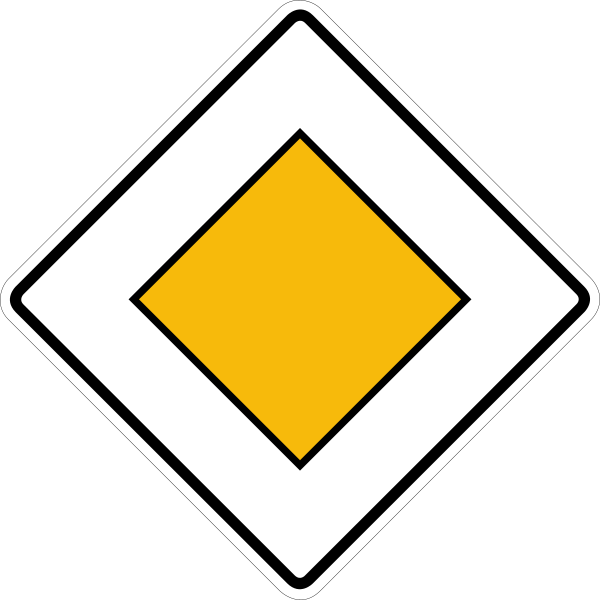
What does this yellow-diamond sign on a white background mean?
Pro Tips
- Practice slow control extensively - it's harder than fast riding
- Get comfortable with emergency stops in safe conditions
- Ride in various weather during training to build experience
- Study motorcycle-specific theory content, not just general driving theory
Common Mistakes to Avoid
- Underestimating how hard low-speed control is, and treating the off-road stage as the easy one
- Not wearing appropriate protective gear during training
- Assuming car driving experience transfers directly to motorcycle riding
AutoviaTest Editorial Team
Driving Education Experts
Related Guides
Ready to test what you just read?
Free to start — no card, no signup to try.
Take a free practice test