Complete Hazard Perception Guide
Master the skills needed to spot hazards and score high
Hazard PerceptionIntermediate3 min read
In This Guide 1/11
Where a country includes a hazard perception test, it assesses your ability to identify developing hazards while driving. The skill matters well beyond the exam - it is the one that actually prevents collisions. This guide explains how these tests are built, how the scoring logic works, and the techniques that help you excel; the specific clip counts and pass marks are national, so take those from your own country's test page.
Understanding Hazard Perception
A hazard is anything that causes you to change speed, direction, or stop. A developing hazard is one that requires you to take action. Static hazards (parked cars, road signs) are always present. Developing hazards emerge and require response. The test measures how quickly you spot developing hazards.
Test Format Explained
Where a country runs this test, you watch video clips filmed from a driver's perspective. Each clip contains at least one developing hazard, and some contain more than one. You click when you spot a hazard beginning to develop, and you score more the earlier you click inside the scoring window. The number of clips, the points available and the pass mark are all set nationally - take those figures from your own country's test page rather than borrowing another country's.
Scoring Window System
Scoring works on a window system. The window opens when the hazard starts developing and closes when action becomes necessary. Clicking early in the window scores the most, and the score steps down the longer you leave it. Clicking after the window has closed scores nothing. Multiple clicks don't help - systematic clicking patterns are detected and score zero. How many points the top of the scale is worth varies by country, so check your own test page.
Types of Hazards
Common hazards include: pedestrians stepping out, vehicles emerging from junctions, cyclists moving into your path, vehicles braking ahead, children near roads, road works, animals, and weather-related hazards. Learn to scan systematically for all hazard types.
Scanning Techniques
Use a systematic scanning pattern: far distance, middle distance, near distance, then mirrors. Check the sides of the road for potential hazards. Look for clues that suggest hazards (school signs, parked ice cream vans, ball bouncing into road). Anticipate what could happen next.
Practice Effectively
Use official practice clips to understand the format. Practice commentary driving - verbalize hazards as you see them. When watching the clips, imagine you're actually driving. Don't practice bad habits like clicking continuously. Aim for one or two well-timed clicks per hazard.
Common Patterns
Certain scenarios appear frequently: pedestrians at marked crossings, cars emerging at junctions, cyclists swerving around parked cars, emergency vehicles approaching, buses pulling out, schools and playgrounds. Recognize these patterns quickly.
Key Takeaways
- Click when a hazard starts developing, not when it's already dangerous
- Use systematic scanning: far, middle, near, and sides of the road
- One well-timed click per hazard is better than multiple random clicks
- Practice with official clips to understand timing and scoring
Try it now
You have just read the traps. See how many you would still miss.
Question 1 of 10
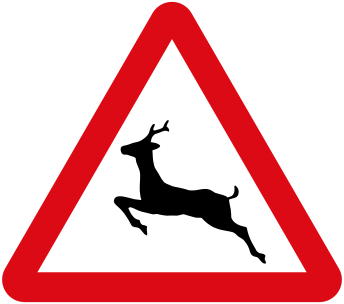
What does this warning sign showing a leaping deer mean?
Pro Tips
- Practice commentary driving as a passenger to develop hazard awareness
- Look for clues in the environment that suggest potential hazards
- If you see something that might develop, click early rather than late
- Stay focused throughout each clip - hazards can appear anytime
Common Mistakes to Avoid
- Clicking too late when the hazard is already obvious to everyone
- Click-spamming which results in zero points for that clip
- Losing concentration during clips and missing hazards entirely
AutoviaTest Editorial Team
Driving Education Experts
Related Guides
Ready to test what you just read?
Free to start — no card, no signup to try.
Take a free practice test