Tourist guide

Driving in United Kingdom

Complete guide for tourists and expats. Learn the road rules, speed limits, and essential information before you drive in United Kingdom.

Left sideDriving side
70mphMax highway speed
999Emergency number

Briefing

Driving in the UK in 2026 is largely about three things tourists don't see coming: the patchwork of urban speed limits that now varies by nation, the spread of camera-enforced charging zones in English cities, and the gulf between Scottish and English drink-drive limits. Speeds are still posted in mph — 30 mph in built-up England, Scotland and Northern Ireland, 60 mph on single carriageways, 70 mph on dual carriageways and motorways — but since 17 September 2023 the default urban limit in Wales is 20 mph on any "restricted road" (a road with streetlights spaced no more than 200 yards apart).

Scotland is on the same path: a national 20 mph strategy is rolling out through 2026, with Glasgow starting on 4 June 2026 across roughly 3,800 streets and Inverclyde already switched over in April.

Driving on the left is just how the country works; the bigger trap for foreign drivers is the camera estate. London's Congestion Charge runs Monday–Friday 07:00–18:00 and Saturday–Sunday 12:00–18:00, currently £18 a day if you pay on time.

On top of that the ULEZ — expanded on 29 August 2023 to cover all 32 boroughs out to the M25 — bills £12.50 per day on non-compliant vehicles, 24/7. Outside London, Class D Clean Air Zones in Bristol (£9/day for non-compliant cars) and Birmingham (£8/day inside the A4540 ring) catch the most tourists; Bath, Bradford, Portsmouth, Sheffield and Tyneside operate Class C CAZs that don't charge private cars.

Parking enforcement is mostly civil, not criminal: a council PCN (Penalty Charge Notice) for an overstay is £80–£160 in London and £50–£70 outside, halved if paid within 14 days. That sits separately from criminal FPNs (Fixed Penalty Notices) issued by police — £200 and six points for handheld phone use under the March 2022 reform that closed the old "communications-only" loophole, £100 and three points for a red light, fines up to £500 for no seatbelt.

Regional quirks worth knowing: Scotland's blood-alcohol limit has been 50 mg/100 ml since 5 December 2014, against 80 mg/100 ml in England, Wales and Northern Ireland — cross the border and the same pint changes the law. The GB plate identifier was retired for international travel on 28 September 2021 (now UK).

And smart-motorway "all lane running" stretches on the M1, M6, M25 and M42 use variable mandatory limits on overhead gantries; the red-bordered number is legally enforceable, not advisory, even when the hard shoulder looks like a running lane.

Can you drive in United Kingdom?

Accepted licenses from

EUEEAUSACanadaAustraliaNew ZealandMost countries (full national licence)
Validity period

EU/EEA full licences valid in Great Britain until age 70 or for 3 years after becoming resident, whichever is longer (vocational licences require DVLA registration within 12 months of moving). Non-EU/EEA visitors can drive on a full national licence (or International Driving Permit if the licence is not in English) for up to 12 months from arrival

Important note

Northern Ireland has its own DVA rules — broadly similar. After the 12-month window, non-EU residents must take a UK driving test (or exchange, if from a "designated country" such as Australia, Canada, Japan, South Africa, Switzerland, USA — list at GOV.UK)

What to carry in your car

Mandatory items

  • Valid driving licence (full, not provisional)
  • Valid motor insurance certificate or cover note (third-party minimum is legally required under the Road Traffic Act 1988)
  • MOT certificate if the vehicle is over 3 years old (4 years in Northern Ireland)
  • Vehicle registration document (V5C) — not legally required to carry but useful

Recommended items

  • UK sticker on the rear of the vehicle when driving abroad (replaced "GB" on 28 September 2021)
  • Warning triangle (not legally mandatory in the UK but useful)
  • Reflective hi-vis vest (not legally mandatory)
  • First aid kit
  • European accident statement form if driving onward into mainland Europe

Speed limits

Urban areas

mph

Rural roads

mph

Highways/motorways

mph
Test your knowledge of United Kingdom traffic rulesFree practice questions based on official test material.Start practicing

Toll roads

Payment methods

  • Online (Dart Charge, Merseyflow)
  • Pre-pay account
  • Cash at Payzone stores (Dart Charge)
  • Cash booths (M6 Toll)
  • Number-plate cameras (no booths on Dart, Mersey Gateway, Tyne)
Average cost

Dart Charge (Dartford Crossing) £3.50 single (£2.80 on a pre-pay account), charged 06:00–22:00 only; M6 Toll around Birmingham £6.70–£11.60 by zone (Class 2); Mersey Gateway £1.80; Tyne Tunnel £2.60 from 1 May 2026

No motorway tolls in the conventional sense — the M6 Toll is the only fully tolled motorway. Severn crossings (M48 Severn Bridge and M4 Prince of Wales Bridge) were made free on 17 December 2018. The Dartford Crossing has no booths; pay online by midnight the day after crossing or face a £70 PCN (£35 if paid within 14 days). London Congestion Charge £18/day Mon-Fri 07:00–18:00 and Sat-Sun 12:00–18:00; ULEZ £12.50/day across all 32 London boroughs since 29 August 2023

Parking

Line colors

Yellow single line

Restricted at certain times — check the nearby time-plate sign

Yellow double line

No waiting at any time (loading may still be allowed unless kerb-marked)

Red single line

No stopping during the times shown on signs (on London Red Routes — TfL-managed)

Red double line

No stopping at any time, including to drop off (Red Route)

White zig-zag

No stopping near pedestrian crossings or schools

Blue badge bay

Reserved for blue-badge disabled drivers

Parking tips

  • Use RingGo, PayByPhone or JustPark apps — coin meters are increasingly being removed in London
  • A PCN (civil Penalty Charge Notice) for a parking overstay is £80–£160 in London and £50–£70 outside London — halved if paid within 14 days, up by 50% if unpaid after 28 days
  • Park & Ride sites at the edge of York, Cambridge, Oxford, Bath, Canterbury, Exeter and most cathedral cities are cheaper and faster than driving into the centre
  • Most supermarkets (Tesco, Sainsbury's, Asda, Morrisons) offer free parking with a 90–180 minute limit enforced by ANPR — overstays trigger a private parking charge of £60–£100
  • Pavement parking is banned across Greater London and across all of Scotland since 11 December 2023 (£100 PCN); England outside London is still permitted unless signed otherwise
Average cost

£2.50–£8 per hour in central London; £1.50–£4 per hour in other city centres; supermarket and retail-park parking usually free for 1–3 hours

Common mistakes tourists make

  1. Driving on the right — the UK drives on the left. Roundabouts are clockwise and you give way to traffic coming from your right
  2. Forgetting to pay the Dart Charge online by midnight the next day — there are no toll booths at the Dartford Crossing and unpaid crossings trigger a £70 PCN
  3. Entering the London Congestion Charge zone or ULEZ without paying — cameras catch you automatically, £180 PCN (£90 early payment) on top of the missed daily fee
  4. Using a handheld phone — since the March 2022 reform any "use" counts, not just calls. £200 fixed penalty plus 6 points (new drivers within their 2-year probation lose their licence outright)
  5. Crossing into Scotland after a drink in England — the Scottish BAC limit is 50 mg/100 ml versus 80 mg/100 ml in England, Wales and Northern Ireland
  6. Driving 30 mph through a Welsh village — the default urban limit in Wales has been 20 mph since 17 September 2023
  7. Ignoring variable speed limits on smart-motorway gantries — when the red-bordered number is lit, it's legally enforceable, not advisory
  8. Stopping in a yellow-box junction unless turning right and only oncoming traffic blocks you — £70–£130 PCN in camera-enforced boxes (most of London since 2022)

Traffic fines

Speeding
Fixed Penalty Notice: £100 + 3 points (minimum). Court fines follow Sentencing Council bands by % of weekly income — Band A 50% (range 25–75%, 3 points), Band B 100% (75–125%, 4–6 points or 7–28 day ban), Band C 150% (125–175%, 6 points or disqualification). Maximum £1,000 (£2,500 on a motorway). Speed-awareness course usually offered for first-time minor offences
No seatbelt
Fixed Penalty £100; court fine up to £500. No points
Phone use
£200 + 6 points (since March 2022 — any handheld use, not just calls). New drivers within their 2-year probation lose their licence at 6 points
Red light
£100 + 3 points (Fixed Penalty); up to £1,000 if taken to court
Illegal parking
Civil PCN £80–£160 in London (50% discount if paid within 14 days); £50–£70 outside London. Private-land charges (supermarket overstays, ANPR-issued) typically £60–£100

Can you pass the test?

Try a few real practice questions

Start practicing

United Kingdom practice questions

Question 1 of 5
Free practice

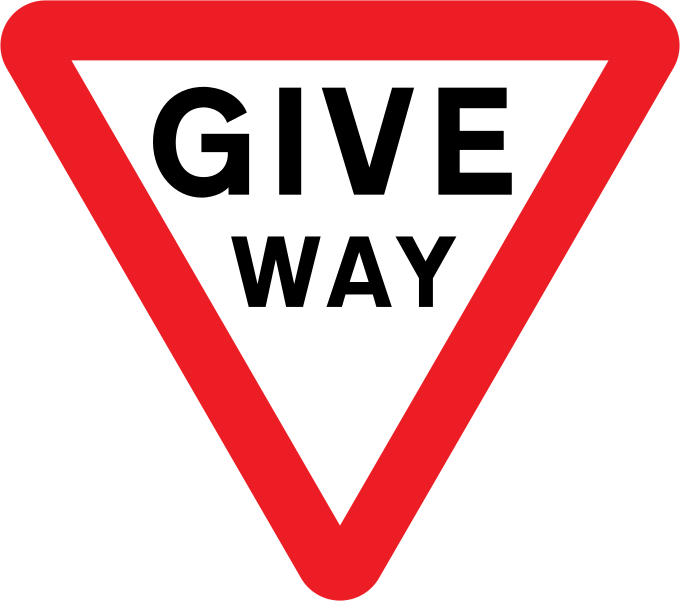
You reach this sign at a junction. What must you do?

Free practice questions based on official test material.

Emergency contacts

Police999(emergency, all UK) / 101 (non-emergency police)
Ambulance999(or 112, which is equivalent)
Fire999
Roadside assistanceAA: 0800 88 77 66 · RAC: 0330 159 1111 · Green Flag: 0345 246 1557. National Highways traffic officers patrol motorways (call 0300 123 5000)

Want to master United Kingdom driving rules?

Practice with our driving test questions and learn all the rules before you drive.

Driving guides for other countries