Belgium driving test FAQ
Everything you need to know about the Belgium driving theory test - questions, pass mark, cost, and more.
Can you pass the test?
Try a few real practice questions
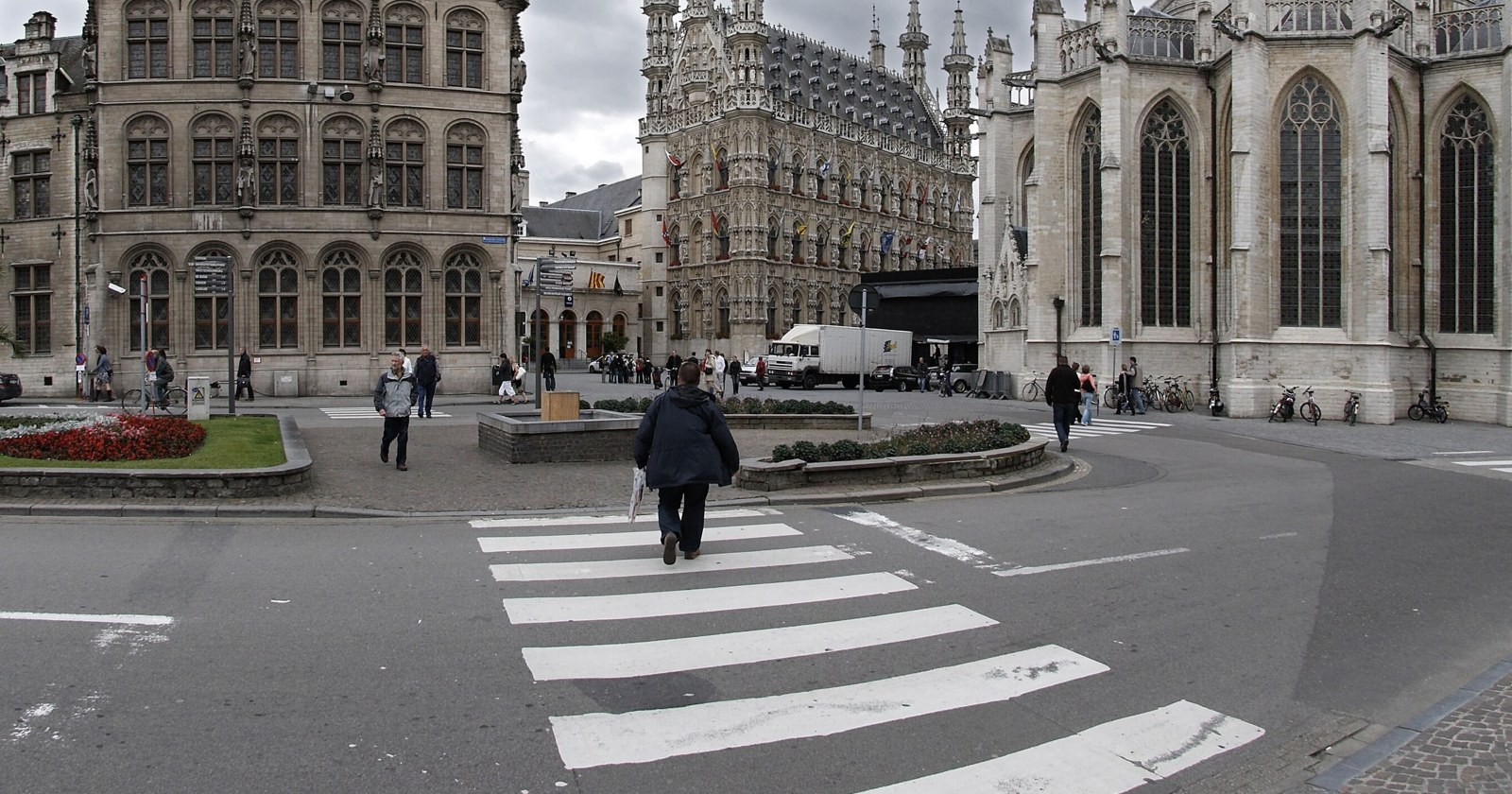
There are no traffic lights at this zebra crossing. You are driving from left to right along the street that runs across the picture; the man on the stripes has passed the middle and is on the half away from you. What do you do?
Try a few real practice questions
Frequently asked questions
15 answersHow many questions are on the Belgium driving test?
The Belgium driving theory test has 50 questions. You need 41/50 (82%) to pass. The test duration is 30 minutes.
What score do you need to pass the Belgium driving test?
To pass the Belgium driving theory test, you need 41/50 (82%). This means you can make a maximum of 9 mistakes.
How long is the Belgium driving theory test?
The Belgium driving theory test lasts 30 minutes. During this time, you must answer 50 questions. This gives you approximately 36 seconds per question.
Can I take the Belgium driving test in English?
The Groepering van Ondernemingen voor Controle van Automobielvoertuigen decides which languages the Belgium theory test can be taken in, so check the current options with them before you book. You can practise for the test in English on AutoviaTest.
How much does the Belgium driving test cost?
Fee for the Belgium driving test: €15-19. Fees change, so check the current amount with the GOCA before you book.
What is the minimum age to get a driving license in Belgium?
The minimum age for a car driving licence in Belgium is 17.
What documents do I need for the Belgium driving test?
What you need for the Belgium driving test: ID card/Passport; Medical certificate; Photo; Proof of residency. Check the current list with the Groepering van Ondernemingen voor Controle van Automobielvoertuigen before your appointment.
How long is a Belgium driving license valid?
A Belgium driving licence is valid for 10 years. After that it must be renewed.
What is the drink driving limit in Belgium?
Alcohol limit for driving in Belgium: 0.5 g/L (0.2 g/L professional).
What are the speed limits in Belgium?
Speed limits for cars in Belgium: towns 50 km/h, rural roads 90 km/h, highways 120 km/h. Signs can set a different limit.
What side of the road do you drive on in Belgium?
In Belgium, you drive on the RIGHT side of the road. The steering wheel is on the left side of the vehicle. This is important to remember if you're visiting from a country that drives on the opposite side.
What is the format of the Belgium driving theory test?
The Belgium driving theory test consists of 50 multiple-choice questions. You have 30 minutes to complete the test. The test is administered by GOCA (Groepering van Ondernemingen voor Controle van Automobielvoertuigen).
What are the unique driving rules in Belgium?
Driving rules specific to Belgium: Priority from the right at unmarked intersections. Trams always have priority. Fire extinguisher required in vehicle. Zip-merging mandatory on motorways. Rescue lane required on motorways. No penalty points system — direct fines instead.
Can I practice the Belgium driving test online?
Yes. AutoviaTest has practice tests for the Belgium driving theory test, written to Belgium's traffic rules. The first two tests are free; the rest need a subscription.
What is the emergency number for road accidents in Belgium?
The emergency number in Belgium is 112. In case of a road accident, call this number immediately. Keep your location details ready and follow the operator's instructions.
Belgium speed limits
Important driving rules in Belgium
- Priority from the right at unmarked intersections
- Trams always have priority
- Fire extinguisher required in vehicle
- Zip-merging mandatory on motorways
- Rescue lane required on motorways
- No penalty points system — direct fines instead