The Ultimate Theory Test Guide
Everything you need to know to pass your theory test on the first attempt
Theory TestBeginner4 min read
In This Guide 1/12
The theory test is the first step on your journey to becoming a licensed driver. This comprehensive guide covers everything from test format and question types to proven study strategies that will help you pass with confidence. Whether you're just starting your preparation or looking for final tips before your test, this guide has you covered.
Understanding the Test Format
Almost every theory test is a multiple-choice exam taken at a computer under a time limit, drawing on road signs, traffic laws, vehicle safety and driving best practice. What varies by country is the detail: how many questions you get, how many you may miss and still pass, and whether a separate hazard perception or video section is bundled in alongside it. Look up the question count and the pass mark for your own country on its test page before you start practicing - preparing against another country's numbers is the most common planning mistake. Understanding the format you will actually sit is crucial for effective preparation.
Question Categories Breakdown
Questions are drawn from several key categories: Road signs and markings (regulatory, warning, informational), Traffic rules and right-of-way, Vehicle safety and maintenance, Environmental awareness and eco-driving, Vulnerable road users, High-speed and limited-access highway rules, and Documents and legal requirements. Each category has its own complexity level, so allocate study time accordingly.
Effective Study Strategies
Start your preparation at least 4-6 weeks before your test date. Use official study materials and practice tests. Focus on understanding concepts rather than memorizing answers. Study in short, focused sessions of 30-45 minutes. Review incorrect answers carefully to understand why you got them wrong. Create flashcards for difficult topics and test yourself regularly.
Common Question Traps
Watch out for absolute words like "always", "never", or "only" - these often indicate incorrect answers. Read each question carefully as wording can be tricky. Questions about stopping distances and speed limits are frequently tested. Pay attention to the specific scenario described - conditions matter. Double-check questions about giving way and right-of-way rules.
Test Day Preparation
Get a good night's sleep before test day. Arrive at the test center at least 15 minutes early. Bring required identification documents. Don't cram - light review only on test day. Eat a proper meal but avoid heavy foods that might make you drowsy. Stay calm and confident in your preparation.
During the Test
Read each question completely before looking at the answers. Don't spend too long on difficult questions - mark them for review and move on. Use the review feature to check flagged questions at the end. Trust your first instinct but review if unsure. Manage your time carefully across all questions.
Hazard Perception Tips (Where It Applies)
Some countries add a hazard perception section in which you identify developing hazards in video clips. Where it exists, the principle is the same: click as soon as you see a hazard beginning to develop, not once it has already happened. Don't click repeatedly at random, which some systems penalize with a zero for that clip. Practice with the official clips for your own country to learn its scoring window, and check your test page for whether this section applies to you at all. Focus on the road ahead and keep checking mirrors in your mind.
After the Test
You'll receive your results immediately after completing the test. If you pass, you'll get a pass certificate needed for your practical test booking. If you fail, you can rebook after a waiting period. Review which areas you struggled with for future reference. Celebrate your success or plan your next attempt systematically.
Key Takeaways
- Start preparing at least 4-6 weeks before your test date for best results
- Practice with official materials and understand the reasoning behind correct answers
- Focus on high-frequency topics: road signs, stopping distances, and right-of-way rules
- Read questions carefully and watch for tricky wording designed to catch you out
Try it now
You have just read the traps. See how many you would still miss.
Question 1 of 10
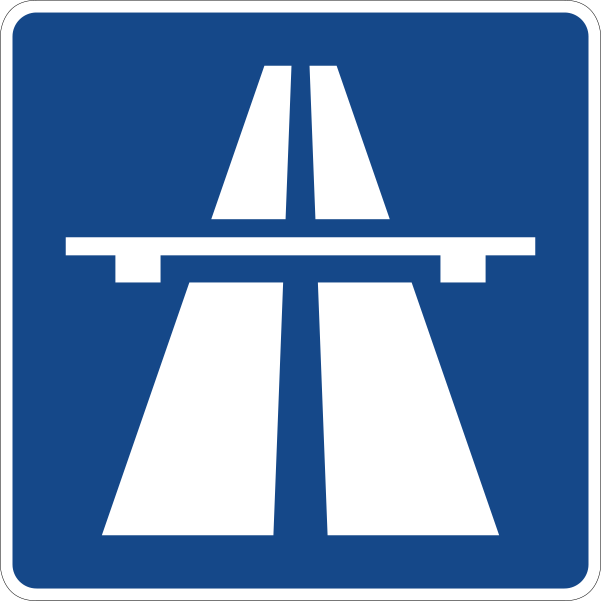
What does this blue sign showing a divided highway with an overpass mean?
Pro Tips
- Take practice tests under timed conditions to build exam confidence
- Study your own country's official highway code or driver handbook systematically, chapter by chapter
- Use multiple learning methods: reading, videos, apps, and practice tests
- Create a study schedule and stick to it consistently
Common Mistakes to Avoid
- Rushing through questions without reading them completely
- Underestimating hazard spotting practice - it requires specific skills that question drills don't build
- Cramming the night before instead of steady preparation over weeks
AutoviaTest Editorial Team
Driving Education Experts
Related Guides
Ready to test what you just read?
Free to start — no card, no signup to try.
Take a free practice test