Driving in Fog
Safe navigation when visibility is reduced
WeatherHigh Risk
Fog creates one of the most dangerous driving conditions by severely limiting visibility while maintaining normal road surface grip. The false sense of security this creates leads to many multi-vehicle accidents.
Why This Matters
Fog-related accidents often involve multiple vehicles due to drivers traveling too fast for visibility conditions. Your speed must match how far you can see - if you can only see 50 meters, you should be able to stop in that distance.
Key Actions to Take
- Reduce speed to match visibility distance
- Use dipped headlights, not full beam (reflects back)
- Use fog lights if visibility is below 100 meters
- Increase following distance significantly
- Listen for traffic you cannot see
- Do not overtake in foggy conditions
Do
- Use windshield wipers and demister
- Follow the road edge markings
- Pull over safely if fog becomes too dense
- Turn off fog lights when visibility improves
Don't
- Use high beam headlights
- Follow other vehicles tail lights too closely
- Stop on the road - pull completely off
- Speed up when fog appears to lift
Important Warning
Never drive at a speed where you cannot stop within the distance you can see. If visibility drops to near zero, find a safe place to stop completely off the road.
Pro Tips
- Fog can be patchy - be ready for sudden visibility changes
- Open your window slightly to hear approaching vehicles
- Fog is often worst in valleys and near water
Test your judgement
Reading about it is not the same as reacting to it. Try ten real questions.
Question 1 of 10
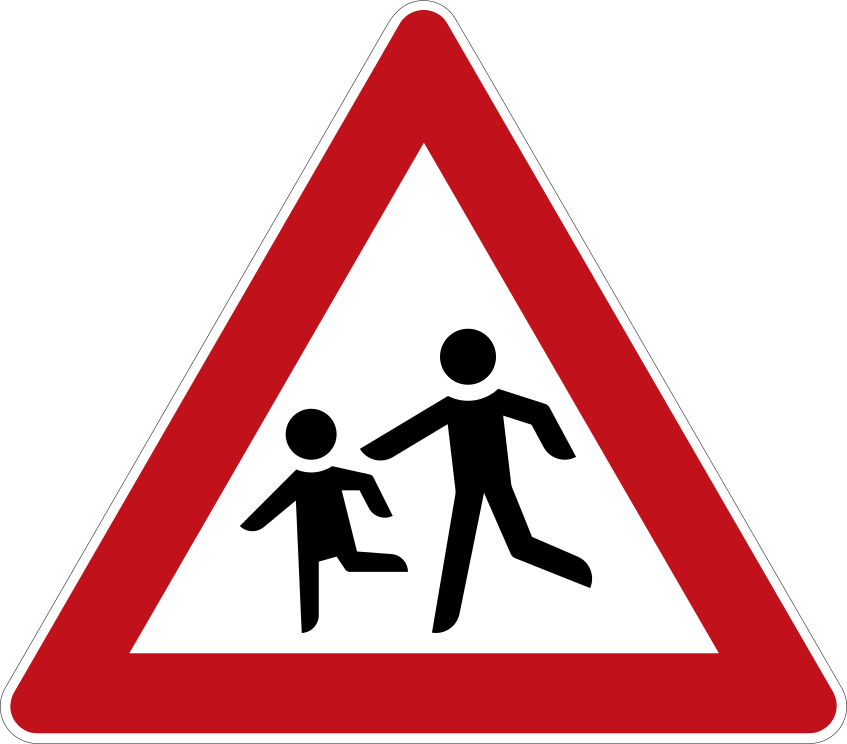
What does this warning triangle showing two children running mean?
Practice Your Hazard Perception
Put your knowledge into practice with our interactive hazard perception training.
Start TrainingRelated Scenarios
Practice Your Hazard Perception
Put your knowledge into practice with our interactive hazard perception training.
Start Training