Traffic Signs Mastery
Learn to recognize and understand every road sign you'll encounter
Theory TestIntermediate3 min read
In This Guide 1/11
Traffic signs form a universal language of the road. Understanding them is not just essential for passing your theory test - it's crucial for safe driving throughout your life. This guide will help you master all types of road signs using proven learning techniques.
Sign Shape Meanings
The shape of a sign tells you its category before you even read it. Circles give orders - red circles prohibit, blue circles give positive instructions. Triangles warn of hazards ahead. Rectangles provide information. Octagons mean STOP (the only octagonal sign). Inverted triangles mean give way. Learn shapes first, then specific signs.
Regulatory Signs
Regulatory signs tell you what you must or must not do. Red circles with diagonal lines prohibit actions (no entry, no overtaking). Blue circles give mandatory instructions (minimum speed, direction). Speed limit signs are the most common regulatory signs. Breaking regulatory sign rules results in penalties.
Warning Signs
Warning signs alert you to hazards ahead. Most are triangular with red borders. They cover road conditions (bends, slopes, narrow roads), intersections and junctions, pedestrian and animal crossings, and road works. The warning gives you time to adjust speed and attention. Some warnings include distance plates.
Information Signs
Information signs are typically rectangular, and their background color tells you what kind of information you are being given - but that color code is set nationally, so the same color can mean different things in different countries. In some systems a blue background marks the highest class of road; in others blue is reserved for driver services such as fuel, food and lodging, while green carries the through-route directions. Learn your own country's color scheme from its official highway code or driver handbook rather than assuming. Whatever the palette, these signs carry directions, distances, facilities and parking information - town boundary, tourist attraction and service area signs all belong to this family.
Temporary Signs
Temporary signs mark road works, diversions, lane closures and temporary speed limits, and they override the permanent signs around them. Their background color is a national choice - yellow in much of Europe, orange across North America - so learn the color your own country uses rather than looking out for one particular shade. Always obey them: the workers' safety and your own depend on it.
Road Markings
Road markings complement signs. Two things hold almost everywhere: a solid line means do not cross it, and a broken line means you may cross when it is safe to do so. Line color is not universal. In North America, yellow separates traffic moving in opposite directions and white separates lanes moving the same way. Many European countries use white for both jobs and give yellow a different one entirely - marking a temporary layout through a work zone, or a parking restriction at the curb. Never assume; check what each color means in your own country's official highway code or driver handbook. Markings at junctions and pedestrian crossings - cross-hatched keep-clear boxes, crossing stripes, stop lines and yield lines - then add their own specific rules on top.
Memory Techniques for Signs
Group similar signs together for learning. Create stories or associations for complex signs. Use the "look-cover-check" method. Practice with flashcard apps. Drive (or ride as passenger) and identify signs in real life. Quiz yourself regularly. Focus on signs you find confusing.
Key Takeaways
- Learn sign shapes and colors first - they tell you the category immediately
- Regulatory signs (circles) give orders; warning signs (triangles) alert to hazards
- Temporary signs override permanent ones - always obey them
- Practice identifying signs in real-world driving situations
Try it now
You have just read the traps. See how many you would still miss.
Question 1 of 10
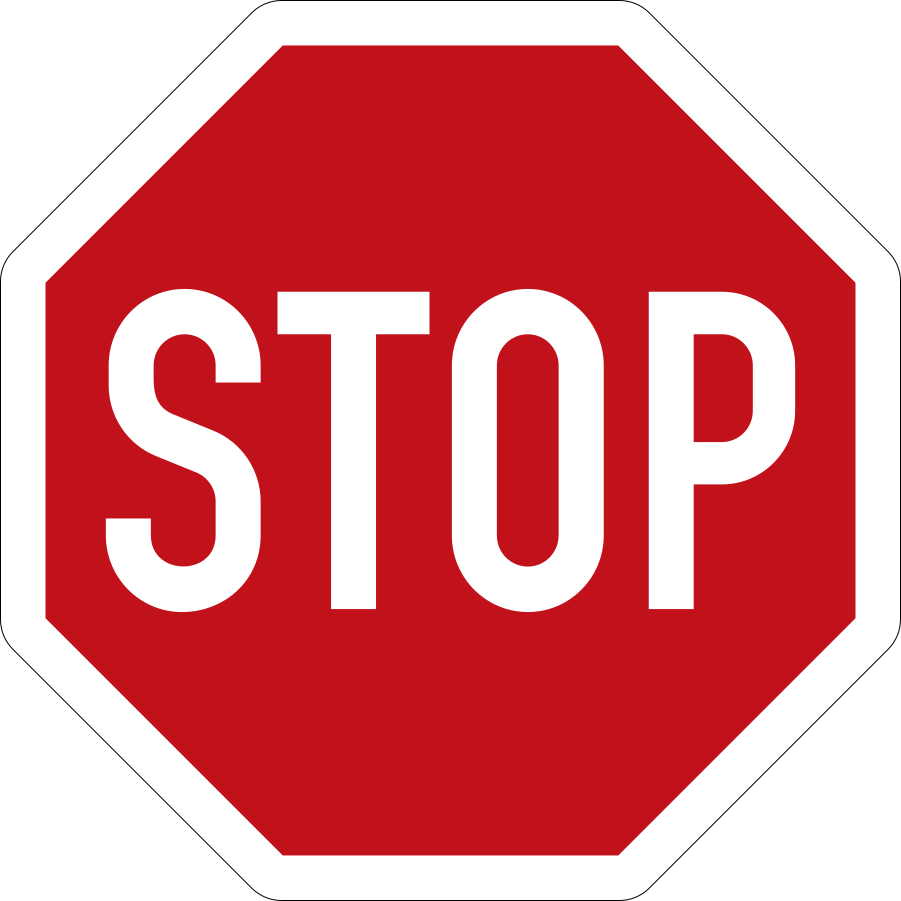
You see this octagonal red sign at an intersection. What must you do?
Pro Tips
- Create a sign recognition game - count specific signs on journeys
- Focus extra attention on signs that confuse you - make targeted flashcards
- Learn the logic behind signs, not just the meaning - it helps memory
- Test yourself with signs in unusual contexts or partially obscured
Common Mistakes to Avoid
- Trying to memorize signs without understanding the shape/color system
- Ignoring temporary road signs during construction periods
- Confusing similar signs like different types of no entry or one-way signs
AutoviaTest Editorial Team
Driving Education Experts
Related Guides
Ready to test what you just read?
Free to start — no card, no signup to try.
Take a free practice test