
 Germany
Driving schools in Germany
Compare local driving schools and start practicing for your driving test
Cities in Germany
Berlin
Munich
Hamburg
Cologne
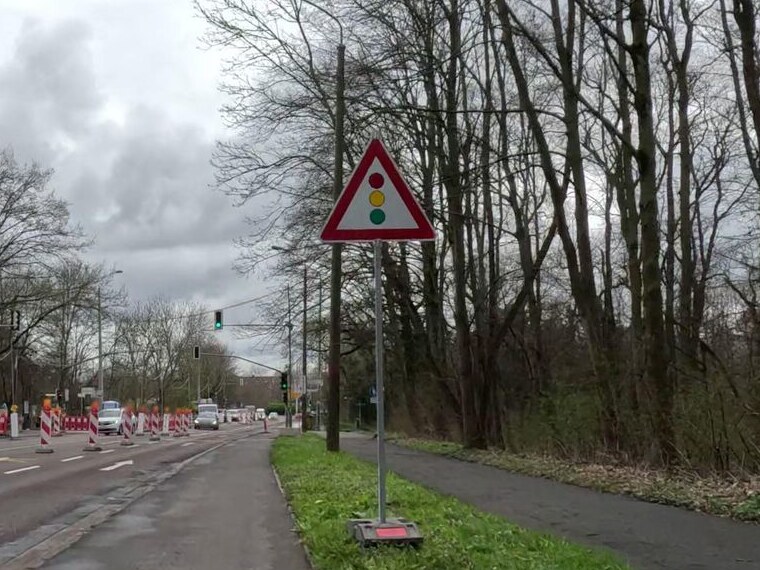
What must you expect after this sign, and how do you drive on?
Try a few real practice questions
GermanyDriving rules & facts
Rechtsfahrgebot
Drive on the right side. On multi-lane roads, use the rightmost lane unless overtaking. Applies especially on the Autobahn.
Rechts-vor-Links
At unmarked intersections, the vehicle coming from the right has priority. This is the DEFAULT rule — applies far more often than foreigners expect.
Rettungsgasse
When traffic stops on multi-lane roads, drivers must form an emergency corridor between the left lane and all other lanes. Fines €200–320 for violations.
Reißverschlussverfahren
Zipper merge: when lanes reduce, drivers must merge at the actual narrowing point, alternating one vehicle from each lane. Legally mandated by StVO.
Umweltzone / Plakette
Many German cities have environmental zones requiring a green Umweltplakette (€80 fine without). Check before entering city centres.
Winter Tires (M+S / Alpine)
Winter tires mandatory in winter conditions (ice, snow, slush). Since October 2024, only Alpine symbol (3PMSF) tires are accepted. Fine: €60 + 1 point.
How to get your driving license in Germany
Everything you need to know about enrolling in a driving school and getting your B license in Germany.
Typical cost
€2,000–€3,500Total driving school cost including lessons and materials
Prices vary by school, location, and number of lessons needed.
Typical lessons needed
~3045-minute lessons on average
Mandatory theory hours
14hRequired classroom or online theory instruction
Mandatory practical hours
12hRequired behind-the-wheel training with an instructor
License requirements in Germany
Theory test languages
The TÜV/DEKRA theory test is available in these languages:
- German
- English
- French
- Greek
- Italian
- Polish
- Portuguese
- Romanian
- Russian
- Croatian
- Spanish
- Turkish
- Arabic
Tips for choosing a driving school in Germany
- Compare prices from at least 3 schools before enrolling. The cheapest option is not always the best — check what is included in the package.
- Ask schools about their pass rates. A higher pass rate often indicates better instruction quality.
- If Germany's official language is not your first language, ask if the school offers instruction or materials in your language.
Source: Technischer Überwachungsverein · Last updated:
Practice with real exam questions, track your progress, and study road signs — all free.
Start practicing