Driving in Snow
Navigate snowy conditions with confidence
WeatherHigh Risk
Snow transforms roads into challenging environments requiring specialized skills. From proper preparation to emergency techniques, understanding snow driving is essential for winter safety.
Why This Matters
Snow-covered roads are extremely unpredictable. Stopping distances can increase by up to 10 times compared to dry roads. Without proper technique, even experienced drivers can lose control.
Key Actions to Take
- Fit winter/snow tires or chains before the season begins
- Clear all snow from your vehicle before driving
- Accelerate and decelerate slowly and smoothly
- Keep a 10-second following distance
- Use a higher gear to reduce wheel spin
- Avoid hills if possible - momentum is key
- Know your route and avoid steep inclines
- Keep emergency supplies in your vehicle
Do
- Check weather forecasts before traveling
- Keep fuel tank at least half full
- Use engine braking by downshifting
- Stay in tracks made by other vehicles
Don't
- Use cruise control on snowy roads
- Stop on hills - you may not restart
- Pass snowplows - stay behind them
- Ignore winter tire requirements
Important Warning
Black ice often forms on bridges and overpasses first. Slow down in these areas even if the road appears clear.
Pro Tips
- Practice in an empty parking lot to understand how your car handles
- Keep a winter emergency kit: blanket, flashlight, snacks, phone charger
- If stuck, gently rock the car between forward and reverse
Test your judgement
Reading about it is not the same as reacting to it. Try ten real questions.
Question 1 of 10
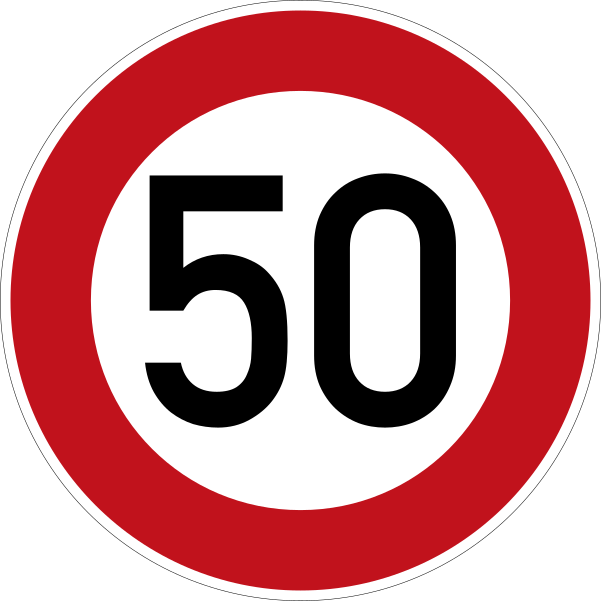
What does this red circle with the number 50 inside mean?
Practice Your Hazard Perception
Put your knowledge into practice with our interactive hazard perception training.
Start TrainingRelated Scenarios
Practice Your Hazard Perception
Put your knowledge into practice with our interactive hazard perception training.
Start Training