Motorcycle Maneuvers
Master the off-road machine-control exercises
Motorcycle TestAdvanced2 min read
In This Guide 1/10
The off-road skills stage challenges your machine control in a controlled environment. The exercises test specific skills that translate directly to road safety. This guide breaks down each exercise, explaining the technique and the common problems, so you can practice effectively - check your own country's test page for the exact exercise list it uses.
Slow Control Fundamentals
Low-speed control is the foundation. Use friction point (clutch slipping), rear brake for stability, and look where you want to go. Your body position matters - slight lean into the direction you're turning. Counter-balance by shifting your weight opposite to the bike lean at walking pace.
Slalom Exercise
Weave between cones at a controlled pace. Look ahead to the next cone, not at the one you're passing. Use gentle handlebar inputs and body lean. Maintain a consistent speed using clutch and rear brake. The key is smoothness - jerky movements cause wobbles.
Figure of Eight
Complete a figure-8 pattern within a marked area. This tests turning ability in both directions. Look through the turns, not at the ground. Use clutch control for consistent speed. The transition between circles is crucial - plan ahead and stay smooth. Practice both directions equally.
U-Turn
Execute a U-turn within a confined space. Look over your shoulder in the direction of turn. Use rear brake and clutch together for stability. Lean the bike but keep your body upright or counter-lean. Commit to the turn - hesitation causes problems. Practice until it feels natural.
Hazard Avoidance
Approach at specified speed then swerve to avoid an obstacle. This simulates avoiding something in your path. Look at your escape route, not the hazard. Counter-steer: push left to go left, push right to go right. Don't brake during the swerve - do it before or after.
Emergency Stop
Approach at required speed and stop in minimum distance when signaled. Apply both brakes progressively - front brake provides most stopping power. Keep the bike upright and straight. Don't lock wheels - practice threshold braking. Stop within the marked distance.
Key Takeaways
- Slow control uses clutch friction point, rear brake, and vision
- Look where you want to go - your bike follows your eyes
- Counter-steering (push-steer) is essential for avoidance maneuvers
- Front brake provides most stopping power but requires smooth application
Try it now
You have just read the traps. See how many you would still miss.
Question 1 of 10
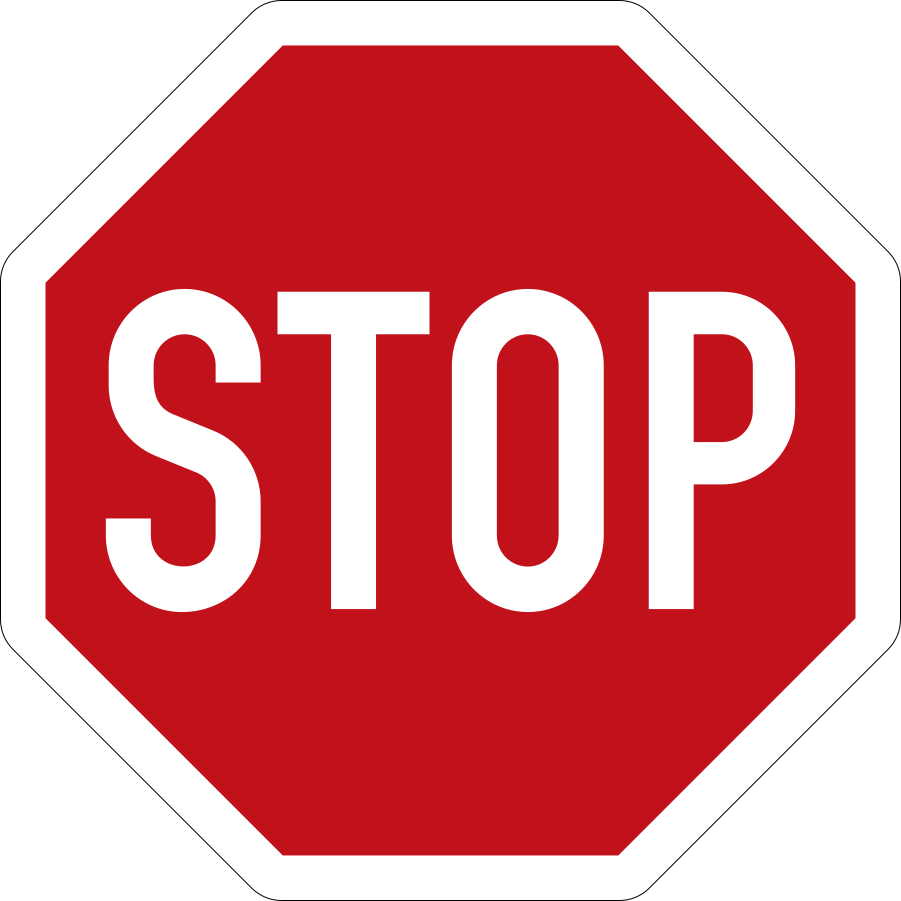
You see this octagonal red sign at an intersection. What must you do?
Pro Tips
- Practice slow control in a parking lot until it becomes automatic
- Set up your own cones to practice the exact test exercises
- Have someone film your practice to identify technique issues
- Practice the emergency stop from various speeds to build muscle memory
Common Mistakes to Avoid
- Looking at the ground instead of where you want to go
- Grabbing the front brake suddenly causing the wheel to lock
- Tensing up which transfers to jerky bike movements
AutoviaTest Editorial Team
Driving Education Experts
Related Guides
Ready to test what you just read?
Free to start — no card, no signup to try.
Take a free practice test