Driving Test Maneuvers
Step-by-step guide to mastering test maneuvers
Practical TestIntermediate3 min read
In This Guide 1/12
Maneuvers often cause the most anxiety for test candidates, yet with practice they become straightforward. This guide breaks down each maneuver into clear steps, helping you understand the techniques and build confidence through systematic practice.
Maneuver Fundamentals
All maneuvers share common principles: effective observation all around, controlled speed (slow is fine), accurate steering, and awareness of road users. Before starting any maneuver, check mirrors and blind spots. During the maneuver, keep checking. Accuracy matters but safety matters more.
Parallel Parking
Pull up alongside the target space, about half a meter from the parked car. Check all around. Begin reversing with full steering lock toward the curb. When at 45 degrees, straighten briefly then apply opposite lock. Continue reversing until parallel. Straighten up within the space. Stay within two car lengths of the vehicle ahead.
Perpendicular (Bay) Parking - Reversing In
Position your car so you have a clear view of the target bay. Select reverse and check all around. Turn toward the bay using reference points (mirror alignment with bay lines). Continue steering until straight in the bay. Adjust if needed - taking extra shunts is fine. Finish centered and straight.
Perpendicular (Bay) Parking - Driving In
Approach at an angle that allows you to turn into the bay. Check mirrors and the bay itself. Steer smoothly into the bay, judging distance from bay lines. Straighten as you enter. Check you're centered. Driving in is often easier than reversing in but requires good judgment of angles.
Pull Up on the Opposite Side and Reverse
When asked, pull up on the side of the road opposite the one you normally drive on. That means crossing the oncoming lane, so timing and observation come first. Signal, check mirrors and the blind spot, and cross only in a clear gap. Pull up reasonably close to the curb. When asked to reverse, check all around thoroughly - visibility is limited from this side. Reverse for about two car lengths keeping straight, checking for traffic throughout.
Emergency Stop
This may or may not be tested. When the examiner signals stop, check mirror quickly then brake firmly and progressively. Apply clutch just before stopping to prevent stalling. Stop in a controlled manner. Don't anticipate the signal - react to it naturally. Practice this safely with your instructor.
Common Errors to Avoid
Rushing and losing control. Forgetting observations during maneuvers. Mounting the curb. Getting too close to other vehicles. Over-steering corrections. Not checking blind spots. Poor positioning before starting. Each error is preventable with practice and awareness.
Practice Strategy
Practice each maneuver until it feels natural. Use reference points consistently. Have your instructor vary the scenarios - different spaces, different positions. Practice on test day at your test center's car park if possible. Confidence comes from repetition.
Key Takeaways
- Observation is as important as accuracy - check all around throughout
- Slow speed gives you time to think and correct
- Use consistent reference points to judge position and angles
- Taking extra shunts to adjust is fine - safety beats speed
Try it now
You have just read the traps. See how many you would still miss.
Question 1 of 10
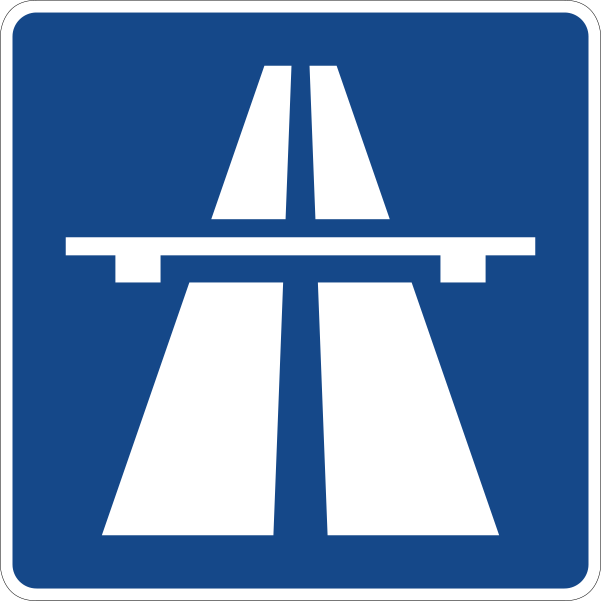
What does this blue sign showing a divided highway with an overpass mean?
Pro Tips
- Find your personal reference points and use them consistently
- Practice maneuvers in different locations to build adaptability
- If you feel you're going wrong, stop and restart observation before continuing
- Visualize successful maneuvers before practicing to build mental pathways
Common Mistakes to Avoid
- Forgetting to check blind spots before and during maneuvers
- Going too fast and losing control or accuracy
- Panicking when slightly out of position instead of calmly correcting
AutoviaTest Editorial Team
Driving Education Experts
Related Guides
Ready to test what you just read?
Free to start — no card, no signup to try.
Take a free practice test