Driving on Ice
Master control on the slipperiest surface
WeatherCritical Risk
Ice presents the most challenging driving conditions. Black ice is particularly dangerous because it is nearly invisible. Understanding how to identify risky areas and control your vehicle on ice could save your life.
Why This Matters
On ice, friction between tires and road is almost zero. Normal driving inputs like braking, accelerating, or steering can cause immediate loss of control. Prevention and early recognition are your best defenses.
Key Actions to Take
- Watch for shiny road surfaces indicating ice
- Reduce speed dramatically before reaching icy patches
- Avoid braking on ice - lift off the accelerator instead
- Keep steering inputs small and gentle
- If you skid, look where you want to go, not the obstacle
- Use the highest gear possible to reduce torque
- Know where ice forms: bridges, shade, intersections
Do
- Watch the temperature — road surfaces freeze before the air does, so treat anything near 4°C (39°F) as possible ice
- Watch for frost on grass indicating road ice
- Leave extra time for all journeys
- Use winter tires or chains when required
Don't
- Brake suddenly - you will slide
- Accelerate hard on ice
- Make sudden steering movements
- Assume gritted roads are safe
Important Warning
Black ice is nearly invisible and often forms overnight. Be especially cautious during the first drive of a cold morning, particularly on bridges and in shaded areas.
Pro Tips
- Test grip gently on a straight, empty stretch
- ABS will pulse on ice - this is normal, maintain pressure
- Consider staying home if ice is widespread
Test your judgement
Reading about it is not the same as reacting to it. Try ten real questions.
Question 1 of 10
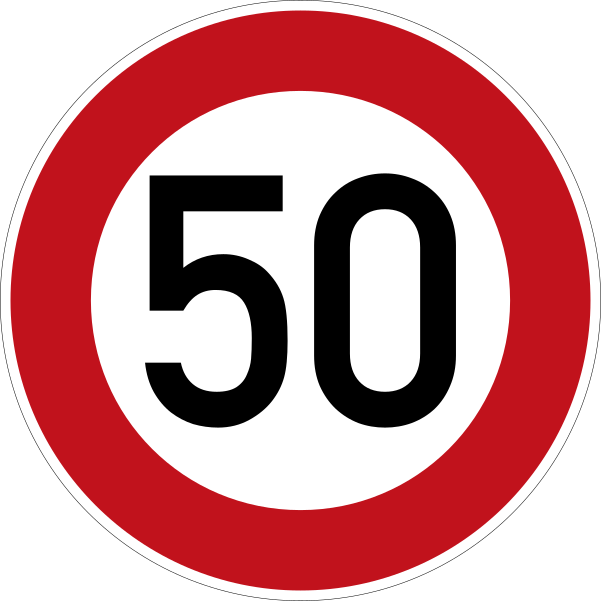
What does this red circle with the number 50 inside mean?
Practice Your Hazard Perception
Put your knowledge into practice with our interactive hazard perception training.
Start TrainingRelated Scenarios
Practice Your Hazard Perception
Put your knowledge into practice with our interactive hazard perception training.
Start Training