
 Complete guide 2026Updated September 2026
French Driving Licence 2026 The Complete Guide
Everything you need to know about getting your driving licence in France — Code de la route test format, auto-école costs, speed limits, traffic fines, and the permis à points system.
Table of Contents
Theory Test
40 multiple-choice questions (Code de la route), 35 correct answers out of 40 to pass (87.5%).
The épreuve théorique générale (ETG) is a State exam — the Sécurité routière (ministère de l'Intérieur) alone owns the questions and the marking — while the sessions themselves are organised by private operators approved by the ministry (La Poste, SGS, Bureau Veritas, Pearson VUE, Dekra), who collect the €30 fee.
Total Cost
Approximately €1,500–2,000 total: auto-école enrolment €150–300, theory preparation €20–300, ETG exam €30, minimum 20 hours of practical lessons €900–1,575, licence issuance via ANTS €25.
Costs vary significantly by region, with Paris being the most expensive.
Road Deaths
3,260 fatalities in 2025 (~4.8 per 100K), down 2.9% from 3,550 in 2022.
The 2020 figure of 2,780 was anomalously low due to COVID-19 lockdowns. France records approximately 48 deaths per million inhabitants, near the EU average.
BAC Limit
0.5 g/L (0.05% BAC) general limit.
0.2 g/L for novice drivers (permis probatoire, first 3 years) and professional drivers. Exceeding 0.5–0.8 g/L: €135 fine + 6 points. Above 0.8 g/L: criminal offence, up to €4,500 fine + 6 points + licence suspension.
Fines & Points
France uses a 5-class fine system and a 12-point permis à points (you lose points for offences).
Speeding under 5 km/h over: €68, 0 points. Red light: €135, 4 points. Phone use: €135, 3 points. Early payment within 15 days gives a 33% discount on most fines.
Global Context
France has a road death rate of ~4.8/100K, compared to Germany (3.4), Spain (3.7), UK (2.5), and USA (12.2).
Licence cost (€1,500–2,000) is moderate by European standards. The permis à points system and widespread speed cameras contribute to road safety.
France Road Safety: 6-Year Trend (2019–2024)
According to ONISR and Sécurité Routière, road fatalities dropped sharply in 2020 due to COVID-19 lockdowns but rebounded in 2021–2022. The 2023 figure of 3,260 deaths represents a 2.9% improvement over 2022, while 2024 saw a slight increase to 3,432.
Year-over-year changes
Deaths per 100,000 Population
 USA12.2
- France4.9
 Germany3.4
 Spain3.8
 UK2.5
Source: ONISR, WHO Global Status Report on Road Safety. Per-capita rates are estimates and may vary by methodology.
French Theory Test Format
The ETG is a State exam: the Sécurité routière sets the questions and marks them, while approved private operators run the sessions at centres across France
The French driving theory test, known as the Code de la route or épreuve théorique générale (ETG), is a multiple-choice paper of 40 questions, numbered 1 to 40 in each série. To pass, you must answer at least 35 of them correctly (87.5% pass mark). The ETG is a State examination: the Sécurité routière (ministère de l'Intérieur) alone owns the question bank and the marking, and only the material organisation of the sessions is delegated to private operators approved by the minister responsible for road safety — La Poste, SGS, Bureau Veritas, Pearson VUE and Dekra — with whom you book your seat for €30, payable again at every re-sit. France Titres — ANTS plays no part in the exam itself: it handles the NEPH registration and the manufacture of the licence card. The ETG result is valid for 5 years or 5 attempts at the practical test. The overall pass rate is approximately 54%. Topics cover driver behaviour, interactions with other road users, traffic signs and signals, road conditions, vehicle mechanics, safety equipment, and environmental awareness.
Questions
Who runs it
Pass Mark
Test Fee
What the Theory Test Covers
- Driver behaviour & risk awareness
- Traffic signs (signalisation) & signals
- Speed limits & safe following distances
- Priorité à droite & right-of-way rules
- Road types (autoroute, nationale, départementale)
- Vehicle mechanics & dashboard indicators
- Tire condition & braking systems
- Contrôle technique requirements
- Safety equipment (gilet jaune, triangle)
- Environmental awareness & Crit'Air zones
- Sharing the road with cyclists & pedestrians
- Driving in adverse conditions (rain, fog, ice)
- BAC limits & drug-impaired driving
- Tunnel & railway crossing rules
- First aid basics (PAS: Protéger, Alerter, Secourir)
How to Get Your French Driving Licence
From auto-école to permis de conduire — the complete 5-step process
- 1
Enrol at an Auto-école & Get NEPH Number
Register at a licensed driving school (auto-école) or online platform
Enrolment fee €150–300. You receive a NEPH (Numéro d'Enregistrement Préfectoral Harmonisé) via ANTS — required for all exams.
- 2
Study & Pass the Code de la route (ETG)
Prepare for and pass the theory exam — 40 questions, 35/40 to pass
Study via auto-école or online platforms. ETG exam costs €30 at authorized centres (La Poste, SGS, etc.). Result valid 5 years.
- 3
Take Practical Driving Lessons
Complete a minimum of 20 hours of in-car instruction
20 hours minimum (13h on road + 7h simulated for manual). Automatic licence (BEA) requires 13 hours minimum. Costs €45–75 per hour.
- 4
Pass the Practical Driving Test
Demonstrate safe driving for 32 minutes with an examiner
The practical test lasts 32 minutes. You need a favourable opinion (avis favorable) with a minimum of 20/31 points and no eliminatory errors.
- 5
Receive Your Licence via ANTS
Apply online and receive your permis de conduire
Apply through ANTS (ants.gouv.fr) — France Titres manufactures the card. Processing fee €25. Licence arrives by post. You then enter the permis probatoire: 3 years, or 2 years if you learned through conduite accompagnée, starting with 6 points.
French Driving Licence Fees
Total cost typically €1,500–€2,000 — varies significantly by region and auto-école
| Fee | Amount |
|---|---|
| Auto-école enrolment | €150–300 |
| Theory preparation (online/in-school) | €20–300 |
| ETG exam (Code de la route) | €30 |
| Practical test (state fee free; auto-école accompaniment ~€40–60) | €40–60 |
| Licence issuance via ANTS | €25 |
| ID photos (e-photo) | €5–10 |
| Total Typical (Permis B) | €1,500–€2,000 |
Costs vary significantly by region. Paris and Île-de-France tend to be the most expensive. Some auto-écoles offer package deals. Additional costs apply if you fail and must retake tests. Conduite accompagnée (AAC) from age 15 can reduce overall costs through practice with a family member.
See how ready you are — practice with real exam questions
Try Free QuestionsMinimum age by licence category
- AM — Mopeds, small scooters (≤45 km/h)14years
- A1 — Motorcycles up to 125cc / 11 kW16years
- B1 — Heavy quadricycles16years
- A2 — Motorcycles up to 35 kW18years
- B — Cars up to 3,500 kg17 since January 2024 (was 18)17years
- A — Motorcycles unlimited24 direct, or 20 + 2 years with A224years
- C — Trucks over 3,500 kg21years
- D — Buses (8+ passengers)24years
Licence Validity Periods
| Licence / age | Validity |
|---|---|
| B (Standard)EU card format; driving right is permanent, document must be renewed | 15 years |
| C / CE (Trucks)Medical examination required for renewal | 5 years |
| D / DE (Buses)Medical examination required for renewal | 5 years |
| Old pink licence (papier rose)Must be exchanged for EU card format by 2033 | Exchange by 2033 |
Permis Probatoire (Probationary Period)
- 3-year probationary period for all new licence holders — 2 years with conduite accompagnée (AAC)
- An optional 7-hour formation complémentaire, taken between the 6th and 12th month, cuts the probation to 2 years — 1 year and 6 months after AAC
- Start with 6 points out of 12 — gain 2 points per year if no offence
- Full 12 points after 3 clean years (or 2 with AAC)
- Losing 3+ points in first year: mandatory stage de sensibilisation (€200–250, 2 days)
- Losing all 6 points: licence invalidated, must restart from scratch
Permis à Points System
- 12 points maximum — you start with 12 (6 for new drivers)
- Points are deducted for offences, not added
- Loss of all points = licence invalidated (must wait 6 months + retake tests)
- Voluntary awareness course: recover up to 4 points (once per year, €200–250)
- Points automatically restored after 2–3 years without offence (depending on severity)
- Maximum 8 points deducted for a single incident, regardless of number of offences
Speed Limits in France
As per the Code de la route — all speeds in km/h
France has a comprehensive speed limit system that varies by road type and conditions. The autoroute limit is 130 km/h, reduced to 110 km/h in rain and for novice drivers (permis probatoire). Since 1 July 2018, two-way secondary roads (routes départementales and nationales) without a central divider have been limited to 80 km/h, down from 90 km/h — but the local traffic authority may raise the limit back to 90 km/h on the roads it manages, so always follow the posted signs. Urban areas are 50 km/h by default, with widespread 30 km/h zones (Zone 30) and 20 km/h shared zones (Zone de rencontre). Novice drivers have lower limits on all road types during their probationary period.
| Road Type | Standard | Rain | Novice | Note |
|---|---|---|---|---|
| Autoroute | 130 | 110 | 110 | Tolled motorways |
| Dual Carriageway (Voie express) | 110 | 100 | 100 | Separated carriageways |
| Secondary Road | 80 | 80 | 80 | 80 km/h since 1 July 2018 — 90 km/h where the local authority has restored it (signposted) |
| Urban Area (Agglomération) | 50 | 50 | 50 | Default in built-up areas |
| Zone 30 | 30 | 30 | 30 | Residential areas, near schools |
| Zone de rencontre | 20 | 20 | 20 | Shared pedestrian/vehicle zones |
Autoroute
Standard: 130Rain: 110Novice: 110Tolled motorways
Dual Carriageway (Voie express)
Standard: 110Rain: 100Novice: 100Separated carriageways
Secondary Road
Standard: 80Rain: 80Novice: 8080 km/h since 1 July 2018 — 90 km/h where the local authority has restored it (signposted)
Urban Area (Agglomération)
Standard: 50Rain: 50Novice: 50Default in built-up areas
Zone 30
Standard: 30Rain: 30Novice: 30Residential areas, near schools
Zone de rencontre
Standard: 20Rain: 20Novice: 20Shared pedestrian/vehicle zones
Novice limits apply throughout the permis probatoire — 3 years, or 2 years with conduite accompagnée, each cut by a further year (six months with AAC) if you take the optional 7-hour formation complémentaire. In rain, limits are reduced by 10–20 km/h on open roads. In fog with visibility under 50m, all roads are limited to 50 km/h.
Traffic Fines & Penalties
France uses a 5-class fine system with early payment discounts — plus the permis à points deduction system
France operates a 5-class contravention system alongside the permis à points. Most traffic fines qualify for a 33% early payment discount if paid within 15 days (or 30 days for online payment). Speeding less than 5 km/h over the limit incurs a €68 fine with no point deduction. Running a red light costs €135 plus 4 points. Phone use while driving: €135 plus 3 points. DUI between 0.5–0.8 g/L: €135 plus 6 points. DUI above 0.8 g/L is a criminal offence carrying up to €4,500, 6 points, licence suspension, and potential imprisonment. Since December 2025, exceeding the speed limit by 50+ km/h is classified as a criminal offence (délit routier).
Up to €100€101–€500Over €500
| Violation | Fine | Points Lost | Additional |
|---|---|---|---|
| Speeding under 5 km/h over | €68 | 0 pt | — |
| Speeding 5–20 km/h over | €68–135 | 1 pt | — |
| Speeding 20–30 km/h over | €135 | 2 pt | — |
| Speeding 30–40 km/h over | €135 | 3 pt | Licence suspension possible |
| Speeding 40–50 km/h over | €135 | 4 pt | Licence suspension, vehicle retention |
| Speeding 50+ km/h over | €1,500 | 6 pt | Criminal offence since Dec 2025 |
| Red light / stop sign | €135 | 4 pt | — |
| Phone use while driving | €135 | 3 pt | Vehicle retention possible since 2022 |
| No seatbelt | €135 | 3 pt | — |
| DUI 0.5–0.8 g/L (1st offence) | €135 | 6 pt | Licence suspension |
| DUI above 0.8 g/L | Up to €4,500 | 6 pt | Criminal offence, imprisonment possible |
| No Crit'Air vignette in ZFE | €68 | 0 pt | — |
- €68
Speeding under 5 km/h over
0 pt - €68–135
Speeding 5–20 km/h over
1 pt - €135
Speeding 20–30 km/h over
2 pt - €135Licence suspension possible
Speeding 30–40 km/h over
3 pt - €135Licence suspension, vehicle retention
Speeding 40–50 km/h over
4 pt - €1,500Criminal offence since Dec 2025
Speeding 50+ km/h over
6 pt - €135
Red light / stop sign
4 pt - €135Vehicle retention possible since 2022
Phone use while driving
3 pt - €135
No seatbelt
3 pt - €135Licence suspension
DUI 0.5–0.8 g/L (1st offence)
6 pt - Up to €4,500Criminal offence, imprisonment possible
DUI above 0.8 g/L
6 pt - €68
No Crit'Air vignette in ZFE
0 pt
Standard (forfaitaire) fines shown. Early payment within 15 days gives a 33% discount (minorée). Late payment after 45 days increases the fine (majorée). Criminal offences (DUI >0.8 g/L, speeding 50+ km/h since Dec 2025) are prosecuted in court with higher penalties.
Know These Rules Before Your Theory Test
Traffic fines, speed limits, and BAC rules are heavily tested in the Code de la route exam. Practice with real exam-style questions.
How the road worksMandatory, with a penaltyMakes it easier
Right-Hand Traffic
France drives on the right.
Overtake on the left only. On multi-lane roads, stay in the rightmost lane except when overtaking.
BAC Limits: 0.5 g/L / 0.2 g/L
General limit 0.5 g/L. Novice drivers (permis probatoire) and professional drivers: 0.2 g/L. Above 0.8 g/L is a criminal offence with imprisonment possible.
Mandatory Insurance
Third-party liability insurance (assurance au tiers) is compulsory for every motor vehicle, even when it is not being driven.
Since 1 April 2024 there is no green card or windscreen insurance sticker: police check cover in the national insured-vehicles file (Fichier des véhicules assurés, FVA) using the number plate. Driving uninsured is a criminal offence: a fine of up to €3,750, or a €500 flat-rate fine (€750 with the 50% guarantee-fund surcharge), and the vehicle can be impounded or confiscated.
Contrôle Technique
Mandatory vehicle inspection every 2 years (first inspection at 4 years).
Vehicles failing the inspection have 2 months for repairs. Since 2024, motorcycles also require a contrôle technique.
Crit'Air & ZFE Zones
Crit'Air vignettes classify vehicles by emissions.
Required in all 43 ZFE (Zones à Faibles Émissions) cities. Driving without the correct vignette: €68 fine. Older, more polluting vehicles are progressively banned.
Phone Use Prohibited
Using a handheld phone while driving is prohibited: €135 + 3 points.
Since 2022, police can retain the vehicle. Bluetooth hands-free is permitted but earbuds/headphones are not.
Child Seats (Under 10)
Children under 10 must use an appropriate child restraint system in the rear.
Children under 135 cm must use a booster seat. Violation: €135 + 3 points.
Gilet Jaune & Triangle
Every vehicle must carry a reflective vest (gilet jaune) and a warning triangle (triangle de signalisation).
The vest must be accessible from inside the vehicle. Fine: €135 if missing.
Priorité à Droite
At unmarked intersections, vehicles coming from the right have priority.
This is the default rule in France and catches many foreign drivers off guard. Does not apply at modern roundabouts (but does at old rond-points).
Common Road Hazards in France
3,260 road fatalities in 2025 — know these hazards to stay safe on French roads
Heavy Rain & Aquaplaning
Sudden downpours, especially in the south, cause aquaplaning and reduced visibility — speed limits drop by 10–20 km/h in rain
Mountain Fog & Ice
Alpine and Pyrenean passes experience sudden fog, black ice, and snow — winter tires or chains mandatory in mountain zones
Mistral Wind
Powerful northerly wind in the Rhône Valley and Provence — can gust over 100 km/h, affecting vehicle stability on exposed roads
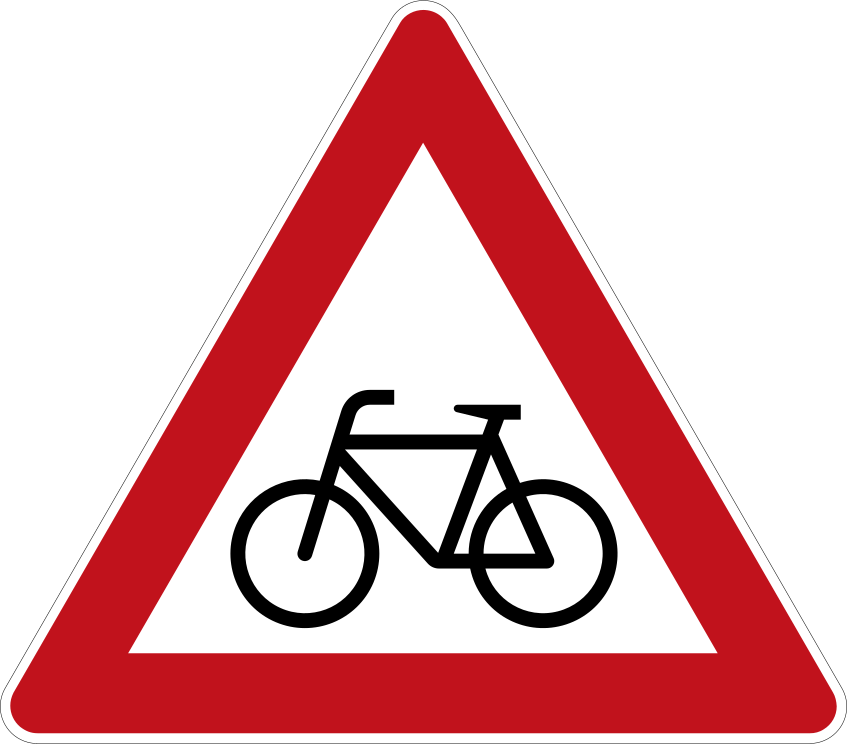
Cyclists
France has a strong cycling culture especially in rural areas — maintain at least 1m in urban areas and 1.5m outside built-up areas when overtaking
Agricultural Machinery
Slow-moving tractors and farm equipment on secondary roads, especially in rural regions — limited visibility around bends

Tourist Congestion
Severe congestion during summer holidays (grands départs) on major routes, particularly the A6, A7, and A10 autoroutes
- 1Auvergne-Rhône-AlpesLyonMetropolitan8.1M
- 2Bourgogne-Franche-ComtéDijonMetropolitan2.8M
- 3BretagneRennesMetropolitan3.4M
- 4Centre-Val de LoireOrléansMetropolitan2.6M
- 5CorseAjaccioMetropolitan0.3M
- 6Grand EstStrasbourgMetropolitan5.6M
- 7Hauts-de-FranceLilleMetropolitan6.0M
- 8Île-de-FranceParisMetropolitan12.3M
- 9NormandieRouenMetropolitan3.3M
- 10Nouvelle-AquitaineBordeauxMetropolitan6.0M
- 11OccitanieToulouseMetropolitan5.9M
- 12Pays de la LoireNantesMetropolitan3.8M
- 13Provence-Alpes-Côte d'AzurMarseilleMetropolitan5.1M
- 14GuadeloupeBasse-TerreOverseas0.4M
- 15GuyaneCayenneOverseas0.3M
- 16La RéunionSaint-DenisOverseas0.9M
- 17MartiniqueFort-de-FranceOverseas0.4M
- 18MayotteMamoudzouOverseas0.3M
While driving laws are national (Code de la route), some speed limit variations exist — certain départements have restored the 90 km/h limit on secondary roads since 2019. Licence issuance is handled centrally by ANTS.
Myth: Priorité à droite applies everywhere, including roundabouts
Fact: Priorité à droite only applies at unmarked junctions without signs or road markings. Modern roundabouts (ronds-points with 'Cédez le passage' signs) give priority to vehicles already in the roundabout. However, some old-style rond-points (notably Place de l'Étoile in Paris) still use priorité à droite — vehicles entering have priority.
Myth: French motorways are free to use
Fact: Nearly all French autoroutes are tolled (péage), operated by private companies (Vinci, Sanef, APRR). A Paris-to-Lyon journey costs approximately €35 in tolls. Only some urban motorways and a few sections in Brittany and parts of northern France are toll-free.
Myth: You must carry a breathalyzer (éthylotest) in your car
Fact: While a 2012 law technically requires carrying an unused breathalyzer, the penalty clause was never implemented. There is no fine for not having one. The law remains on the books but is universally considered unenforced and unenforceable.
Myth: Crit'Air vignettes are only needed in Paris
Fact: As of 2025, 43 French cities have established ZFE (Zones à Faibles Émissions) requiring Crit'Air vignettes. Major cities include Lyon, Marseille, Toulouse, Strasbourg, Grenoble, Nice, and many others. The list continues to grow.
Myth: Turning right on a red light is allowed in France
Fact: Right on red is never permitted in France. Running a red light carries a €135 fine and 4 points. Some junctions have a flashing amber arrow allowing right turns, but this is a separate signal — not the same as turning on red.
Myth: Roundabouts always use priorité à droite
Fact: Modern roundabouts (ronds-points) give priority to vehicles already circulating — entering vehicles must yield ('Cédez le passage'). This is the standard for the vast majority of French roundabouts. Only a few old-style rond-points (carrefours à sens giratoire without yield signs) still use priorité à droite for entering traffic.
Speeding 50+ km/h becomes criminal offence
Since December 2025, exceeding the speed limit by 50 km/h or more is classified as a délit routier (criminal road traffic offence), not just a contravention. 43 cities now have ZFE zones. AI-powered cameras being deployed for phone use and seatbelt detection.
Permis B age lowered to 17
Since January 2024, the minimum age for the permis B (car licence) was lowered from 18 to 17 years. Motorcycles now require a contrôle technique. Speeding under 5 km/h over no longer costs points.
Phone retention power for police
Police can now retain a driver's vehicle immediately when caught using a handheld phone while driving, in addition to the €135 fine and 3-point deduction.
Départements can restore 90 km/h
Following the controversial 2018 reduction to 80 km/h on secondary roads, départements were given the option to restore the 90 km/h limit on selected roads after conducting a safety study.
80 km/h on secondary roads
Speed limit on two-lane secondary roads (without a central reservation) was reduced from 90 km/h to 80 km/h nationwide. This controversial measure was credited with saving an estimated 349 lives in its first year.
How France Compares Globally
France's driving regulations compared to other major countries — data compiled from official government sources
StrictestIn betweenMost lenientBAC limit and minimum age
| Parameter | France | Germany | Spain | UK | USA |
|---|---|---|---|---|---|
| BAC Limit | 0.05% | 0.05% | 0.05% | 0.08% | 0.08% |
| Min. Age (Car) | 17 | 18 | 18 | 17 | 16 |
| Driving Side | Right | Right | Right | Left | Right |
| Highway Speed | 130 km/h | No limit* | 120 km/h | 112 km/h | 120 km/h |
| Test Questions | 40 | 30 | 30 | 50 | 20–50 |
| Licence Cost | €1,500–2,000 | €2,000–3,500 | €700–1,200 | £1,000–1,500 | $30–90 |
| Road Deaths/yr | 3,398 | 2,770 | 1,790 | 1,695 | 40,990 |
| Deaths/100K | ~4.9 | ~3.4 | ~3.8 | ~2.5 | ~12.2 |
BAC Limit
France: 0.05%Germany: 0.05%Spain: 0.05%UK: 0.08%USA: 0.08%Min. Age (Car)
France: 17Germany: 18Spain: 18UK: 17USA: 16Driving Side
France: RightGermany: RightSpain: RightUK: LeftUSA: RightHighway Speed
France: 130 km/hGermany: No limit*Spain: 120 km/hUK: 112 km/hUSA: 120 km/hTest Questions
France: 40Germany: 30Spain: 30UK: 50USA: 20–50Licence Cost
France: €1,500–2,000Germany: €2,000–3,500Spain: €700–1,200UK: £1,000–1,500USA: $30–90Road Deaths/yr
France: 3,398Germany: 2,770Spain: 1,790UK: 1,695USA: 40,990Deaths/100K
France: ~4.9Germany: ~3.4Spain: ~3.8UK: ~2.5USA: ~12.2
France
Same as Germany (0.05%) and Spain (0.05%). Stricter than USA/UK (0.08%). Novice drivers: 0.02%.
Lowered from 18 to 17 in January 2024. Same as UK (17). USA allows from 16, Germany from 18 (17 with BF17).
Standard autoroute limit. Reduced to 110 in rain and for novice drivers. Germany has no general Autobahn limit.
Moderate by European standards. Germany costs €2,000–3,500. USA costs $30–90. UK costs £1,000–1,500.
~4.9 per 100K. Higher than Germany (3.4) and UK (2.5), similar to Spain (3.8). USA is 2.5x worse at 12.2/100K.
Road deaths: France 3,260 (ONISR 2025), Germany 2,814 (Destatis 2025), Spain 1,785 (DGT 2024), UK 1,695 (DfT 2023), USA 40,990 (NHTSA 2023). BAC limits: France/Germany/Spain 0.05%, UK 0.08% (England/Wales; Scotland 0.05%), USA 0.08%.
Primary Sources
Verification Methodology
Every fact on this page has been cross-referenced against at least two authoritative sources. Our process:
- 1Primary data collected from official French legislation (Légifrance) and government portals
- 2Cross-verified against ONISR publications, Sécurité Routière data, and ANTS regulations
- 3Regional variations noted where applicable (auto-école costs, 80/90 km/h variations by département)
- 4Page reviewed and fact-checked on April 12, 2026
If you find an error, please contact us so we can correct it immediately.
Frequently Asked Questions
How much does a driving licence cost in France?
The total cost for a permis B (car licence) is typically €1,500–€2,000. This includes: auto-école enrolment €150–300, theory preparation €20–300, ETG exam €30, a minimum of 20 hours of practical lessons €900–1,575, licence issuance via ANTS €25, and ID photos €5–10. Costs vary significantly by region, with Paris being the most expensive.
What is the Code de la route exam format?
The épreuve théorique générale (ETG), commonly called the Code de la route exam, is a multiple-choice paper of 40 questions; you need at least 35 correct answers (87.5%) to pass. No official text sets an overall time limit for the exam. It is a State exam — the Sécurité routière (ministère de l'Intérieur) owns the questions and the marking — but the sessions are run by approved private operators (La Poste, SGS, Bureau Veritas, Pearson VUE, Dekra), who charge €30, due again at every attempt. The result is valid for 5 years.
What are the speed limits in France?
Autoroute: 130 km/h (110 in rain, 110 for novice drivers). Dual carriageway: 110 km/h (100 in rain, 100 novice). Secondary roads: 80 km/h (some départements have restored 90). Urban: 50 km/h. Zone 30: 30 km/h. Zone de rencontre: 20 km/h. In fog with visibility under 50m, the limit is 50 km/h on all roads.
What is the BAC (blood alcohol) limit in France?
The general limit is 0.5 g/L (0.05% BAC). For novice drivers (permis probatoire, first 3 years) and professional drivers, the limit is 0.2 g/L. Between 0.5–0.8 g/L: €135 fine + 6 points. Above 0.8 g/L: criminal offence with up to €4,500 fine, 6 points, licence suspension, and possible imprisonment.
What is the permis probatoire?
All new licence holders enter a probationary period (permis probatoire): 3 years normally, or 2 years if you completed conduite accompagnée (AAC). You start with 6 points (out of 12) and gain 2 per clean year (3 with AAC). Taking the optional 7-hour formation complémentaire between the 6th and 12th month shortens the probation to 2 years, or 1 year and 6 months after AAC. During this period, lower speed limits apply and the BAC limit is 0.2 g/L. Losing 3+ points in the first year requires a mandatory awareness course.
How does the permis à points system work?
France uses a 12-point licence system. New drivers start with 6 points and build up to 12 over 3 years (2 with AAC). Points are deducted for offences — the more serious the offence, the more points lost (1–6 per offence, max 8 per incident). Losing all points invalidates the licence. You can recover up to 4 points by attending a voluntary awareness course (once per year, €200–250). Points are automatically restored after 2–3 offence-free years.
What is conduite accompagnée (AAC)?
Conduite accompagnée (Apprentissage Anticipé de la Conduite) allows young people to start learning to drive from age 15. After completing initial auto-école training (20h minimum), the learner drives with an accompanying person (at least 5 years' licence, no serious offences) for at least 1 year and 3,000 km. Benefits: can take the practical test at 17, shorter probationary period (2 years instead of 3), and statistically lower accident rates.
Do I need a Crit'Air vignette?
If you plan to drive in any of France's 43 ZFE (Zones à Faibles Émissions) cities — including Paris, Lyon, Marseille, Toulouse, Strasbourg, and many others — you need a Crit'Air vignette. It costs €3.72 and classifies your vehicle by emissions (0 to 5, plus unclassified). Order it from certificat-air.gouv.fr. Driving in a ZFE without the correct vignette: €68 fine.
Are French motorways tolled?
Nearly all French autoroutes are tolled (péage), operated by private companies (Vinci Autoroutes, Sanef, APRR). You can pay by cash, card, or electronic tag (télépéage). A Paris–Lyon journey costs approximately €35, Paris–Marseille approximately €55. Some urban motorways and sections in Brittany are toll-free. The toll network covers about 9,000 km.
What equipment must I carry in my car in France?
Mandatory items: a reflective vest (gilet jaune) accessible from inside the vehicle and a warning triangle (triangle de signalisation). Fine: €135 if missing. While an éthylotest (breathalyzer) was technically made mandatory in 2012, there is no fine for not carrying one — the penalty clause was never enforced. Recommended but not mandatory: first aid kit, fire extinguisher, spare bulbs.
Can I drive in France with a foreign licence?
EU/EEA licences are valid indefinitely in France. Non-EU visitors can drive with their licence plus an International Driving Permit (IDP) for up to 1 year. After establishing residency, you generally have 1 year to exchange your licence. Some countries have bilateral agreements allowing direct exchange; others require passing the French theory and/or practical tests.
What is the contrôle technique?
The contrôle technique is a mandatory vehicle inspection. For private cars: first inspection at 4 years, then every 2 years. The inspector checks 133 points covering brakes, steering, lights, emissions, and safety. Vehicles failing critical items (défaillances critiques) cannot be driven until repaired. Since 2024, motorcycles and scooters over 125cc also require a contrôle technique. Cost: approximately €70–90.
What happens if I lose all my points?
If your permis à points reaches 0 points, your licence is invalidated. You must surrender it within 10 days. You must wait 6 months before reapplying (1 year for repeat offenders). You must pass a medical and psychological examination, pass the Code de la route (ETG) again, and for those who held their licence less than 3 years, also retake the practical test.
How do early payment discounts work for fines?
Most traffic fines (amendes forfaitaires) offer three tiers: minorée (reduced, pay within 15 days or 30 days online — 33% discount), forfaitaire (standard amount, pay within 45 days), and majorée (increased, after 45 days — typically 2.5x the standard). For example, a €135 forfaitaire fine becomes €90 if paid early or €375 if paid late.
Is the minimum driving age really 17 now?
Yes, since January 2024, the minimum age to obtain the permis B and drive solo was lowered from 18 to 17. With conduite accompagnée (AAC), supervised driving can begin from age 15. This change aligns France with several other European countries including the UK (17) and Germany (17 with BF17).
Cite This Page
Use the following citations when referencing this article in academic papers, journalism, or reports.
APA 7th Edition
AutoviaTest. (2026, March 23). France driving licence facts 2026 — Code de la route, auto-école, fees & speed limits. https://autoviatest.com/en/driving-test/france/facts
MLA 9th Edition
AutoviaTest. "France Driving Licence Facts 2026 — Code de la Route, Auto-école, Fees & Speed Limits." AutoviaTest, 23 Mar. 2026, autoviatest.com/en/driving-test/france/facts.
Chicago 17th Edition
AutoviaTest. "France Driving Licence Facts 2026 — Code de la Route, Auto-école, Fees & Speed Limits." Last modified March 23, 2026. https://autoviatest.com/en/driving-test/france/facts.
Ready to Pass Your French Theory Test?
Practice with 1,000+ official-style Code de la route questions and detailed explanations. Available in 24 languages.