
 Complete guide 2026Updated September 2026
UK Driving Licence 2026 The Complete Guide
Everything you need to know about getting your driving licence in the United Kingdom — DVSA theory test format (50 MCQ + hazard perception, 57 minutes), practical test, provisional licence, penalty points, BAC limits, speed limits in mph, and driving across England, Scotland, Wales & Northern Ireland.
Table of Contents
Theory Test
50 multiple-choice questions (57 minutes total) plus a hazard perception test with 14 video clips.
Pass marks: 43/50 for MCQ and 44/75 for hazard perception. Computer-based test at DVSA-approved centres across the UK. Fee: £23.
Official Fees
Provisional licence £34 (online), theory test £23, practical test £62 on weekdays (£75 evenings, weekends and bank holidays).
Official fees for a first-time pass: £119. Driving lessons are the main extra cost, and prices vary by instructor and region.
Road Safety
1,602 reported road deaths in Great Britain in 2024 (1,624 in 2023), or 24 per million people (about 2.4 per 100,000).
Great Britain ranked 4th of 36 countries with data for the lowest road death rate. Seatbelt laws, drink-drive enforcement, speed cameras, and the MOT system all contribute.
BAC Limits
England, Wales & Northern Ireland: 0.08% BAC (80 mg per 100 ml blood).
Scotland: 0.05% BAC (50 mg per 100 ml blood) since December 2014. Penalties include unlimited fines, driving bans of at least 12 months, and up to 6 months in prison.
Penalty Points
The UK uses an additive endorsement system.
Accumulate 12 or more points within 3 years and face a minimum 6-month disqualification. New drivers (first 2 years after passing) have their licence revoked at just 6 points and must retake both theory and practical tests.
Global Context
Great Britain's road death rate (about 2.4 per 100,000 in 2024) is among the lowest in the world, comparable to Sweden and Norway.
The theory test (50 questions + hazard perception) is more rigorous than most countries.
Great Britain Road Safety: 3-Year Trend (2022–2024)
Great Britain consistently ranks among the safest countries for road users. Reported road deaths fell from 1,711 in 2022 to 1,624 in 2023 and 1,602 in 2024. These figures cover Great Britain; Northern Ireland publishes its own road casualty statistics.
Year-over-year changes
Deaths per 100,000 Population
 USA12.2
 France4.6
 Spain3.8
 Germany3.4
- UK2.4
Source: Department for Transport, Reported Road Casualties Great Britain annual reports 2022–2024. Other countries: WHO Global Status Report on Road Safety, Eurostat. Per-capita rates are estimates and may vary by methodology.
UK Theory Test Format
Computer-based test administered at DVSA-approved theory test centres across the United Kingdom
The UK driving theory test consists of two parts taken in a single session. Part 1 is a multiple-choice section with 50 questions to be completed in 57 minutes — you must score at least 43 out of 50 to pass. Part 2 is the hazard perception test: 14 one-minute video clips filmed from a driver's perspective, where you must identify developing hazards by clicking the screen. The hazard perception pass mark is 44 out of 75. You must pass both parts in the same sitting. The test is taken in English or Welsh. You can ask for an English or Welsh voiceover, or British Sign Language (BSL). Foreign-language voiceovers and interpreters ended on 7 April 2014. Questions cover the Highway Code, road signs, vehicle safety, and driving theory. The theory test certificate is valid for 2 years — you must pass the practical test within this period or retake the theory.
Questions
Duration
Pass Mark
Test Fee
What the Theory Test Covers
- Road signs, signals & road markings
- Roundabout rules & right-of-way
- Speed limits by road type
- Pedestrian crossings (zebra, pelican, puffin, toucan, pegasus)
- Lane discipline & motorway rules
- Vehicle maintenance & MOT requirements
- Braking distances & stopping distances
- Tyre tread depth & pressure
- Driving in adverse conditions (fog, ice, rain)
- Loading & towing regulations
- Hazard perception & anticipation
- Vulnerable road users (cyclists, motorcyclists, pedestrians)
- Drink-driving & drug-driving laws
- Mobile phone use & distractions
- Environmental impact & eco-safe driving
How to Get Your UK Driving Licence
From provisional licence to full licence — the complete process
- 1
Apply for a Provisional Licence
Apply online at GOV.UK or by post (form D1)
Must be at least 15 years and 9 months old to apply, but cannot drive a car on public roads until 17. Cost: £34 online, £43 by post. Need National Insurance number and passport.
- 2
Study the Highway Code
Learn the rules of the road, road signs, and driving theory
The official Highway Code is available free online at GOV.UK. Use DVSA-approved revision materials and practice tests to prepare for the theory exam.
- 3
Pass the Theory Test
Take the computer-based theory test at a DVSA-approved centre
50 multiple-choice questions (43/50 to pass) plus hazard perception (44/75 to pass). Fee: £23. Valid for 2 years.
- 4
Take Driving Lessons
Learn to drive with an approved driving instructor (ADI)
Most learners need 40–60 hours of professional lessons; prices vary by instructor and region. You can also practise with a friend or family member aged 21+ who has held a full licence for 3+ years. L plates must be displayed.
- 5
Pass the Practical Driving Test
Demonstrate safe driving skills to a DVSA examiner
Approximately 40 minutes. Includes an eyesight check, 'show me/tell me' vehicle safety questions, general driving, one reversing manoeuvre, and around 20 to 35 minutes of independent driving, following a sat nav, traffic signs, or both. The examiner sets up the sat nav; you cannot use your own. Fee: £62 (weekday), £75 (evenings/weekends).
- 6
Receive Your Full Licence
Your full licence is issued automatically after passing
DVLA sends your photocard licence by post within 3 weeks. You are now a new driver — subject to the 6-point rule for the first 2 years. Photocard renewal every 10 years (£14 online).
UK Driving Licence Fees
Government fees are modest — the main expense is professional driving lessons
| Fee | Amount |
|---|---|
| Provisional licence (online) | £34 |
| Provisional licence (by post) | £43 |
| Theory test | £23 |
| Practical test (weekday) | £62 |
| Practical test (evening/weekend/bank holiday) | £75 |
| Driving lessons (40–60 hours typical) | Varies by instructor |
| Photocard renewal (every 10 years) | £14 |
| Official fees (online licence + theory + weekday practical) | £119 |
Government test fees are set by DVSA. Driving lesson costs vary significantly by region — London and the South East tend to be the most expensive. Instructor quality matters more than price. Retake fees apply for failed attempts.
See how ready you are — practice with real exam questions
Try Free QuestionsMinimum age by licence category
- AM — Mopeds up to 50cc, max 45 km/h16years
- A1 — Light motorcycles up to 125cc11 kW power limit17years
- A2 — Motorcycles up to 35 kW19years
- A — Any motorcycle (unrestricted)Direct access from 24, or 2 yrs on A224years
- B — Cars up to 3,500 kg, max 8 passengersStandard car licence17years
- C1 — Medium vehicles 3,500–7,500 kgRequires medical18years
- C — Large goods vehicles over 3,500 kgHGV licence21years
- D1 — Minibuses 9–16 passengers21years
- D — Buses over 16 passengersPCV licence21years
Licence Validity Periods
| Licence / age | Validity |
|---|---|
| Photocard LicencePhoto renewal — driving entitlement continues | 10 years |
| Driving Entitlement (Car)Then renew every 3 years (free) | Until age 70 |
| HGV / PCV (C / D)Medical required for renewal | 5 years |
| Provisional LicencePhoto renewal required | 10 years |
Penalty Points (Endorsement System)
- 12 points within 3 years = minimum 6-month disqualification
- New drivers (first 2 years): licence revoked at just 6 points
- Points stay on licence for 4 or 11 years depending on offence
- Speeding: 3–6 points. Drink-driving: 3–11 points + ban
- Using a mobile phone while driving: 6 points + £200 fine
New Driver Rules (First 2 Years)
- Licence revoked at 6 points (not 12) — must retake both tests
- Learners may drive on motorways only with an approved driving instructor (ADI) in a car with dual controls (Highway Code rule 253). Once you pass, there is no motorway restriction.
- L plates required while learning (D plates in Wales optional)
- N plates in Northern Ireland only — R plates for restricted drivers
- 72 km/h (45 mph) speed restriction in Northern Ireland for first year
Speed Limits in the UK
All speed limits in miles per hour (mph) — the UK uses mph, not km/h
The UK uses miles per hour for all road speed limits. Built-up areas (towns and cities) have a default limit of 30 mph, often reduced to 20 mph in residential zones. Single carriageway roads outside built-up areas are 60 mph (national speed limit). Dual carriageways and motorways have a 70 mph limit. These are default limits — lower limits may be posted. Speed cameras are widespread and strictly enforced. The minimum penalty for speeding is a £100 fine and 3 penalty points. Speed awareness courses may be offered as an alternative for minor offences. Variable speed limits apply on smart motorways.
| Road Type | Cars & Motorcycles | Vans / Car-derived | HGVs >7.5t | Note |
|---|---|---|---|---|
| Built-up areas | 30 | 30 | 30 | 20 mph zones increasingly common |
| Single carriageway | 60 | 50 | 50 | National speed limit applies |
| Dual carriageway | 70 | 60 | 60 | Physical central reservation |
| Motorway | 70 | 70 | 60 | Variable limits on smart motorways |
Built-up areas
Cars & Motorcycles: 30Vans / Car-derived: 30HGVs >7.5t: 3020 mph zones increasingly common
Single carriageway
Cars & Motorcycles: 60Vans / Car-derived: 50HGVs >7.5t: 50National speed limit applies
Dual carriageway
Cars & Motorcycles: 70Vans / Car-derived: 60HGVs >7.5t: 60Physical central reservation
Motorway
Cars & Motorcycles: 70Vans / Car-derived: 70HGVs >7.5t: 60Variable limits on smart motorways
These are default speed limits. Lower limits may be signed. The national speed limit sign (white circle with diagonal black line) means 60 mph on single carriageways and 70 mph on dual carriageways/motorways. 20 mph zones are widespread in residential areas. Speed cameras are common and strictly enforced.
Driving Offences & Penalties
UK penalty points, fines, and driving bans for common offences
The UK uses an additive endorsement (penalty points) system. Points are added to your licence for driving offences and stay for 4 or 11 years depending on severity. Accumulating 12 or more points within 3 years results in a minimum 6-month disqualification. New drivers face licence revocation at just 6 points in their first 2 years. Fines range from £100 fixed penalties to unlimited fines for serious offences. Some offences carry mandatory disqualification (drink-driving, dangerous driving). Courts can impose prison sentences for the most serious driving offences.
Up to £200£201–£500Over £500 or unlimited
| Offence | Fine | Points | Ban |
|---|---|---|---|
| Speeding | £100+ | 3–6 pt | Possible |
| Using mobile phone | £200 | 6 pt | Possible |
| Drink-driving (over limit) | Unlimited | 3–11 pt | Min. 12 months |
| Drug-driving | Unlimited | 3–11 pt | Min. 12 months |
| Running a red light | £100 | 3 pt | Possible |
| No insurance | Unlimited | 6–8 pt | Possible |
| Dangerous driving | Unlimited | 3–11 pt | Min. 12 months |
| Driving without a licence | £1,000 | 3–6 pt | Possible |
| No MOT | £1,000 | — | — |
| No seatbelt (driver) | Up to £500 | — | — |
| Causing death by dangerous driving | Unlimited | 3–11 pt | Min. 2 years |
| Failing to stop after accident | Unlimited | 5–10 pt | Possible |
- £100+Possible
Speeding
3–6 pt - £200Possible
Using mobile phone
6 pt - UnlimitedMin. 12 months
Drink-driving (over limit)
3–11 pt - UnlimitedMin. 12 months
Drug-driving
3–11 pt - £100Possible
Running a red light
3 pt - UnlimitedPossible
No insurance
6–8 pt - UnlimitedMin. 12 months
Dangerous driving
3–11 pt - £1,000Possible
Driving without a licence
3–6 pt - £1,000
No MOT
- Up to £500
No seatbelt (driver)
- UnlimitedMin. 2 years
Causing death by dangerous driving
3–11 pt - UnlimitedPossible
Failing to stop after accident
5–10 pt
Fines and points shown are typical ranges. Courts have discretion. Fixed penalties are £100/3 points for many offences. Serious offences carry unlimited fines and prison. Drink-drive ban is minimum 12 months (3 years for second offence within 10 years). Source: Sentencing Council, CPS.
Know These Rules Before Your Theory Test
Penalty points, speed limits, and the Highway Code are heavily tested. Practice with real exam-style questions.
How the road worksMandatory, with a penaltyMakes it easier
Drive on the Left
The UK drives on the left side of the road.
Overtake on the right. Roundabouts flow clockwise. This applies across England, Scotland, Wales, and Northern Ireland.
Drink-Drive Limits
England, Wales & NI: 80 mg alcohol per 100 ml blood (0.08% BAC).
Scotland: 50 mg per 100 ml blood (0.05% BAC). Penalties include unlimited fines, minimum 12-month driving ban, and up to 6 months in prison. The safest approach is zero alcohol when driving.
Seatbelts Mandatory
Seatbelts must be worn by all occupants (front and rear) where fitted.
Driver responsible for passengers under 14. Children must use appropriate car seats until 12 years old or 135 cm tall. Fine: up to £500.
MOT Test Required
All vehicles over 3 years old must pass an annual MOT (Ministry of Transport) test.
Covers roadworthiness: brakes, lights, tyres, emissions, steering, suspension. Driving without a valid MOT is an offence (fine up to £1,000). MOT history is publicly searchable.
Mobile Phones Prohibited
It is illegal to use a handheld mobile phone while driving, including at traffic lights or in a queue.
Penalty: 6 points + £200 fine. Hands-free is permitted but can still lead to prosecution for careless driving. New drivers risk losing their licence.
Compulsory Insurance
All vehicles used on public roads must have at least third-party motor insurance.
Driving without insurance: 6–8 penalty points, unlimited fine, possible vehicle seizure. Police use automatic number plate recognition (ANPR) to detect uninsured vehicles.
Congestion & Emission Zones
London Congestion Charge (£18/day), ULEZ (£12.50/day for non-compliant vehicles), and Clean Air Zones in Birmingham, Bath, Bristol, and other cities.
Charges apply to older, more polluting vehicles. Check compliance before driving in these areas.
Child Car Seats
Children must use an appropriate child car seat until they are 12 years old or 135 cm tall, whichever comes first.
Rear-facing seats for babies, forward-facing for toddlers, booster seats for older children. Very few exemptions (e.g., unexpected emergency in a taxi).
Smart Motorway Rules
Smart motorways use technology to manage traffic flow.
Variable speed limits displayed on overhead gantries are legally enforceable. Red X means lane closed — you must not drive in it. Emergency refuge areas replace hard shoulders on some sections. Fines: £100 + 3 points for ignoring a red X.
Common Road Hazards in the UK
1,602 reported road deaths in Great Britain in 2024 — know these hazards to stay safe on UK roads

Roundabouts
The UK has more roundabouts than almost any other country. Multi-lane roundabouts require careful lane selection. Check mirrors, signal, and give way to traffic from the right.
Wet & Icy Conditions
Rain, ice, and fog are common year-round. Stopping distances can double in wet conditions and multiply tenfold on ice. Black ice is particularly dangerous on country roads.
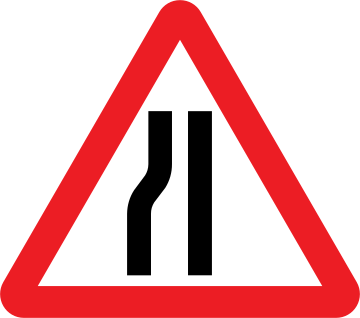
Narrow Country Roads
Single-track roads with passing places are common in rural Scotland, Wales, and parts of England. Limited visibility around bends and hedgerows. Speed limits may be 60 mph but safe speed is often much lower.
Cyclists & Vulnerable Road Users
Cycle lanes are expanding in cities. The Highway Code hierarchy of road users prioritises pedestrians and cyclists. Leave at least 1.5 metres when passing cyclists at speeds up to 30 mph.
Smart Motorway Hazards
Some smart motorways lack a permanent hard shoulder. Breakdowns in live lanes are dangerous. Use emergency refuge areas. Red X lane closures are legally enforced.
Sun Glare
Low sun in autumn and winter causes significant glare, especially during morning and evening commutes. Keep windscreen clean, use sun visor, and slow down when visibility is impaired.
The UK's Four Nations
Driving licences are valid across all four nations, but some rules differ — notably Scotland's lower BAC limit and Northern Ireland's restricted driver rules
- 1EnglandLondon56.5M
- 2ScotlandEdinburgh5.5M
- 3WalesCardiff3.1M
- 4Northern IrelandBelfast1.9M
The UK driving licence is issued by DVLA (Swansea) for GB and DVA (Coleraine) for Northern Ireland. A licence from one nation is valid across all four. Theory and practical tests follow the same format throughout the UK, but some local rules differ.
Myth: You can use your phone at a red light or in slow traffic
Fact: It is illegal to use a handheld phone at any time while your engine is running, including at traffic lights, in a queue, or in slow-moving traffic. The penalty is 6 points and a £200 fine. For new drivers, this alone can mean losing your licence.
Myth: The speed limit on all motorways is always 70 mph
Fact: While the national speed limit on motorways is 70 mph, smart motorways frequently display variable mandatory speed limits (40–60 mph) on overhead gantries. These are legally enforced by cameras. Temporary limits in roadworks are also common.
Myth: You do not need an MOT if you rarely drive the car
Fact: Any vehicle driven or parked on a public road must have a valid MOT (if over 3 years old). The only exceptions are driving to a pre-booked MOT test or to a garage for repairs required to pass the MOT. SORN (Statutory Off Road Notification) is required if keeping a vehicle off-road.
Myth: You can drink one pint and still be under the limit
Fact: There is no reliable way to calculate how much you can drink and stay under the limit. Alcohol affects people differently based on weight, metabolism, food intake, and many other factors. The only safe advice is to not drink at all if you are driving.
Myth: Driving on the hard shoulder is always illegal
Fact: On smart motorways that operate as 'All Lane Running' (ALR), the former hard shoulder becomes a regular traffic lane during busy periods. However, when a red X is displayed above the lane, it is closed and driving in it is illegal (fine + 3 points, or prosecution).
Myth: Foreign licence holders can drive in the UK indefinitely
Fact: It depends where your licence is from. EU and EEA licences can be used until you are 70 (or for 3 years if you are 67 or over when you become resident), then exchanged without a test. Licences from 23 designated countries can be used for 12 months and exchanged for a GB licence without a test, within 5 years of becoming resident: Andorra, Australia, Barbados, British Virgin Islands, Canada, Cayman Islands, Falkland Islands, Faroe Islands, Gibraltar, Hong Kong, Japan, Monaco, New Zealand, Republic of Korea, Republic of Moldova, Republic of North Macedonia, Singapore, South Africa, Switzerland, Taiwan, Ukraine, United Arab Emirates, Zimbabwe. All other licences can be used for 12 months; after that you must pass the theory and practical tests. Source: GOV.UK, exchange a non-GB driving licence.
Graduated Driving Licence proposals under review
The government is reviewing proposals for a graduated licensing scheme for new drivers, potentially including restrictions on night driving and carrying young passengers in the first year.
Expanded Clean Air Zones
Additional cities implementing or expanding Clean Air Zones with charges for older, more polluting vehicles. Check GOV.UK for the latest zone boundaries and compliance requirements.
Smart motorway safety review
Government paused new smart motorway construction pending safety review. Existing smart motorways retained. Additional emergency refuge areas being retrofitted on All Lane Running sections.
Highway Code hierarchy of road users
Major Highway Code update in January 2022 introduced a hierarchy of road users prioritising pedestrians and cyclists. New rules on passing cyclists (1.5m gap) and junction priority for pedestrians crossing.
London ULEZ expansion
London's Ultra Low Emission Zone expanded to cover all areas within the North and South Circular roads in October 2021, then expanded London-wide in August 2023. £12.50/day charge for non-compliant vehicles.
Mobile phone penalties doubled
Penalties for using a handheld mobile phone while driving doubled from 3 points/£100 fine to 6 points/£200 fine. New drivers caught once can have their licence revoked under the 6-point new driver rule.
How the UK Compares Globally
UK driving regulations compared to other countries — data compiled from official government sources
StrictestIn betweenMost lenientBAC limit and minimum age
| Parameter | UK | Germany | France | Spain | USA |
|---|---|---|---|---|---|
| BAC Limit | 0.08% | 0.05% | 0.05% | 0.05% | 0.08% |
| Min. Age (Car) | 17 | 17 | 15* | 18 | 16 |
| Driving Side | Left | Right | Right | Right | Right |
| Motorway Speed | 70 mph (113 km/h) | No limit* | 130 km/h | 120 km/h | Varies |
| Test Questions | 50+HP | 30 | 40 | 30 | 20–50 |
| Licence Cost | £119 + lessons | €2K–€3.5K | €1.5K–€2K | €700–€1.2K | $30–90 |
| Road Deaths/yr | 1,602 | 2,839 | 3,170 | 1,790 | 40,901 |
| Deaths/100K | 2.4 | 3.4 | 4.6 | 3.8 | 12.2 |
BAC Limit
UK: 0.08%Germany: 0.05%France: 0.05%Spain: 0.05%USA: 0.08%Min. Age (Car)
UK: 17Germany: 17France: 15*Spain: 18USA: 16Driving Side
UK: LeftGermany: RightFrance: RightSpain: RightUSA: RightMotorway Speed
UK: 70 mph (113 km/h)Germany: No limit*France: 130 km/hSpain: 120 km/hUSA: VariesTest Questions
UK: 50+HPGermany: 30France: 40Spain: 30USA: 20–50Licence Cost
UK: £119 + lessonsGermany: €2K–€3.5KFrance: €1.5K–€2KSpain: €700–€1.2KUSA: $30–90Road Deaths/yr
UK: 1,602Germany: 2,839France: 3,170Spain: 1,790USA: 40,901Deaths/100K
UK: 2.4Germany: 3.4France: 4.6Spain: 3.8USA: 12.2
UK
England/Wales/NI 0.08%, Scotland 0.05%. Germany 0.05%, France 0.05%, Spain 0.05%, USA 0.08%.
Higher than USA (16) but same as Germany. France allows accompanied driving from 15.
Germany has no general limit on autobahn. France 130 km/h, Spain 120 km/h, USA varies by state.
Official fees only; lessons are extra and vary by instructor and region. Germany is the most expensive (€2,000–€3,500). USA is cheapest ($30–90).
About 2.4 per 100K — among the safest globally. USA has 12.2, France 4.6, Germany 3.4.
Road deaths: UK column shows Great Britain 1,602 (DfT 2024; 24 per million), Germany 2,839 (Destatis 2023), France 3,170 (ONISR 2023), Spain 1,790 (DGT 2023), USA 40,901 (NHTSA 2023). Per-capita rates: GB ~2.4, Germany 3.4, France 4.6, Spain 3.8, USA 12.2 per 100K. UK licence cost shows official fees only (provisional licence £34 online, theory test £23, weekday practical test £62); lessons are extra. Motorway speed: UK 70 mph, Germany advisory 130 km/h (no formal limit), France 130 km/h, Spain 120 km/h.
Primary Sources
Verification Methodology
Every fact on this page has been cross-referenced against at least two authoritative sources. Our process:
- 1Primary data collected from UK legislation and GOV.UK official guidance
- 2Cross-verified against DVSA publications, Highway Code, and DfT statistics
- 3Regional variations noted where applicable (Scotland BAC, NI restricted drivers)
- 4Page reviewed and fact-checked on March 27, 2026
If you find an error, please contact us so we can correct it immediately.
Frequently Asked Questions
How much does it cost to get a driving licence in the UK?
Official fees for a first-time pass are £119: provisional licence £34 (online), theory test £23 and practical test £62 (weekday; £75 evenings, weekends and bank holidays). Driving lessons are the main extra cost. Most learners need 40–60 hours, and prices vary by instructor and region.
What is the UK theory test format?
The theory test has two parts taken in one session: 50 multiple-choice questions (57 minutes, pass mark 43/50) and a hazard perception test (14 video clips, pass mark 44/75). You must pass both parts. The test costs £23 and is taken at DVSA-approved centres. Certificate valid for 2 years. In 2025–26, 44.8% of theory tests in Great Britain were passed (DVSA).
What is the drink-drive limit in the UK?
England, Wales & Northern Ireland: 80 mg of alcohol per 100 ml of blood (0.08% BAC). Scotland: 50 mg per 100 ml (0.05% BAC) since December 2014. Penalties: minimum 12-month driving ban, unlimited fine, up to 6 months in prison, criminal record.
What are the speed limits in the UK?
Built-up areas: 30 mph (20 mph zones common). Single carriageway: 60 mph (national speed limit). Dual carriageway: 70 mph. Motorway: 70 mph. All speeds in miles per hour. Lower limits for vans and HGVs. Smart motorway variable limits are legally enforced.
What are the emergency numbers in the UK?
999 — Primary emergency number (police, fire, ambulance). 112 — European emergency number (also works in UK). 111 — NHS non-emergency health advice. 101 — Police non-emergency. All free to call, available 24/7.
Can I drive in the UK with a foreign licence?
It depends where your licence is from. EU and EEA licences can be used until you are 70 (or for 3 years if you are 67 or over when you become resident), then exchanged without a test. Licences from 23 designated countries can be used for 12 months and exchanged for a GB licence without a test, within 5 years of becoming resident: Andorra, Australia, Barbados, British Virgin Islands, Canada, Cayman Islands, Falkland Islands, Faroe Islands, Gibraltar, Hong Kong, Japan, Monaco, New Zealand, Republic of Korea, Republic of Moldova, Republic of North Macedonia, Singapore, South Africa, Switzerland, Taiwan, Ukraine, United Arab Emirates, Zimbabwe. All other licences can be used for 12 months; after that you must pass the theory and practical tests. Source: GOV.UK, exchange a non-GB driving licence.
What is the penalty points system?
The UK uses additive endorsements. Points are added to your licence for offences (3–11 per offence). 12+ points in 3 years = minimum 6-month disqualification. New drivers (first 2 years): licence revoked at 6 points, must retake both tests. Points stay on your licence for 4 or 11 years.
What is an MOT and when do I need one?
MOT (Ministry of Transport test) is an annual vehicle inspection for roadworthiness. Required for all vehicles over 3 years old. Covers brakes, lights, tyres, emissions, steering, suspension, and more. Driving without a valid MOT: fine up to £1,000 and no insurance coverage. History checkable online.
What are L plates and when do I need them?
L plates (red L on white background) must be displayed on the front and rear of the vehicle while a learner driver is driving. In Wales, D plates (red D) can be used instead. L plates must be removed when a qualified driver is driving. In Northern Ireland, R plates (red R) are used by restricted drivers for the first year after passing.
What is the minimum driving age in the UK?
Cars (category B): 17 years. Mopeds (AM): 16 years. Motorcycles (A1): 17 years. Medium motorcycles (A2): 19 years. Unrestricted motorcycles (A): 24 years (or 21 with 2 years on A2). You can apply for a provisional licence from 15 years and 9 months.
What is the Congestion Charge and ULEZ?
The London Congestion Charge is £18/day for driving in central London (Mon–Fri 7am–6pm, Sat–Sun 12pm–6pm). ULEZ (Ultra Low Emission Zone) covers all of Greater London: £12.50/day for non-compliant vehicles. Other cities have Clean Air Zones with varying charges. Check TfL and local council websites.
Do I need a high-visibility vest or warning triangle in the UK?
Unlike many European countries, high-visibility vests and warning triangles are not legally required in the UK. However, they are strongly recommended and included in many car safety kits. If driving to continental Europe, you will need them as they are mandatory in France, Spain, Germany, and most EU countries.
How does the practical driving test work?
The test lasts about 40 minutes. It includes: an eyesight check (reading a number plate at 20 metres), 2 'show me/tell me' vehicle safety questions, general driving in various road and traffic conditions, one reversing manoeuvre, and around 20 to 35 minutes of independent driving, following a sat nav, traffic signs, or both (you cannot use your own sat nav). Fee: £62 weekday, £75 evenings/weekends. In 2025–26, 50.0% of car practical tests in Great Britain were passed — the highest full-year rate since records began in 2007–08 (DVSA).
What happens if I get 6 points as a new driver?
If you accumulate 6 or more points within 2 years of passing your first driving test, your licence is automatically revoked by DVLA. You revert to learner status and must reapply for a provisional licence, then pass both the theory and practical tests again. This is more strict than the 12-point rule for experienced drivers.
Are there different rules in Scotland, Wales, and Northern Ireland?
Yes. Scotland has a lower BAC limit (0.05% vs 0.08%). Northern Ireland has R plates (restricted) and a 45 mph speed restriction on all roads for new drivers in their first year. Wales allows D plates instead of L plates. The theory and practical tests follow the same format across all four nations, and your licence is valid throughout the UK.
Cite This Page
Use the following citations when referencing this article in academic papers, journalism, or reports.
APA 7th Edition
AutoviaTest. (2026, March 27). UK driving licence facts 2026 — theory test, fees, rules & guide. https://autoviatest.com/en/driving-test/uk/facts
MLA 9th Edition
AutoviaTest. "UK Driving Licence Facts 2026 — Theory Test, Fees, Rules & Guide." AutoviaTest, 27 Mar. 2026, autoviatest.com/en/driving-test/uk/facts.
Chicago 17th Edition
AutoviaTest. "UK Driving Licence Facts 2026 — Theory Test, Fees, Rules & Guide." Last modified March 27, 2026. https://autoviatest.com/en/driving-test/uk/facts.
Ready to Pass Your UK Theory Test?
Practice with official DVSA-style theory questions, hazard perception clips, and detailed explanations. Free to start.
More Country Driving Guides
German Driving Licence 2026 — The Complete GuideTUV theory test, Fahrschule costs, autobahn rules, speed limits, traffic fines, and the points system.French Driving Licence 2026 — The Complete GuideCode de la route, auto-école costs, speed limits, traffic fines, and the permis à points system.Spanish Driving Licence 2026 — The Complete GuideDGT theory test, autoescuela costs, speed limits, traffic fines, and the points system.USA Driving Licence 2026 — The Complete GuideDMV written test, driving school costs, speed limits, traffic laws, and state-by-state variations.