
 Complete guide 2026Updated November 2026
Iceland Driving License 2026 The Complete Guide
Iceland driving license guide (2026): the theory test set by Samgöngustofa (50 true/false statements, 90% pass mark), test and license fees, the 0.02% BAC limit (penalties from 0.05%), speed limits, winter tire rules, and highland F-roads.
Table of Contents
Iceland Driving Test Explained, Theory, Cost & Pass Mark 2026
A 2-minute walkthrough of Iceland’s driving license system, which is run by Samgöngustofa.
 Video Guide · 2 min
Key Takeaways
- Iceland's theory test is 50 true/false statements with a 90% pass mark (45 of 50 correct) and a 45-minute limit, available in English, Icelandic, and other languages.
- Mandatory classroom training at an approved ökuskóli is required before you can sit the practical exam.
- Speed limits are 50 km/h urban, 80 km/h on gravel rural roads, 90 km/h on paved rural roads, gravel is a distinct category.
- The alcohol limit is 0.02% BAC; fines and license suspension start at 0.05%.
- Minimum age is 17 for a Class B license, you can start learning with a provisional permit earlier.
Read full transcript
Iceland's driving license system is run by Samgöngustofa, the Icelandic Transport Authority, and uniquely tests skills that no other European country covers: gravel-road handling, midnight sun driving, and single-lane bridge etiquette. Here's the 2-minute breakdown.
0:06 Theory Test Format. Iceland's theory test has 50 true/false statements with a 45-minute time limit, and you need to answer at least 45 correctly to pass, a 90% threshold. It's available in Icelandic, English, Polish, and several other languages. You're tested on both standard European road rules and Iceland-specific hazards like sudden weather, loose gravel, and wildlife on the road.
0:20 Cost of an Icelandic License. Expect to pay roughly 270,000 to 400,000 Icelandic krónur, around €1,800 to €2,700, for your license. That includes mandatory classroom lessons at an approved ökuskóli (driving school), practical driving lessons, the medical check, and Samgöngustofa exam fees. Unlike some countries, there's no shortcut: all lessons at a registered ökuskóli are mandatory.
0:35 Icelandic Speed Limits. Speed limits are 50 km/h in urban areas, 80 km/h on gravel rural roads, and 90 km/h on paved rural roads, Iceland is one of the only countries where gravel is a distinct legal speed category. There are no motorways above 90 km/h anywhere in the country.
0:47 Traffic Fines. Fines are among the steepest in Europe per offense. Speeding 21 to 30 km/h over the limit is around 30,000 krónur. Using a phone while driving is 40,000. No seatbelt is 20,000. The legal limit is 0.02% BAC, and drink-driving from 0.05% BAC triggers automatic minimum 20-day license suspension and fines starting around 100,000 krónur.
1:02 Key Road Rules. Iceland drives on the right. Headlights must be on 24 hours a day, year-round. Off-road driving is strictly illegal and carries heavy fines, Iceland's fragile volcanic soil takes decades to recover from tire damage. Winter tires are legally required from November to mid-April.
1:14 Step-by-Step License Process. The process: pick an approved ökuskóli, complete mandatory classroom training, pass the 50-statement theory exam, take practical lessons, and pass the driving test with a Samgöngustofa examiner. Minimum age is 17 for Class B. Full licensing typically takes 3 to 4 months.
1:29 Emergency Numbers. Iceland uses 112 for all emergencies, police, ambulance, and fire. Rescue services (Landsbjörg) are also reached through 112. The tourist emergency line SafeTravel is 1717.
1:37 Driving Myths vs Facts. Myth: you can drive on any road with a regular rental car. Fact: F-roads, marked with the letter F, legally require a 4-wheel-drive vehicle, and driving a 2WD car on them voids your insurance. Myth: the theory test is just European basics. Fact: Iceland-specific questions on gravel, wildlife, and single-lane bridges are common and frequently fail unprepared drivers.
Practice the full Samgöngustofa question bank for free on AutoviaTest to prepare for your Icelandic theory exam.
Theory Test
The Icelandic driving theory test consists of 50 true/false statements.
Duration: 45 minutes. Pass mark: 90% (45/50 correct). Fee: ISK 7,583. Frumherji hf. runs the test under a contract with Samgöngustofa (ICETRA). island.is lists the category B test in Arabic, English, Icelandic, Polish, Thai and Vietnamese; Frumherji also lists Spanish.
Total Cost
The fixed fees are ISK 7,583 for the theory test, ISK 19,619 for the practical test, ISK 4,300 for the provisional license and ISK 8,600 for the full license.
Driving instructors and driving schools set their own prices; island.is says to expect considerable cost and 17–25 driving lessons. AutoviaTest estimates the total at ISK 270,000–400,000, which is our estimate and not an official figure.
Road Deaths
10 fatalities in 2025 (~2.6 per 100K).
Iceland recorded 13 deaths in 2024, 8 in 2023, and 9 in 2022. With a population of about 394,000, even small changes in absolute numbers cause large swings in the per-capita rate.
BAC Limit
0.02% (0.2‰). The Road Traffic Act that took effect on 1 January 2020 lowered it from 0.05%. From 0.2‰ a driver is not considered fit to drive; fines (from ISK 90,000) and license suspension (from 2 months) apply from 0.5‰. Norway and Sweden also set the limit at 0.2‰.
Road Traffic Act No. 77/2019 / Regulation 1240/2019F-Roads & Highlands
Iceland’s F-roads (highland mountain roads) open only in summer.
Vegagerðin opens each road once snow and thaw allow; its average opening dates for 2021–2025 run from about 1 June on Kjalvegur (Route 35) to mid-July on Austurleið (F910). The traffic sign “Illfær vegur” marks a route that is impassable for ordinary passenger cars and passable for higher four-wheel-drive vehicles such as jeeps, and some routes cross rivers without bridges. Off-road driving is banned by the Nature Conservation Act and punished with a fine or up to two years in prison; where it causes serious damage the penalty is a fine of at least ISK 350,000 or up to four years in prison.
Global Context
Death rate ~2.6 per 100K in 2025, against Norway ~2.0, Sweden ~2.0, Finland ~3.3 and Germany ~3.4.
Iceland drives on the right and sets a 0.02% BAC limit. General speed limits are 50 km/h in built-up areas, 80 km/h on gravel roads and 90 km/h on paved rural roads. Tires need at least 3 mm of tread from Nov 1 to Apr 14 and headlights must be on at all times. A kilometer fee has applied since Jan 2026 (6.95 ISK/km for cars up to 3.5 tonnes).
Iceland Road Safety: Trends (2021–2025)
According to Samgöngustofa, Iceland recorded 10 deaths on its roads in 2025, down from 13 in 2024. With a population of only about 394,000, the figures swing from year to year: a single crash with several deaths changes the annual rate noticeably. The 2025 rate was about 2.6 deaths per 100,000 people, compared with about 2.0 in Norway and in Sweden and 3.3 in Finland.
Iceland Road Safety: Trends (2021–2025)
Deaths per 100,000 Population
 Germany3.4
 Finland3.3
- Iceland2.6
 Sweden2
 Norway2
Source: Samgöngustofa, Umferðarslys á Íslandi 2025 (Iceland, Norway, Sweden, Finland); Destatis (Germany: 34 deaths per million inhabitants in 2025).
Iceland Theory Test Format
Samgöngustofa (ICETRA) sets the theory test and Frumherji hf. runs it at test centers around Iceland
Iceland requires a theory test, taken on a tablet, that is set by Samgöngustofa (Icelandic Transport Authority / ICETRA) and run by Frumherji hf. The test consists of 50 true/false statements: 30 on traffic signs, road markings and right of way, and 20 general ones. Duration: 45 minutes. The pass mark is 90%, you must answer at least 45 out of 50 correctly. island.is lists the category B test in Arabic, English, Icelandic, Polish, Thai and Vietnamese; Frumherji also lists Spanish.
Questions
Duration
Pass Mark
Test Fee
What the Theory Test Covers
- Traffic signs 1: prohibition, indication, priority and warning signs (12)
- Traffic signs 2: special rules, lane, information, road and service signs (6)
- Right of way: traffic lights and police traffic control (4)
- Right of way: intersections, the right-hand rule, priority signs and roundabouts (4)
- Stopping and parking (2)
- Crosswalks and vulnerable road users (2)
- Driving licenses and public administration, including insurance and traffic violations (3)
- Vehicles and environmental aspects (3)
- Use of lights and signals (2)
- Speed and stopping distance (2)
- Human factors that affect driving ability and behavior (4)
- General driving habits, including driving in difficult situations (4)
- First aid and what a driver must do at the scene of an accident (2)
How to Get Your Icelandic Driving License
From choosing an instructor to the full license, in the order island.is sets out
- 1
Choose a Driving Instructor and Apply for a Learning Permit
Driver training can start at age 16
The first step is to choose a driving instructor (ökukennari); island.is links to the list of licensed instructors. To start training you apply for a driving license with a learning permit (námsheimild), then bring a passport photo to the District Commissioner’s office (sýslumaður) and give your signature. Training can start at 16, and the license itself is issued on your 17th birthday at the earliest.
- 2
Take the Theory Courses (Ökuskóli 1, 2 and 3)
About 25 lessons of classroom teaching at a driving school
The classroom part is about 25 lessons spread over three courses. Ökuskóli 1 covers the main traffic rules, traffic signs and traffic psychology. Ökuskóli 2 is valid for two years and has to be repeated if it lapses. Ökuskóli 3 includes practical training on a skid course (ökugerði), which shows how easily a driver loses control on ice or loose gravel; before it you must finish Ökuskóli 1 and at least 10 driving lessons.
- 3
Driving Lessons and Practice Driving
Expect 17–25 lessons with your instructor; the minimum is 15
Expect 17–25 driving lessons in total; the minimum is 15. After about 10 lessons on average, the instructor decides when you are ready for practice driving (æfingaakstur) with a parent or another supervisor, who must apply for permission to supervise. The practice permit is issued for up to 18 months. Your progress is recorded in a digital training log (ökunámsbók).
- 4
Pass the Theory Test (Bóklegt Próf)
50 true/false statements, 45 minutes, 90% pass mark (45/50)
The theory test, taken on a tablet, consists of 50 true/false statements. Duration: 45 minutes. Pass mark: 90% (45/50 correct). Fee: ISK 7,583. island.is lists the category B test in Arabic, English, Icelandic, Polish, Thai and Vietnamese; Frumherji also lists Spanish. You can take it from two months before your 17th birthday, after at least 12 driving lessons if you have finished Ökuskóli 3 and 14 if you have not. If you fail, you can retake the test after one week.
- 5
Pass the Practical Test & Receive Your License
Practical test fee ISK 19,619, then a provisional license valid for 3 years
Your instructor books the practical test once you have passed the theory test; it can be taken from two weeks before your 17th birthday and costs ISK 19,619. It starts with oral questions about the car and continues with a drive along a set test route. Upon passing, you get a provisional license (bráðabirgðaskírteini, ISK 4,300) valid for 3 years. After at least one year without penalty points and a driving assessment (akstursmat) you can apply for the full license (ISK 8,600), which is valid for 15 years.
Iceland Driving License Fees
Test and license fees are fixed; driving instructors and driving schools set their own prices
| Fee | Amount |
|---|---|
| Theory test fee | ISK 7,583 |
| Practical test fee | ISK 19,619 |
| Full license (provisional license: ISK 4,300) | ISK 8,600 |
| License renewal (after 15 years) | ISK 8,600 |
| Total including instructor and driving school (AutoviaTest estimate) | ISK 270,000–400,000 |
The fees in the table are the fixed ones. island.is says to expect considerable cost on top of them: the learning permit, the driving-school courses, lessons with an instructor (17–25 in total is usual and 15 is the minimum), the textbook and the license photos. Instructors set their own prices, so ask about the price per lesson and payment terms before you start. The total of ISK 270,000–400,000 is an AutoviaTest estimate, not an official figure.
See how ready you are with exam-style mock questions
Try Free QuestionsMinimum age by license category
- AM — Moped15 years, mopeds up to 45 km/h15years
- A1 — Light motorcycle17 years, up to 125cc / 11 kW17years
- B — Car17 years, standard car license17years
- C — Truck21 years, heavy goods vehicles21years
License Validity
| License / age | Validity |
|---|---|
| Provisional license (new drivers)Full license possible after one year without penalty points | 3 years |
| Standard (under 70)Full license after probation | 15 years |
| Age 70–79Medical certificate required from age 75 | 10 years at 70–75, then 9 down to 6 years |
| Age 80+Medical certificate required at every renewal | 5 years at 80–83, down to 1 year from 90 |
Penalty Points System
- Iceland uses a 12-point system over a rolling 3-year period
- Accumulating 12 points results in a 3-month license suspension
- The regulation allows 1 to 4 points per offense, depending on how serious it is; the offenses in its current schedule carry 1 to 3
- After a suspension of under 12 months a full license is returned without a new test; provisional-license holders must take a course and retake both tests
- On a provisional license the threshold is 7 points
Foreign License Conversion
- EEA licenses: valid in Iceland, voluntary exchange available
- Non-EEA licenses: valid in Iceland for up to 12 months
- After 6 months of permanent residence, holders must apply for an Icelandic license and pass the theory and practical tests
- Licenses from EEA countries, the UK, Switzerland, the Faroe Islands and Japan are exchanged without a test
- International Driving Permit (IDP) accepted for tourists for up to 1 year
- A medical certificate is needed only if you wear glasses or lenses when driving or have a health condition that affects driving
- Apply at a District Commissioner’s office (sýslumaður)
- Auto-only license available since 2017 (limits you to automatic transmission only)
Speed Limits in Iceland
General limits under the Road Traffic Act (Umferðarlög), in km/h. Signs can set a lower or a higher limit.
The Road Traffic Act sets three general limits: 50 km/h in built-up areas, 80 km/h on gravel roads outside them and 90 km/h on paved roads outside them, which includes the Ring Road (Route 1). Signs can set a lower limit, such as 30 km/h in some streets. The Act also allows a higher limit, up to 110 km/h, on roads where the two directions of traffic are separated. Samgöngustofa advises slowing down before the surface changes from paved to gravel, because tires can lose grip.
| Road Type | Cars | Note |
|---|---|---|
| Urban Roads | 50 | Lower limits, such as 30 km/h, are signposted in some streets |
| Gravel Roads | 80 | Slow down before you leave the paved surface |
| Paved Rural Roads (incl. Ring Road) | 90 | The Act allows up to 110 km/h where the directions of traffic are separated |
Urban Roads
Cars: 50Lower limits, such as 30 km/h, are signposted in some streets
Gravel Roads
Cars: 80Slow down before you leave the paved surface
Paved Rural Roads (incl. Ring Road)
Cars: 90The Act allows up to 110 km/h where the directions of traffic are separated
These are the general limits; a signposted limit takes precedence. Speeding fines start at ISK 10,000 and rise with the speed and the limit in force. Reduce speed in poor visibility and on wet or icy roads.
Traffic Fines & Penalties
Fines are set by regulation and come with penalty points: 12 points in 3 years means a 3-month suspension
Fines are set in Regulation 1240/2019. Drink-driving at 0.5‰ or more costs ISK 90,000–270,000 for a first offense plus a license suspension, and off-road driving is punished under the Nature Conservation Act with a fine or up to two years in prison, or up to four years where serious damage is caused. The penalty points regulation allows 1 to 4 points per offense, and the offenses in its current schedule carry 1 to 3 each; 12 points within three years means a 3-month license suspension. Fines paid within 30 days are reduced by 25%.
Up to ISK 30,000ISK 30,001–80,000More than ISK 80,000
| Violation | Fine | Points | Other |
|---|---|---|---|
| Speeding in a 90 km/h zone, 96–100 km/h | ISK 20,000 | — | — |
| Speeding in a 90 km/h zone, 101–110 km/h | ISK 50,000 | — | — |
| Speeding in a 90 km/h zone, 111–120 km/h | ISK 80,000 | 1 | — |
| Running a red light | ISK 50,000 | 2 | — |
| Phone use while driving | ISK 40,000 | 1 | — |
| Off-road driving | ISK 350,000+ for serious damage | — | Criminal offense |
| Drink-driving (0.5‰ or more, first offense) | ISK 90,000–270,000 | — | License suspension from 2 months |
| Studded tires out of season (Apr 15–Oct 31) | ISK 20,000/tire | — | Per tire |
| No headlights (mandatory 24/7) | ISK 20,000 | — | — |
| No seatbelt | ISK 20,000 | 1 | — |
- ISK 20,000
Speeding in a 90 km/h zone, 96–100 km/h
- ISK 50,000
Speeding in a 90 km/h zone, 101–110 km/h
- ISK 80,000
Speeding in a 90 km/h zone, 111–120 km/h
1 - ISK 50,000
Running a red light
2 - ISK 40,000
Phone use while driving
1 - ISK 350,000+ for serious damageCriminal offense
Off-road driving
- ISK 90,000–270,000License suspension from 2 months
Drink-driving (0.5‰ or more, first offense)
- ISK 20,000/tirePer tire
Studded tires out of season (Apr 15–Oct 31)
- ISK 20,000
No headlights (mandatory 24/7)
- ISK 20,000
No seatbelt
1
Off-road driving is a criminal offense under the Nature Conservation Act: a fine or up to two years in prison, and a fine of at least ISK 350,000 or up to four years in prison where serious damage is caused. Penalty points: red light 2, phone 1, no seatbelt 1, speeding 1–3. Drink-driving brings a license suspension rather than points, and a repeat offense costs ISK 240,000–350,000. Fines paid within 30 days are reduced by 25%. All fines are in Icelandic krónur (ISK).
Know these rules before your theory test
Traffic signs, right of way, speed and the rules on traffic violations are all part of the Samgöngustofa theory test. Practice with exam-style true/false statements.
How the road worksMandatory, with a penaltyMakes it easier
Drive on the Right
Iceland drives on the right, and you overtake on the left.
At roundabouts, traffic already in the roundabout has priority.
BAC Limit 0.02% (0.2‰)
In force since 1 January 2020; the limit was 0.05% before.
From 0.2‰ you are not considered fit to drive. Fines (ISK 90,000 and up) and license suspension (2 months and up) apply from 0.5‰. Norway and Sweden also use 0.2‰.
F-Roads (Highland Roads)
Highland roads open only in summer.
Vegagerðin opens each one once snow and thaw allow; its average opening dates for 2021–2025 run from about 1 June on Kjalvegur (Route 35) to mid-July on Austurleið (F910). The sign “Illfær vegur” marks a route that is impassable for ordinary passenger cars and passable for higher four-wheel-drive vehicles such as jeeps. The sign “Óbrúaðar ár” warns of rivers without bridges. Check umferdin.is or phone 1777 for current conditions before setting out.
Off-Road Driving Strictly Banned
Driving off roads is a criminal offense in Iceland.
The penalty is a fine or up to two years in prison; where serious damage is caused it is a fine of at least ISK 350,000 or up to four years in prison. Samgöngustofa’s guide for visitors warns that such driving can cause damage that nature may never repair, and that the ban applies on sand and wasteland too. Driving on F-roads and gravel roads is not off-road driving.
Winter Tire Rules (Nov 1 – Apr 14)
From November 1 to April 14 tires must have at least 3 mm of tread.
On snow or ice the car needs winter-pattern tires, studs or chains. Studded tires may not be used from April 15 to October 31 unless conditions require them; the fine is ISK 20,000 per tire.
Headlights Mandatory 24/7
Dipped headlights must be used at all times while driving, day and night, year-round.
This applies to all vehicles. Required even in the 24-hour daylight of Icelandic summers. Fine: ISK 20,000.
Single-Lane Bridges
Iceland has many single-lane bridges, both on and off the Ring Road, and the sign “Einbreið brú” tells you one is ahead.
The car closer to the bridge has right of way. Slow down and see what the other driver intends to do before you drive across.
Km-Based Road Tax (Jan 2026)
Since 1 January 2026 a kilometer fee is charged on all vehicles regardless of fuel; it replaced the petrol and diesel taxes.
Cars up to 3.5 tonnes pay 6.95 ISK/km and heavier vehicles pay more. Owners record the odometer reading at least once a year, on Ísland.is or at an inspection station.
Ring Road (Route 1)
The Ring Road (Hringvegur) is about 1,310 km long and is the country’s main trunk road, linking the settlements around Iceland.
The general limits apply: 90 km/h on paved sections and 80 km/h on gravel. Expect single-lane bridges along the way.
Common Road Hazards in Iceland
10 road fatalities in 2025, know these hazards to stay safe on Icelandic roads

Livestock on Roads
Expect livestock on or beside the road, usually sheep but sometimes horses or cows. Statistics Iceland counted about 350,000 sheep in 2025. Samgöngustofa’s advice: when a lamb is on one side of the road and another sheep on the other, drive very carefully, because the lamb is likely to run across to its mother as the car approaches.
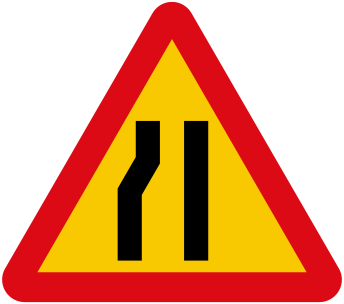
Single-Lane Bridges
There are many single-lane bridges, both on and off the Ring Road (Route 1). The car closer to the bridge has right of way. Slow down, see what the other driver intends to do, and be ready to stop.
Unbridged Rivers on Highland Roads
Some highland routes cross rivers that have no bridge; the sign “Óbrúaðar ár” warns that such a route can be hazardous. The sign “Illfær vegur” means a route is impassable for ordinary passenger cars and passable for higher four-wheel-drive vehicles such as jeeps. Check road conditions at umferdin.is or on 1777 before you set out.
Winter Roads
From Nov 1 to Apr 14 tires must have at least 3 mm of tread, and on snow or ice the car needs winter-pattern tires, studs or chains. Check road conditions at umferdin.is or by phoning 1777 (Vegagerðin) before you set out.
Driving Test Centers in Iceland
Frumherji hf. runs the driving tests for Samgöngustofa in Reykjavík, Akureyri, Selfoss and other towns around the country
- 1Reykjavík & Capital AreaReykjavík~247K
- 2Akureyri & North IcelandAkureyri~20K
- 3Selfoss & South IcelandSelfoss~11K
Icelandic driving rules and traffic law apply uniformly across the entire country. Frumherji hf. runs the tests under a contract with Samgöngustofa and also holds them in other towns, including Reykjanesbær, Akranes, Ísafjörður, Egilsstaðir and Vestmannaeyjar. A license obtained at any center is valid nationwide.
Myth: You can drive anywhere in Iceland with a regular car
Fact: A route signed “Illfær vegur” is impassable for ordinary passenger cars; it is passable for higher four-wheel-drive vehicles such as jeeps. Highland roads open only in summer, once Vegagerðin declares them passable. Leaving the road is another matter: off-road driving is a criminal offense punished with a fine or prison.
Myth: The Ring Road is a highway you can drive fast on
Fact: The Ring Road (Route 1) comes under the general limits: 90 km/h on paved sections and 80 km/h on gravel. It is about 1,310 km long and has single-lane bridges, where the car closer to the bridge goes first.
Myth: You don’t need headlights during Iceland’s midnight sun
Fact: Headlights are mandatory 24/7 in Iceland, even during the 24-hour daylight of summer. This is a legal requirement, not optional. Fine: ISK 20,000. Dipped headlights must be on at all times while driving.
Myth: One drink before driving is fine in Iceland
Fact: Iceland’s limit is 0.02% (0.2‰), lowered from 0.05% on 1 January 2020. That is the same limit as Norway and Sweden and lower than Germany’s 0.05%. Samgöngustofa’s guide for visitors puts it plainly: you can’t drive, even after one alcoholic drink.
Myth: Sheep on the road are not a serious hazard
Fact: Samgöngustofa tells visitors to expect livestock on or beside the road, usually sheep, and to take extra care because it is hard to work out what the animals intend to do. A lamb on one side of the road is likely to run to its mother on the other side as a car approaches. Statistics Iceland counted about 350,000 sheep in 2025.
Longer license validity for drivers aged 70 and over
Act No. 75/2026 took effect on 8 July 2026. A license renewed at age 70–75 is now valid for 10 years, and the term shortens step by step to 1 year from age 90.
Km-based road tax: 6.95 ISK/km replaces fuel tax
A kilometer fee replaced the petrol and diesel taxes on 1 January 2026. Cars up to 3.5 tonnes pay 6.95 ISK/km and heavier vehicles pay more, whatever their fuel. Owners record the odometer reading at least once a year.
BAC limit lowered from 0.05% to 0.02%
The new Road Traffic Act (No. 77/2019) took effect on 1 January 2020 and lowered the blood alcohol limit from 0.5‰ to 0.2‰, the same figure as Norway and Sweden. Fines and license suspension still start at 0.5‰.
Auto-only driving license introduced
Iceland introduced the option of a driving license limited to automatic transmission. Holders may drive only vehicles with automatic transmission.
How Iceland Compares Globally
Iceland next to Norway, Finland, Sweden and Germany, on figures taken from official sources
StrictestIn betweenMost lenientBAC limit and minimum age
| Parameter | Iceland | Norway | Finland | Sweden | Germany |
|---|---|---|---|---|---|
| BAC Limit | 0.02% | 0.02% | — | 0.02% | 0.05% |
| Min. Age (Car) | 17 | 18 | — | 18 | 18 |
| Driving Side | Right | Right | Right | Right | Right |
| Road Deaths (2025) | 10 | 111 | 187 | 208 | 2,832 |
| Deaths/100K | ~2.6 | ~2.0 | ~3.3 | ~2.0 | ~3.4 |
BAC Limit
Iceland: 0.02%Norway: 0.02%Finland: —Sweden: 0.02%Germany: 0.05%Min. Age (Car)
Iceland: 17Norway: 18Finland: —Sweden: 18Germany: 18Driving Side
Iceland: RightNorway: RightFinland: RightSweden: RightGermany: RightRoad Deaths (2025)
Iceland: 10Norway: 111Finland: 187Sweden: 208Germany: 2,832Deaths/100K
Iceland: ~2.6Norway: ~2.0Finland: ~3.3Sweden: ~2.0Germany: ~3.4
Iceland
Iceland 0.02% (0.2‰) since 2020, the same as Norway and Sweden. Germany’s limit is 0.05%.
Iceland issues a car (B) license from age 17; Norway, Sweden and Germany set 18. Driver training in Iceland can start at 16.
Norway Right · Finland Right · Sweden Right · Germany Right
~2.6 per 100K. Norway 111 (~2.0/100K), Finland 187 (~3.3/100K), Sweden 208 (~2.0/100K), Germany 2,832 (~3.4/100K).
Norway ~2.0 · Finland ~3.3 · Sweden ~2.0 · Germany ~3.4
Road deaths 2025: Iceland 10, Norway 111, Finland 187, Sweden 208 (Samgöngustofa, Umferðarslys á Íslandi 2025); Germany 2,832 (Destatis). The Nordic per-100K rates come from the same Samgöngustofa report; Germany’s is the Destatis figure of 34 deaths per million inhabitants. A dash means we have not confirmed that figure from an official source.
Primary Sources
Verification Methodology
The facts on this page are checked against official Icelandic sources. Our process:
- 1Rules and penalties are taken from the Road Traffic Act (Umferðarlög, via althingi.is) and from the regulations published on island.is
- 2Test, fee and license details come from island.is, Samgöngustofa and Frumherji; road data from Vegagerðin; population and livestock figures from Statistics Iceland
- 3Figures that are our own estimate, such as the total cost of a license, are labeled as estimates
- 4Last checked against these sources on November 17, 2026
If you find an error, please contact us so we can correct it immediately.
Frequently Asked Questions
How much does an Icelandic driving license cost?
The fixed fees are ISK 7,583 for the theory test, ISK 19,619 for the practical test, ISK 4,300 for the provisional license and ISK 8,600 for the full license. Driving instructors and driving schools set their own prices, and island.is says to expect considerable cost. AutoviaTest estimates the total at ISK 270,000–400,000; that range is our estimate, not an official figure.
What is the theory test format?
50 true/false statements. Duration: 45 minutes. Pass mark: 90% (45/50 correct). Taken on a tablet. island.is lists the category B test in Arabic, English, Icelandic, Polish, Thai and Vietnamese; Frumherji also lists Spanish. Fee: ISK 7,583.
What are the speed limits in Iceland?
In built-up areas: 50 km/h. Gravel roads outside built-up areas: 80 km/h. Paved roads outside built-up areas, including the Ring Road: 90 km/h. Signs can set a lower limit, and the Road Traffic Act allows a limit of up to 110 km/h on roads where the two directions of traffic are separated.
What is the BAC limit?
0.02% (0.2‰), in force since 1 January 2020 (0.05% before). Fines and license suspension apply from 0.5‰.
What are F-roads?
F-roads are mountain roads in the highlands. They open only in summer, road by road, once snow and thaw allow: Vegagerðin’s average opening dates for 2021–2025 run from about 1 June to mid-July. A route signed “Illfær vegur” is impassable for ordinary cars and passable for higher four-wheel-drive vehicles such as jeeps, and some routes cross rivers without bridges. Check umferdin.is before you go.
Is off-road driving allowed in Iceland?
No. Off-road driving is a criminal offense punished with a fine or up to two years in prison; where serious damage is caused the penalty is a fine of at least ISK 350,000 or up to four years in prison. Samgöngustofa warns that such driving can cause damage that nature may never repair.
What are single-lane bridges?
Bridges with a single lane for both directions. Iceland has many, both on and off the Ring Road. The car closer to the bridge has right of way; slow down and see what the other driver intends to do before you cross.
Are headlights mandatory during summer?
Yes. Headlights (dipped beam) are mandatory 24/7 in Iceland, including during the midnight sun in summer. Fine: ISK 20,000.
What are the winter tire requirements?
From November 1 to April 14 tires need at least 3 mm of tread, and on snow or ice the car needs winter-pattern tires, studs or chains. Studded tires are banned from April 15 to October 31 unless conditions require them. Fine: ISK 20,000 per tire.
What is the penalty points system?
12 points within 3 years = 3-month license suspension (7 points on a provisional license). Points per offense: speeding 1–3, red light 2, phone 1, no seatbelt 1.
Can I drive with a foreign license in Iceland?
EEA licenses: valid in Iceland. Non-EEA licenses: valid for up to 12 months; after 6 months of permanent residence you must apply for an Icelandic license and pass the theory and practical tests. Licenses from EEA countries, the UK, Switzerland and Japan are exchanged without a test.
What is the emergency number?
112 is the single emergency number for police, fire and ambulance. The 112 Iceland app lets you contact 112 without calling and sends your location to the emergency center.
What about sheep on the roads?
Expect livestock on or beside the road, usually sheep; Statistics Iceland counted about 350,000 sheep in 2025. Slow down when you see them: a lamb on one side of the road is likely to run to its mother on the other side as a car approaches.
How old do you have to be to drive in Iceland?
Car (B): 17 years. Learner permit: 16. Moped (AM): 15 years. Light motorcycle (A1): 17 years. Truck (C): 21 years.
APA 7th
AutoviaTest. (2026). Iceland driving license 2026 — The complete guide. AutoviaTest. https://autoviatest.com/en/driving-test/iceland/facts
MLA 9th
"Iceland Driving License 2026 — The Complete Guide." AutoviaTest, 2026, autoviatest.com/en/driving-test/iceland/facts.
Chicago 17th
AutoviaTest. "Iceland Driving License 2026 — The Complete Guide." AutoviaTest. Accessed November 17, 2026. https://autoviatest.com/en/driving-test/iceland/facts.
Ready to Pass Your Icelandic Driving Test?
Practice with real exam-style questions covering all topics on the Samgöngustofa theory test. 50 questions, 90% pass mark, be prepared.
More Country Driving Guides
 India Driving License Facts 2026RTO test format, fees, speed limits, and traffic fines across 36 statesGermany Driving License Facts 2026TÜV/DEKRA test, Führerschein costs, Autobahn rules, and traffic finesNorway Driving License Facts 2026Statens vegvesen test format, fees, speed limits, and traffic finesFinland Driving License Facts 2026Traficom test format, fees, income-based day-fines, and winter tire rules