
 Complete guide 2026Updated November 2026
Spanish Driving License 2026 The Complete Guide
Spain driving license guide (2026): DGT test format, autoescuela costs, speed limits, traffic fines, and the points system.
Table of Contents
Spain Driving Test Explained, DGT Theory, Cost, Pass Rate 2026
A 2-minute walkthrough of Spain's DGT licensing system, from autoescuela enrollment to passing the theory and practical exams.
 Video Guide · 2 min
Key Takeaways
- The DGT theory test is 30 questions with only 3 mistakes allowed, a 90% pass threshold.
- Total cost runs €700–€1,400: autoescuela enrollment, practical lessons, the psicotécnico medical, and DGT exam fees (€94.05).
- The practical test requires training at an authorized autoescuela; the theory exam can be sat independently (por libre).
- Speed limits are 50 km/h urban (30 on single-lane streets since 2021), 90 on rural roads, 120 on motorways.
- Alcohol limit is 0.05% BAC, dropping to 0.03% for novice drivers in their first 2 years.
- Spain uses a 12-point license system (8 points for novices), reaching zero means the license loses its validity.
- From January 2026 every car must carry a V-16 geolocated beacon; the old red warning triangle is phased out.
Read full transcript
Getting a driving license in Spain means working with the DGT, the Dirección General de Tráfico, the government agency that runs every theory exam, practical test, and license issue in the country. Here's the key summary in under two minutes.
0:06 Theory Test Format. The Spanish theory test has 30 multiple-choice questions drawn from the DGT question bank, and you can only get 3 wrong. That's a 90% pass mark, one of the strictest in Europe. You have 30 minutes, the test is available in Spanish, English, French, and several other languages, and every question has a single correct answer from three options.
0:20 Cost of a Spanish License. Expect to pay between €700 and €1,400 total. That covers autoescuela enrollment (€200–600), practical lessons (€400–1,050), the medical psicotécnico (€25–50), and DGT exam fees of €94.05. Unlike many countries, the practical test requires training at an authorized autoescuela, the theory exam, though, can be sat independently (por libre).
0:35 Spanish Speed Limits. Spain uses three main speed limits: 50 km/h in urban areas, dropped to 30 on single-lane streets since May 2021, 90 km/h on conventional rural roads, and 120 km/h on motorways and dual carriageways. Exceed these and fines start at €100 and climb sharply.
0:47 Traffic Fines & Points. Speeding 21 to 30 km/h over the limit costs €300 plus 2 license points. Using a mobile phone while driving is €200 and 6 points. No seatbelt is €200 and 4 points. Drink-driving over the 0.25 mg/l breath limit starts at €500 and 4 points. Pay within 20 days and you get a 50% early-payment discount.
1:02 Key Road Rules. Spain drives on the right and gives way to traffic from the right at unmarked intersections. It uses a strict 12-point license system, with novice drivers starting on 8 points. From January 2026 every car must carry a V-16 geolocated beacon, the old red warning triangle is being phased out.
1:14 Step-by-Step License Process. The process: enroll in an autoescuela, pass the psicotécnico medical, study the DGT question bank, pass the 30-question theory exam, complete practical lessons, then pass the practical road test. Total time is typically 2 to 3 months with consistent study.
1:29 Emergency Numbers. Spain uses the pan-European 112 for any emergency, police, ambulance, or fire. The Guardia Civil traffic division is 062 and National Police is 091.
1:37 Driving Myths vs Facts. Myth: you can just swap any foreign license. Fact: only EU and EEA licenses swap automatically, most non-EU licenses require passing the full Spanish theory and practical exam. Myth: the DGT test is easy. Fact: only 51% of theory sittings passed in 2024, and the DGT publishes no first-attempt figure. Myth: you don't need to worry about fine deadlines. Fact: you have exactly 20 days to pay at the 50% discounted rate.
Practice the full DGT question bank for free on AutoviaTest to prepare for your Spanish theory exam.
Theory Test
30 multiple-choice questions with 3 options each, 30 minutes, maximum 3 errors allowed (90% pass mark). €94.05 test fee (DGT tasa 2.1, which also covers the practical test).
Administered by the DGT (Dirección General de Tráfico).
Total Cost
AutoviaTest estimate: typically €700–1,400 in total.
Only the €94.05 DGT exam fee is official (tasa 2.1, covers both the theory and the practical test). Estimated ranges: autoescuela enrollment €200–600, theory materials ~€200, practical lessons €20–35/hr, psicotécnico (medical certificate) €25–50.
Road Deaths
1,775 deaths in 2025 (~3.6 per 100K): 10 fewer than in 2024 (1,785, −1%).
Spain's rate was below the EU average of 4.3 deaths per 100K.
BAC Limit
0.5 g/l in blood (0.25 mg/l in breath) is the general limit.
Novice drivers (first 2 years) and professional drivers: 0.3 g/l (0.15 mg/l in breath). A bill to cut the limit for all drivers to 0.2 g/l (0.1 mg/l in breath) was rejected by the Congress Interior Committee on 18 March 2026. A new bill with the same limit was tabled in September 2026 and accepted for debate by the full Congress; it is not law, and the limits above still apply (as of November 2026). Above 0.60 mg/l in breath is a criminal offense that can mean prison.
Fines & Points
Spain uses a points system starting at 12 points (8 for new drivers) that decrease with infractions.
Reaching 0 points means the license loses its validity. 50% early payment discount on most fines if paid within 20 days.
Global Context
Spain's death rate of ~3.6 per 100K (2025) is well below that of the USA (11.5, 2024) and above those of Germany (3.4, 2025) and Great Britain (2.4, 2024).
DGT / NHTSA / Destatis / DfTSpain Road Safety: 6-Year Trend (2020–2025)
According to DGT data, road deaths fell sharply in 2020 during COVID-19 restrictions, then rose again in 2021–2023. The 2025 figure of 1,775 deaths is 10 fewer than in 2024 (1,785).
Year-over-year changes
Deaths per 100,000 Population
 USA11.5
- Spain3.6
 Germany3.4
 GB2.4
Sources: DGT Balance de Seguridad Vial 2025 (Spain, urban and interurban roads); NHTSA 2024 (USA); Destatis 2025 (Germany); DfT 2024 (Great Britain only). Per-capita rates may vary by methodology.
Spanish Theory Test Format
The computerized theory test is administered by DGT at Jefaturas Provinciales de Tráfico across Spain
The Spanish driving theory test (examen teórico) for Category B consists of 30 multiple-choice questions, each with 3 answer options, to be completed within 30 minutes. To pass, you must answer at least 27 questions correctly (maximum 3 errors), a 90% pass mark. The test fee is €94.05 (DGT tasa 2.1, which also covers the practical test), administered by the DGT at provincial traffic offices (Jefaturas Provinciales de Tráfico). The test is available in Spanish, the co-official languages, English, French and German.
Questions
Duration
Pass Mark
Test Fee
What the Theory Test Covers
- Traffic signs (señales de tráfico) & signals
- Priority rules (prioridad de paso)
- Speed limits (límites de velocidad)
- Overtaking rules (adelantamiento)
- Alcohol & drugs regulations
- Vehicle maintenance & safety equipment
- Tire requirements & ITV inspection
- Seatbelts & child restraint systems
- First aid basics
- Eco-driving (conducción eficiente)
- Motorway rules (autopista/autovía)
- Hazard perception & emergency braking
- BAC limits & novice driver rules
- Tunnel & level crossing rules
- Points system (permiso por puntos)
How to Get Your Spanish Driving License
From autoescuela to permiso de conducir, the complete 5-step process
- 1
Enroll at an Autoescuela
Register at a licensed driving school (autoescuela)
Enrollment typically €200–600 (estimate), depending on the package. The autoescuela handles all paperwork and exam bookings.
- 2
Get Medical Certificate
Complete the psicotécnico at an authorized medical center
Psicotécnico typically €25–50 (estimate). Tests vision, hearing, coordination, and psychological aptitude. Valid for 90 days.
- 3
Pass the Theory Test
Take and pass the DGT theory exam at a Jefatura Provincial de Tráfico
30 questions, max 3 errors (90%), 30 minutes, €94.05. Available in Spanish, the co-official languages, English, French and German.
- 4
Take Practical Driving Lessons
Complete driving lessons with your instructor at the autoescuela
Typically 20–30 hours at €20–35 per hour (estimates).
- 5
Pass the Practical Test
Pass the practical driving test with a DGT examiner
At least 25 minutes of driving in real traffic. There is no separate practical-exam fee, it is covered by the €94.05 tasa 2.1. Examiner evaluates driving in urban and interurban settings.
Spanish Driving License Fees
AutoviaTest estimate: total cost typically €700–€1,400, depending on location and number of lessons
| Fee | Amount |
|---|---|
| Autoescuela enrollment | €200–600 |
| Theory materials & classes | ~€200 |
| Practical lessons (per hour) | €20–35 |
| DGT exam fee (tasa 2.1, theory + practical) | €94.05 |
| Psicotécnico (medical certificate) | €25–50 |
| Typical total, estimate (Category B) | €700–€1,400 |
All amounts except the €94.05 DGT fee are AutoviaTest estimates of typical market prices, not official prices. Prices differ from one autoescuela to another. Additional costs apply if you fail and must retake tests. The 50% early payment discount applies to DGT fines, not exam fees. The tasa 2.1 buys two sittings shared between the theory and the practical test; fail twice and you pay it again.
See how ready you are with exam-style mock questions
Try Free QuestionsLatest news
All Spain driving newsMinimum age by license category
- AM — Mopeds up to 50cc / 45 km/h15years
- A1 — Motorcycles up to 125cc / 11 kW16years
- A2 — Motorcycles up to 35 kW18years
- B — Cars up to 3,500 kg18years
- A — Motorcycles unlimited20 with 2 years A2 experience20years
- C1 — Medium trucks 3,500–7,500 kg18years
- C — Trucks over 3,500 kg21years
- D1 — Minibuses up to 16 passengers21years
- D — Buses (8+ passengers)24years
License Validity Periods
| License / age | Validity |
|---|---|
| AM / A1 / A2 / A / B (under 65)Psicotécnico required at every renewal | 10 years |
| AM / A1 / A2 / A / B (65+)Psicotécnico required at every renewal | 5 years |
| Any class, medical conditionValidity can be shortened if the medical check finds a condition that may get worse | Shorter |
| C / D Professional (under 65)Psicotécnico required at every renewal | 5 years |
| C / D Professional (65+)Psicotécnico required at every renewal | 3 years |
Novice Driver Period
- 2-year novice period for all new license holders
- Start with 8 points (instead of 12) for the first 2 years
- BAC limit 0.3 g/l blood (0.15 mg/l breath)
- After 2 years without infractions, points increase to 12
- Clean-record bonus: +2 points after 3 years without sanctions (14), then +1 after 3 more years (15)
Points System (Permiso por Puntos)
- All drivers start with 12 points (8 for new drivers)
- Points are DEDUCTED for infractions (opposite of Flensburg)
- 0 points = the license loses its validity
- No new license for 6 months (3 for professional drivers); 12 months (6) if it happens again within 3 years
- To get a new license: a road-safety awareness course (up to 30 hours), then a DGT theory test
- An awareness course restores up to 6 points (once every 2 years; yearly for professionals). A safe and efficient driving course adds 2 points (max 15; one course of each type every 2 years)
Speed Limits in Spain
As per the Ley de Seguridad Vial and Reglamento General de Circulación, all speeds in km/h
Spain has clearly defined speed limits across all road types. Autopistas and autovías, the two types of motorway, share the same 120 km/h limit for cars. Since May 2021, the default urban limits are: 20 km/h on streets where the carriageway and the pavement are at the same level (plataforma única), 30 km/h on streets with a single lane in each direction, and 50 km/h on streets with two or more lanes in each direction. Conventional interurban roads (carreteras convencionales) are limited to 90 km/h for cars and buses. Buses are limited to 100 km/h on motorways. Trucks are restricted to 90 km/h on motorways and 80 km/h on conventional roads.
| Road Type | Cars | Trucks | Note |
|---|---|---|---|
| Autopista / Autovía | 120 | 90 | Both types of motorway |
| Carretera convencional | 90 | 80 | Interurban roads |
| Urban (multi-lane) | 50 | 50 | More than one lane per direction |
| Urban (single-lane) | 30 | 30 | Since May 2021 reform |
| Plataforma única | 20 | 20 | Carriageway and pavement at the same level |
Autopista / Autovía
Cars: 120Trucks: 90Both types of motorway
Carretera convencional
Cars: 90Trucks: 80Interurban roads
Urban (multi-lane)
Cars: 50Trucks: 50More than one lane per direction
Urban (single-lane)
Cars: 30Trucks: 30Since May 2021 reform
Plataforma única
Cars: 20Trucks: 20Carriageway and pavement at the same level
The 30 km/h urban default (since May 2021) applies to streets with a single lane in each direction, unless signs say otherwise. Autopistas and autovías differ in design, not in tolls; both share the 120 km/h limit. Buses: 100 km/h on motorways, 90 km/h on conventional roads. Trucks: 90 km/h on motorways, 80 km/h on conventional roads.
Traffic Fines & Penalties
As per the Ley de Seguridad Vial, 50% early payment discount on most fines within 20 days
Spain's traffic fine system was reformed in 2022 with increased penalties for mobile phone use (now 6 points) and stricter overtaking rules. Fines are classified as leve (minor), grave (serious), or muy grave (very serious). A 50% early payment discount applies to most fines if paid within 20 days of notification. The points system starts at 12 points (8 for novice drivers) and deducts points for infractions, reaching 0 means the license loses its validity. Drunk driving above 0.60 mg/L in breath is a criminal offense carrying potential imprisonment.
Up to €200€300–€500€601 or moreFull fine, before the 50% discount
| Violation | Fine | Points | Notes |
|---|---|---|---|
| Speeding 1–20 km/h over limit | €100 | 0 pt | — |
| Speeding 21–30 km/h over limit | €300 | 2 pt | — |
| Speeding 31–40 km/h over limit | €400 | 4 pt | — |
| Speeding 41–50 km/h over limit | €500 | 6 pt | — |
| Mobile phone use while driving | €200 | 6 pt | Increased from 3 to 6 points in 2022 |
| No seatbelt | €200 | 4 pt | — |
| Running a red light | €200 | 4 pt | — |
| Drunk driving (0.25–0.50 mg/L breath) | €500 | 4 pt | Administrative offense |
| Drunk driving (0.50–0.60 mg/L breath) | €1,000 | 6 pt | Administrative offense |
| Drug driving | €1,000 | 6 pt | — |
| No insurance (seguro obligatorio) | €601–3,005 | — | Vehicle impounded |
| ZBE low emission zone violation | €200 | — | Cities >50,000 population |
- €100
Speeding 1–20 km/h over limit
0 pt - €300
Speeding 21–30 km/h over limit
2 pt - €400
Speeding 31–40 km/h over limit
4 pt - €500
Speeding 41–50 km/h over limit
6 pt - €200Increased from 3 to 6 points in 2022
Mobile phone use while driving
6 pt - €200
No seatbelt
4 pt - €200
Running a red light
4 pt - €500Administrative offense
Drunk driving (0.25–0.50 mg/L breath)
4 pt - €1,000Administrative offense
Drunk driving (0.50–0.60 mg/L breath)
6 pt - €1,000
Drug driving
6 pt - €601–3,005Vehicle impounded
No insurance (seguro obligatorio)
- €200Cities >50,000 population
ZBE low emission zone violation
Fines shown are full amounts before the 50% early payment discount. The speeding bands shown apply where the limit is 50 km/h or lower; on faster roads the bands are wider (e.g. on a 120 km/h road: 121–150 €100, 151–170 €300 + 2 points, 171–180 €400 + 4, 181–190 €500 + 6, over 190 €600 + 6). Points are deducted from your balance (12 for experienced drivers, 8 for novices). Drunk driving above 0.60 mg/L breath is a criminal offense prosecuted under the Código Penal.
Know These Rules Before Your Theory Test
Traffic fines, speed limits, and BAC rules are heavily tested in the DGT theory exam. Practice with real exam-style questions.
How the road worksMandatory, with a penaltyMakes it easier
Right-Hand Traffic
Spain drives on the right.
Always keep to the right lane unless overtaking. Priority to vehicles from the right at unmarked intersections.
BAC Limit 0.5 g/L
General limit is 0.5 g/l blood (0.25 mg/l breath).
Novice drivers (first 2 years) and professional drivers: 0.3 g/l (0.15 mg/l breath). A bill to cut the limit for all drivers to 0.2 g/l (0.1 mg/l in breath) was rejected by the Congress Interior Committee on 18 March 2026. A new bill with the same limit was tabled in September 2026 and accepted for debate by the full Congress; it is not law, and the limits above still apply (as of November 2026). Zero tolerance for drugs.
Mandatory Insurance
Seguro de responsabilidad civil (third-party liability insurance) is mandatory.
Driving without it carries fines of €601–3,005 and vehicle impoundment.
ITV Vehicle Inspection
Inspección Técnica de Vehículos (ITV) is mandatory: every 2 years after the vehicle is 4 years old, annually after 10 years.
Fine for expired ITV: €200.
V-16 Emergency Beacon
From January 2026, a V-16 emergency beacon is mandatory in cars, vans, lorries and buses (not motorcycles), replacing the traditional warning triangles.
The beacon must be placed on the vehicle roof during a breakdown.
Mobile Phone: €200 + 6 Points
Using a mobile phone while driving carries a €200 fine and 6-point deduction (increased from 3 points in the 2022 reform).
Hands-free systems are permitted.
Child Restraint Systems
Children 135 cm tall or shorter must use an approved child restraint suited to their height and weight, and sit in the back.
They may sit in front only if the car has no rear seats, the rear seats are all taken by other such children, or the seats cannot be fitted there. A rear-facing seat may go in front only if the front airbag is switched off.
ZBE Low Emission Zones
Zonas de Bajas Emisiones (ZBE) are mandatory in all cities with over 50,000 inhabitants.
Vehicles without the correct DGT environmental label may be restricted or fined €200.
Digital License (miDGT)
The miDGT app allows drivers to carry a digital version of their driving license on their smartphone.
Accepted by all Spanish authorities as equivalent to the physical card.
Common Road Hazards in Spain
1,775 road fatalities in 2025, know these hazards to stay safe on Spanish roads
Fog
In a fog bank the DGT's rules are: never stop on the hard shoulder, switch on the fog lights, slow right down and follow the lane markings. Do not use main beam: it reflects off the fog and dazzles you
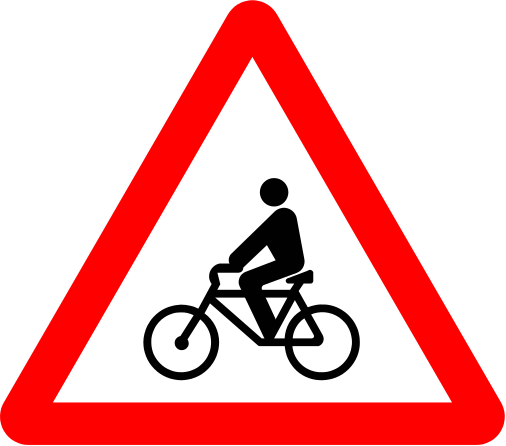
Cyclists on Rural Roads
When overtaking a cyclist you must leave at least 1.5 m, or change lane completely on roads with more than one lane in each direction. Since 1 October 2026, outside built-up areas you must also slow to at least 20 km/h below the limit while overtaking

Wild Boar at Night
On interurban roads in 2024 (Catalonia and the Basque Country not included), wild boar were involved in 15,049 crashes, 42% of all crashes with animals (DGT). Crashes with animals peak between 22:00 and 23:00, and Castilla y León alone recorded 34% of them
Spain's 17 Autonomous Communities
Driving license administration is handled by the DGT through Jefaturas Provinciales de Tráfico in each province, plus the Basque Country and Catalonia which have their own traffic authorities
- 1AndalucíaSevilla8.8M
- 2AragónZaragoza1.4M
- 3AsturiasOviedo1.0M
- 4Illes BalearsPalma1.3M
- 5CanariasLas Palmas / Santa Cruz2.3M
- 6CantabriaSantander0.6M
- 7Castilla-La ManchaToledo2.2M
- 8Castilla y LeónValladolid2.4M
- 9CataluñaBarcelona8.2M
- 10ExtremaduraMérida1.1M
- 11GaliciaSantiago de Compostela2.7M
- 12La RiojaLogroño0.3M
- 13Comunidad de MadridMadrid7.2M
- 14Región de MurciaMurcia1.6M
- 15C. Foral de NavarraPamplona0.7M
- 16País VascoVitoria-Gasteiz2.3M
- 17Comunitat ValencianaValencia5.5M
- 18CeutaCeuta0.08M
- 19MelillaMelilla0.09M
Driving laws are national (Ley de Seguridad Vial), but the Basque Country has its own traffic police (Ertzaintza) and Catalonia has the Servei Català de Trànsit. Spain also has 2 Autonomous Cities: Ceuta and Melilla.
Myth: Speed limits are loosely enforced in Spain
Fact: The DGT actively enforces limits with fixed and mobile radars (cinemómetros), section cameras, and helicopter surveillance on major routes.
Myth: A foreign driving license is valid indefinitely in Spain
Fact: Non-EU license holders who become residents can drive on their license for up to 6 months; after that they must exchange it (if their country has an agreement with Spain) or pass the Spanish tests. EU/EEA licenses stay valid, but residents are subject to Spanish rules on validity, medical checks and points. If an EU license has no expiry date, it must be renewed in Spain after 2 years of residence.
Myth: The 30 km/h limit only applies on some streets
Fact: Since May 2021, the default urban limit is 30 km/h on every street with a single lane in each direction, a nationwide rule, not a local decision. Streets with two or more lanes in each direction keep the 50 km/h limit. Streets where the carriageway and pavement are at the same level (plataformas únicas) are limited to 20 km/h.
Myth: Drink-driving is tolerated in Spanish culture
Fact: Spain's general limit (0.5 g/l, i.e. 0.05%) is lower than the 0.08% limit in England, Wales and Northern Ireland and in every US state except Utah. Novice and professional drivers are limited to 0.3 g/l. A bill to cut the limit for all drivers to 0.2 g/l (0.1 mg/l in breath) was rejected by the Congress Interior Committee on 18 March 2026. A new bill with the same limit was tabled in September 2026 and accepted for debate by the full Congress; it is not law, and the limits above still apply (as of November 2026).
Myth: With warning triangles gone, you no longer need to carry a warning device
Fact: Since 1 January 2026 the connected V-16 beacon is the only legal way to signal a broken-down vehicle in Spain, so cars must carry one in place of the triangles. The beacon sends its location to the DGT 3.0 platform. Vehicles registered abroad that are visiting Spain may still use triangles.
Myth: Autopistas and autovías are the same thing
Fact: Both have the same 120 km/h speed limit and a similar design. The legal difference is technical: an autopista has no access from adjoining properties, while an autovía does not meet every autopista requirement (Ley 37/2015, art. 2). Tolls do not depend on the name: a road can be free or tolled. Always check for toll signs (peaje) to avoid unexpected charges.
V-16 beacon and new traffic rules (RD 518/2026)
Since 1 January, a connected V-16 beacon replaces warning triangles. Since 1 October (RD 518/2026): drivers must slow to at least 20 km/h below the limit when overtaking cyclists outside built-up areas (the 1.5 m minimum gap, or a full lane change on multi-lane roads, already applied); forming an emergency lane (carril de emergencia) in motorway and autovía queues is mandatory; the urban seatbelt exemption covers only emergency-service vehicles. A bill to cut the limit for all drivers to 0.2 g/l (0.1 mg/l in breath) was rejected by the Congress Interior Committee on 18 March 2026. A new bill with the same limit was tabled in September 2026 and accepted for debate by the full Congress; it is not law, and the limits above still apply (as of November 2026).
New EU Driving License Directive
The EU adopted a new Driving License Directive with harmonized rules across member states. Spain must bring it into national law over the coming years.
Traffic law reform (Ley de Tráfico)
Major reform (Ley 18/2021, in force March 2022): holding a mobile phone while driving rises to 6 points. Overtaking cyclists while endangering them or without leaving 1.5 m rises to 6 points. Not wearing a seatbelt rises to 4 points. New rules for e-scooters and personal mobility vehicles.
30 km/h urban default speed limit
Reform lowering the default speed limit on single-lane urban roads from 50 to 30 km/h. Multi-lane urban roads remained at 50 km/h.
How Spain Compares Globally
Spain's driving regulations compared to other major countries, data compiled from official government sources
StrictestIn betweenMost lenientBAC limit and minimum age
| Parameter | Spain | Germany | USA | UK |
|---|---|---|---|---|
| BAC Limit | 0.05% | 0.05% | 0.08% | 0.08% |
| Min. Age (Car) | 18 | 18 | — | 17 |
| Highway Speed | 120 km/h | No limit* | — | 112 km/h |
| Test Questions | 30 | 30 | — | 50 |
| Road Deaths/yr | 1,775 | 2,832 | 39,254 | 1,602 (GB) |
| Deaths/100K | 3.6 | 3.4 | 11.5 | 2.4 (GB) |
BAC Limit
Spain: 0.05%Germany: 0.05%USA: 0.08%UK: 0.08%Min. Age (Car)
Spain: 18Germany: 18USA: —UK: 17Highway Speed
Spain: 120 km/hGermany: No limit*USA: —UK: 112 km/hTest Questions
Spain: 30Germany: 30USA: —UK: 50Road Deaths/yr
Spain: 1,775Germany: 2,832USA: 39,254UK: 1,602 (GB)Deaths/100K
Spain: 3.6Germany: 3.4USA: 11.5UK: 2.4 (GB)
Spain
Same as Germany (0.05%). England, Wales, Northern Ireland and the USA (except Utah) allow 0.08%. Novice and professional drivers in Spain: 0.03%. A bill to cut the limit for all drivers to 0.02% was rejected in committee in March 2026; a new one, tabled in September 2026, is before Congress and is not law.
Same as Germany. The UK allows car driving from 17.
Germany has no general Autobahn limit for cars; 130 km/h is the recommended speed. The UK motorway limit is 70 mph (112 km/h). The USA has no national speed limit.
Germany 30 · USA — · UK 50
3.6 per 100K (2025), below the EU average (4.3). The USA rate was 11.5 per 100K in 2024.
Germany 3.4 · USA 11.5 · UK 2.4 (GB)
Road deaths: Spain 1,775 (DGT 2025), Germany 2,832 (Destatis 2025), USA 39,254 (NHTSA 2024), UK column: Great Britain only, 1,602 (DfT 2024). Deaths per 100K: Spain 3.6 (DGT 2025), Germany 3.4 (Destatis 2025), USA 11.5 (NHTSA 2024), Great Britain 2.4 (DfT 2024). BAC: Spain 0.5 g/L = 0.05%. UK BAC is 0.08% for England, Wales and Northern Ireland; Scotland is 0.05%. USA BAC is 0.08% in every state except Utah (0.05%). *Germany: no general Autobahn limit for cars; 130 km/h is the recommended speed. A dash (—) in the USA column means there is no national figure: each state sets its own rule.
Primary Sources
Verification Methodology
The facts on this page are checked against official sources. How we work:
- 1Rules, limits and fines come from the consolidated legal texts in the Boletín Oficial del Estado (BOE)
- 2Statistics and procedures come from DGT publications; figures for other countries come from their official bodies (NHTSA, Destatis, DfT)
- 3Cost ranges other than the €94.05 DGT fee are AutoviaTest estimates, not official prices
- 4Last checked against the sources on November 17, 2026
If you find an error, please contact us so we can correct it immediately.
Frequently Asked Questions
How much does a driving license cost in Spain?
AutoviaTest estimates the total cost of a Category B (car) license at typically €700–€1,400. Only the DGT exam fee is official: €94.05 (tasa 2.1, covering both the theory and the practical test). The rest are estimated typical prices: autoescuela enrollment €200–600, theory materials ~€200, practical lessons at €20–35 per hour, and the psicotécnico (medical certificate) €25–50. Prices differ from one autoescuela to another.
What is the Spanish theory test format?
The DGT theory exam for Category B has 30 multiple-choice questions with 3 options each, to be completed in 30 minutes. You must answer at least 27 correctly (maximum 3 errors) for a 90% pass mark. The test costs €94.05 (DGT tasa 2.1, which also covers the practical test) and is available in Spanish, the co-official languages, English, French and German.
What is the pass rate for the Spanish theory test?
In 2024, 51% of theory sittings were passed, 528,874 passes and 513,253 fails (DGT Anuario Estadístico General 2024, table 110). That figure covers all sittings, not just first attempts. To pass you need 90% (maximum 3 errors out of 30 questions).
What is the BAC (blood alcohol) limit in Spain?
General limit: 0.5 g/l blood (0.25 mg/l breath). Novice drivers (first 2 years) and professional drivers: 0.3 g/l (0.15 mg/l breath). A bill to cut the limit for all drivers to 0.2 g/l (0.1 mg/l in breath) was rejected by the Congress Interior Committee on 18 March 2026. A new bill with the same limit was tabled in September 2026 and accepted for debate by the full Congress; it is not law, and the limits above still apply (as of November 2026). Exceeding 0.60 mg/l breath is a criminal offense.
How does the Spanish points system work?
Spain uses a descending points system (permiso por puntos). All drivers start with 12 points (8 for novice drivers in their first 2 years). Points are deducted for infractions. At 0 points the license loses its validity: you cannot get a new one for 6 months (3 for professional drivers), or 12 months (6) if it happens again within 3 years, and you must pass a road-safety awareness course (up to 30 hours), then a DGT theory test. If you have lost some points, an awareness course restores up to 6 (once every 2 years; yearly for professionals). Separately, a safe and efficient driving course adds 2 points (max 15; one course of each type every 2 years). Novice drivers move to 12 points after 2 years without sanctions. Drivers who keep all their points get +2 after 3 years (14) and +1 after 3 more (15).
What is the psicotécnico?
The psicotécnico is a mandatory medical certificate required to obtain or renew a driving license in Spain. It tests vision, hearing, coordination, reflexes, and psychological aptitude at an authorized CRC (Centro de Reconocimiento de Conductores). It typically costs €25–50 (AutoviaTest estimate) and is valid for 90 days. You must obtain it before taking the theory exam.
What is the V-16 emergency beacon?
Since 1 January 2026 the connected V-16 emergency beacon is mandatory in cars, vans, lorries and buses in Spain (not motorcycles) and replaces the traditional warning triangles. The amber flashing light is placed on the vehicle roof during a breakdown and is visible from 1 km away in good conditions. It sends its location to the DGT 3.0 platform. The DGT's reason for the change is the risk of being run over while walking along the road to place triangles.
What are ZBE low emission zones?
Zonas de Bajas Emisiones (ZBE) are mandatory in all Spanish cities with over 50,000 inhabitants. Vehicles are classified by the DGT environmental label: 0 Emisiones (electric), ECO (hybrid), C (modern petrol/diesel), B (older but compliant), and unlabeled (most polluting, restricted). Driving without the correct label in a ZBE carries a €200 fine.
What is the difference between autopista and autovía?
Both are motorways with the same 120 km/h speed limit. The difference is in design, not in tolls: an autopista has no access from adjoining properties, while an autovía does not meet every autopista requirement (Ley 37/2015, art. 2). Either can be free or tolled. Since 2018, tolls have been lifted on 1,206 km of state motorways (Ministry of Transport, November 2026). Always watch for toll signs to avoid unexpected charges.
What speed limits apply in Spanish urban areas?
Since May 2021, the default urban limit is 30 km/h on streets with a single lane in each direction (previously 50). Streets with two or more lanes in each direction keep the 50 km/h limit. Streets where the carriageway and pavement are at the same level (plataformas únicas) are limited to 20 km/h. These limits apply nationwide and are enforced by fixed cameras and radar.
What is the ITV vehicle inspection?
The Inspección Técnica de Vehículos (ITV) is Spain's mandatory vehicle roadworthiness inspection. New cars require their first ITV after 4 years, then every 2 years until 10 years old, then annually. The inspection covers emissions, brakes, lights, tires, suspension, and more. Driving with an expired ITV carries a €200 fine.
Can I use the miDGT app as my driving license?
Yes. The miDGT app is the official DGT digital application that allows you to carry a digital version of your driving license, vehicle registration (permiso de circulación), and ITV certificate on your smartphone. It is accepted by all Spanish authorities (police, Guardia Civil) as equivalent to the physical documents. Download it from the App Store or Google Play.
Can I convert my foreign driving license in Spain?
EU/EEA licenses are valid in Spain. Once you are a resident, Spanish rules on validity, medical checks and points apply, and a license with no expiry date must be renewed in Spain after 2 years of residence. Non-EU license holders who become residents can drive on their license for up to 6 months. After that, if their country has an exchange agreement with Spain (e.g. several Latin American countries, the UK, Japan, South Korea), they can swap it; otherwise they must pass both the theory and practical tests. The USA has no exchange agreement.
What is the 50% early payment discount on fines?
Most DGT traffic fines qualify for a 50% discount if paid within 20 days of notification. For example, a €200 mobile phone fine is reduced to €100. Paying early also means you accept the fine and waive the right to appeal. The discount does not apply to a short list of very serious offenses in Ley de Tráfico art. 93.2, such as driving with a radar jammer or failing to identify the driver.
What are the mandatory items to carry in a car in Spain?
Since 1 January 2026: a connected V-16 emergency beacon (it replaces the triangles), a reflective vest (chaleco reflectante), a spare wheel or repair kit, and the vehicle documentation. You must also carry your driving license (physical or in the miDGT app). The vest must be worn when you get out of the vehicle onto the carriageway or hard shoulder of an interurban road; the DGT's advice is to put it on before getting out.
Cite This Page
Use the following citations when referencing this article in academic papers, journalism, or reports.
APA 7th Edition
AutoviaTest. (2026, March 23). Spain driving license facts 2026 — DGT test, autoescuela costs, fines & rules. https://autoviatest.com/en/driving-test/spain/facts
MLA 9th Edition
AutoviaTest. "Spain Driving License Facts 2026 — DGT Test, Autoescuela Costs, Fines & Rules." AutoviaTest, 23 Mar. 2026, autoviatest.com/en/driving-test/spain/facts.
Chicago 17th Edition
AutoviaTest. "Spain Driving License Facts 2026 — DGT Test, Autoescuela Costs, Fines & Rules." Last modified November 17, 2026. https://autoviatest.com/en/driving-test/spain/facts.
Ready to Pass Your Spanish Theory Test?
Practice exam-style DGT theory questions with detailed explanations.
More Country Driving Guides
What Is DGT 3.0? — Complete GuidemiDGT app, V-16 beacon, connected vehicles & more India Driving License Facts & RTO GuideRTO test format, fees, speed limits, traffic fines, state-wise information, and everything about driving in India.Germany Driving License Facts & Fahrschule GuideTÜV/DEKRA test format, Fahrschule costs, Autobahn rules, speed limits, and the Flensburg points system.