
 Complete guide 2026Updated April 2026
German Driving Licence 2026 The Complete Guide
Everything you need to know about getting your driving licence in Germany — TÜV/DEKRA test format, Fahrschule costs, Autobahn rules, speed limits, traffic fines, and the Flensburg points system.
Table of Contents
Germany Driving Test Explained — Theorieprüfung, Cost & Rules 2026
A 2-minute walkthrough of Germany's Führerschein system — from Fahrschule enrolment to passing the TÜV/DEKRA theory and practical exams.
 Video Guide · 2 min
Key Takeaways
- The TÜV/DEKRA theory test has 30 questions (20 basic + 10 class-specific) with a maximum of 10 error points allowed — two wrong 5-point questions is an automatic fail.
- Total cost runs €2,000–€3,500 (ADAC average ~€2,800): Fahrschule registration, theory + practical lessons, mandatory Sonderfahrten, and TÜV/DEKRA exam fees.
- Enrolment in a licensed Fahrschule is mandatory — self-taught driving is not permitted in Germany.
- Speed limits are 50 km/h urban, 100 on rural roads, and no general limit on ~60% of the Autobahn (130 km/h advisory).
- BAC limit is 0.05% (0.5 promille) general, with absolute zero tolerance (0.0%) for novice drivers in Probezeit and under-21s.
- Germany uses the Flensburg points system — 8 points triggers licence revocation, with points expiring after 2.5 to 10 years.
- The 2021 Bußgeldkatalog reform nearly doubled most traffic fines — failing to form a Rettungsgasse now costs €200–320.
Read full transcript
Getting a driving licence in Germany means enrolling at a Fahrschule and passing exams administered by TÜV or DEKRA — the two organizations that run every theory and practical test in the country. Here's everything you need to know in under two minutes.
0:06 Theory Test Format. The German theory test — the Theorieprüfung — has 30 multiple-choice questions: 20 basic knowledge and 10 class-specific. Each question carries 2 to 5 error points based on difficulty, and you can accumulate a maximum of 10 error points to pass. But watch out — getting two 5-point questions wrong is an automatic fail, even if your total is under 10. You have 45 minutes, the test is available in 12 languages including German, English, Turkish, and Arabic, and it costs €22.49.
0:20 Cost of a German Licence. Expect to pay between €2,000 and €3,500 total — ADAC reports an average around €2,800. That covers Fahrschule registration (€100–200), theory lessons and materials (€200–400), regular driving lessons at €45–70 per 45 minutes, 12 mandatory Sonderfahrten (€540–840), the theory test (€22.49), and the practical test (€116.93). You'll also need a first aid course (€25–50), eye test (€7), and licence application fees (€40–50).
0:35 German Speed Limits. Germany is famous for the Autobahn — but only about 60% of it has no mandatory speed limit. The advisory speed is 130 km/h, and exceeding it increases your liability in an accident. Urban areas are 50 km/h with widespread 30 km/h zones. Rural roads are 100 km/h for cars. Trucks over 3.5 tonnes are capped at 80 km/h on all roads outside cities.
0:47 Traffic Fines & Points. The 2021 Bußgeldkatalog reform nearly doubled most fines. Speeding 31–40 km/h over the limit in urban areas costs €260, 2 Flensburg points, and a 1-month driving ban. Phone use while driving is €100 and 1 point. Drunk driving over 0.5 promille starts at €500, 2 points, and a 1-month ban. Failing to form a Rettungsgasse — the emergency corridor — costs €200–320 and 2 points.
1:02 Key Road Rules. Germany drives on the right. The default priority rule is Rechts-vor-Links — yield to traffic from the right at unmarked intersections. The Flensburg points system runs on 8 points: reach 8 and your licence is revoked. Novice drivers face a 2-year Probezeit with absolute zero BAC. Every vehicle must carry a warning triangle, first aid kit, and reflective vest.
1:14 Step-by-Step Licence Process. The process: enrol at a Fahrschule, complete a first aid course and eye test, apply at the Fahrerlaubnisbehörde, attend 14 theory sessions, pass the 30-question TÜV/DEKRA theory exam, complete practical lessons including 12 mandatory Sonderfahrten, then pass the practical road test. Total time is typically 3 to 6 months.
1:29 Emergency Numbers. Germany uses 112 for fire and ambulance — the EU-wide emergency number. Police is 110. For non-emergency medical help, the Ärztlicher Bereitschaftsdienst is 116 117.
1:37 Driving Myths vs Facts. Myth: the entire Autobahn has no speed limit. Fact: only about 60% is unrestricted — the rest has mandatory posted limits. Myth: Rechts-vor-Links rarely applies. Fact: it's the default rule at every unmarked intersection and catches foreigners off guard constantly. Myth: flashing headlights on the Autobahn is fine. Fact: aggressive Lichthupe to pressure other drivers is illegal and can be prosecuted as coercion.
Practice the full German theory question bank for free on AutoviaTest to prepare for your Theorieprüfung.
Theory Test
30 questions (20 basic + 10 class-specific), 45 minutes, maximum 10 error points to pass.
Two 5-point questions wrong = automatic fail even if under 10 points total. Administered by TÜV or DEKRA.
Total Cost
Approximately €2,000–3,500 (ADAC average ~€2,800): Fahrschule registration €100–200, theory + materials €200–400, driving lessons €45–70 per 45 min, mandatory Sonderfahrten €540–840, theory test €22.49, practical test €116.93.
ADAC / TÜVRoad Deaths
2,814 fatalities in 2025 (~3.4 per 100K).
Steady decline from 3,046 in 2019. Approximately 60% of the Autobahn has no mandatory speed limit — the remaining 40% has posted limits.
BAC Limit
0.5 promille (0.05%) general limit.
Absolute zero (0.0) for novice drivers in Probezeit, under 21, and commercial drivers. Criminal threshold at 1.1 promille — automatic licence revocation + MPU.
Fines Doubled
2021 Bußgeldkatalog reform doubled most fines.
Speeding 31–40 km/h in urban areas: €260 + 2 points + 1-month ban. Rettungsgasse violation: €200–320 + 2 points. Phone use: €100 + 1 point.
Global Context
Germany has one of the world's safest road networks despite the Autobahn.
Death rate ~3.4/100K vs USA 12.9, UK 2.6, Japan 2.0. Licence cost (€2,000–3,500) is among the highest globally but training is comprehensive.
Germany Road Safety: 6-Year Trend (2019–2024)
According to Destatis and BASt, road fatalities dropped 10.7% in 2020 due to COVID-19 but have fluctuated since. The 2024 figure of 2,814 deaths represents an ongoing improvement over the 2019 baseline.
Year-over-year changes
Deaths per 100,000 Population
 USA12.9
 India12.4
- Germany3.3
 Japan2.6
 UK2.6
Source: WHO Global Status Report on Road Safety, Destatis. Per-capita rates are estimates and may vary by methodology.
German Theory Test Format
The computerized theory test is administered by TÜV or DEKRA at testing centres across Germany
The German driving theory test (Theorieprüfung) for Class B consists of 30 multiple-choice questions — 20 basic knowledge questions and 10 class-specific questions — to be completed within 45 minutes. Each question carries 2 to 5 error points based on difficulty. To pass, you must accumulate no more than 10 error points total. However, answering two 5-point questions incorrectly results in automatic failure, even if your total is under 10. The test fee is €22.49, administered by TÜV or DEKRA under the arge tp 21 framework. The test is available in 12 languages including German, English, Turkish, Russian, and Arabic. Since 2025, new image selection tasks have been added to the question pool.
Questions
Duration
Pass Mark
Test Fee
What the Theory Test Covers
- Traffic signs (Verkehrszeichen) & signals
- Right of way (Vorfahrt / Rechts-vor-Links)
- Speed limits (Innerorts, Landstraße, Autobahn)
- Stopping & parking rules
- Environmental zones (Umweltzonen)
- Vehicle technology & maintenance
- Tire requirements (winter/summer)
- TÜV/HU inspection rules
- First aid basics
- Fuel-efficient driving (Eco-driving)
- Autobahn rules & Rettungsgasse
- Hazard perception & Gefahrenbremsung
- BAC limits & Probezeit rules
- Tunnel & railway crossing rules
- Flensburg points system
How to Get Your German Driving Licence
From Fahrschule to Führerschein — the complete 6-step process
- 1
Enrol at a Fahrschule
Register at a licensed driving school (Fahrschule)
Registration fee €100–200. Choose a Fahrschule near you — they handle all paperwork.
- 2
First Aid & Eye Test
Complete the mandatory Erste-Hilfe-Kurs and Sehtest
First aid course: €25–50 (9 hours), Eye test: €7 at any optician
- 3
Apply for Licence
Submit your Führerscheinantrag to the local Fahrerlaubnisbehörde
Application fee €40–50, biometric photos €10, processing takes 4–6 weeks
- 4
Theory Training & Test
Attend theory classes and pass the TÜV/DEKRA theory exam
14 sessions (12 basic + 2 class-specific). Test: 30 questions, max 10 error points, €22.49
- 5
Practical Driving Lessons
Complete mandatory and regular driving lessons with your Fahrlehrer
12 mandatory special drives (Sonderfahrten): 5 rural, 4 Autobahn, 3 night. Plus regular lessons.
- 6
Practical Test
Pass the practical driving test with TÜV/DEKRA examiner
45–75 minutes, €116.93. Examiner rides along and evaluates your driving in real traffic.
German Driving Licence Fees
Total cost typically €2,000–€3,500 — ADAC average approximately €2,800
| Fee | Amount |
|---|---|
| Fahrschule registration | €100–200 |
| Theory lessons + materials | €200–400 |
| Driving lessons (per 45 min) | €45–70 |
| Mandatory special drives (12 lessons) | €540–840 |
| Theory test (TÜV/DEKRA) | €22.49 |
| Practical test (TÜV/DEKRA) | €116.93 |
| First aid course (Erste-Hilfe-Kurs) | €25–50 |
| Eye test (Sehtest) | €7 |
| Biometric photos | €10 |
| Licence application (Führerscheinantrag) | €40–50 |
| Total Typical (Class B) | €2,000–€3,500 |
Costs vary significantly by region. Urban areas (München, Hamburg) tend to be more expensive than rural areas. ADAC reports an average of ~€2,800. Additional costs apply if you fail and must retake tests.
See how ready you are — practice with real exam questions
Try Free QuestionsMinimum age by licence category
- AM — Mopeds, small scooters (≤45 km/h)15years
- A1 — Motorcycles up to 125cc / 11 kW16years
- A2 — Motorcycles up to 35 kW18years
- B — Cars up to 3,500 kg17 with BF17 (Begleitetes Fahren)18years
- A — Motorcycles unlimited20 with progressive access from A224years
- C — Trucks over 3,500 kg18 with professional qualification21years
- D — Buses (8+ passengers)21 with professional qualification24years
Licence Validity Periods
| Licence / age | Validity |
|---|---|
| AM / A1 / A2 / A / BDriving right is permanent; document must be renewed | 15 years (document) |
| C / CE (Trucks)Medical + eye test required for renewal | 5 years |
| D / DE (Buses)Medical + eye test required for renewal | 5 years |
| Pre-2013 licencesStaggered by birth year per EU directive | Exchange by 2033 |
Probezeit (Probationary Period)
- 2-year probationary period for all new licence holders
- Absolute 0.0% BAC limit during Probezeit
- A-violation (serious): extension to 4 years + mandatory Aufbauseminar
- B-violation (minor): two B-violations equal one A-violation
- Aufbauseminar costs €250–500 and takes 2–4 weeks
Flensburg Points System
- 8 points = licence revoked
- 1 point: expires after 2.5 years
- 2 points: expire after 5 years
- 3 points: expire after 10 years
- 4–5 points: written warning (Ermahnung)
- 6–7 points: ordered seminar (Verwarnung)
Speed Limits in Germany
As per StVO — all speeds in km/h
Germany is famous for its Autobahn with no general speed limit — but only about 60% of the Autobahn network is actually unrestricted. The remaining 40% has mandatory posted speed limits, typically 80–130 km/h. The advisory speed (Richtgeschwindigkeit) on unrestricted sections is 130 km/h; driving faster increases liability in case of an accident. Urban areas (Innerorts) are limited to 50 km/h by default, with widespread 30 km/h zones near residential areas and schools. Rural roads (Landstraßen) are limited to 100 km/h for cars. Trucks over 3.5 tonnes are limited to 80 km/h on all roads outside urban areas, and trucks over 7.5 tonnes are limited to 60 km/h on rural roads and 80 km/h on the Autobahn.
| Road Type | Cars | Trucks 3.5–7.5t | Trucks >7.5t | Note |
|---|---|---|---|---|
| Urban (Innerorts) | 50 | 50 | 50 | Tempo-30 zones: 30 km/h |
| Rural (Landstraße) | 100 | 80 | 60 | Single carriageway |
| Autobahn (unrestricted) | No limit | 80 | 80 | 130 km/h advisory (Richtgeschwindigkeit) |
| Autobahn (posted) | As signed | 80 | 80 | Typically 80–130 km/h |
| Tempo-30 Zone | 30 | 30 | 30 | Residential areas, near schools |
Urban (Innerorts)
Cars: 50Trucks 3.5–7.5t: 50Trucks >7.5t: 50Tempo-30 zones: 30 km/h
Rural (Landstraße)
Cars: 100Trucks 3.5–7.5t: 80Trucks >7.5t: 60Single carriageway
Autobahn (unrestricted)
Cars: No limitTrucks 3.5–7.5t: 80Trucks >7.5t: 80130 km/h advisory (Richtgeschwindigkeit)
Autobahn (posted)
Cars: As signedTrucks 3.5–7.5t: 80Trucks >7.5t: 80Typically 80–130 km/h
Tempo-30 Zone
Cars: 30Trucks 3.5–7.5t: 30Trucks >7.5t: 30Residential areas, near schools
Only ~60% of Autobahn sections are unrestricted. The 130 km/h advisory (Richtgeschwindigkeit) means exceeding it increases liability in accidents.
Traffic Fines & Penalties
As per the Bußgeldkatalog — fines nearly doubled since 2021 reform
The Bußgeldkatalog was significantly reformed in 2021, with fines almost all doubled. Key penalties: speeding 31–40 km/h over the limit in urban areas costs €260, 2 Flensburg points, and a 1-month driving ban. Failing to form an emergency corridor (Rettungsgasse) on the Autobahn carries €200–320 plus 2 points. Using a mobile phone while driving costs €100 plus 1 point. Drunk driving above 0.5 promille incurs a €500 fine, 2 points, and a 1-month driving ban for a first offence. The criminal threshold is 1.1 promille, which triggers automatic licence revocation and typically requires an MPU before reinstatement.
Up to €100€101–€300More than €300
| Violation | Fine | Points | Driving Ban |
|---|---|---|---|
| Speeding urban up to 10 km/h | €30 | — | — |
| Speeding urban 21–25 km/h | €115 | 1 pt | — |
| Speeding urban 31–40 km/h | €260 | 2 pt | 1 month |
| Speeding urban over 70 km/h | €800 | 2 pt | 3 months |
| Red light (<1 second) | €90 | 1 pt | — |
| Red light (>1 second) | €200 | 2 pt | 1 month |
| Phone use while driving | €100 | 1 pt | — |
| Drunk driving 0.5–1.09 promille (1st) | €500 | 2 pt | 1 month |
| No seatbelt | €30 | — | — |
| Rettungsgasse violation | €200–320 | 2 pt | — |
| No Umweltplakette in zone | €80 | — | — |
| No winter tires when required | €60 | 1 pt | — |
- €30
Speeding urban up to 10 km/h
- €115
Speeding urban 21–25 km/h
1 pt - €2601 month
Speeding urban 31–40 km/h
2 pt - €8003 months
Speeding urban over 70 km/h
2 pt - €90
Red light (<1 second)
1 pt - €2001 month
Red light (>1 second)
2 pt - €100
Phone use while driving
1 pt - €5001 month
Drunk driving 0.5–1.09 promille (1st)
2 pt - €30
No seatbelt
- €200–320
Rettungsgasse violation
2 pt - €80
No Umweltplakette in zone
- €60
No winter tires when required
1 pt
Fines shown are from the 2021 reformed Bußgeldkatalog. Criminal offences (BAC ≥1.1 promille, causing bodily harm) are prosecuted under the StGB, not the Bußgeldkatalog.
Know These Rules Before Your Theory Test
Traffic fines, speed limits, and BAC rules are heavily tested in the German Theorieprüfung. Practice with real exam-style questions.
How the road worksMandatory, with a penaltyMakes it easier
Rechtsfahrgebot
Drive on the right side.
On multi-lane roads, use the rightmost lane unless overtaking. Applies especially on the Autobahn.
Rechts-vor-Links
At unmarked intersections, the vehicle coming from the right has priority.
This is the DEFAULT rule — applies far more often than foreigners expect.
Rettungsgasse
When traffic stops on multi-lane roads, drivers must form an emergency corridor between the left lane and all other lanes.
Fines €200–320 for violations.
Reißverschlussverfahren
Zipper merge: when lanes reduce, drivers must merge at the actual narrowing point, alternating one vehicle from each lane.
Legally mandated by StVO.
Umweltzone / Plakette
Many German cities have environmental zones requiring a green Umweltplakette (€80 fine without).
Check before entering city centres.
Winter Tires (M+S / Alpine)
Winter tires mandatory in winter conditions (ice, snow, slush).
Since October 2024, only Alpine symbol (3PMSF) tires are accepted. Fine: €60 + 1 point.
0.0 BAC for Novices
Absolute zero tolerance during the 2-year Probezeit and for all drivers under 21.
General limit is 0.5 promille, criminal threshold 1.1 promille.
Required Equipment
Warning triangle (Warndreieck), first aid kit (DIN 13164), and reflective vest (Warnweste) must be in every vehicle. €15 fine each if missing.
TÜV/HU Inspection
Every registered vehicle must pass the Hauptuntersuchung (HU) every 2 years.
The TÜV sticker on the rear plate shows when the next inspection is due.
Common Road Hazards in Germany
2,814 road fatalities in 2025 — know these hazards to stay safe on German roads
Autobahn Speed Differentials
Extreme speed differences between slow trucks and fast cars — closing speed can exceed 200 km/h
Black Ice (Blitzeis)
Sudden ice formation on roads in winter, especially bridges and overpasses
Dense Fog (Nebel)
Particularly dangerous in river valleys and the North German Plain, causes motorway pile-ups
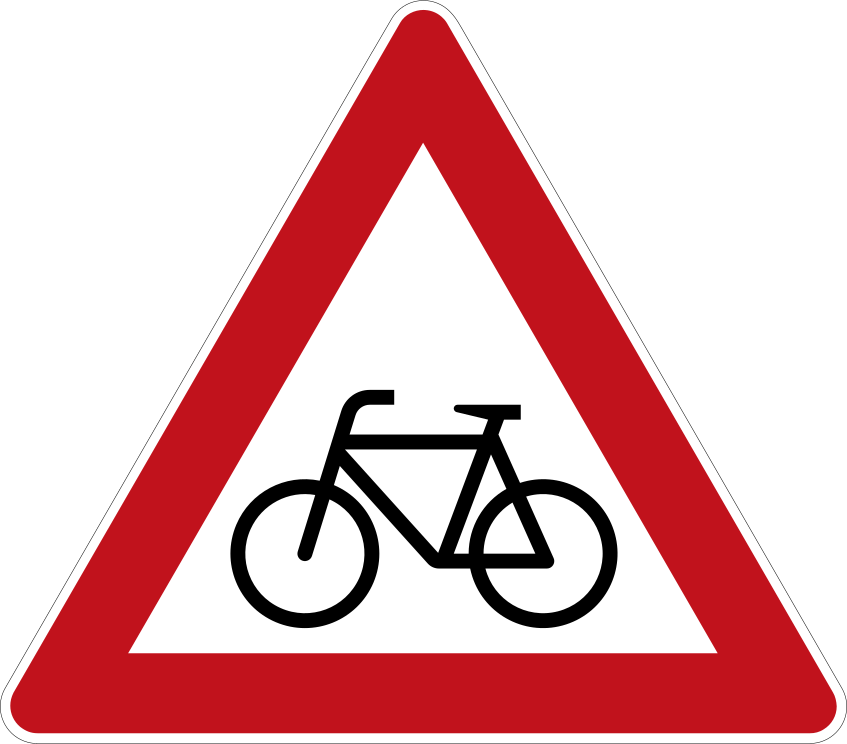
Urban Cyclists
Germany has a strong cycling culture — check blind spots, respect cycling lanes, maintain 1.5m distance
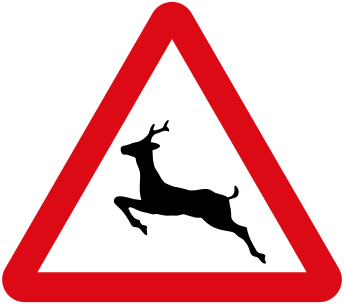
Wildlife Crossings (Wildwechsel)
Deer and wild boar frequently cross rural roads, especially at dawn and dusk
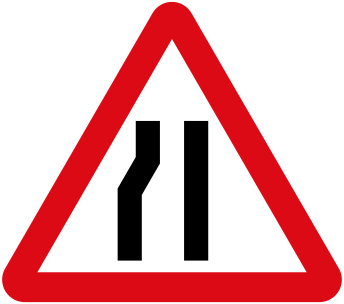
Construction Zones (Baustellen)
Narrow lanes on Autobahn, sudden speed reductions, frequent lane shifts
Germany's 16 Bundesländer
Driving licence administration is handled by the local Fahrerlaubnisbehörde in each state
- 1Baden-WürttembergStuttgartBW11.1M
- 2BayernMünchenBY13.2M
- 3BerlinBerlinBE3.7M
- 4BrandenburgPotsdamBB2.6M
- 5BremenBremenHB0.7M
- 6HamburgHamburgHH1.9M
- 7HessenWiesbadenHE6.4M
- 8Mecklenburg-VorpommernSchwerinMV1.6M
- 9NiedersachsenHannoverNI8.0M
- 10Nordrhein-WestfalenDüsseldorfNW18.1M
- 11Rheinland-PfalzMainzRP4.1M
- 12SaarlandSaarbrückenSL1.0M
- 13SachsenDresdenSN4.1M
- 14Sachsen-AnhaltMagdeburgST2.2M
- 15Schleswig-HolsteinKielSH2.9M
- 16ThüringenErfurtTH2.1M
While driving laws are federal (StVO), licence issuance is handled by local authorities (Fahrerlaubnisbehörde) in each Bundesland. Fahrschule costs vary significantly by region.
Myth: The entire Autobahn has no speed limit
Fact: Only about 60% of the Autobahn network is unrestricted. The remaining 40% has mandatory posted speed limits, typically 80–130 km/h. Construction zones, urban sections, and high-traffic areas almost always have posted limits.
Myth: You can drive as fast as you want without consequence on unrestricted Autobahn
Fact: The 130 km/h advisory speed (Richtgeschwindigkeit) has legal significance. If you are involved in an accident while driving faster than 130 km/h, your liability share automatically increases — even if you were not at fault. Insurance companies may reduce payouts.
Myth: Right-before-left (Rechts-vor-Links) rarely applies in practice
Fact: Rechts-vor-Links is the DEFAULT priority rule at ALL unmarked intersections in Germany. It applies far more often than foreigners expect, especially in residential areas and smaller streets. Failure to yield costs €25–70 and can cause serious accidents.
Myth: Flashing your headlights on the Autobahn is acceptable to demand right of way
Fact: Aggressive use of headlight flashing (Lichthupe) to pressure other drivers is illegal under §16 StVO and considered coercion (Nötigung) under criminal law. It is only permitted as a warning of danger. Tailgating at high speed can result in criminal charges.
Myth: Passing on the right is always illegal on the Autobahn
Fact: While Rechtsüberholen (passing on the right) is generally prohibited, it is explicitly permitted when traffic is moving slowly (under 80 km/h) and the speed difference is no more than 20 km/h. Also allowed in marked lanes within urban areas.
Myth: Germany is strict about banning dashcams
Fact: The Bundesgerichtshof (BGH) ruled in 2018 that dashcam footage is admissible as evidence in court, despite data protection concerns. Short loop recordings are considered proportionate. Many German drivers now use dashcams, though continuous recording of public spaces remains a grey area under DSGVO.
New image selection tasks in theory test
TÜV/DEKRA introduced new question formats including image selection tasks in the theory test question pool, requiring candidates to identify correct traffic situations from multiple images.
Alpine symbol mandatory for winter tires
From October 2024, only tires bearing the Alpine symbol (3PMSF — Three Peak Mountain Snowflake) are accepted as winter tires. Older M+S-only tires are no longer sufficient. StVO reform also granted municipalities more autonomy over local traffic rules.
Bußgeldkatalog fines nearly doubled
Major reform of the fine catalogue with most penalties approximately doubled. Speeding fines, parking violations, and Rettungsgasse violations all significantly increased.
StVO reform & B196 extension
Comprehensive StVO reform: doubled parking fines, mandatory 1.5m cyclist overtaking distance, increased Rettungsgasse fines. New B196 licence extension allows Class B holders aged 25+ to ride 125cc motorcycles after a short course (no test required).
EU driving licence exchange rollout
All pre-2013 German driving licences must be exchanged for the new EU card format by January 19, 2033. Exchange is staggered by birth year. The new format is valid for 15 years (document only — driving rights remain permanent for AM/A/B).
How Germany Compares Globally
Germany's driving regulations compared to other major countries — data compiled from official government sources
StrictestIn betweenMost lenientBAC limit and minimum age
| Parameter | Germany | USA | UK | India | Japan |
|---|---|---|---|---|---|
| BAC Limit | 0.05% | 0.08% | 0.08% | 0.03% | 0.03% |
| Min. Age (Car) | 18 | 16 | 17 | 18 | 18 |
| Driving Side | Right | Right | Left | Left | Left |
| Highway Speed | No limit* | 120 km/h | 112 km/h | 120 km/h | 120 km/h |
| Test Questions | 30 | 20–50 | 50 | 15–20 | 50 |
| Licence Cost | €2,000–3,500 | $30–90 | £200–1,500 | ₹800 | ¥300K+ |
| Road Deaths/yr | 2,770 | 40,901 | 1,695 | 172,890 | 2,678 |
| Deaths/100K | ~3.3 | 12.9 | 2.6 | 12.4 | 2.6 |
BAC Limit
Germany: 0.05%USA: 0.08%UK: 0.08%India: 0.03%Japan: 0.03%Min. Age (Car)
Germany: 18USA: 16UK: 17India: 18Japan: 18Driving Side
Germany: RightUSA: RightUK: LeftIndia: LeftJapan: LeftHighway Speed
Germany: No limit*USA: 120 km/hUK: 112 km/hIndia: 120 km/hJapan: 120 km/hTest Questions
Germany: 30USA: 20–50UK: 50India: 15–20Japan: 50Licence Cost
Germany: €2,000–3,500USA: $30–90UK: £200–1,500India: ₹800Japan: ¥300K+Road Deaths/yr
Germany: 2,770USA: 40,901UK: 1,695India: 172,890Japan: 2,678Deaths/100K
Germany: ~3.3USA: 12.9UK: 2.6India: 12.4Japan: 2.6
Germany
Stricter than USA/UK (0.08%), but more lenient than India/Japan (0.03%). Novice/under-21: absolute 0.0%.
Same as India and Japan. USA allows from 16, UK from 17. BF17 allows 17 with accompaniment.
USA Right · UK Left · India Left · Japan Left
Unique globally — no general Autobahn speed limit. ~60% unrestricted, 130 km/h advisory.
USA 20–50 · UK 50 · India 15–20 · Japan 50
Among the most expensive globally. USA costs $30–90, India ~$10. Comprehensive mandatory training.
~3.4 per 100K — among the safest despite no Autobahn limit. USA is 4x worse at 12.9/100K.
USA 12.9 · UK 2.6 · India 12.4 · Japan 2.6
* Germany: no general Autobahn speed limit; 130 km/h advisory. Road deaths: Germany 2,814 (Destatis 2025), USA 40,901 (NHTSA 2023), UK 1,695 (DfT 2023), India 172,890 (MoRTH 2023), Japan 2,547 (NPA 2025). UK BAC is 0.08% for England/Wales; Scotland is 0.05%.
Primary Sources
Verification Methodology
Every fact on this page has been cross-referenced against at least two authoritative sources. Our process:
- 1Primary data collected from official German federal legislation and government portals
- 2Cross-verified against Destatis publications, ADAC resources, and KBA data
- 3Regional variations noted where applicable (Fahrschule costs differ by Bundesland)
- 4Page reviewed and fact-checked on April 12, 2026
If you find an error, please contact us so we can correct it immediately.
Frequently Asked Questions
How much does a driving licence cost in Germany?
The total cost for a Class B (car) licence is typically €2,000–€3,500, with the ADAC reporting an average of ~€2,800. This includes: Fahrschule registration €100–200, theory lessons + materials €200–400, driving lessons at €45–70 per 45 minutes, 12 mandatory special drives €540–840, theory test €22.49, practical test €116.93, first aid course €25–50, eye test €7, photos €10, and licence application €40–50. Costs vary significantly by region.
What is the German theory test format?
The Theorieprüfung for Class B has 30 multiple-choice questions (20 basic + 10 class-specific) to be completed in 45 minutes. Each question carries 2–5 error points. You must score no more than 10 error points to pass. Important: two 5-point questions wrong = automatic fail even under 10 total points. The test costs €22.49 and is administered by TÜV or DEKRA. Available in 12 languages.
Is there really no speed limit on the Autobahn?
Only about 60% of the Autobahn network is unrestricted. The remaining 40% has mandatory posted limits (typically 80–130 km/h). On unrestricted sections, the advisory speed (Richtgeschwindigkeit) is 130 km/h. Driving faster is legal but increases your liability share in any accident, even if you were not at fault.
What is the BAC (blood alcohol) limit in Germany?
General limit: 0.5 promille (0.05% BAC). Novice drivers (during 2-year Probezeit) and everyone under 21: absolute 0.0. Commercial drivers: 0.0. The criminal threshold is 1.1 promille, which triggers automatic licence revocation and typically requires an MPU (Medizinisch-Psychologische Untersuchung) before reinstatement.
What is the Probezeit (probationary period)?
All new licence holders enter a 2-year Probezeit with strict rules: absolute 0.0 BAC, and violations are classified as A (serious) or B (minor). One A-violation or two B-violations trigger: extension of Probezeit to 4 years, mandatory Aufbauseminar (€250–500), and a written warning. A second A-violation during the extended period can lead to licence revocation and MPU requirement.
How does the Flensburg points system work?
The Kraftfahrt-Bundesamt (KBA) in Flensburg maintains a points register. Violations earn 1–3 points. At 4–5 points: written warning (Ermahnung). At 6–7 points: ordered seminar (Verwarnung). At 8 points: licence revoked. Points expire at different rates: 1 point after 2.5 years, 2 points after 5 years, 3 points after 10 years.
What is BF17 (Begleitetes Fahren)?
BF17 (Begleitetes Fahren mit 17) allows 17-year-olds to obtain a Class B licence and drive accompanied by a designated person who is at least 30 years old, has held a licence for 5+ years, and has no more than 1 point in Flensburg. The accompanying person must be named on the licence and may not be intoxicated. Driving alone before turning 18 results in licence revocation.
What are the mandatory special drives (Sonderfahrten)?
Before taking the practical test, you must complete 12 mandatory special drives with your Fahrlehrer: 5 Überlandfahrten (rural roads), 4 Autobahnfahrten (Autobahn drives), and 3 Nachtfahrten (night drives). Each lesson is 45 minutes. These are in addition to your regular driving lessons, the number of which depends on your skill level.
What is the Rettungsgasse and why is it important?
The Rettungsgasse (emergency corridor) must be formed immediately when traffic comes to a standstill on multi-lane roads. On a 2-lane road: left lane goes left, right lane goes right. On 3+ lanes: left lane goes left, all other lanes go right. Failure to form or blocking the Rettungsgasse carries fines of €200–320 plus 2 Flensburg points. If emergency vehicles are obstructed, fines increase and a driving ban may be imposed.
Do I need winter tires in Germany?
Germany has a situational winter tire requirement: you must use winter tires when conditions are icy, snowy, or slushy (not date-based). Since October 2024, only tires bearing the Alpine symbol (3PMSF — Three Peak Mountain Snowflake) are accepted. Older M+S-only tires no longer qualify. Driving without appropriate tires costs €60 + 1 Flensburg point, and if you cause an obstruction, €80 + 1 point.
What is an Umweltplakette and do I need one?
An Umweltplakette (environmental badge) is required to drive in Umweltzonen (environmental zones) in many German cities. Most modern vehicles receive a green badge (€5–15 from vehicle registration offices or authorized workshops). Driving in an Umweltzone without the correct badge costs €80. Check umwelt-plakette.de to see which cities require them.
Can I convert my foreign driving licence to a German one?
It depends on your country. EU/EEA licences are valid in Germany without conversion. Some non-EU countries (e.g., USA, Japan, Canada, South Korea) have bilateral agreements allowing conversion with minimal testing. All other countries require you to pass both the theory and practical tests at a German Fahrschule. You generally have 6 months after establishing residency to convert or obtain a German licence.
What equipment must I carry in my car in Germany?
Three items are mandatory: a warning triangle (Warndreieck), a first aid kit conforming to DIN 13164, and at least one reflective vest (Warnweste). Each missing item carries a €15 fine. While not legally required, many Germans also carry a fire extinguisher and a dashcam (admissible as evidence per BGH 2018 ruling).
What is the MPU (Medizinisch-Psychologische Untersuchung)?
The MPU, colloquially known as the "Idiotentest", is a medical-psychological assessment required before licence reinstatement after serious violations (BAC ≥1.6 promille, drug-related offences, 8+ Flensburg points, repeated drunk driving). It costs €350–750 and includes medical, psychological, and reaction tests. Preparation courses are recommended, as the first-attempt pass rate is around 50–60%.
How long is the German driving licence valid?
For AM/A/B categories (issued after 2013): the document is valid for 15 years, but the driving right itself is permanent — you only need to renew the physical card. For C/D categories (trucks/buses): 5 years, requiring medical and eye tests for renewal. Pre-2013 licences must be exchanged for the EU format by January 19, 2033, staggered by birth year.
Cite This Page
Use the following citations when referencing this article in academic papers, journalism, or reports.
APA 7th Edition
AutoviaTest. (2026, March 23). Germany driving licence facts 2026 — Fahrschule, test, fees & Autobahn rules. https://autoviatest.com/en/driving-test/germany/facts
MLA 9th Edition
AutoviaTest. "Germany Driving Licence Facts 2026 — Fahrschule, Test, Fees & Autobahn Rules." AutoviaTest, 23 Mar. 2026, autoviatest.com/en/driving-test/germany/facts.
Chicago 17th Edition
AutoviaTest. "Germany Driving Licence Facts 2026 — Fahrschule, Test, Fees & Autobahn Rules." Last modified March 23, 2026. https://autoviatest.com/en/driving-test/germany/facts.
Ready to Pass Your German Theory Test?
Practice with 1,000+ official-style Theorieprüfung questions and detailed explanations. Available in 24 languages.
More Country Driving Guides
India Driving Licence Facts & RTO GuideRTO test format, fees, speed limits, traffic fines, state-wise information, and everything about driving in India.Germany Practice Tests500+ practice questions for the TÜV/DEKRA Führerscheinprüfung with detailed explanations. French Driving Licence 2026 — The Complete GuideCode de la route, auto-école costs, speed limits, traffic fines, and the permis à points system.
 Spanish Driving Licence 2026 — The Complete GuideDGT test format, autoescuela costs, speed limits, traffic fines, and the points system.