Road signs in Japan
All 523 road signs used in Japan, grouped by type, with what each one means.
Free to browse — no signup. Every sign with its shape, colours and what it means.
Every sign in Japan
These are the signs as they appear in Japan, which uses its own sign system.
Warning signs
4 signs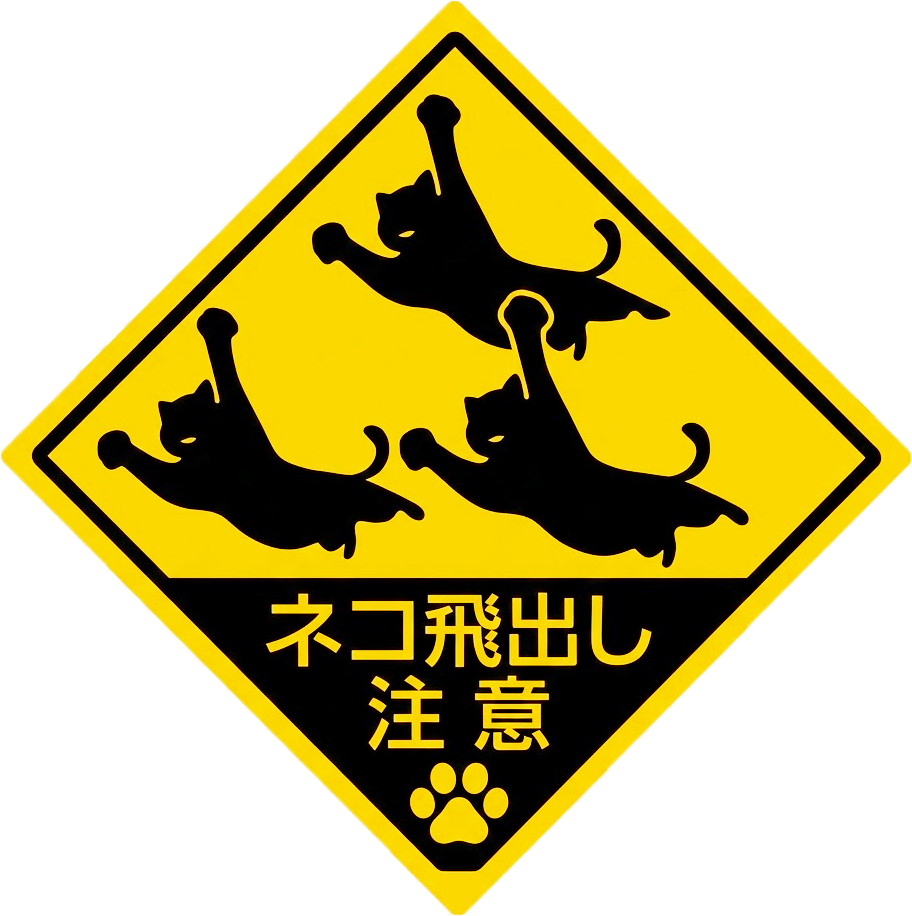 Caution cats jumping outWarning sign cautioning drivers to watch for cats darting onto the road (ネコ飛出し注意) — a locally produced community safety sign.
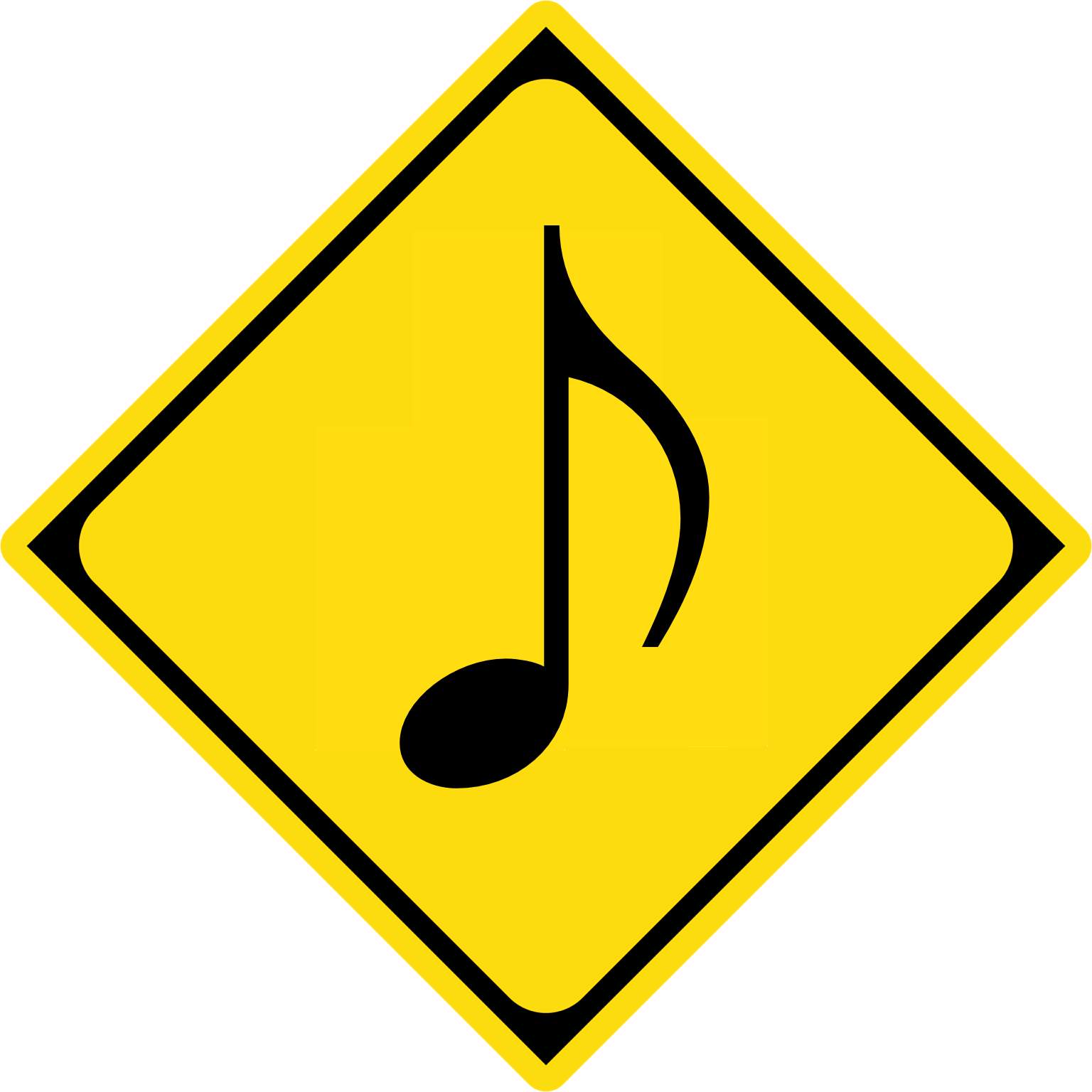 Melody road warningWarning sign indicating a melody road section where the road surface produces musical tones when driven over at the correct speed.
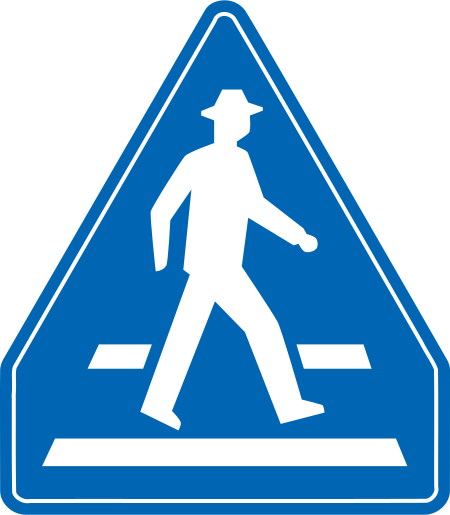 Pedestrian crossing aWarns of a pedestrian crossing ahead (adult pedestrian variant).
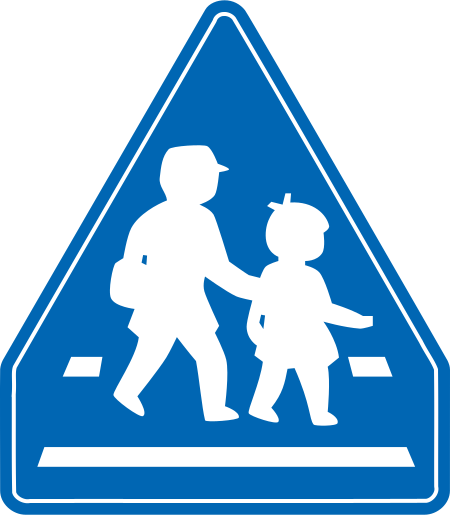 Pedestrian crossing bWarns of a pedestrian crossing ahead used by schoolchildren (children crossing variant).
Priority signs
9 signs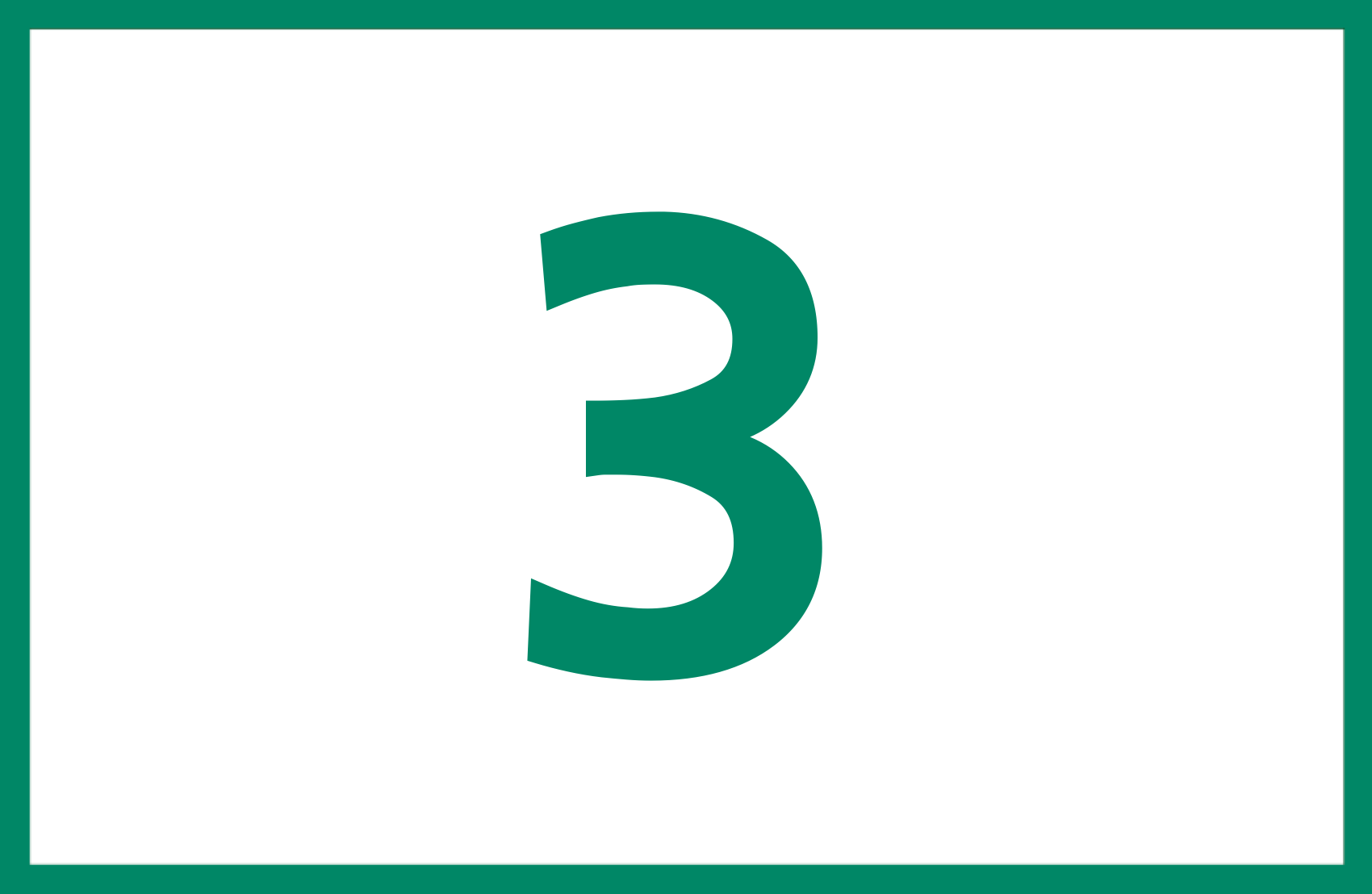 Code label 3Code 3Reference label tile showing Japanese road sign classification code 3 (priority road — the road on which the sign is posted has priority over intersecting roads).
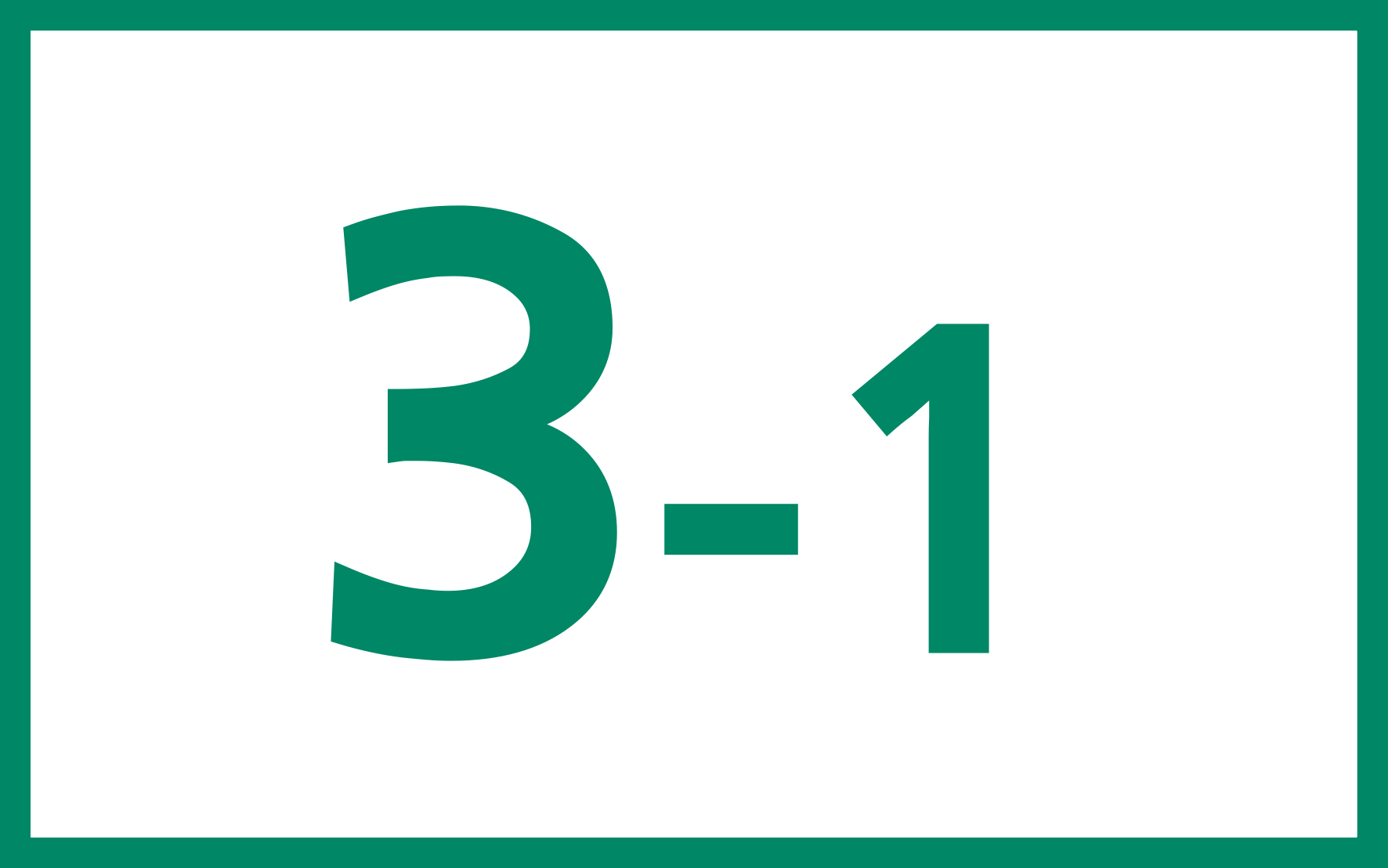 Code label 3 1Code 3-1Reference label tile showing Japanese road sign classification code 3-1 (yield/give way — drivers must give priority to traffic on the intersecting road).
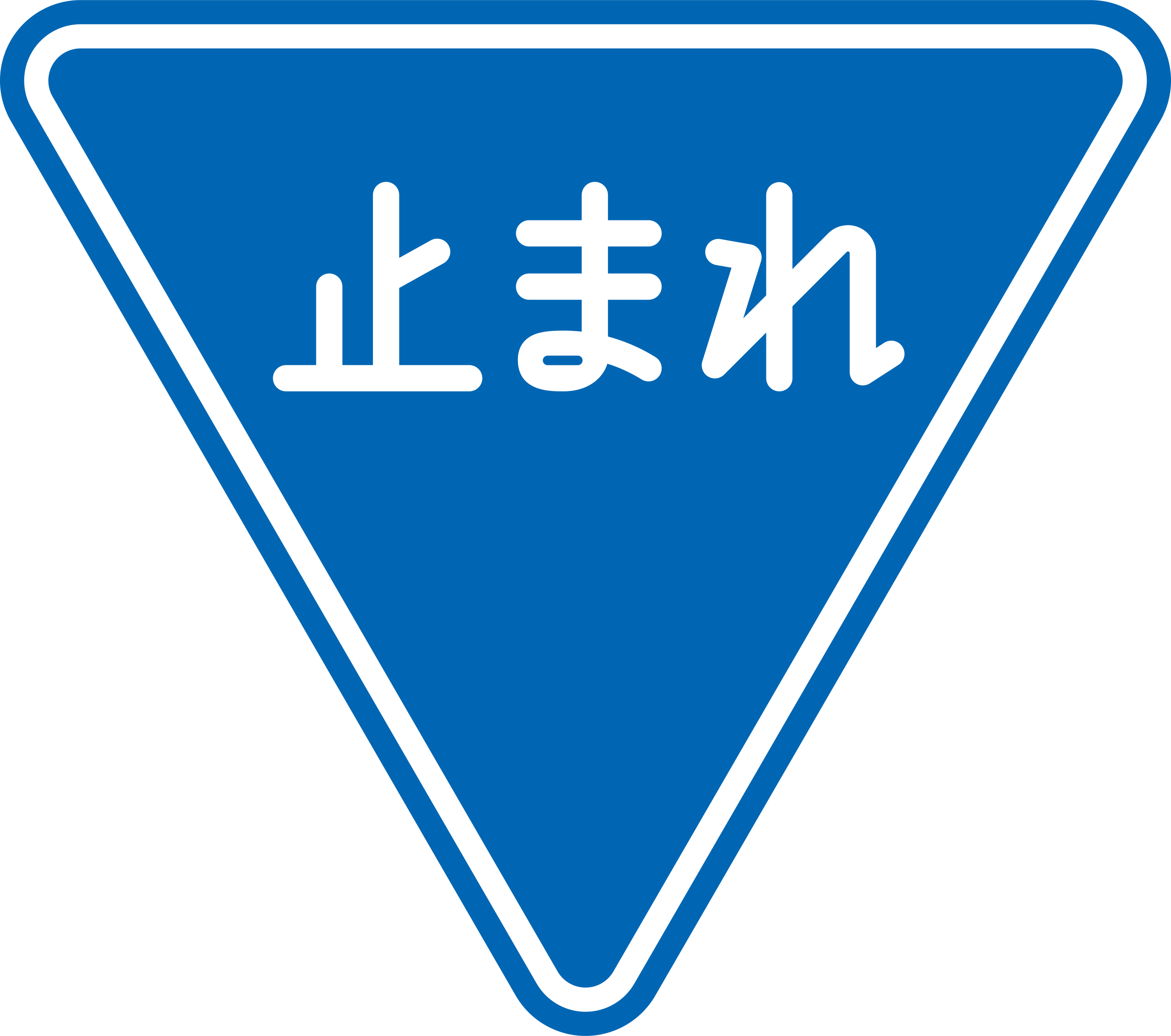
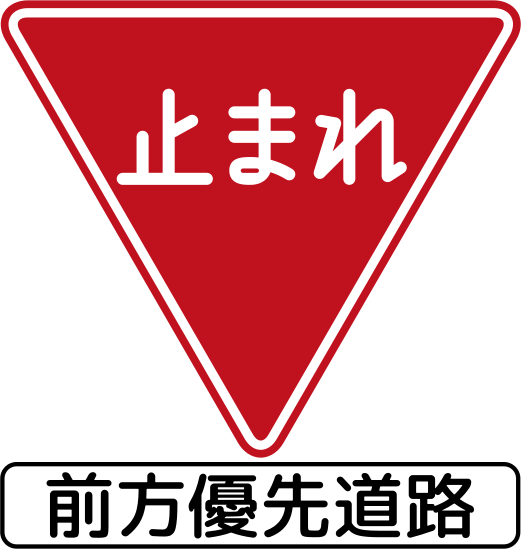
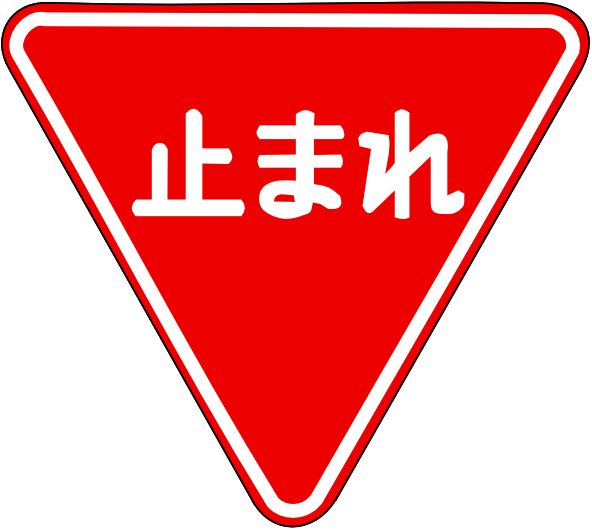
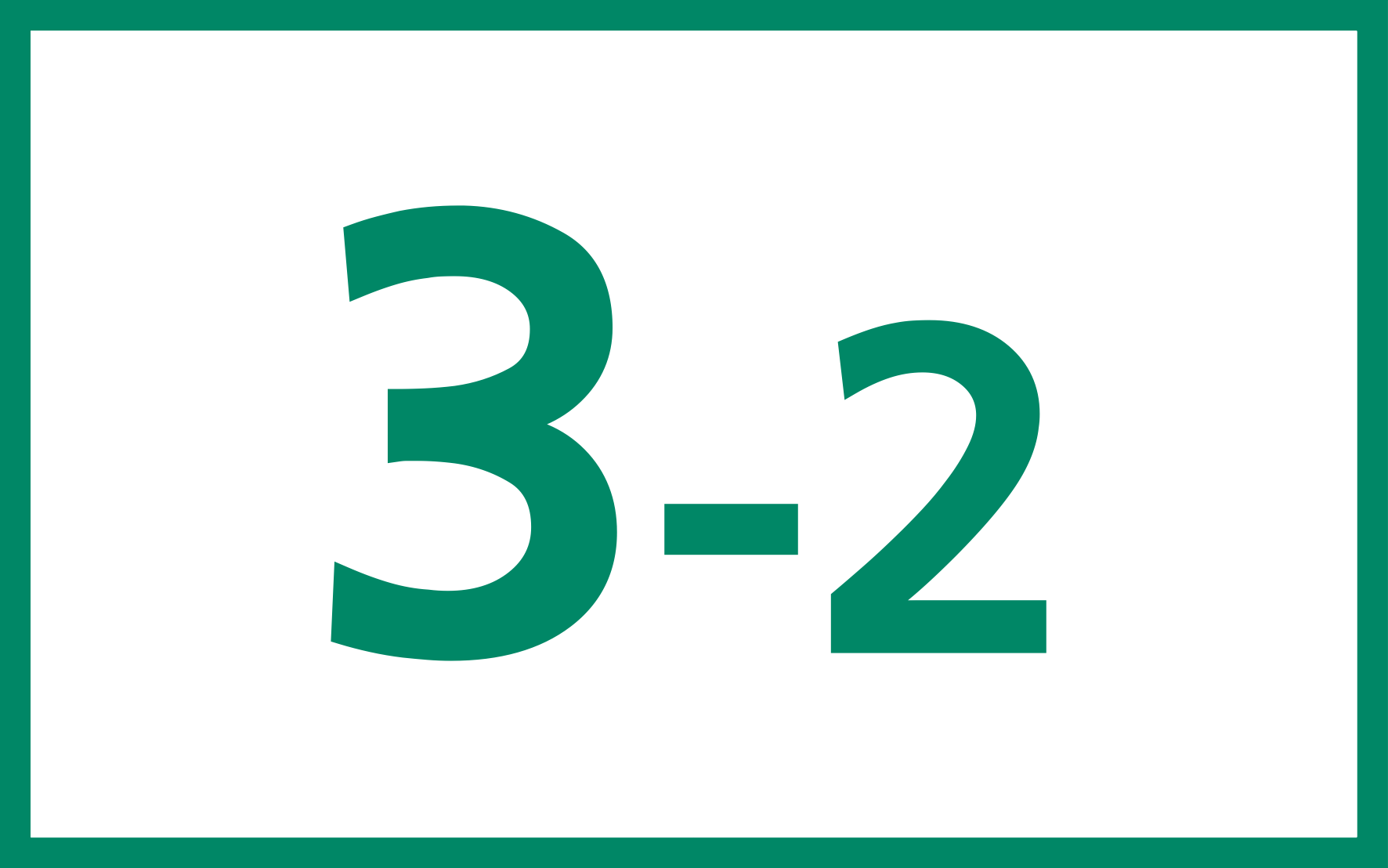 Code label 3 2Code 3-2Reference label tile showing Japanese road sign classification code 3-2 (stop — drivers must come to a complete halt before proceeding).
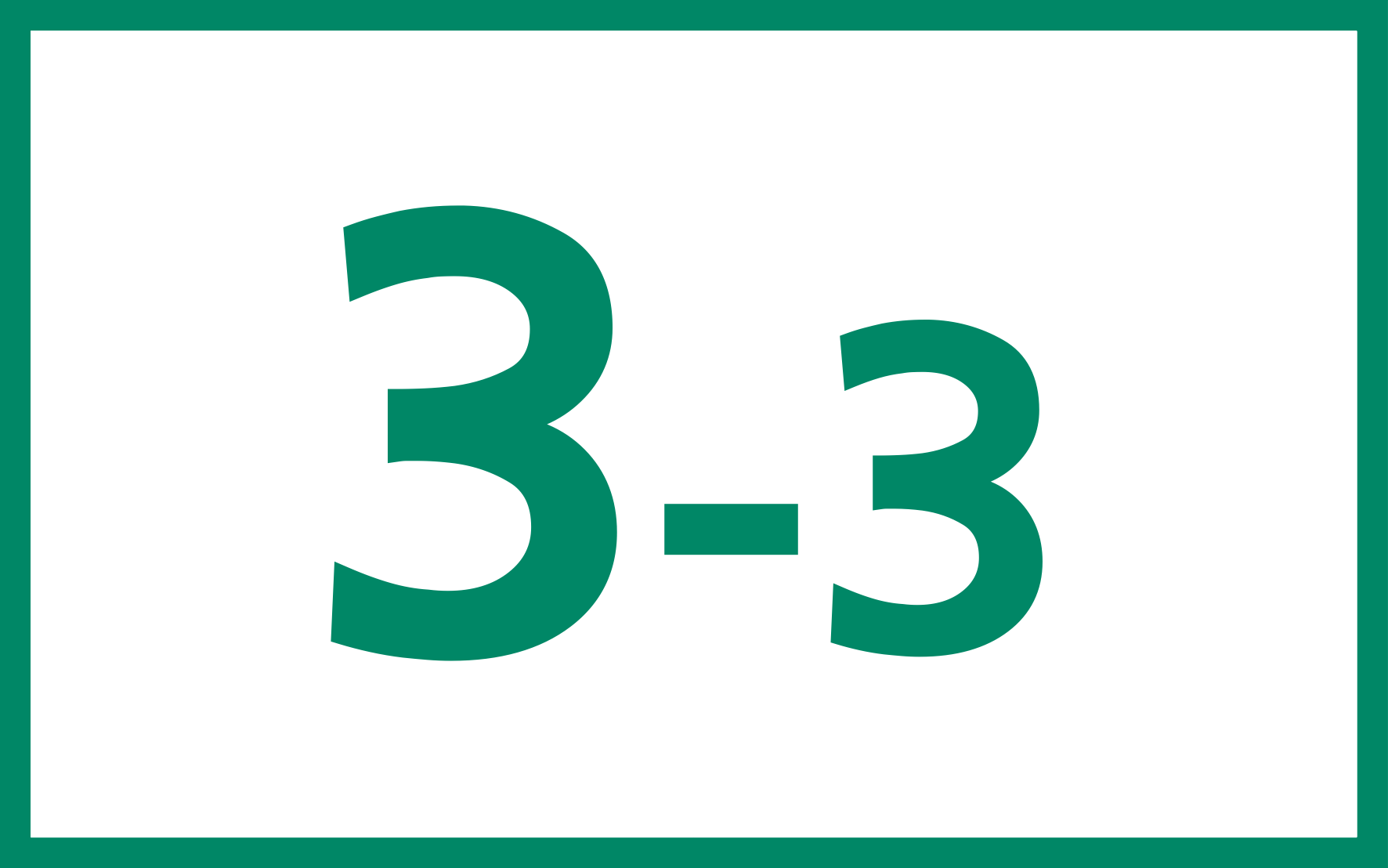 Code label 3 3Code 3-3Reference label tile showing Japanese road sign classification code 3-3 (no entry for vehicles from intersecting road — priority road continuation variant).
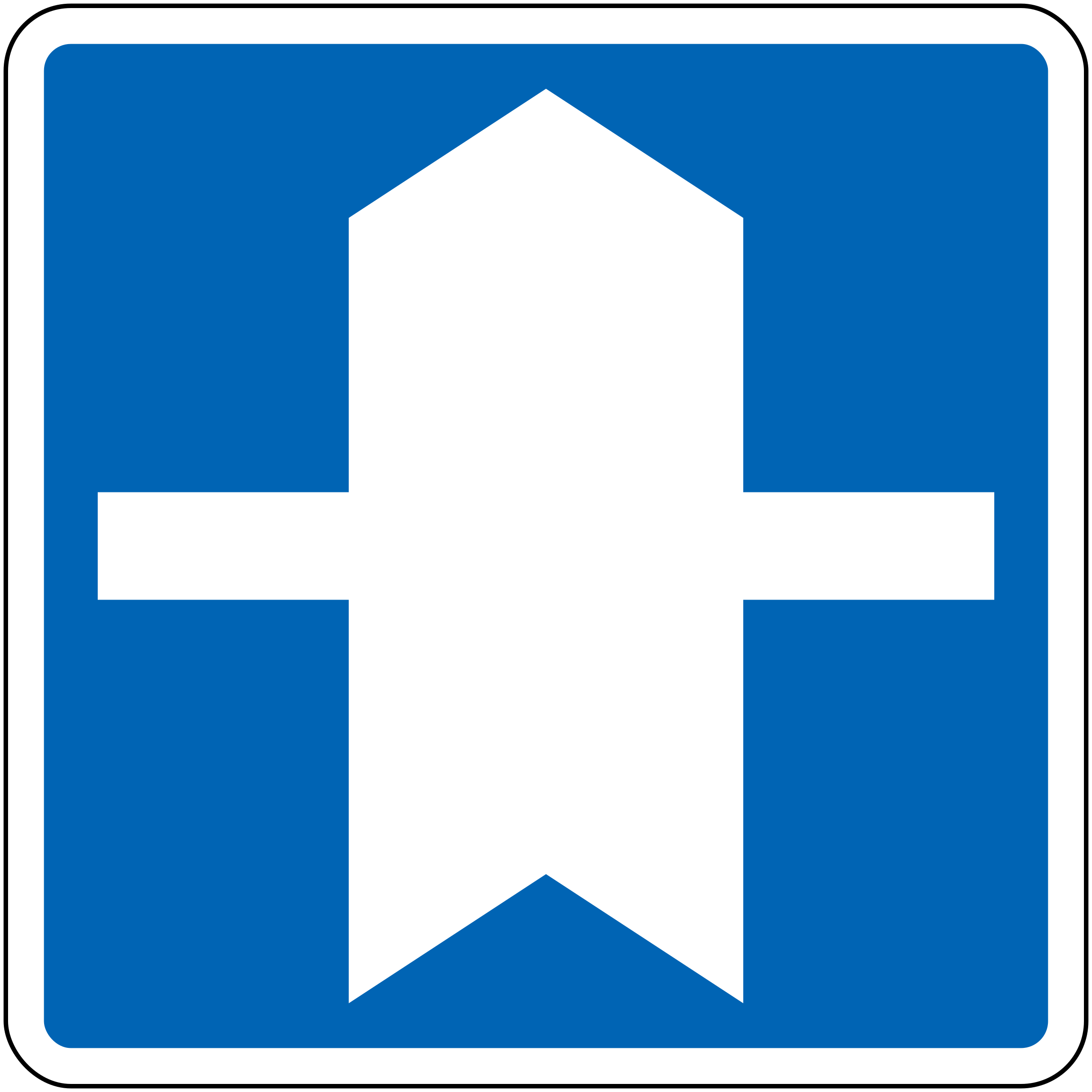 Priority route intersection 405Code 405You are on the priority road through this intersection; cross-traffic must yield.
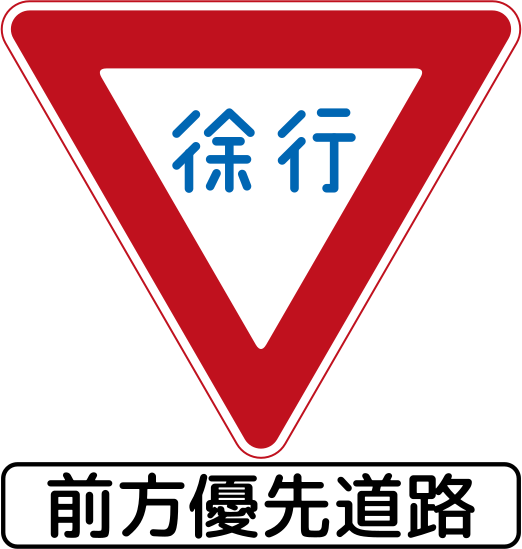 Slow yield 329 2Code 329-2Slow down (徐行) and yield to traffic on the priority road ahead.
Prohibition signs
12 signs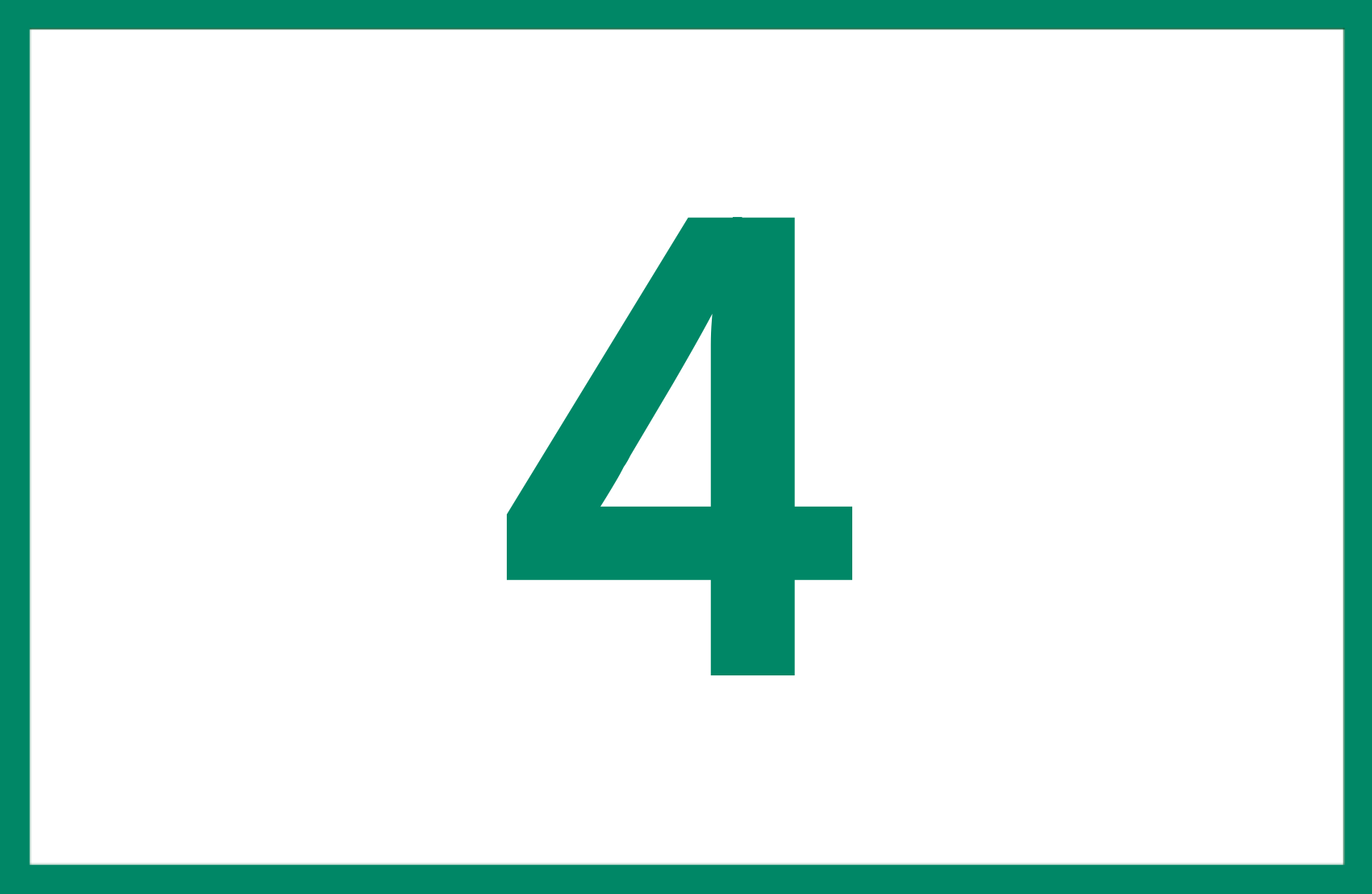 Code label 4Code 4Reference label tile showing Japanese road sign classification code 4 (no entry — vehicles must not enter the road or area ahead).
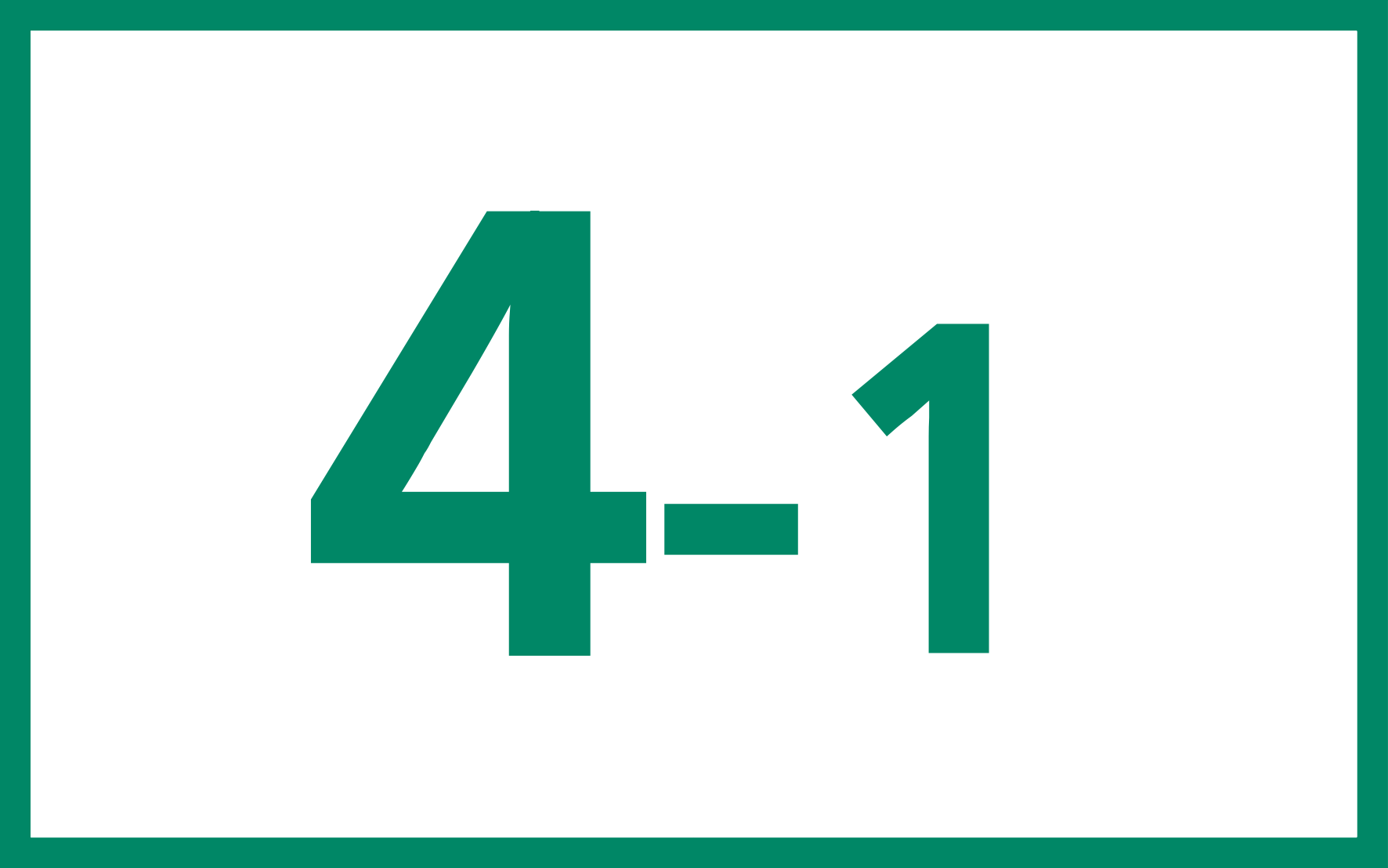 Code label 4 1Code 4-1Reference label tile showing Japanese road sign classification code 4-1 (no entry for specified vehicles — variant 1).
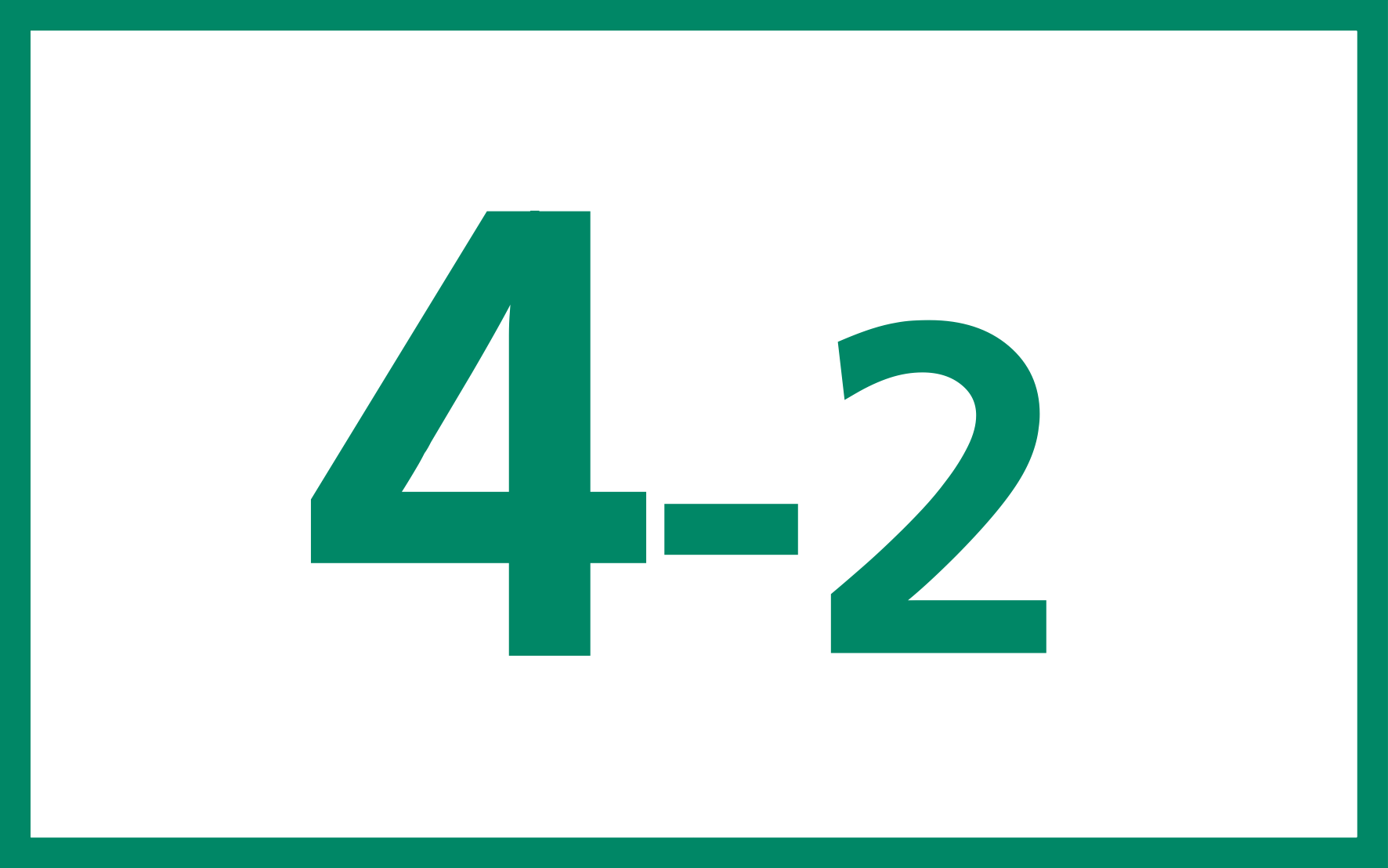 Code label 4 2Code 4-2Reference label tile showing Japanese road sign classification code 4-2 (no entry for specified vehicles — variant 2).
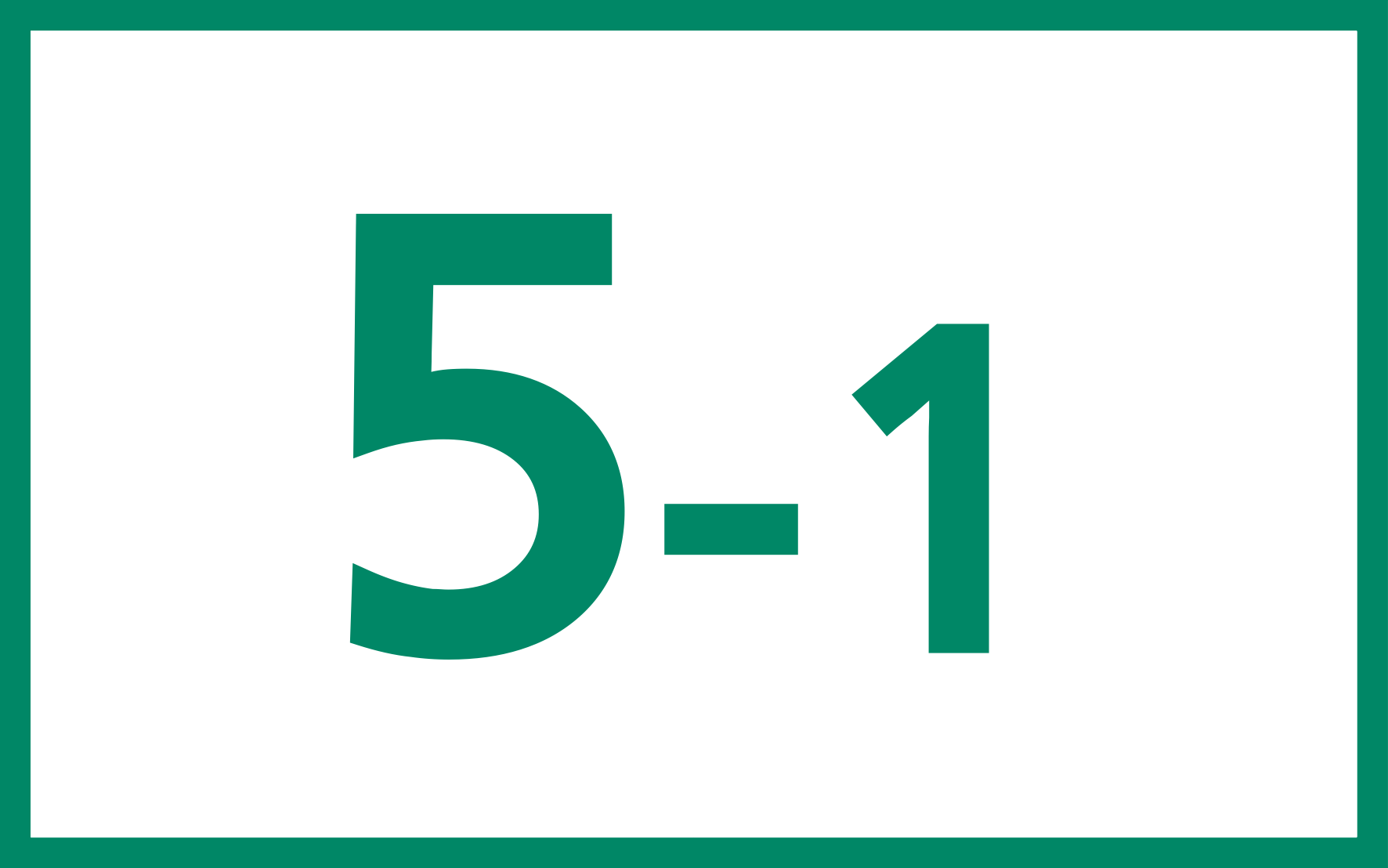 Code label 5 1Code 5-1Reference label tile showing Japanese road sign classification code 5-1 (no through road / dead end — variant indicating road closed to through traffic).
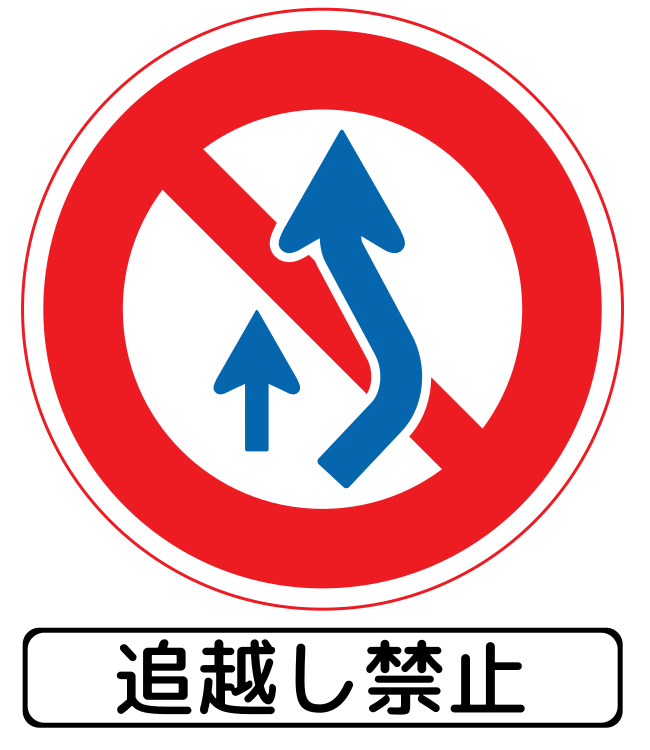 No overtaking with panelCode 314+508-2No overtaking (追越し禁止) prohibition sign with supplementary text panel below.
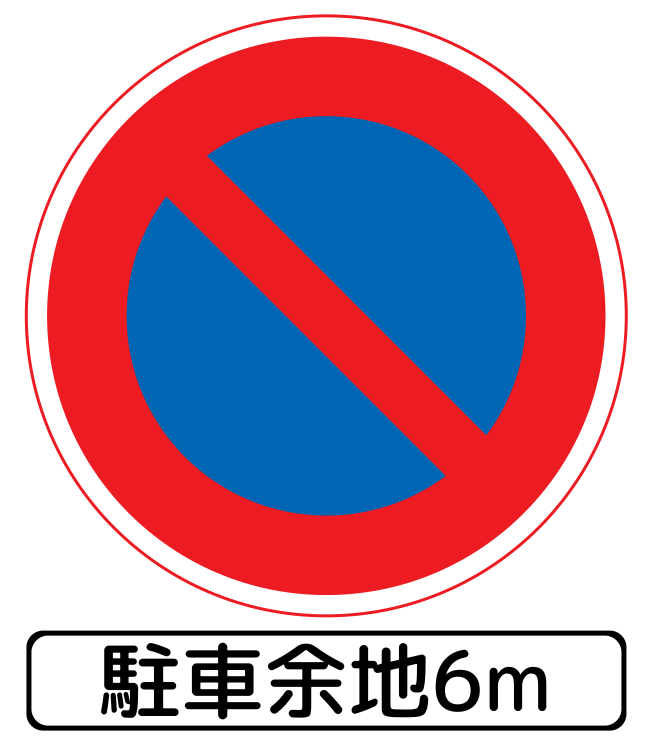 No parking 6m exemptionCode 316+504No parking sign with supplementary panel indicating a 6 m exemption zone (駐車余地6m).
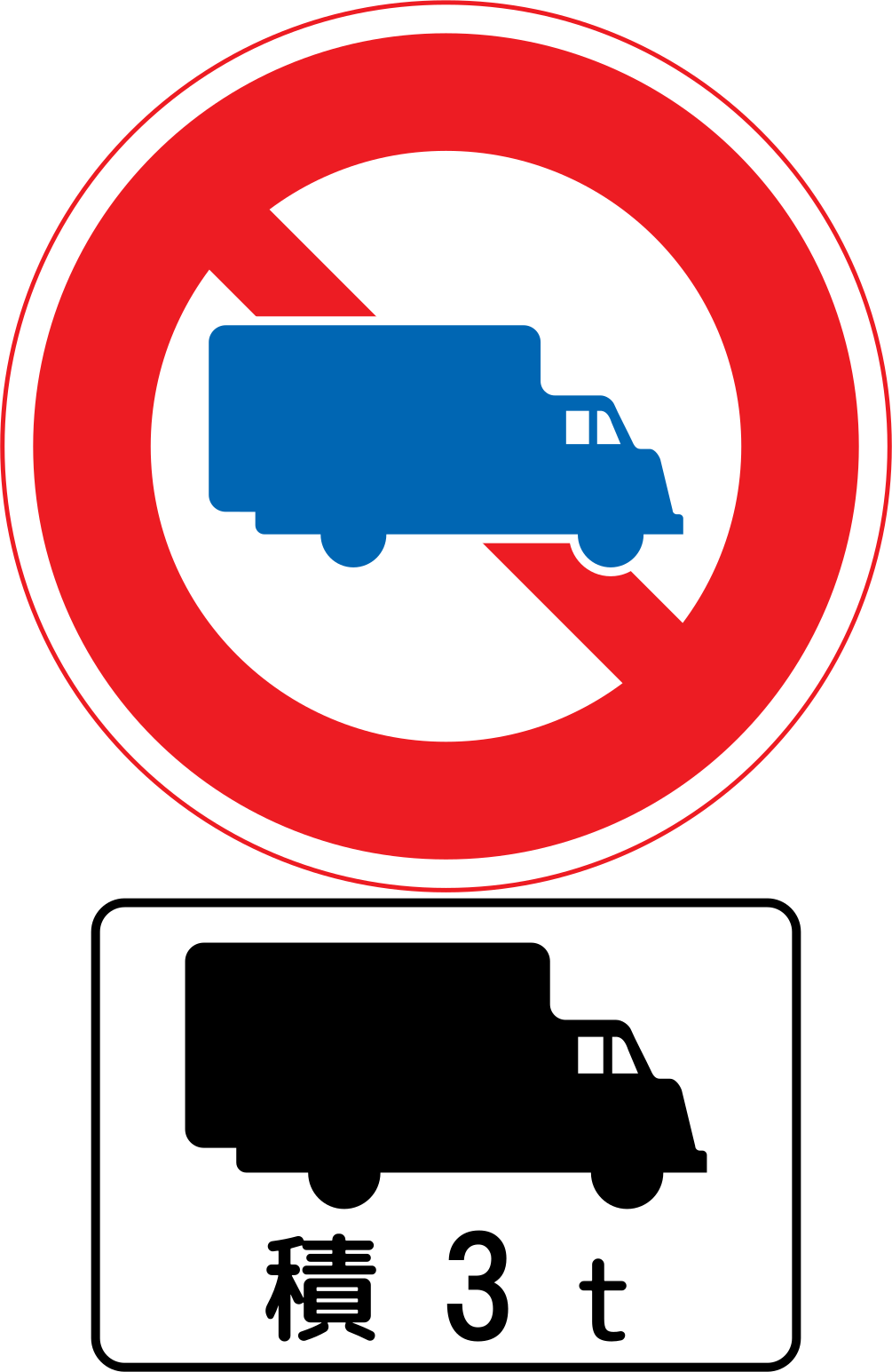
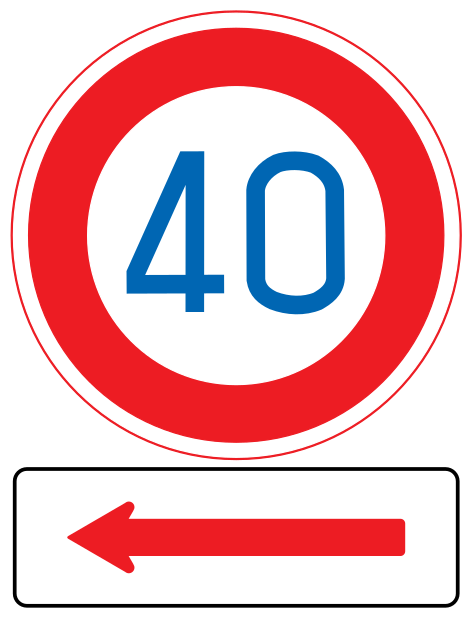
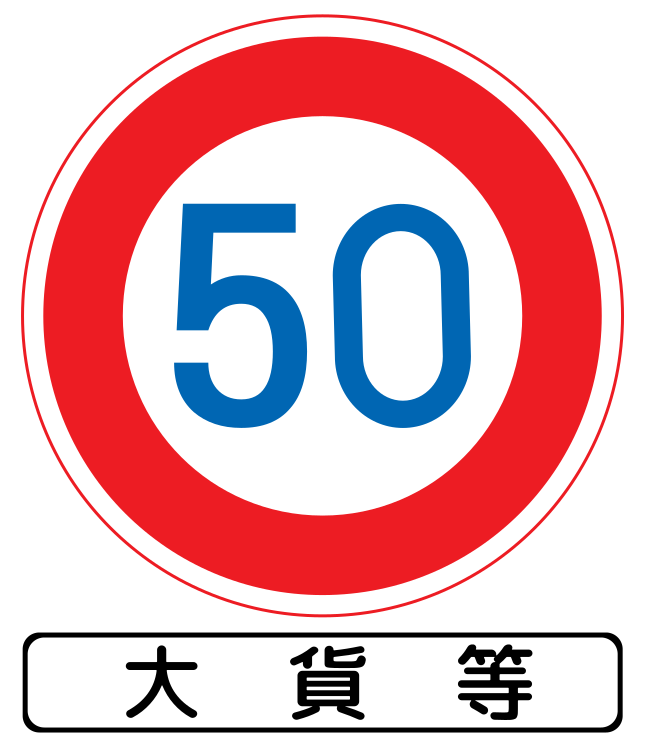
Mandatory signs
16 signs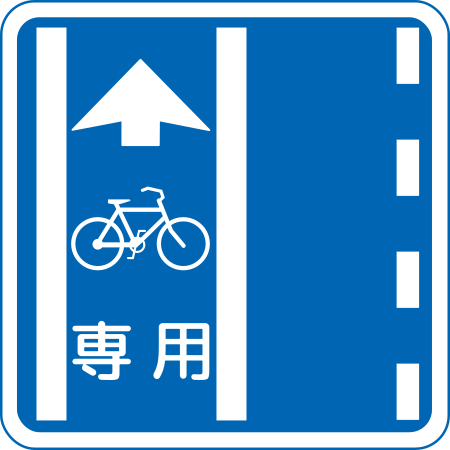 Bicycle exclusive lane 327 4 2Code 327-4-2Designates an exclusive lane for bicycles (専用 = exclusive use).
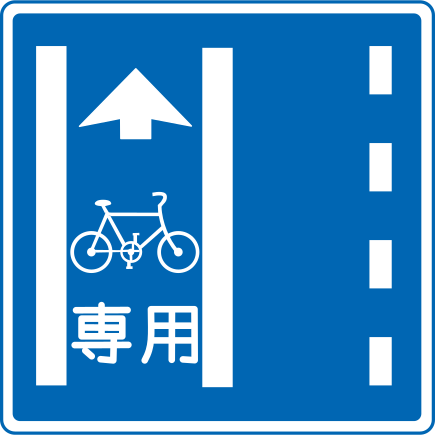 Bicycle laneIndicates a dedicated bicycle lane (自転車専用) on the roadway with an upward arrow.
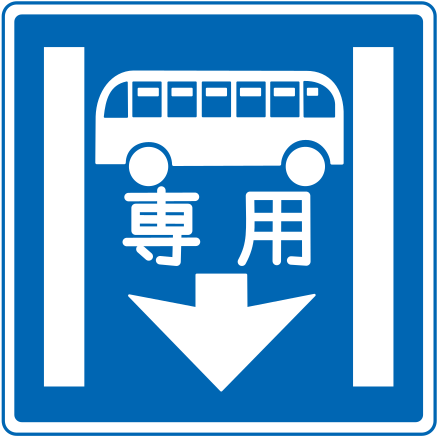 Bus exclusive lane 327 4Code 327-4Designates an exclusive lane for buses only (専用 = exclusive use).
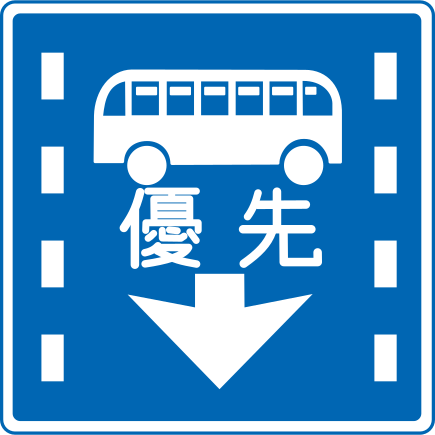 Bus priority lane 327 5Code 327-5Designates a priority lane for buses; other vehicles may use it but must yield to buses.
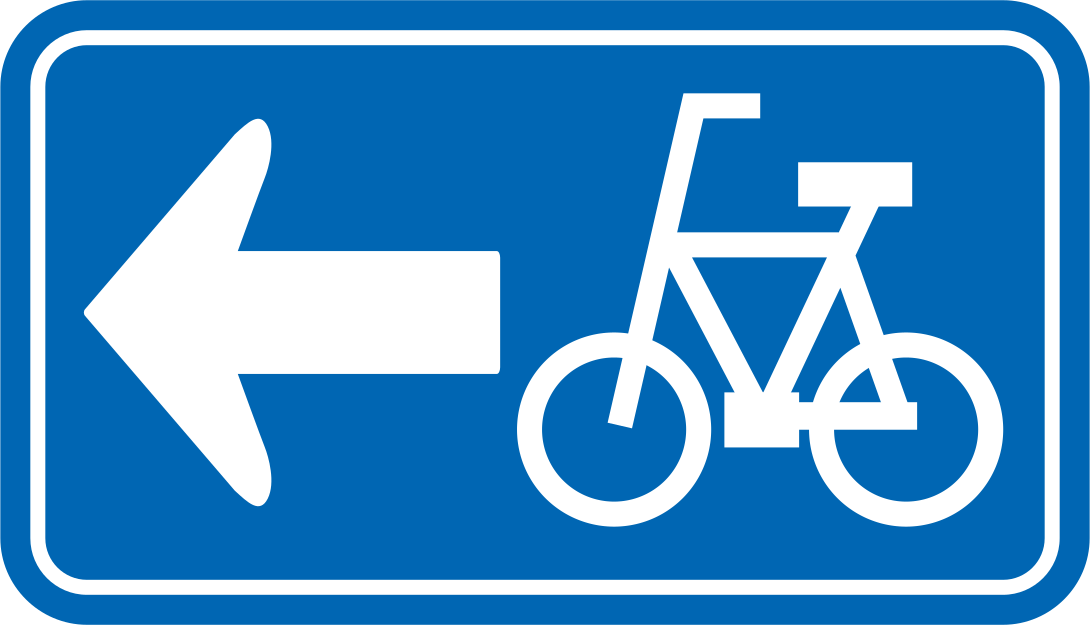 Bicycle direction leftCode 326-2-A-LMandatory direction for bicycles: bicycles must proceed to the left.
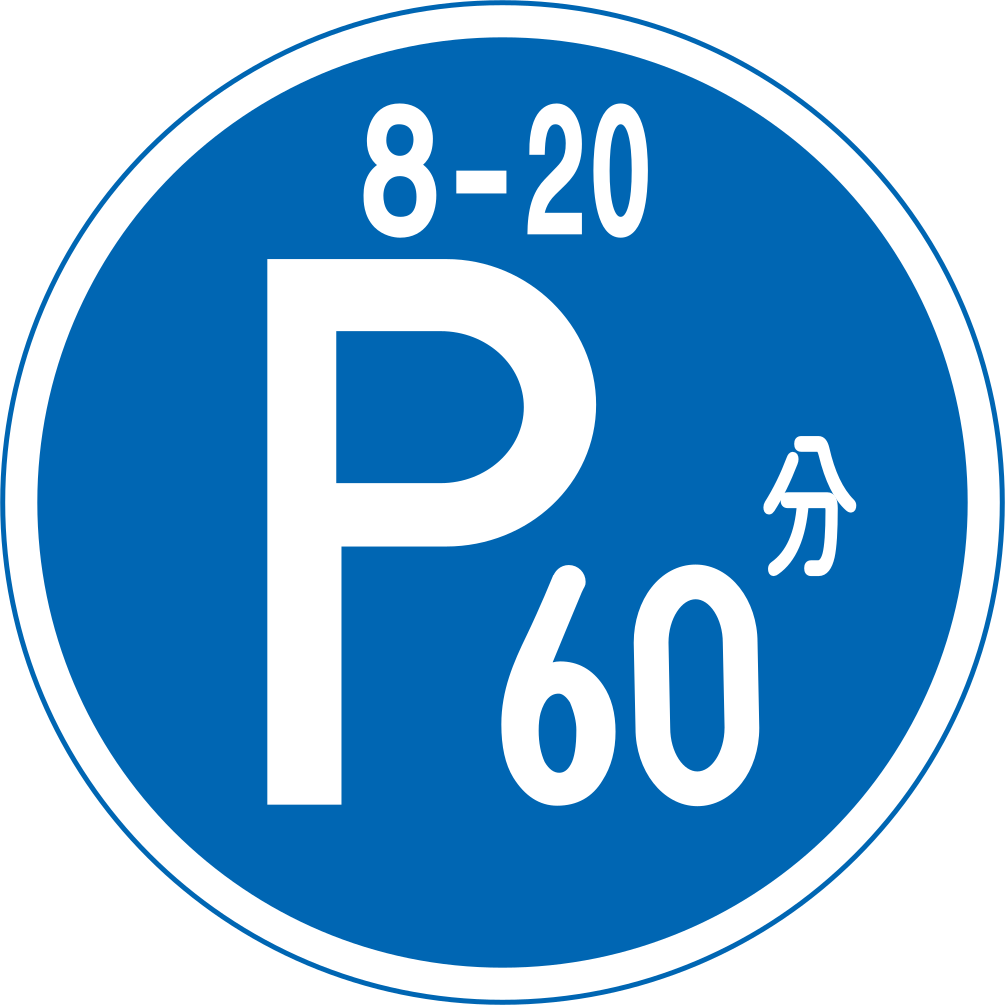 Time limited parking 60minCode 318Time-limited parking permitted: parking allowed between 8:00 and 20:00 for a maximum of 60 minutes.
Special regulation signs
3 signs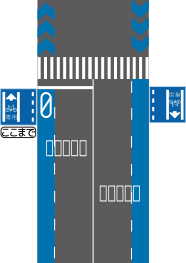 Bicycle lane road markingRoad marking assembly showing a bicycle-only lane (自転車専用) with a crossing zone, stop line, and supplementary panel indicating bicycle exclusive use.
 Disaster management vehicleDisaster management vehicle designation sign — indicates a vehicle designated for disaster relief operations (災害対策).
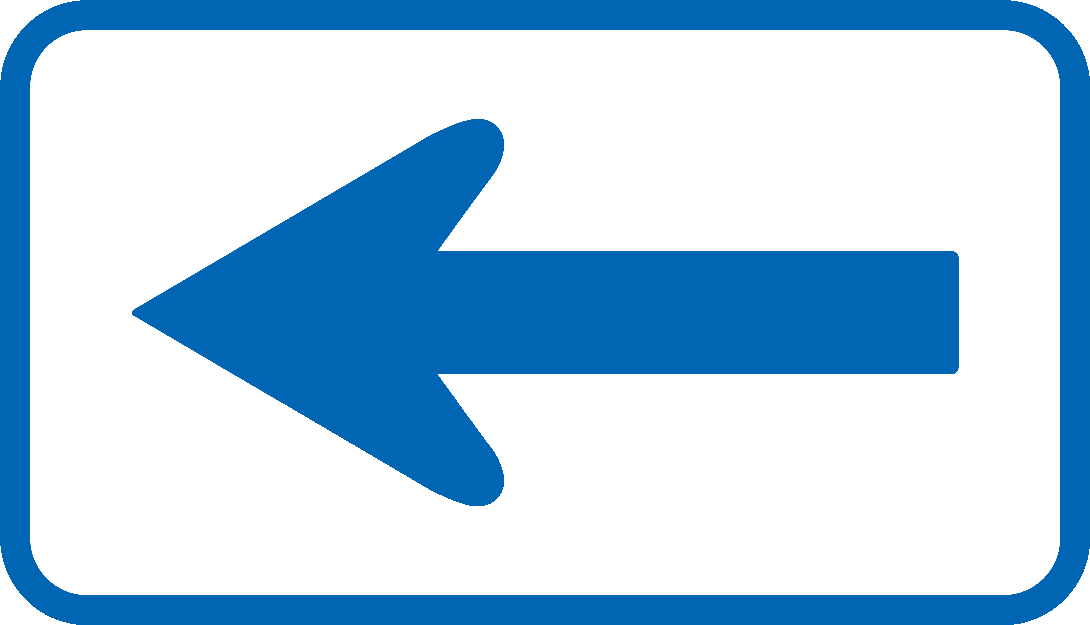 Left turn permittedSupplementary panel indicating that left turns are permitted even when the traffic signal is red.
Information signs
125 signs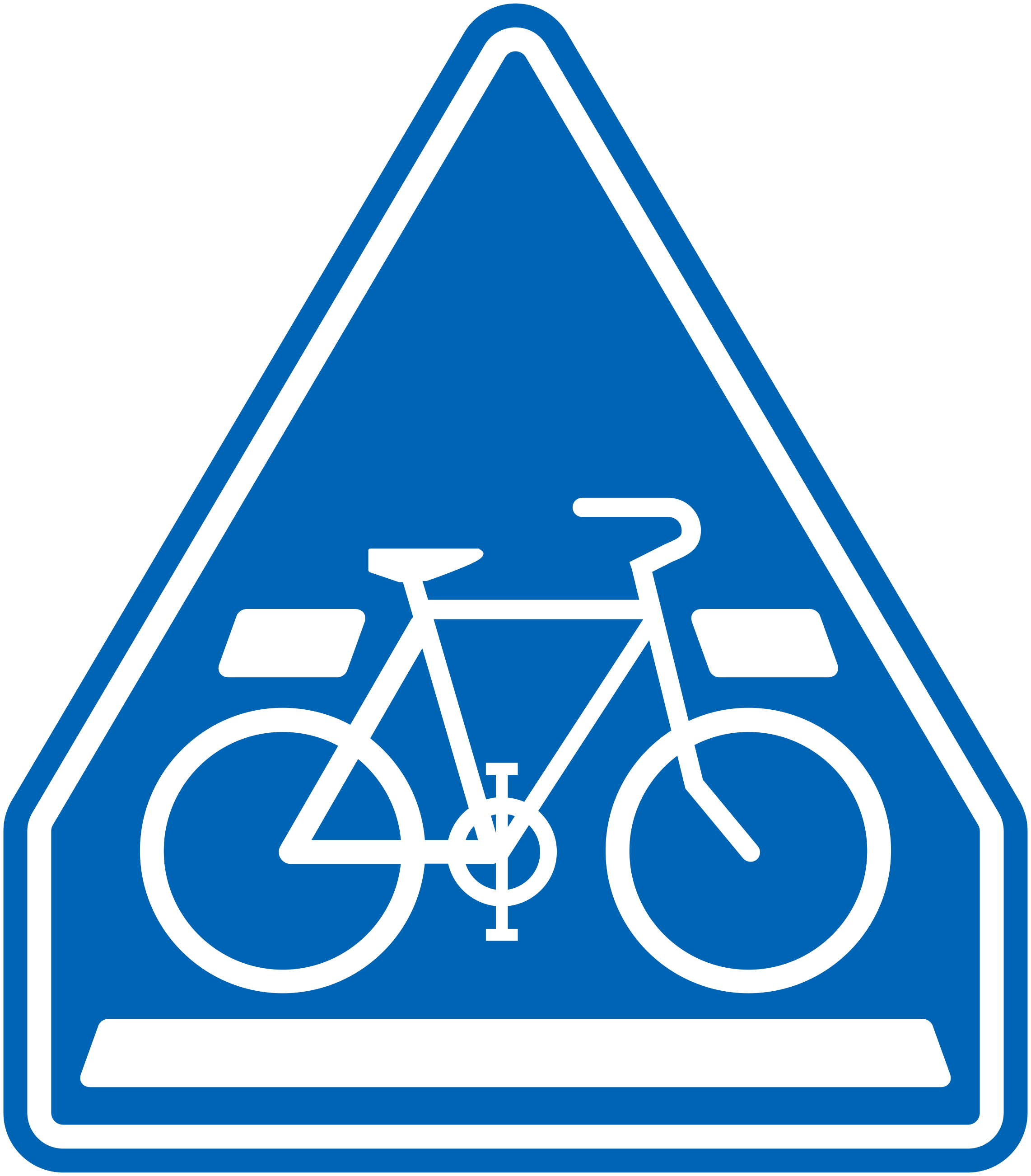 Bicycle crossing ahead 407 2Code 407-2A bicycle crossing is located ahead at this point.
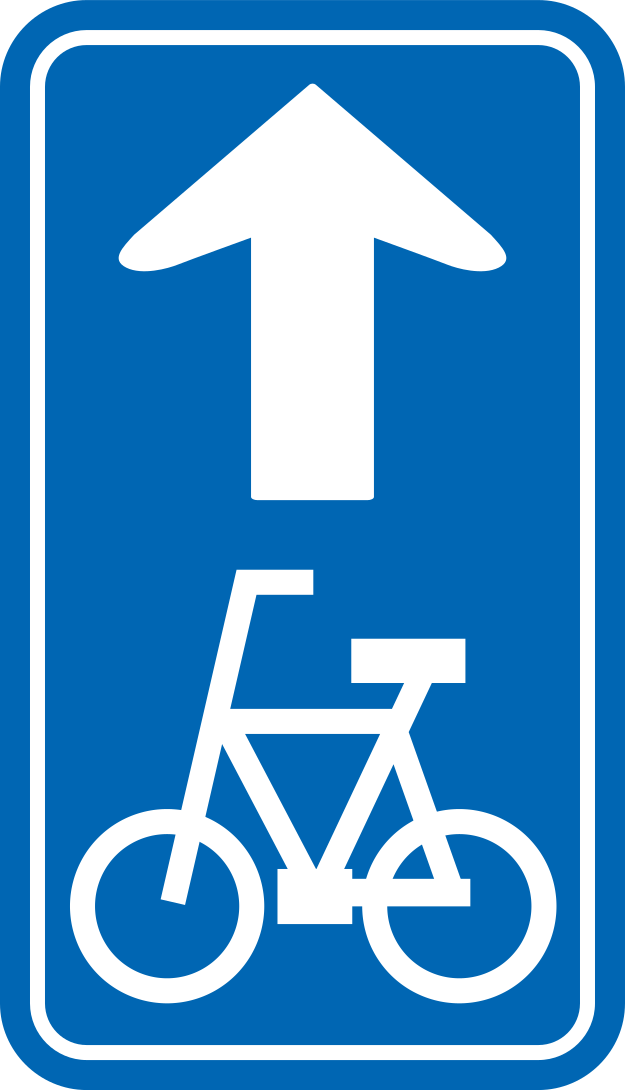 Bicycle lane straight 326 2 bCode 326-2-BBicycle lane continues straight ahead.
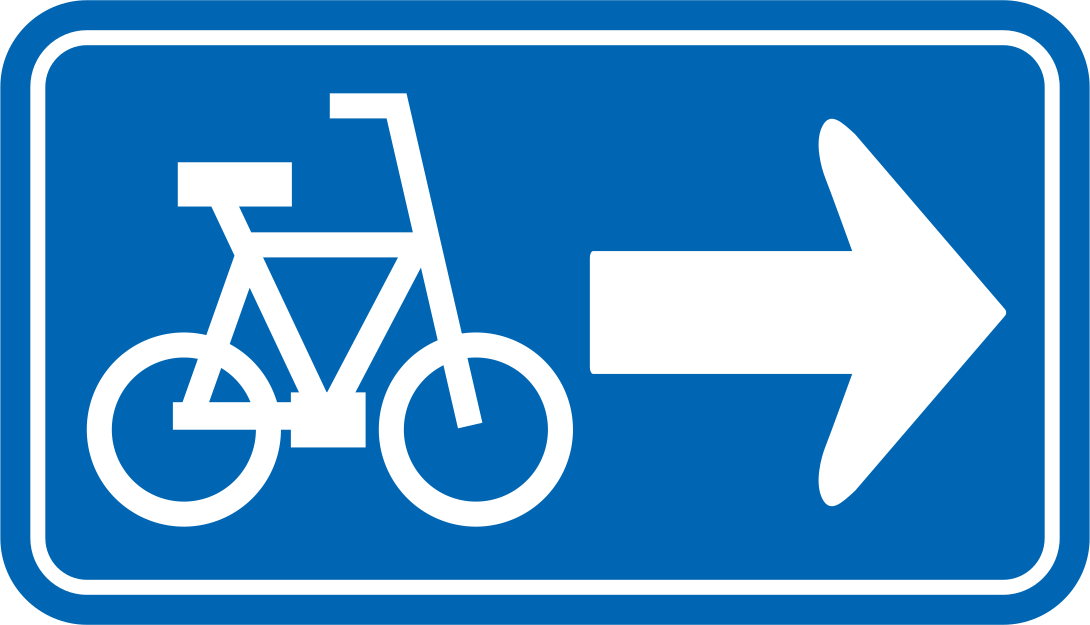 Bicycle lane turn right 326 2 a rCode 326-2-A-RBicycle lane ahead turns to the right.
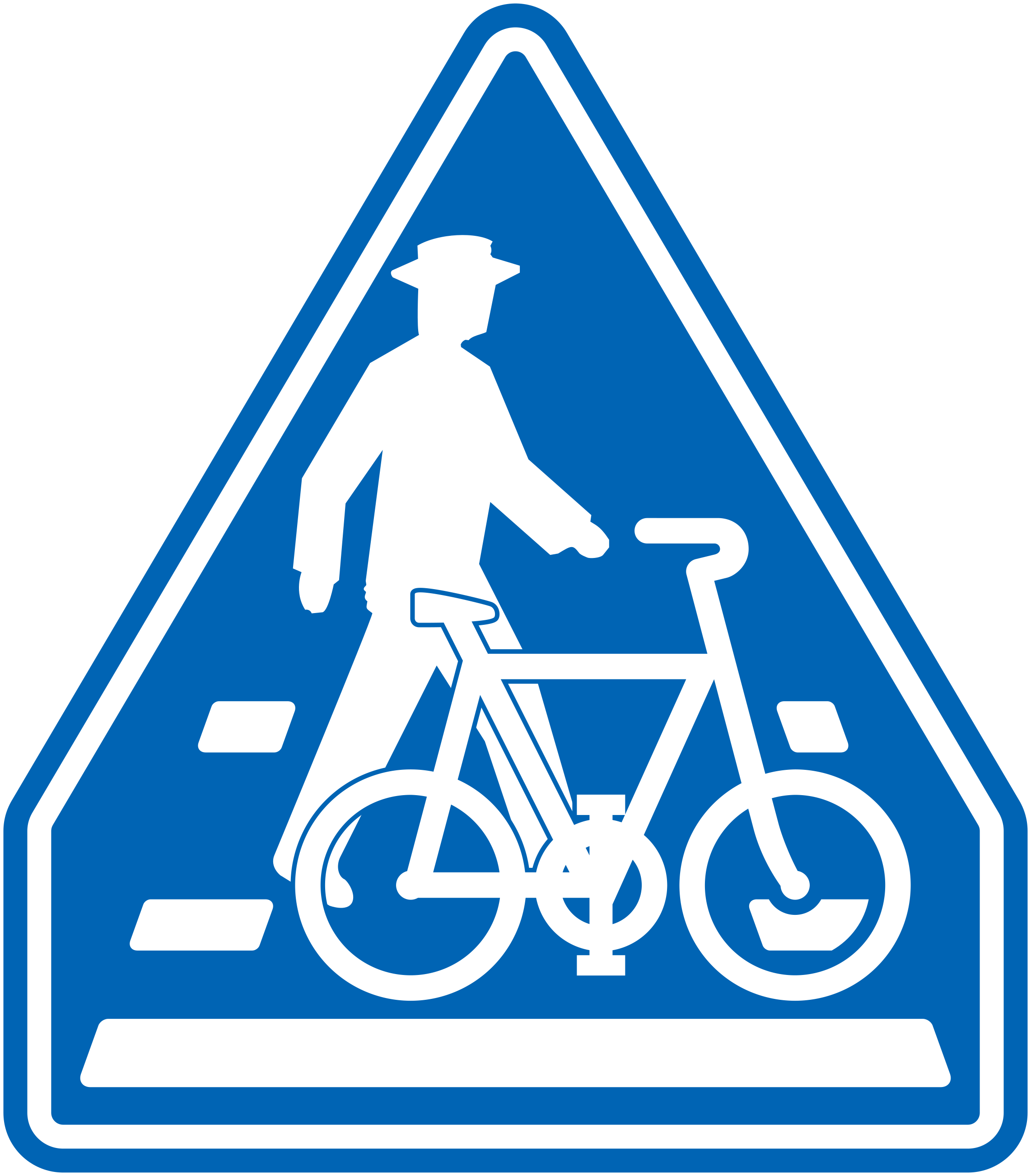 Bicycle pedestrian crossing ahead 407 3Code 407-3A combined bicycle and pedestrian crossing is located ahead.
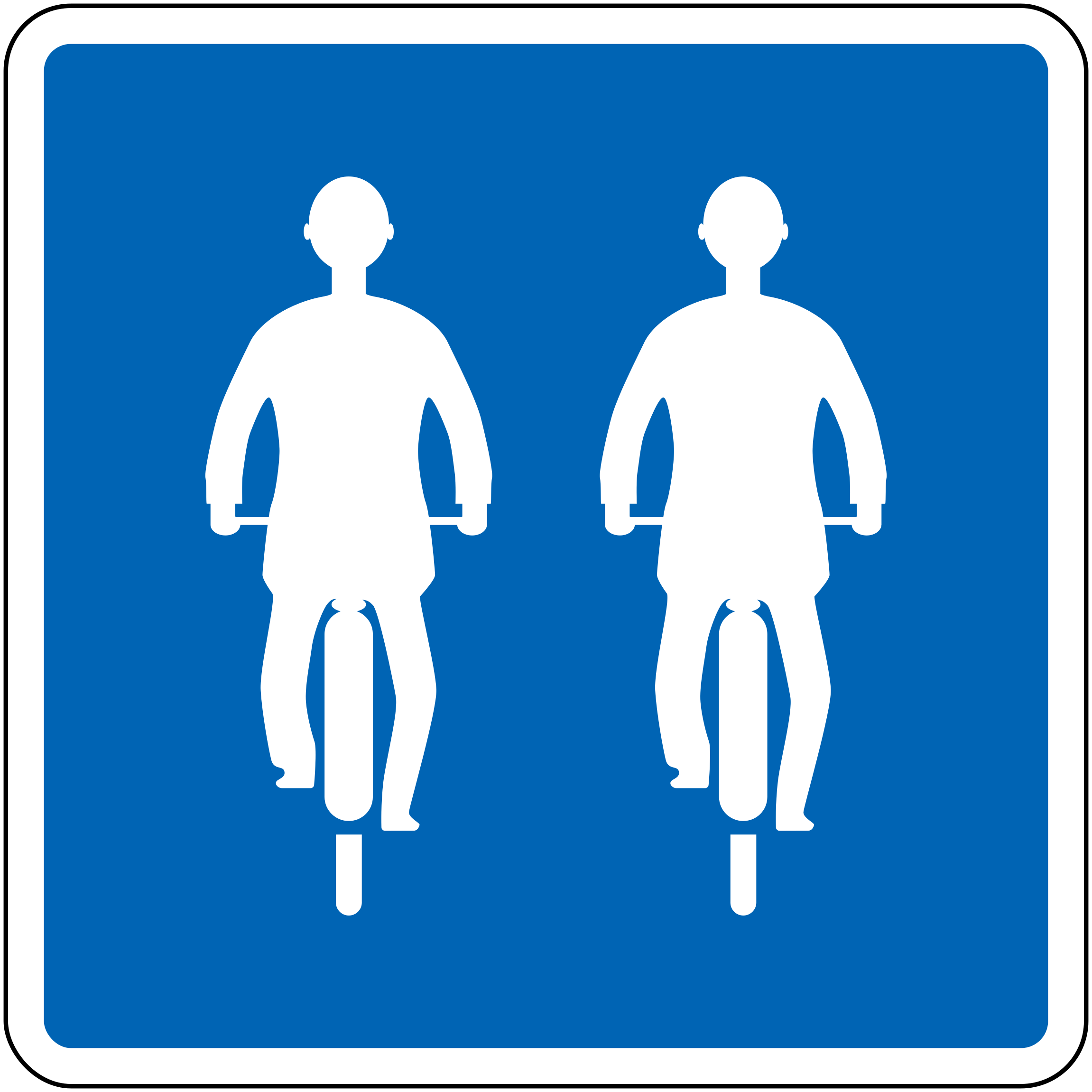 Bicycle side by side permitted 401Code 401Bicycles may ride side by side (two abreast) on this road.
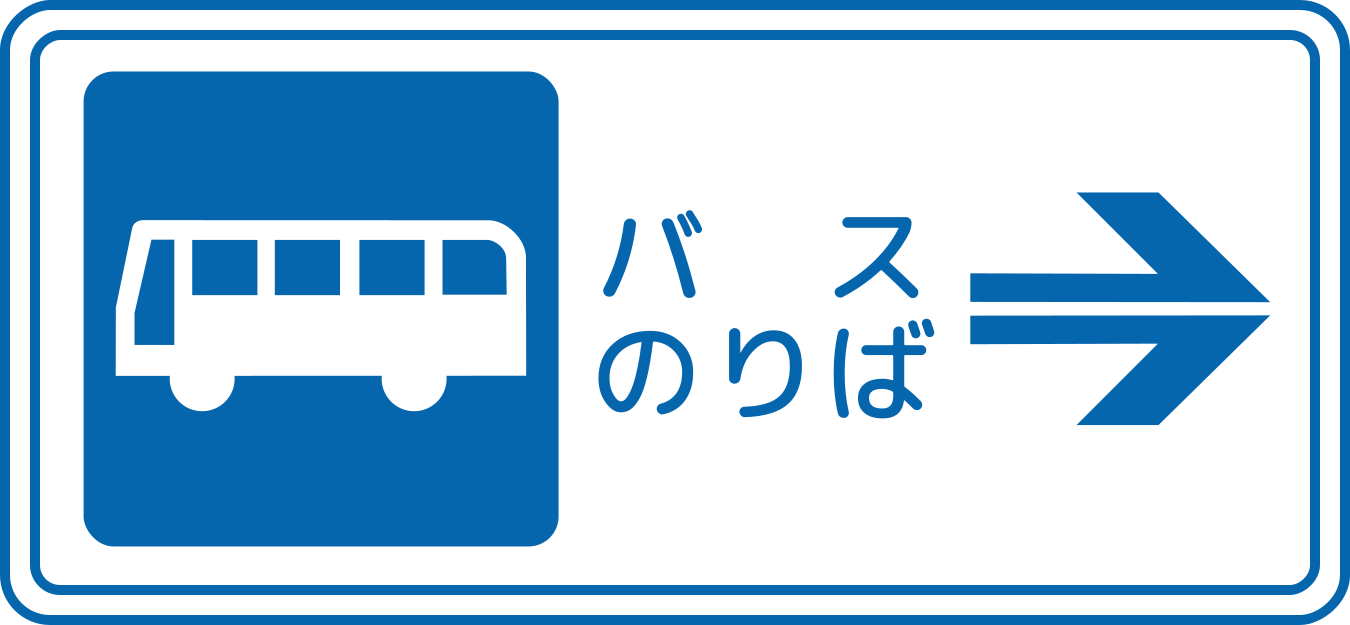
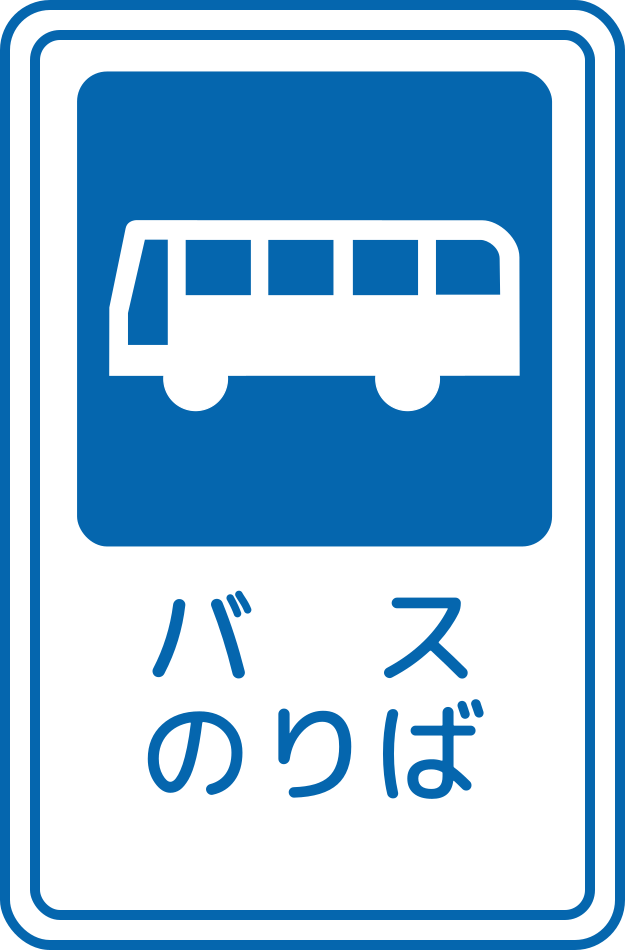
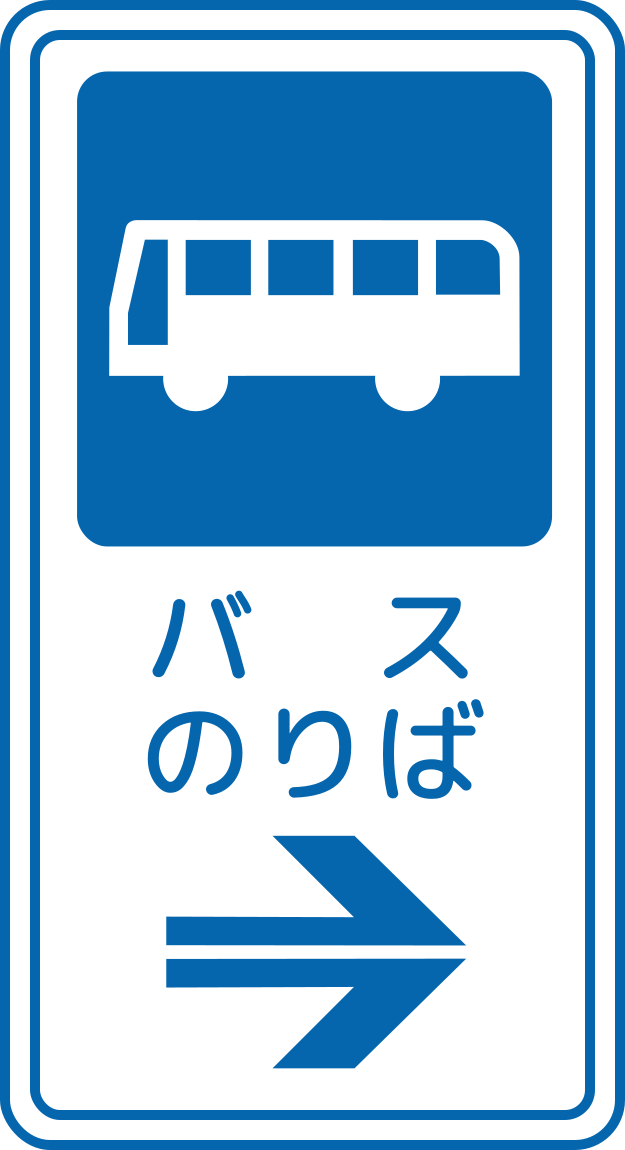 Bus stop direction aCode 124-AIndicates a bus stop (バスのりば) ahead with a directional arrow (vertical sign with arrow below).
Direction signs
252 signs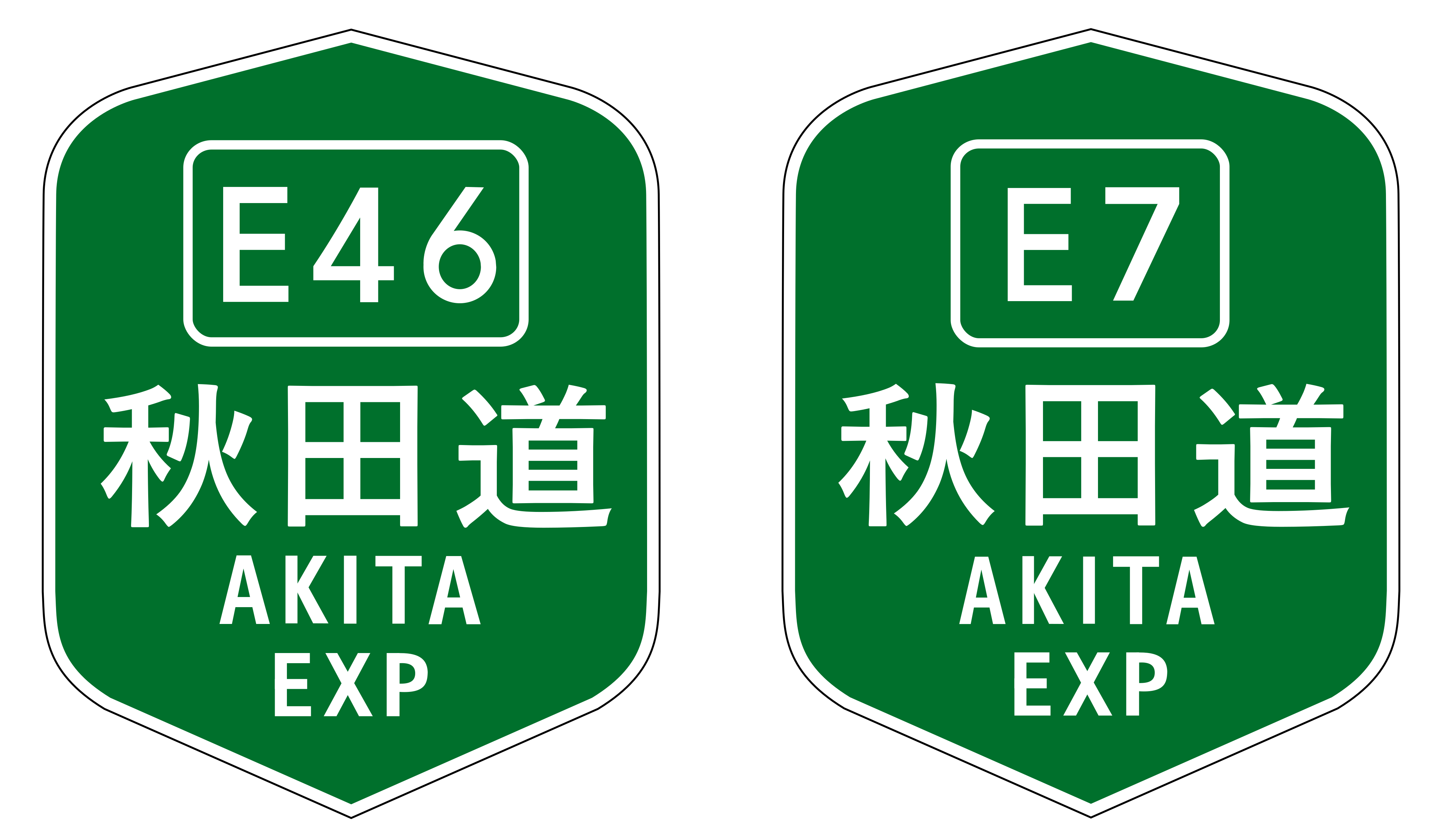 Akita exp route shieldsCode E46/E7Japanese expressway route shields for the Akita Expressway (E46 and E7 designations).
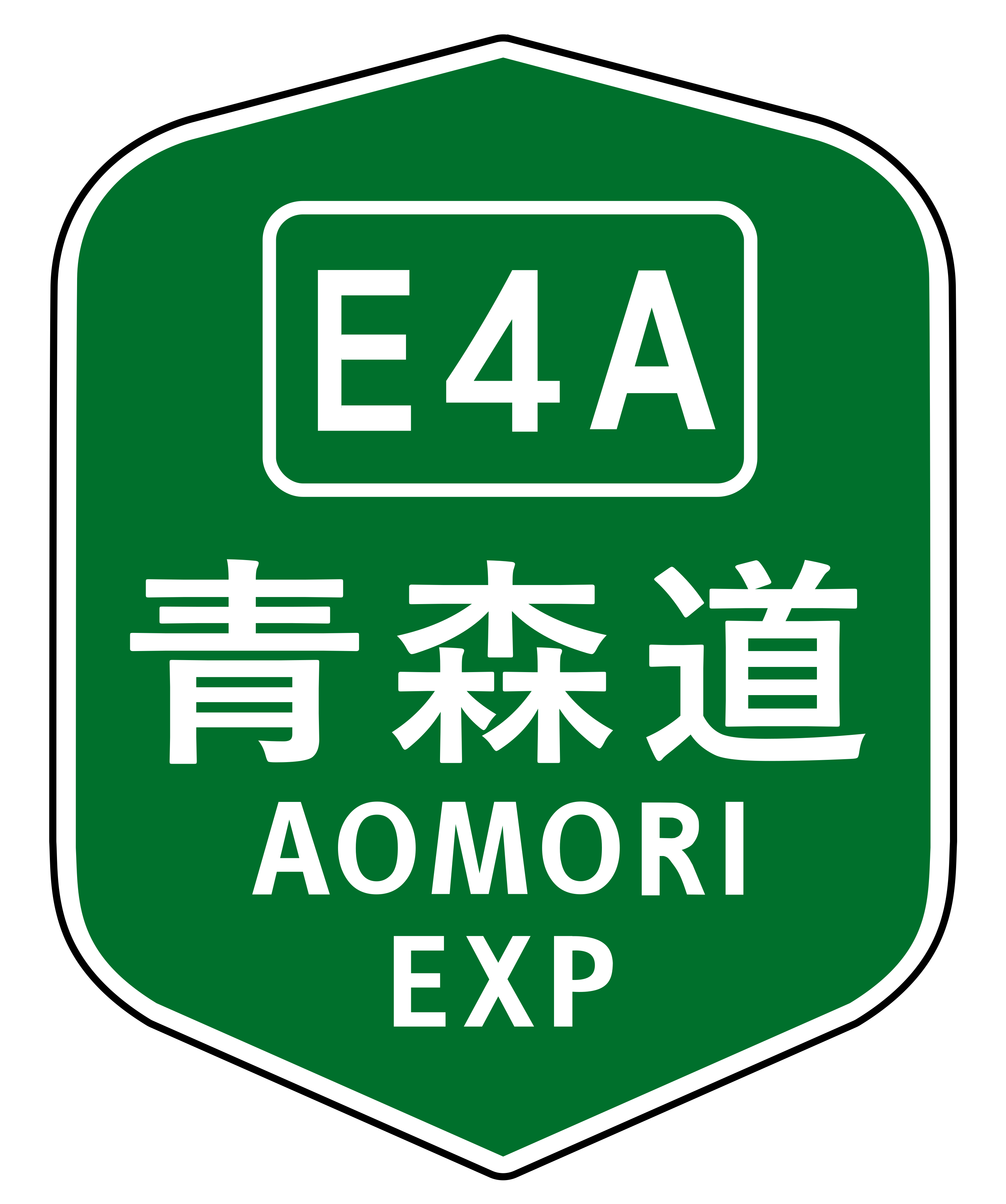 Aomori exp route shieldCode E4AJapanese expressway route shield for the Aomori Expressway (E4A designation).
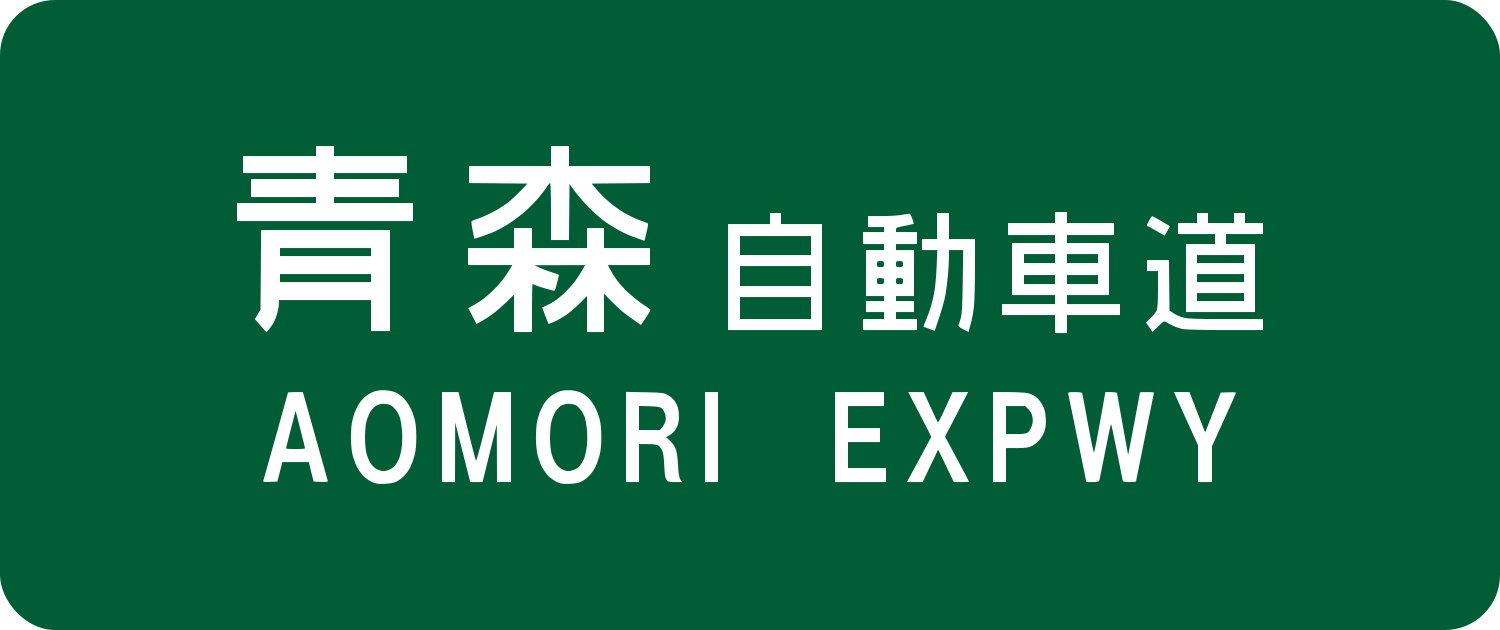 Aomori expwy name signJapanese expressway name sign for the Aomori Expressway (青森自動車道 / AOMORI EXPWY).
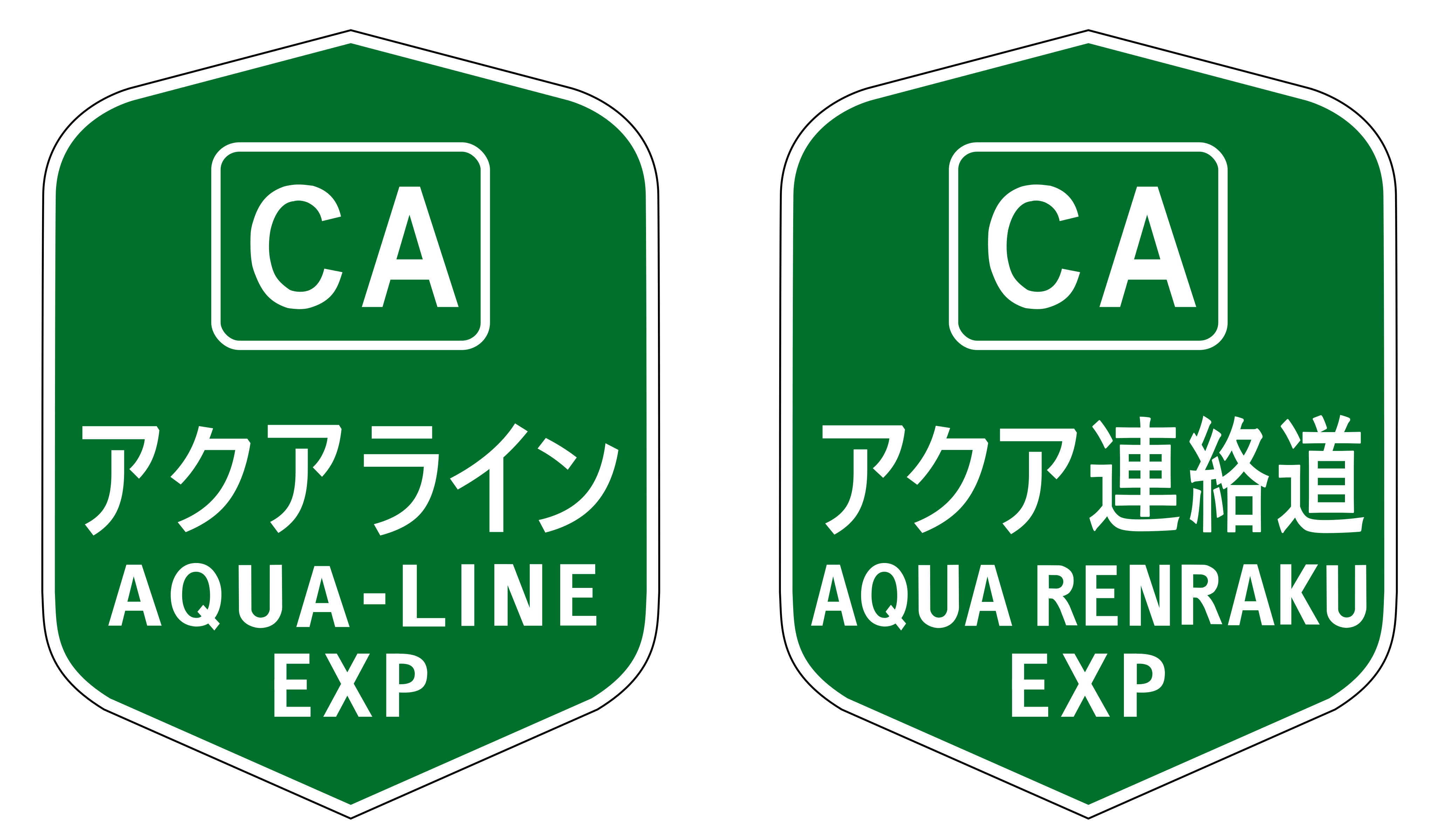 Aqua line ca route shieldsCode CAJapanese expressway route shields for the Tokyo Bay Aqua-Line (CA) and Aqua Renraku Expressway (CA).
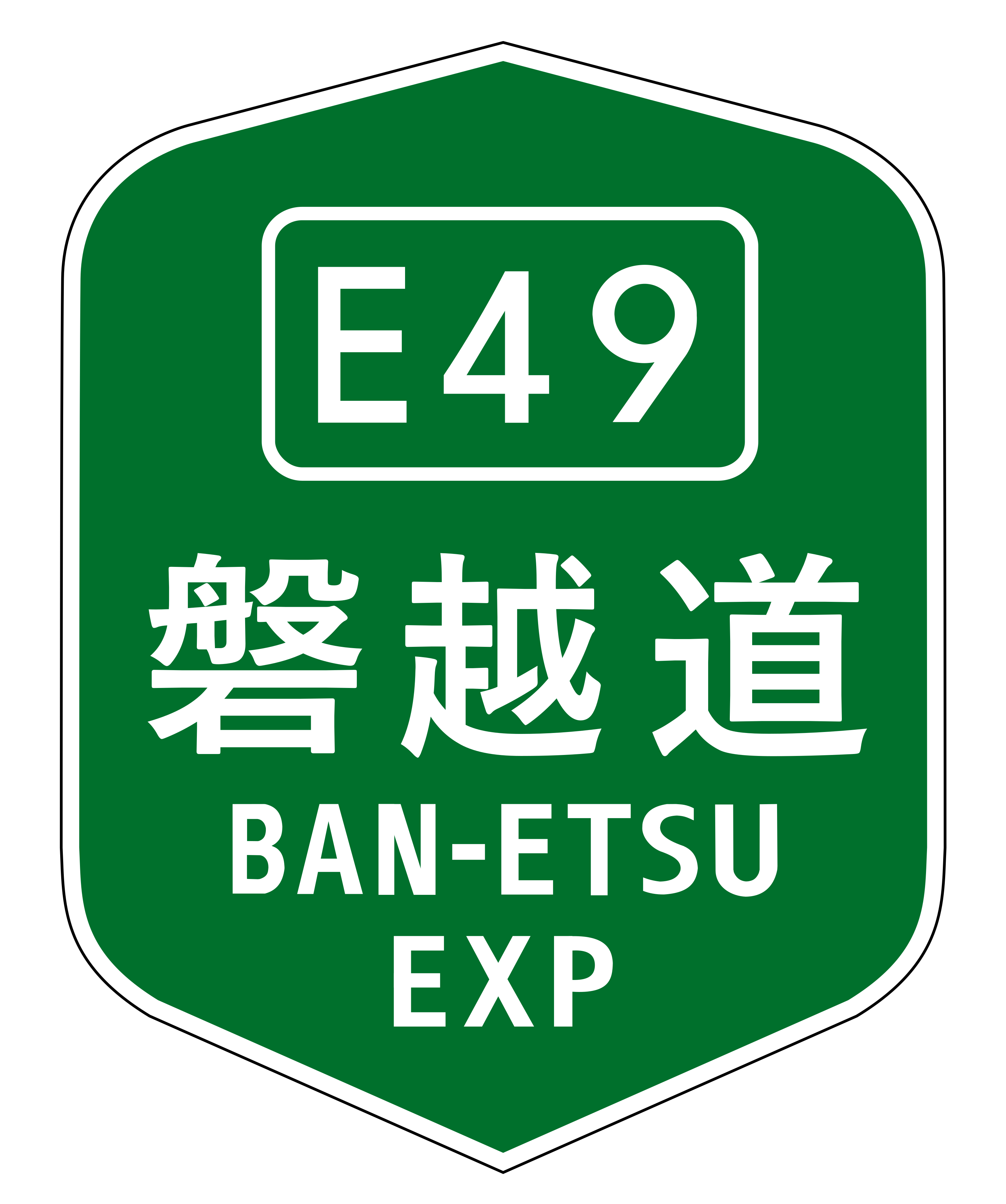 Ban etsu exp route shieldCode E49Japanese expressway route shield for the Ban-Etsu Expressway (E49 designation).
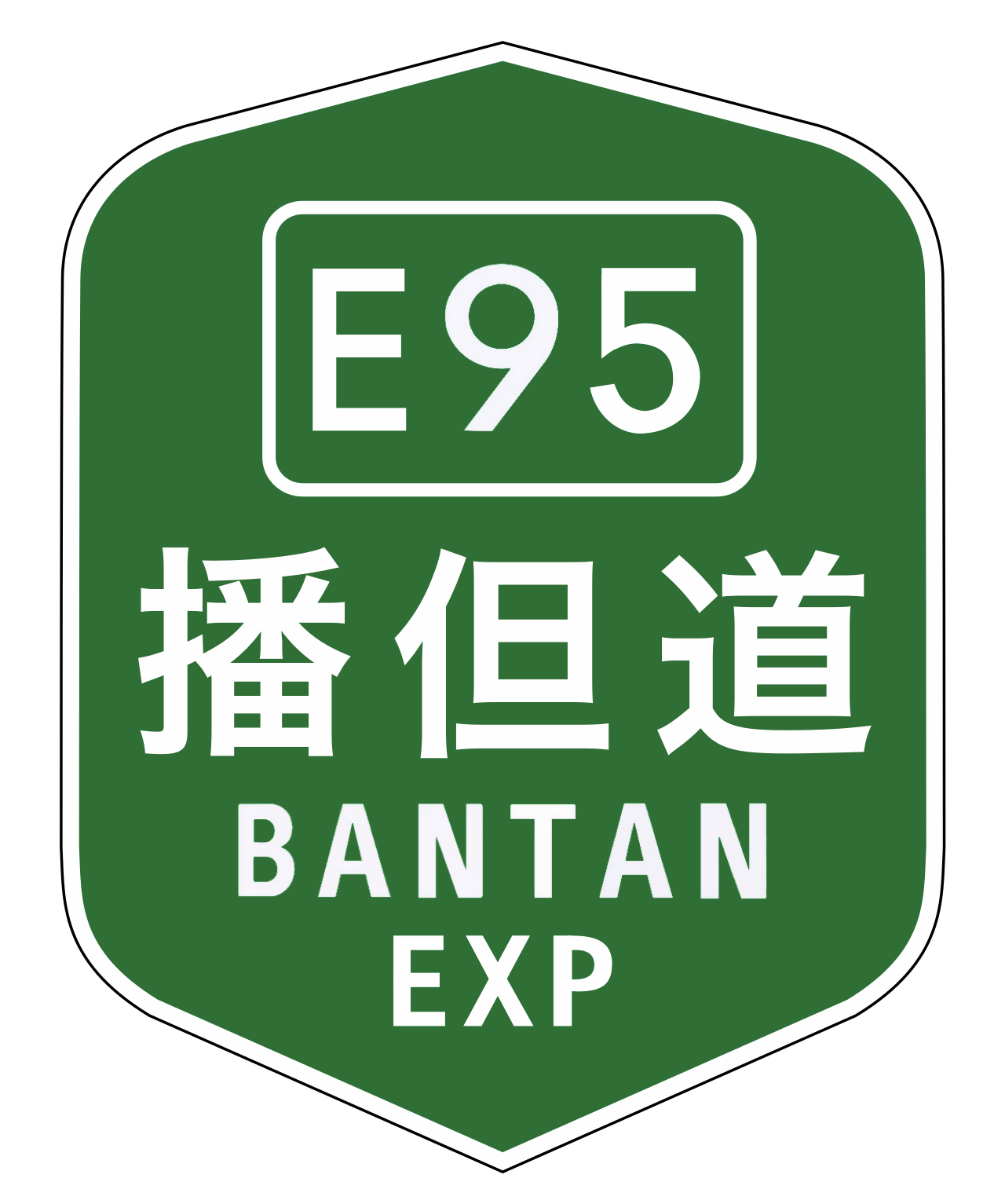 Bantan exp route shieldCode E95Japanese expressway route shield for the Bantan Expressway (E95 designation).
Additional panels
102 signs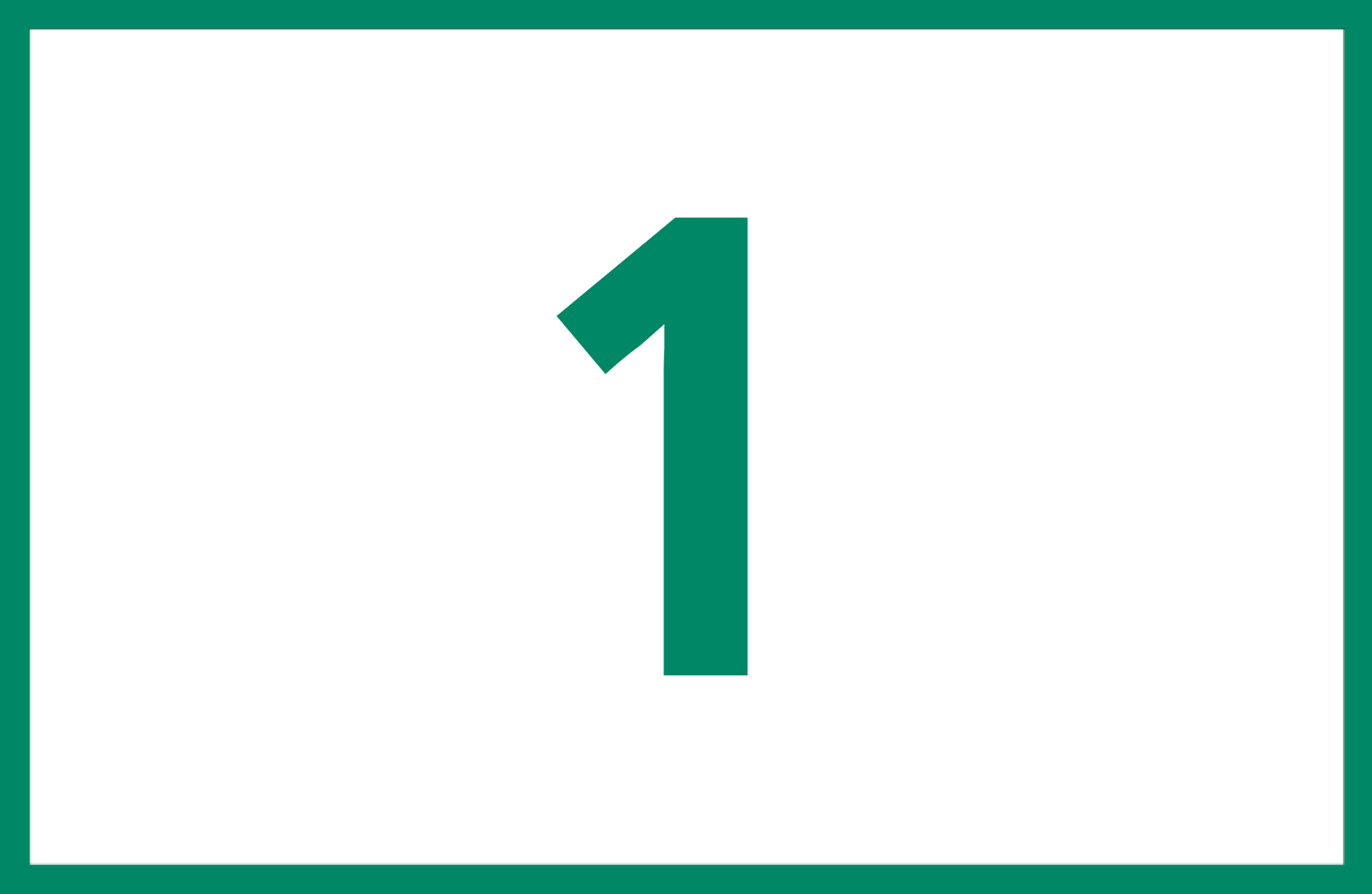 Exit panel 1Japanese expressway interchange/junction exit number marker panel showing exit number 1.
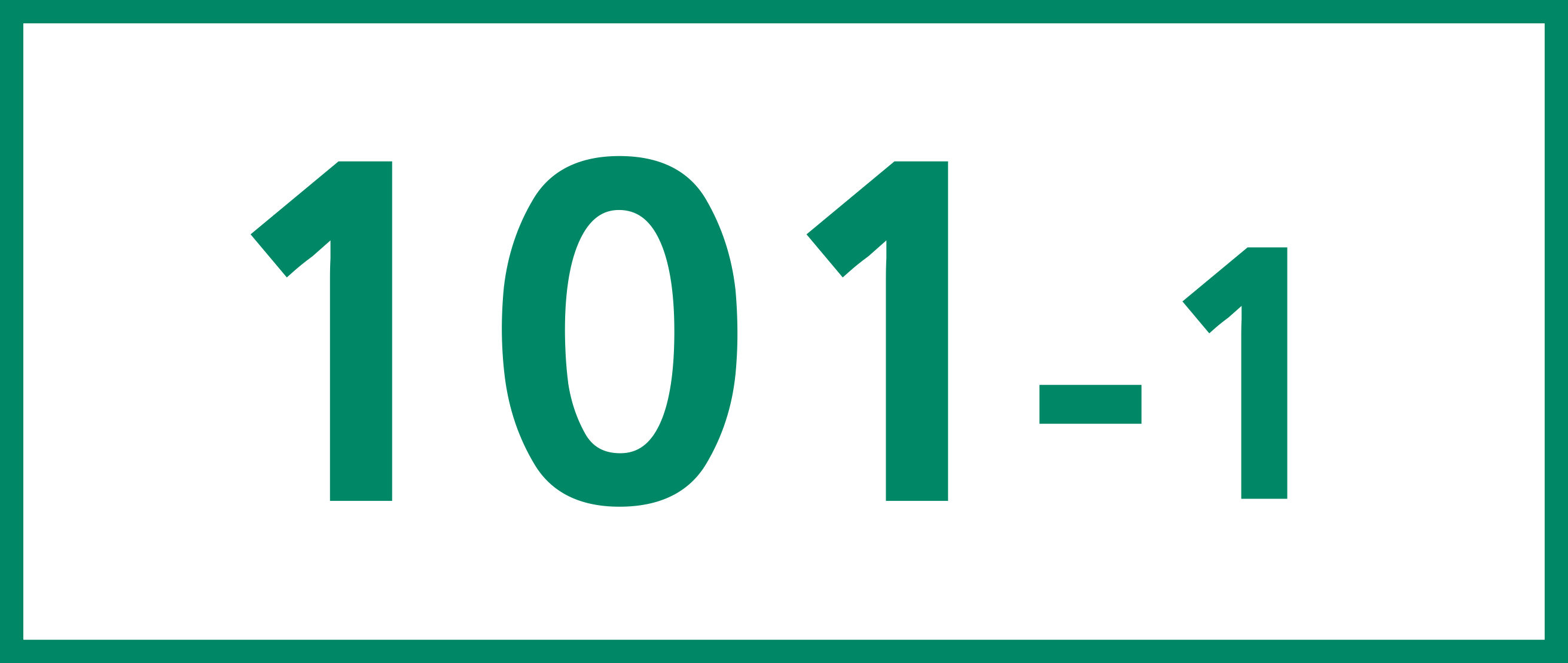
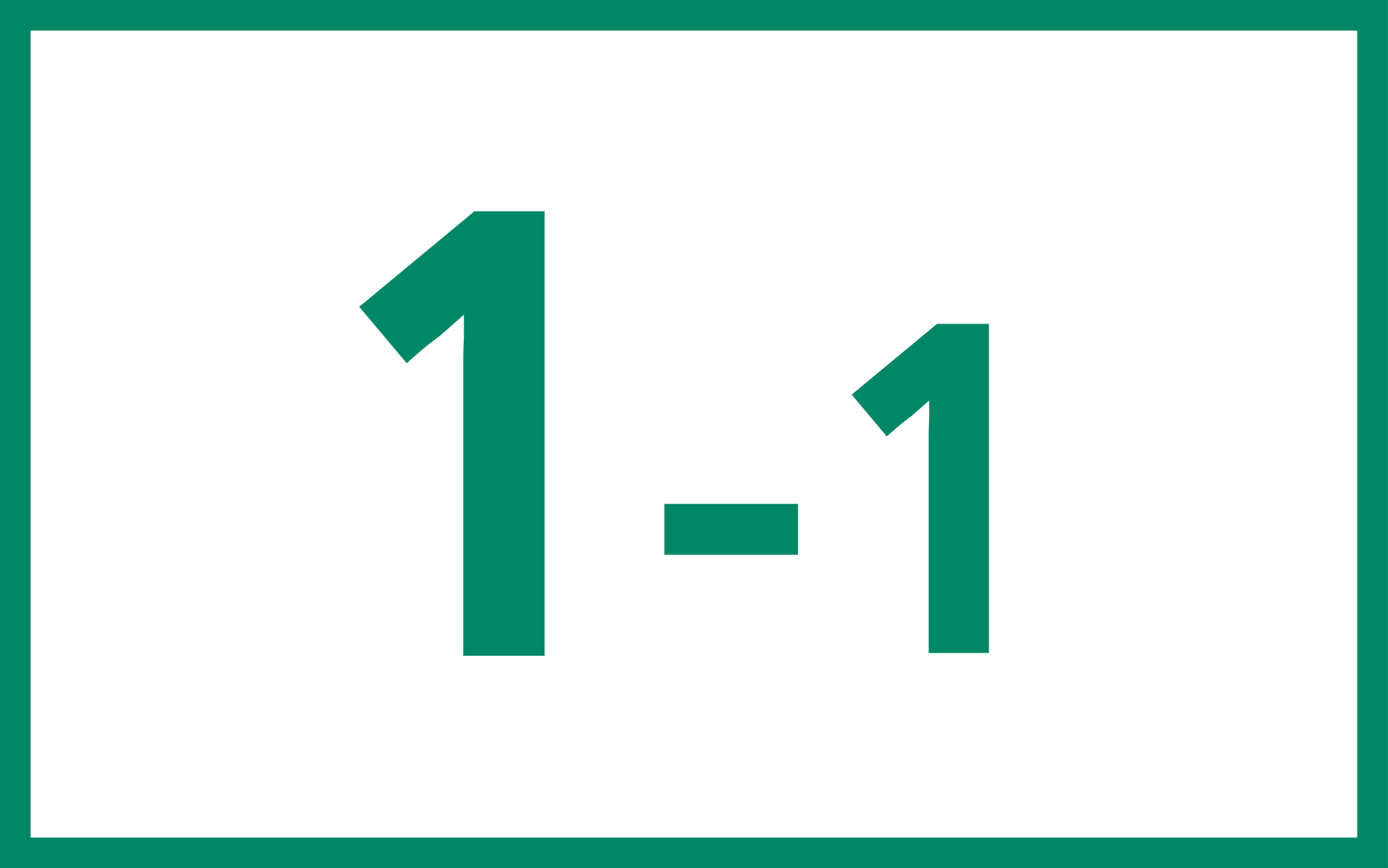 Exit panel 1 1Japanese expressway interchange/junction exit number marker panel showing exit number 1-1.
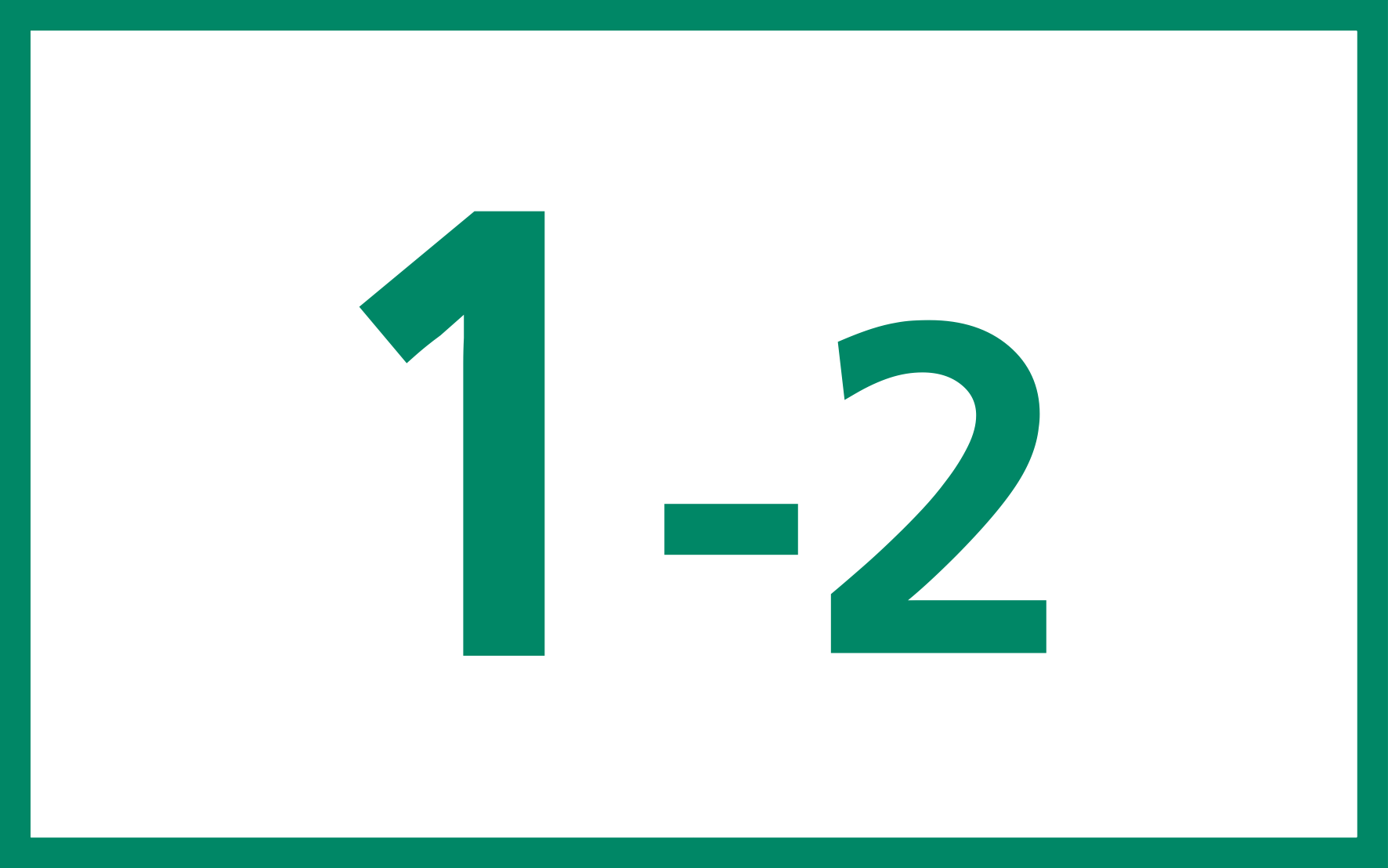 Exit panel 1 2Japanese expressway interchange/junction exit number marker panel showing exit number 1-2.
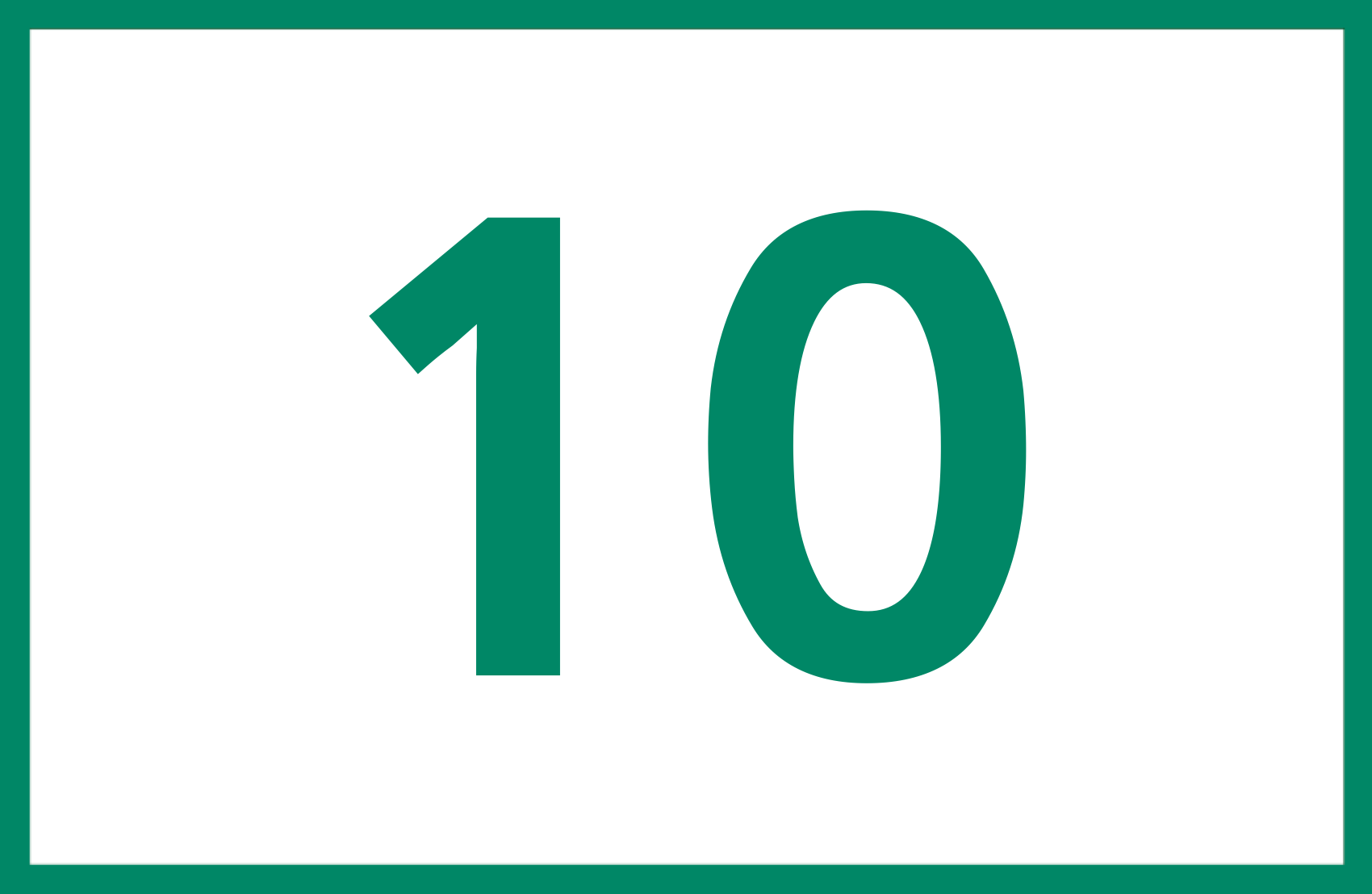 Exit panel 10Japanese expressway interchange/junction exit number marker panel showing exit number 10.
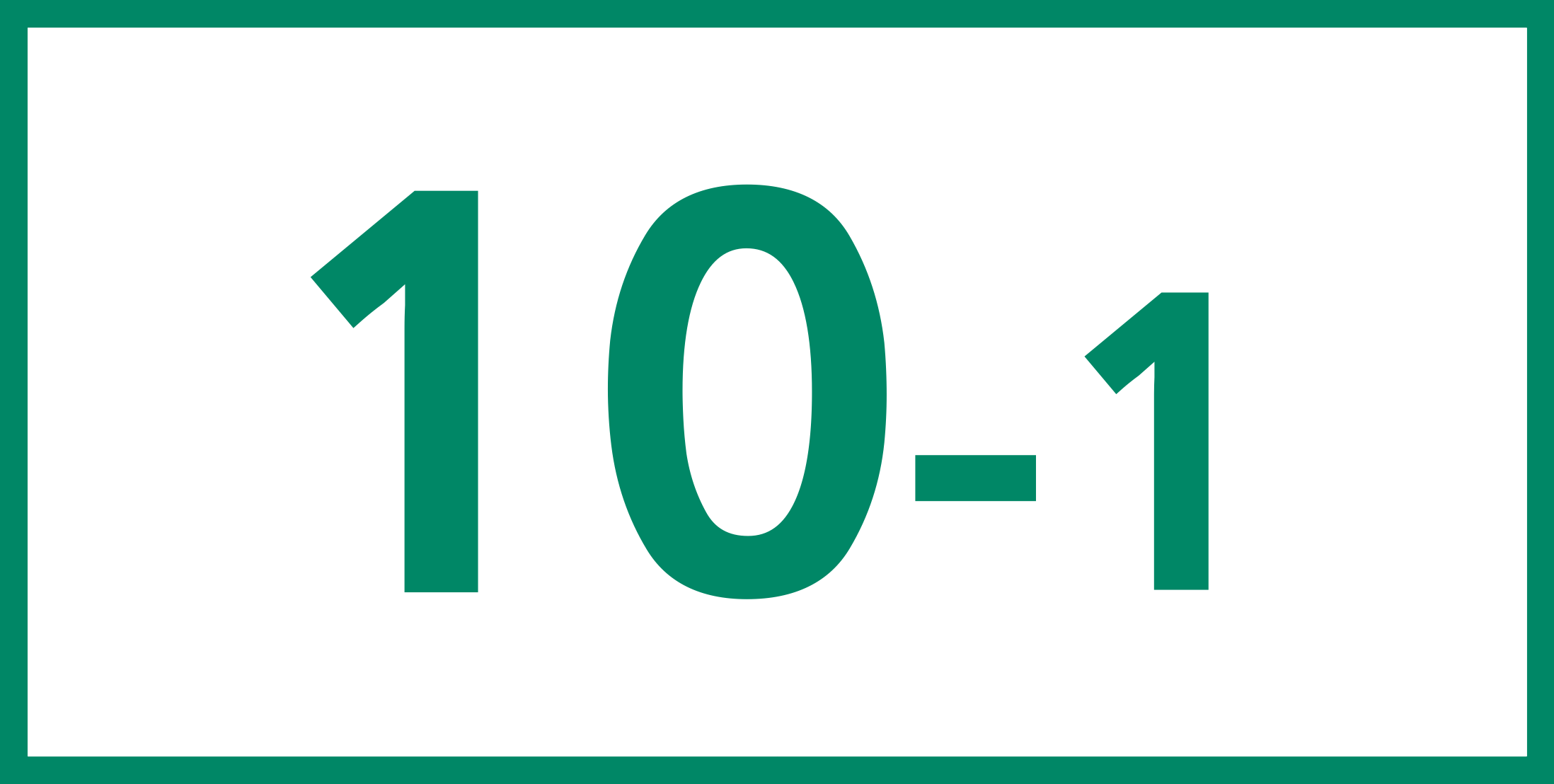 Exit panel 10 1Japanese expressway interchange/junction exit number marker panel showing exit number 10-1.
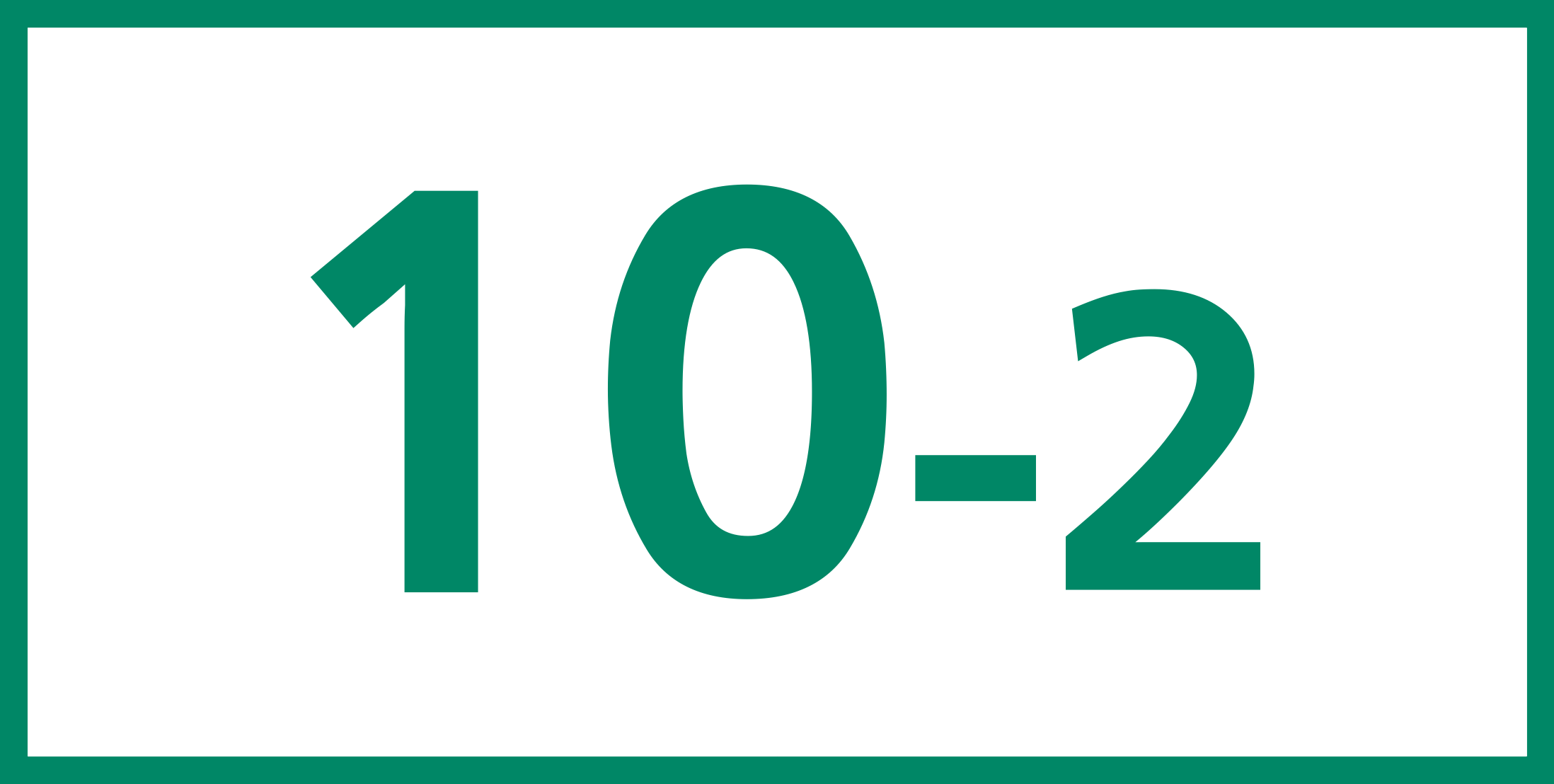 Exit panel 10 2Japanese expressway interchange/junction exit number marker panel showing exit number 10-2.
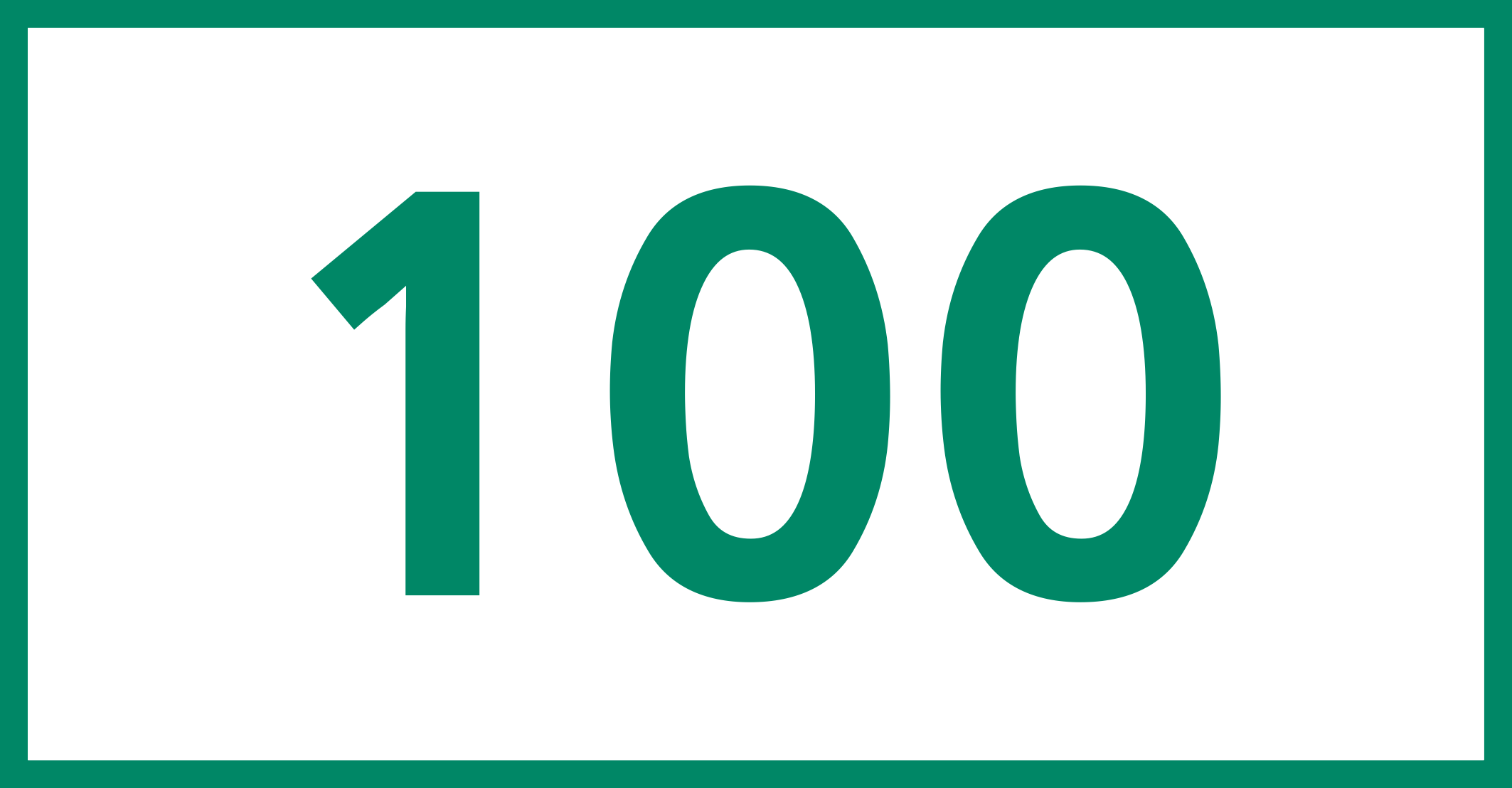
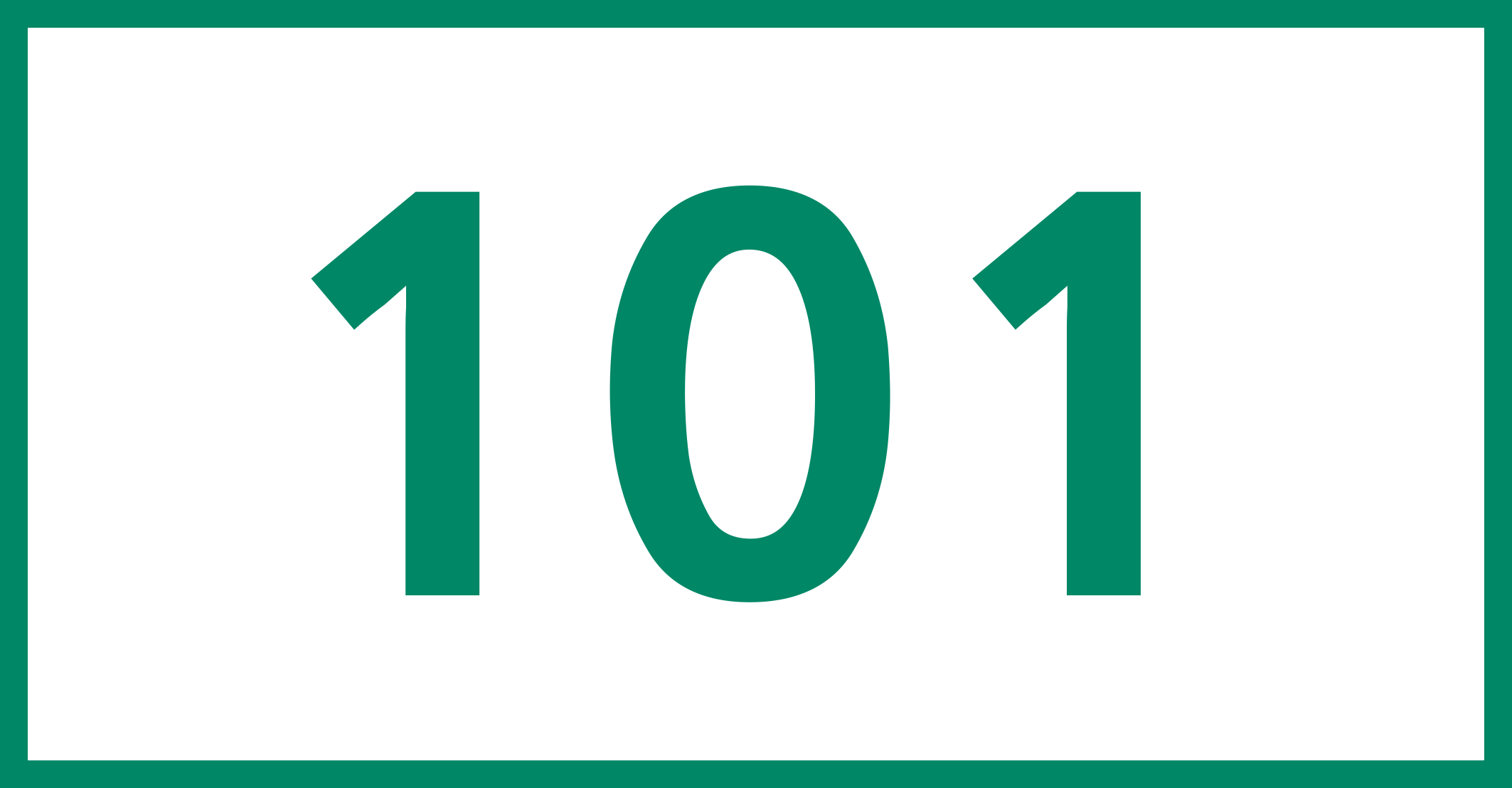
Signs explained
What the main sign groups mean and what to do when you see one.

Warning signs
Alert drivers to potential hazards ahead. Usually triangular with red border.12 signs
Prohibitory signs
Indicate actions that are not permitted. Usually circular with red border.7 signs
Mandatory signs
Indicate required actions or directions. Usually circular with blue background.3 signs
Priority signs
Indicate who has right of way at intersections. Various shapes and colors.5 signs
Informational signs
Provide useful information about facilities, services, and locations.6 signs
Direction signs
Guide drivers to destinations, exits, and distances.3 signs
Special zone signs
Indicate special areas like school zones, pedestrian areas, and work zones.2 signsReady for your Japan theory test?
Signs are only part of the exam. Practise full Japan mock tests and see which topics you still get wrong.