
 Complete guide 2026Updated November 2026
German Driving License 2026 The Complete Guide
Germany driving license guide (2026): TÜV/DEKRA test format, Fahrschule costs, Autobahn rules, speed limits, traffic fines, and the Flensburg points system.
Table of Contents
Germany Driving Test Explained, Theorieprüfung, Cost & Rules 2026
A 2-minute walkthrough of Germany's Führerschein system, from Fahrschule enrollment to passing the TÜV/DEKRA theory and practical exams.
 Video Guide · 2 min
Key Takeaways
- The TÜV/DEKRA theory test has 30 questions (20 basic + 10 class-specific) with a maximum of 10 error points allowed, two wrong 5-point questions is an automatic fail.
- Total cost runs €2,500–€4,500 (ADAC, 2025): Fahrschule registration, theory + practical lessons, mandatory Sonderfahrten, and TÜV/DEKRA exam fees.
- Enrollment in a licensed Fahrschule is mandatory, self-taught driving is not permitted in Germany.
- Speed limits are 50 km/h urban, 100 on rural roads, and no general limit on ~70% of the Autobahn (130 km/h advisory).
- BAC limit is 0.05% (0.5 promille) general, with absolute zero tolerance (0.0%) for novice drivers in Probezeit and under-21s.
- Germany uses the Flensburg points system, 8 points triggers license revocation, with points expiring after 2.5 to 10 years.
- Failing to form a Rettungsgasse costs €200–320, plus 2 points and a one-month driving ban.
Read full transcript
Getting a driving license in Germany means registering at a Fahrschule and passing exams administered by TÜV or DEKRA, the two organizations that run every theory and practical test in the country. Here's the key summary in under two minutes.
0:06 Theory Test Format. The German theory test, the Theorieprüfung, has 30 multiple-choice questions: 20 basic knowledge and 10 class-specific. Each question carries 2 to 5 error points based on difficulty, and you can accumulate a maximum of 10 error points to pass. But watch out, getting two 5-point questions wrong is an automatic fail, even if your total is under 10. You have 45 minutes, the test is available in 14 languages including German, English, Turkish, and Arabic, and it costs €24.99.
0:20 Cost of a German License. Expect to pay between €2,500 and €4,500 total (ADAC estimate, April 2025). That covers Fahrschule basic registration (€350–565), learning materials (€88–119), regular driving lessons at €55–77 per 45 minutes, 12 mandatory Sonderfahrten (€720–1,140), the theory test (€24.99), and the practical test (€129.83). You'll also need a first aid course (about €60), eye test (€0–7), and license application fees (€38–70).
0:35 German Speed Limits. Germany is famous for the Autobahn, but only about 70% of it has no mandatory speed limit. The advisory speed is 130 km/h, and exceeding it increases your liability in an accident. Urban areas are 50 km/h with widespread 30 km/h zones. Rural roads are 100 km/h for cars. Trucks over 3.5 tonnes are capped at 80 km/h on all roads outside cities.
0:47 Traffic Fines & Points. The 2021 Bußgeldkatalog reform nearly doubled most fines. Speeding 31–40 km/h over the limit in urban areas costs €260, 2 Flensburg points, and a 1-month driving ban. Phone use while driving is €100 and 1 point. Drunk driving over 0.5 promille starts at €500, 2 points, and a 1-month ban. Failing to form a Rettungsgasse, the emergency corridor, costs €200–320 and 2 points.
1:02 Key Road Rules. Germany drives on the right. The default priority rule is Rechts-vor-Links, yield to traffic from the right at unmarked intersections. The Flensburg points system runs on 8 points: reach 8 and your license is revoked. Novice drivers face a 2-year Probezeit with absolute zero BAC. Every vehicle must carry a warning triangle, first aid kit, and reflective vest.
1:14 Step-by-Step License Process. The process: enroll at a Fahrschule, complete a first aid course and eye test, apply at the Fahrerlaubnisbehörde, attend 14 theory sessions, pass the 30-question TÜV/DEKRA theory exam, complete practical lessons including 12 mandatory Sonderfahrten, then pass the practical road test. Total time is typically 3 to 6 months.
1:29 Emergency Numbers. Germany uses 112 for fire and ambulance, the EU-wide emergency number. Police is 110. For non-emergency medical help, the Ärztlicher Bereitschaftsdienst is 116 117.
1:37 Driving Myths vs Facts. Myth: the entire Autobahn has no speed limit. Fact: only about 70% is unrestricted, the rest has mandatory posted limits. Myth: Rechts-vor-Links rarely applies. Fact: it's the default rule at every unmarked intersection and catches foreigners off guard constantly. Myth: flashing headlights on the Autobahn is fine. Fact: aggressive Lichthupe to pressure other drivers is illegal and can be prosecuted as coercion.
Practice the full German theory question bank for free on AutoviaTest to prepare for your Theorieprüfung.
Theory Test
30 questions (20 basic + 10 class-specific), 45 minutes, maximum 10 error points to pass.
Two 5-point questions wrong = automatic fail even if under 10 points total. Administered by TÜV or DEKRA.
Total Cost
Approximately €2,500–4,500 (ADAC, April 2025): Fahrschule basic fee €350–565, learning materials €88–119, driving lessons €55–77 per 45 min, 12 mandatory Sonderfahrten €720–1,140, theory test €24.99, practical test €129.83.
ADAC / TÜVRoad Deaths
2,832 fatalities in 2025 (~3.4 per 100K).
Below the 3,046 recorded in 2019, but 62 more than in 2024. Approximately 70% of the Autobahn has no mandatory speed limit, the remaining 30% has posted limits.
BAC Limit
0.5 promille (0.05%) general limit.
Absolute zero (0.0) for novice drivers in Probezeit and drivers under 21, and for bus and taxi drivers on duty. Criminal threshold at 1.1 promille, the court normally revokes the license; MPU from 1.6 promille.
Fines
The current rates for speeding, illegal parking and Rettungsgasse offenses have applied since 9 November 2021.
Speeding 31–40 km/h in urban areas: €260 + 2 points + 1-month ban. Rettungsgasse violation: €200–320 + 2 points + 1-month ban. Phone use: €100 + 1 point.
Global Context
Road deaths per 100,000 population: Germany ~3.4 (2025), USA 11.5 (2024), Great Britain 2.4 (2024), Japan 2.60 (2024, deaths within 30 days).
A Class B license costs about €2,500–4,500 (ADAC estimate, April 2025).
Germany Road Safety: 7-Year Trend (2019–2025)
According to Destatis and BASt, road fatalities dropped 10.7% in 2020 due to COVID-19 but have fluctuated since. The 2025 figure of 2,832 deaths represents a slight increase from 2,770 in 2024, though the long-term trend remains well below the 2019 level of 3,046.
Year-over-year changes
Deaths per 100,000 Population
 USA11.5
- Germany3.4
 Japan2.6
 Great Britain2.4
Sources: Destatis (Germany, 2025), NHTSA (USA, 2024), DfT (Great Britain, 2024), NPA (Japan, 2024, deaths within 30 days). Rates differ by year and counting method.
German Theory Test Format
The computerized theory test is administered by TÜV or DEKRA at testing centers across Germany
The German driving theory test (Theorieprüfung) for Class B consists of 30 multiple-choice questions, 20 basic knowledge questions and 10 class-specific questions, to be completed within 45 minutes. Each question carries 2 to 5 error points based on difficulty. To pass, you must accumulate no more than 10 error points total. However, answering two 5-point questions incorrectly results in automatic failure, even if your total is under 10. The test fee is €24.99, administered by TÜV or DEKRA under the arge tp 21 framework. The test can be taken in German or in 14 other languages, including English, Turkish, Russian, Arabic and Ukrainian. The question catalog updated on 1 April 2025 introduced image selection tasks (Abbildungsauswahlaufgaben) and cut the Class B catalog from 1,197 to 1,040 questions (TÜV-Verband).
Questions
Duration
Pass Mark
Test Fee
What the Theory Test Covers
- Traffic signs (Verkehrszeichen) & signals
- Right of way (Vorfahrt / Rechts-vor-Links)
- Speed limits (Innerorts, Landstraße, Autobahn)
- Stopping & parking rules
- Environmental zones (Umweltzonen)
- Vehicle technology & maintenance
- Tire requirements (winter/summer)
- TÜV/HU inspection rules
- First aid basics
- Fuel-efficient driving (Eco-driving)
- Autobahn rules & Rettungsgasse
- Hazard perception & Gefahrenbremsung
- BAC limits & Probezeit rules
- Tunnel & railway crossing rules
- Flensburg points system
How to Get Your German Driving License
From Fahrschule to Führerschein, the complete 6-step process
- 1
Enroll at a Fahrschule
Register at a licensed driving school (Fahrschule)
Basic fee (Grundbetrag) €350–565, which covers the theory lessons. Choose a Fahrschule near you, they handle all paperwork.
- 2
First Aid & Eye Test
Complete the mandatory Erste-Hilfe-Kurs and Sehtest
First aid course: about €60 (9 lessons of 45 minutes). Eye test: €6–7, free at many opticians
- 3
Apply for License
Submit your Führerscheinantrag to the local Fahrerlaubnisbehörde
Application fee €38–70 depending on the state, biometric photo about €10
- 4
Theory Training & Test
Attend theory classes and pass the TÜV/DEKRA theory exam
14 sessions (12 basic + 2 class-specific). Test: 30 questions, max 10 error points, €24.99
- 5
Practical Driving Lessons
Complete mandatory and regular driving lessons with your Fahrlehrer
12 mandatory special drives (Sonderfahrten): 5 rural, 4 Autobahn, 3 night. Plus regular lessons.
- 6
Practical Test
Pass the practical driving test with TÜV/DEKRA examiner
At least 55 minutes, €129.83. Examiner rides along and evaluates your driving in real traffic.
German Driving License Fees
Total cost typically €2,500–€4,500 according to ADAC (April 2025)
| Fee | Amount |
|---|---|
| Fahrschule basic fee (Grundbetrag, covers theory lessons) | €350–565 |
| Learning materials | €88–119 |
| Driving lessons (per 45 min) | €55–77 |
| Mandatory special drives (12 lessons) | €720–1,140 |
| Theory test (TÜV/DEKRA) | €24.99 |
| Practical test (TÜV/DEKRA) | €129.83 |
| First aid course (Erste-Hilfe-Kurs) | about €60 |
| Eye test (Sehtest) | €0–7 |
| Biometric photos | about €10 |
| License application (Führerscheinantrag) | €38–70 |
| Total Typical (Class B) | €2,500–€4,500 |
Driving schools are not bound by a fee schedule and set their own prices, so costs differ from school to school. ADAC puts the total at roughly €2,500 to €4,500 (April 2025). Additional costs apply if you fail and must retake tests.
See how ready you are with exam-style mock questions
Try Free QuestionsMinimum age by license category
- AM — Mopeds, small scooters (≤45 km/h)15years
- A1 — Motorcycles up to 125cc / 11 kW16years
- A2 — Motorcycles up to 35 kW18years
- B — Cars up to 3,500 kg17 with BF17 (Begleitetes Fahren)18years
- A — Motorcycles unlimited20 with progressive access from A224years
- C — Trucks over 3,500 kg18 with professional qualification21years
- D — Buses (8+ passengers)21 with professional qualification24years
License Validity Periods
| License / age | Validity |
|---|---|
| AM / A1 / A2 / A / BDriving right is permanent; document must be renewed | 15 years (document) |
| C / CE (Trucks)Medical + eye test required for renewal | 5 years |
| D / DE (Buses)Medical + eye test required for renewal | 5 years |
| Pre-2013 licensesStaggered by birth year or year of issue | Exchange by 2033 |
Probezeit (Probationary Period)
- 2-year probationary period for all new license holders
- Absolute 0.0% BAC limit during Probezeit
- A-violation (serious): extension to 4 years + mandatory Aufbauseminar
- B-violation (minor): two B-violations equal one A-violation
- Aufbauseminar: four sessions of 135 minutes within 2–4 weeks
Flensburg Points System
- 8 points = license revoked
- 1 point: expires after 2.5 years
- 2 points: expire after 5 years
- 3 points: expire after 10 years
- 4–5 points: written reprimand (Ermahnung)
- 6–7 points: written warning (Verwarnung)
Speed Limits in Germany
As per StVO, all speeds in km/h
Germany is famous for its Autobahn with no general speed limit, but only about 70% of the Autobahn network is actually unrestricted. The remaining 30% has mandatory posted speed limits. The advisory speed (Richtgeschwindigkeit) on unrestricted sections is 130 km/h; it is a recommendation, not a limit. Urban areas (Innerorts) are limited to 50 km/h by default; authorities can set 30 km/h zones (Tempo-30-Zonen), in particular in residential areas. Rural roads (Landstraßen) are limited to 100 km/h for cars. Trucks between 3.5 and 7.5 tonnes are limited to 80 km/h outside urban areas. Trucks over 7.5 tonnes are limited to 60 km/h on rural roads and 80 km/h on the Autobahn.
| Road Type | Cars | Trucks 3.5–7.5t | Trucks >7.5t | Note |
|---|---|---|---|---|
| Urban (Innerorts) | 50 | 50 | 50 | Tempo-30 zones: 30 km/h |
| Rural (Landstraße) | 100 | 80 | 60 | Single carriageway |
| Autobahn (unrestricted) | No limit | 80 | 80 | 130 km/h advisory (Richtgeschwindigkeit) |
| Autobahn (posted) | As signed | 80 | 80 | Posted limits on about 30% of the network |
| Tempo-30 Zone | 30 | 30 | 30 | Mainly in residential areas (§45 StVO) |
Urban (Innerorts)
Cars: 50Trucks 3.5–7.5t: 50Trucks >7.5t: 50Tempo-30 zones: 30 km/h
Rural (Landstraße)
Cars: 100Trucks 3.5–7.5t: 80Trucks >7.5t: 60Single carriageway
Autobahn (unrestricted)
Cars: No limitTrucks 3.5–7.5t: 80Trucks >7.5t: 80130 km/h advisory (Richtgeschwindigkeit)
Autobahn (posted)
Cars: As signedTrucks 3.5–7.5t: 80Trucks >7.5t: 80Posted limits on about 30% of the network
Tempo-30 Zone
Cars: 30Trucks 3.5–7.5t: 30Trucks >7.5t: 30Mainly in residential areas (§45 StVO)
Only ~70% of Autobahn sections are unrestricted. The 130 km/h advisory speed (Richtgeschwindigkeit) is a recommendation, not a limit.
Traffic Fines & Penalties
As per the Bußgeldkatalog-Verordnung (BKatV)
New Bußgeldkatalog rates for speeding, illegal parking and Rettungsgasse offenses have applied since 9 November 2021. Key penalties: speeding 31–40 km/h over the limit in urban areas costs €260, 2 Flensburg points, and a 1-month driving ban. Failing to form an emergency corridor (Rettungsgasse) on the Autobahn carries €200–320 plus 2 points and a 1-month driving ban. Using a mobile phone while driving costs €100 plus 1 point. Drunk driving above 0.5 promille incurs a €500 fine, 2 points, and a 1-month driving ban for a first offense. The criminal threshold is 1.1 promille, at which the court normally revokes the license; an MPU is required from 1.6 promille.
Up to €100€101–€300More than €300
| Violation | Fine | Points | Driving Ban |
|---|---|---|---|
| Speeding urban up to 10 km/h | €30 | — | — |
| Speeding urban 21–25 km/h | €115 | 1 pt | — |
| Speeding urban 31–40 km/h | €260 | 2 pt | 1 month |
| Speeding urban over 70 km/h | €800 | 2 pt | 3 months |
| Red light (<1 second) | €90 | 1 pt | — |
| Red light (>1 second) | €200 | 2 pt | 1 month |
| Phone use while driving | €100 | 1 pt | — |
| Drunk driving 0.5–1.09 promille (1st) | €500 | 2 pt | 1 month |
| No seatbelt | €30 | — | — |
| Rettungsgasse violation | €200–320 | 2 pt | 1 month |
| No Umweltplakette in zone | €100 | — | — |
| No winter tires when required | €60 | 1 pt | — |
- €30
Speeding urban up to 10 km/h
- €115
Speeding urban 21–25 km/h
1 pt - €2601 month
Speeding urban 31–40 km/h
2 pt - €8003 months
Speeding urban over 70 km/h
2 pt - €90
Red light (<1 second)
1 pt - €2001 month
Red light (>1 second)
2 pt - €100
Phone use while driving
1 pt - €5001 month
Drunk driving 0.5–1.09 promille (1st)
2 pt - €30
No seatbelt
- €200–3201 month
Rettungsgasse violation
2 pt - €100
No Umweltplakette in zone
- €60
No winter tires when required
1 pt
Fines shown are the standard rates of the Bußgeldkatalog-Verordnung (BKatV). Criminal offenses (BAC ≥1.1 promille, causing bodily harm) are prosecuted under the StGB, not the Bußgeldkatalog.
Know These Rules Before Your Theory Test
Traffic fines, speed limits, and BAC rules are heavily tested in the German Theorieprüfung. Practice with real exam-style questions.
How the road worksMandatory, with a penaltyMakes it easier
Rechtsfahrgebot
Drive on the right side.
On multi-lane roads, use the rightmost lane unless overtaking. Applies especially on the Autobahn.
Rechts-vor-Links
At unmarked intersections, the vehicle coming from the right has priority.
This is the DEFAULT rule, applies far more often than foreigners expect.
Rettungsgasse
When traffic stops on multi-lane roads, drivers must form an emergency corridor between the left lane and all other lanes.
Fines €200–320 for violations.
Reißverschlussverfahren
Zipper merge: when lanes reduce, drivers must merge at the actual narrowing point, alternating one vehicle from each lane.
Legally mandated by StVO.
Umweltzone / Plakette
Many German cities have environmental zones requiring a green Umweltplakette (€100 fine without).
Check before entering city centers.
Winter Tires (M+S / Alpine)
Winter tires mandatory in winter conditions (ice, snow, slush).
Since October 2024, only Alpine symbol (3PMSF) tires are accepted. Fine: €60 + 1 point.
0.0 BAC for Novices
Absolute zero tolerance during the 2-year Probezeit and for all drivers under 21.
General limit is 0.5 promille, criminal threshold 1.1 promille.
Required Equipment
Warning triangle (Warndreieck), first aid kit (DIN 13164), and reflective vest (Warnweste) must be in every vehicle.
Fines if missing: €15 for the triangle or vest, €5 for the first aid kit.
TÜV/HU Inspection
Cars must pass the Hauptuntersuchung (HU) every 2 years; a new car's first HU is due after 3 years.
The TÜV sticker on the rear plate shows when the next inspection is due.
Common Road Hazards in Germany
2,832 road fatalities in 2025, know these hazards to stay safe on German roads
Autobahn Speed Differentials
Trucks over 3.5 t may drive at most 80 km/h on the Autobahn, while cars have no general limit, so speeds differ widely between lanes
Black Ice (Blitzeis)
Speed must always be adapted to road and weather conditions (§3 StVO); winter tires are mandatory on black ice, snow and slush
Dense Fog (Nebel)
If fog, snow or rain cuts visibility to under 50 m, you may drive no faster than 50 km/h (§3 StVO)
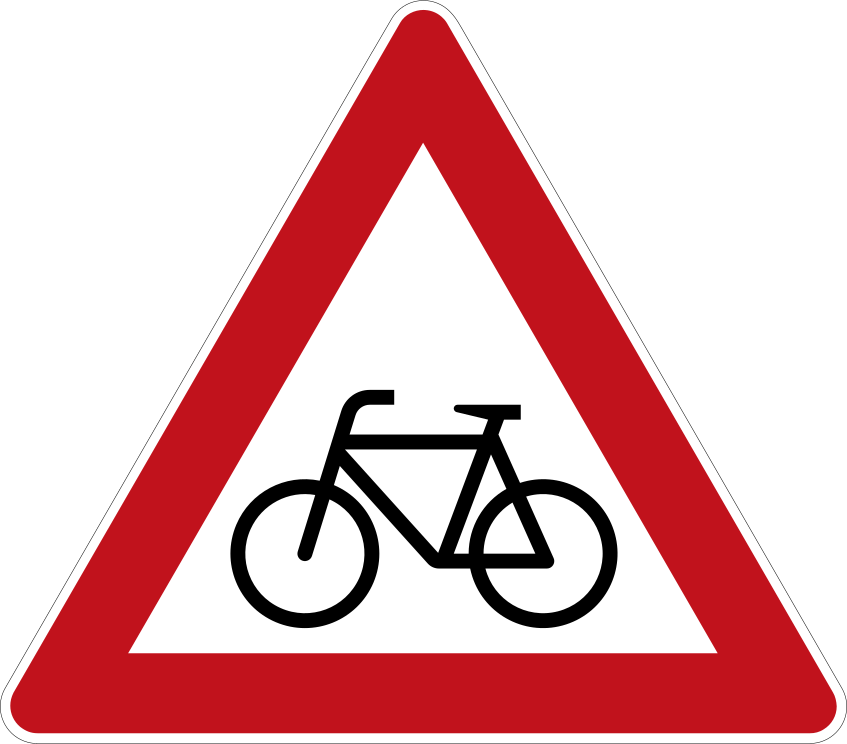
Urban Cyclists
Keep a side distance of at least 1.5 m when overtaking cyclists in built-up areas and 2 m outside them (§5 StVO)
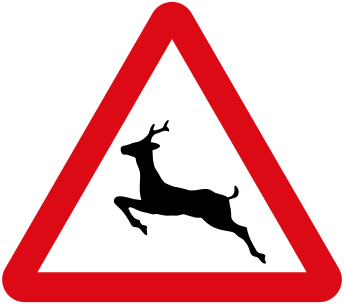
Wildlife Crossings (Wildwechsel)
The warning sign Wildwechsel (sign 142) marks stretches where wild animals may cross the road
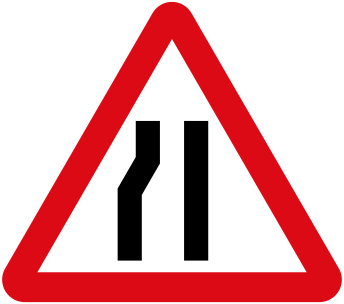
Construction Zones (Baustellen)
Lanes are narrowed and lower speed limits are signed; where a lane ends, merge by the zipper rule (§7 StVO)
Germany's 16 Bundesländer
Driving license administration is handled by the local Fahrerlaubnisbehörde in each state
- 1Baden-WürttembergStuttgartBW11.2M
- 2BayernMünchenBY13.2M
- 3BerlinBerlinBE3.7M
- 4BrandenburgPotsdamBB2.6M
- 5BremenBremenHB0.7M
- 6HamburgHamburgHH1.9M
- 7HessenWiesbadenHE6.3M
- 8Mecklenburg-VorpommernSchwerinMV1.6M
- 9NiedersachsenHannoverNI8.0M
- 10Nordrhein-WestfalenDüsseldorfNW18.0M
- 11Rheinland-PfalzMainzRP4.1M
- 12SaarlandSaarbrückenSL1.0M
- 13SachsenDresdenSN4.0M
- 14Sachsen-AnhaltMagdeburgST2.1M
- 15Schleswig-HolsteinKielSH3.0M
- 16ThüringenErfurtTH2.1M
While driving laws are federal (StVO), license issuance is handled by local authorities (Fahrerlaubnisbehörde) in each Bundesland.
Myth: The entire Autobahn has no speed limit
Fact: Only about 70% of the Autobahn network is unrestricted. The remaining 30% has mandatory posted speed limits.
Myth: You can drive as fast as you want without consequence on unrestricted Autobahn
Fact: Even without a posted limit, §3 StVO only allows a speed at which the vehicle stays under control, adapted to road, traffic, visibility and weather conditions. A federal regulation also recommends not driving faster than 130 km/h (Richtgeschwindigkeit), even in good conditions.
Myth: Right-before-left (Rechts-vor-Links) rarely applies in practice
Fact: Rechts-vor-Links is the DEFAULT priority rule at ALL unmarked intersections in Germany. It applies far more often than foreigners expect, especially in residential areas and smaller streets. Failure to yield costs €25–100 and can cause serious accidents.
Myth: Flashing your headlights on the Autobahn is acceptable to demand right of way
Fact: Aggressive use of headlight flashing (Lichthupe) to pressure other drivers is illegal under §16 StVO and considered coercion (Nötigung) under criminal law. It is only permitted as a warning of danger. Tailgating at high speed can result in criminal charges.
Myth: Passing on the right is always illegal on the Autobahn
Fact: While Rechtsüberholen (passing on the right) is generally prohibited, it is permitted when a queue in the left lane is stationary or moving slowly, and then only at slightly higher speed and with extreme caution (§7 StVO). Also allowed in marked lanes within urban areas.
Myth: Germany is strict about banning dashcams
Fact: The Bundesgerichtshof (BGH) ruled on 15 May 2018 that dashcam footage can be used as evidence in accident liability proceedings. The same ruling found that permanent recording without a specific reason breaches data protection law.
New question type in the theory test
The question catalog that took effect on 1 April 2025 introduced image selection tasks (Abbildungsauswahlaufgaben), in which several answers can be selected. The Class B catalog shrank from 1,197 to 1,040 questions (TÜV-Verband).
Alpine symbol mandatory for winter tires
From October 2024, only tires bearing the Alpine symbol (3PMSF, Three Peak Mountain Snowflake) are accepted as winter tires. Older M+S-only tires are no longer sufficient. The 2024 amendments to the StVG and StVO also made it easier to order 30 km/h limits on main roads, for example near school routes and playgrounds (BMV).
New Bußgeldkatalog rates
The amended Bußgeldkatalog-Verordnung has applied since 9 November 2021. The Federal Ministry of Transport lists new fines for speeding, up to €110 for parking on footpaths and cycle paths, and €200–320 plus a one-month driving ban for misusing or not forming a Rettungsgasse.
EU driving license exchange rollout
All pre-2013 German driving licenses must be exchanged for the new EU card format by January 19, 2033. Exchange is staggered by birth year for paper licenses and by year of issue for card licenses. The new format is valid for 15 years (document only, driving rights remain permanent for AM/A/B).
How Germany Compares Globally
Germany's driving regulations compared with the USA, the UK and Japan, figures from each country's official sources
StrictestIn betweenMost lenientBAC limit and minimum age
| Parameter | Germany | USA | UK | Japan |
|---|---|---|---|---|
| BAC Limit | 0.05% | 0.08% | 0.08% | 0.03% |
| Min. Age (Car) | 18 | — | 17 | 18 |
| Driving Side | Right | Right | Left | Left |
| Highway Speed | No limit* | — | 112 km/h | 100 km/h |
| Test Questions | 30 | — | 50 | 95 |
| Road Deaths/yr | 2,832 | 39,254 | 1,602 | 2,547 |
| Deaths/100K | ~3.4 | 11.5 | 2.4 | 2.60 |
BAC Limit
Germany: 0.05%USA: 0.08%UK: 0.08%Japan: 0.03%Min. Age (Car)
Germany: 18USA: —UK: 17Japan: 18Driving Side
Germany: RightUSA: RightUK: LeftJapan: LeftHighway Speed
Germany: No limit*USA: —UK: 112 km/hJapan: 100 km/hTest Questions
Germany: 30USA: —UK: 50Japan: 95Road Deaths/yr
Germany: 2,832USA: 39,254UK: 1,602Japan: 2,547Deaths/100K
Germany: ~3.4USA: 11.5UK: 2.4Japan: 2.60
Germany
Lower than in the USA and the UK (0.08%), higher than in Japan (0.03%). Novice/under-21: absolute 0.0%.
Same as Japan; the UK allows cars from 17. BF17 allows 17 with accompaniment.
USA Right · UK Left · Japan Left
No general Autobahn speed limit. ~70% unrestricted, 130 km/h advisory.
USA — · UK 50 · Japan 95
~3.4 per 100K. The USA rate is 11.5/100K (2024).
USA 11.5 · UK 2.4 · Japan 2.60
* Germany: no general Autobahn speed limit; 130 km/h advisory., : differs by US state. Japan: 100 km/h is the statutory expressway limit for cars; the full-license written test has 95 questions. Road deaths: Germany 2,832 (Destatis 2025), USA 39,254 (NHTSA 2024), Great Britain 1,602 (DfT 2024; the UK column shows Great Britain for deaths and rate), Japan 2,547 (NPA 2025, deaths within 24 hours). Deaths per 100,000: Germany 3.4 (Destatis 2025), USA 11.5 (NHTSA 2024), Great Britain 2.4 (DfT 2024), Japan 2.60 (NPA 2024, deaths within 30 days). UK motorway limit: 70 mph (112 km/h). UK BAC is 0.08% for England, Wales and Northern Ireland; Scotland is 0.05%. USA BAC is 0.08% in every state except Utah (0.05%).
Primary Sources
Verification Methodology
The facts on this page are checked against official sources. How we work:
- 1Rules, limits and fines are taken from the federal legal texts (StVO, StVG, FeV, BKatV)
- 2Statistics come from Destatis; cost figures are ADAC estimates and are labeled as such
- 3Costs differ by driving school and by Bundesland, so they are given as ranges
- 4Last checked against these sources on November 17, 2026
If you find an error, please contact us so we can correct it immediately.
Frequently Asked Questions
How much does a driving license cost in Germany?
The total cost for a Class B (car) license is typically €2,500–€4,500 according to ADAC (April 2025). This includes: Fahrschule basic fee €350–565 (covers the theory lessons), learning materials €88–119, driving lessons at €55–77 per 45 minutes, 12 mandatory special drives €720–1,140, theory test €24.99, practical test €129.83, first aid course about €60, eye test €0–7, photo about €10, and license application €38–70. Driving schools set their own prices, so the total differs from school to school.
What is the German theory test format?
The Theorieprüfung for Class B has 30 multiple-choice questions (20 basic + 10 class-specific) to be completed in 45 minutes. Each question carries 2–5 error points. You must score no more than 10 error points to pass. Important: two 5-point questions wrong = automatic fail even under 10 total points. The test costs €24.99 and is administered by TÜV or DEKRA. Available in German and 14 other languages.
Is there really no speed limit on the Autobahn?
Only about 70% of the Autobahn network is unrestricted. The remaining 30% has mandatory posted limits. On unrestricted sections, the advisory speed (Richtgeschwindigkeit) is 130 km/h. Driving faster is legal: the advisory speed is a recommendation, not a limit.
What is the BAC (blood alcohol) limit in Germany?
General limit: 0.5 promille (0.05% BAC). Novice drivers (during 2-year Probezeit) and everyone under 21: absolute 0.0. Bus and taxi drivers on duty: 0.0. The criminal threshold is 1.1 promille, at which the court normally revokes the license; an MPU (Medizinisch-Psychologische Untersuchung) is required from 1.6 promille.
What is the Probezeit (probationary period)?
All new license holders enter a 2-year Probezeit with strict rules: absolute 0.0 BAC, and violations are classified as A (serious) or B (minor). One A-violation or two B-violations trigger: extension of Probezeit to 4 years and a mandatory Aufbauseminar. A further violation after the seminar brings a written warning and a recommendation to attend traffic-psychology counseling; a third leads to license revocation.
How does the Flensburg points system work?
The Kraftfahrt-Bundesamt (KBA) in Flensburg maintains a points register. Violations earn 1–3 points. At 4–5 points: written reprimand (Ermahnung). At 6–7 points: written warning (Verwarnung). At 8 points: license revoked. Points expire at different rates: 1 point after 2.5 years, 2 points after 5 years, 3 points after 10 years.
What is BF17 (Begleitetes Fahren)?
BF17 (Begleitetes Fahren mit 17) allows 17-year-olds to obtain a Class B license and drive accompanied by a designated person who is at least 30 years old, has held a license for 5+ years, and has no more than 1 point in Flensburg. The accompanying person must be named on the license and may not be intoxicated. Driving alone before turning 18 results in license revocation.
What are the mandatory special drives (Sonderfahrten)?
Before taking the practical test, you must complete 12 mandatory special drives with your Fahrlehrer: 5 Überlandfahrten (rural roads), 4 Autobahnfahrten (Autobahn drives), and 3 Nachtfahrten (night drives). Each lesson is 45 minutes. These are in addition to your regular driving lessons, the number of which depends on your skill level.
What is the Rettungsgasse and why is it important?
The Rettungsgasse (emergency corridor) must be formed immediately when traffic comes to a standstill on multi-lane roads. On a 2-lane road: left lane goes left, right lane goes right. On 3+ lanes: left lane goes left, all other lanes go right. Failure to form or blocking the Rettungsgasse carries a fine of €200–320, 2 Flensburg points and a 1-month driving ban.
Do I need winter tires in Germany?
Germany has a situational winter tire requirement: you must use winter tires when conditions are icy, snowy, or slushy (not date-based). Since October 2024, only tires bearing the Alpine symbol (3PMSF, Three Peak Mountain Snowflake) are accepted. Older M+S-only tires no longer qualify. Driving without appropriate tires costs €60 + 1 Flensburg point, and if you cause an obstruction, €80 + 1 point.
What is an Umweltplakette and do I need one?
An Umweltplakette (environmental badge) is required to drive in Germany's Umweltzonen (environmental zones); only vehicles with a green badge may enter. Badges are issued by vehicle registration offices and by bodies approved to carry out emissions tests, also for vehicles registered abroad. Driving in an Umweltzone without the badge costs €100. The Umweltbundesamt (Federal Environment Agency) publishes the list of current zones.
Can I convert my foreign driving license to a German one?
It depends on your country. EU/EEA licenses are valid in Germany without conversion. Some non-EU countries (e.g., USA, Japan, Canada, South Korea) have bilateral agreements allowing conversion with minimal testing. All other countries require you to pass both the theory and practical tests at a German Fahrschule. You generally have 6 months after establishing residency to convert or obtain a German license.
What equipment must I carry in my car in Germany?
Three items are mandatory: a warning triangle (Warndreieck), a first aid kit conforming to DIN 13164, and at least one reflective vest (Warnweste). A missing warning triangle or vest costs €15; a missing first aid kit costs €5. A dashcam is not required; the BGH ruled in 2018 that dashcam footage can be used as evidence in accident liability proceedings.
What is the MPU (Medizinisch-Psychologische Untersuchung)?
The MPU is a medical-psychological assessment required before license reinstatement after serious violations (BAC ≥1.6 promille, drug-related offenses, 8+ Flensburg points, repeated drunk driving).
How long is the German driving license valid?
For AM/A/B categories (issued after 2013): the document is valid for 15 years, but the driving right itself is permanent, you only need to renew the physical card. For C/D categories (trucks/buses): 5 years, requiring medical and eye tests for renewal. Pre-2013 licenses must be exchanged for the EU format by January 19, 2033, staggered by birth year or year of issue.
Cite This Page
Use the following citations when referencing this article in academic papers, journalism, or reports.
APA 7th Edition
AutoviaTest. (2026, November 17). Germany driving license facts 2026 — Fahrschule, test, fees & Autobahn rules. https://autoviatest.com/en/driving-test/germany/facts
MLA 9th Edition
AutoviaTest. "Germany Driving License Facts 2026 — Fahrschule, Test, Fees & Autobahn Rules." AutoviaTest, 17 Nov. 2026, autoviatest.com/en/driving-test/germany/facts.
Chicago 17th Edition
AutoviaTest. "Germany Driving License Facts 2026 — Fahrschule, Test, Fees & Autobahn Rules." Last modified November 17, 2026. https://autoviatest.com/en/driving-test/germany/facts.
Ready to Pass Your German Theory Test?
Practice with 800+ exam-style Theorieprüfung questions and detailed explanations.
More Country Driving Guides
 India Driving License Facts & RTO GuideRTO test format, fees, speed limits, traffic fines, state-wise information, and everything about driving in India.Germany Practice Tests800+ practice questions for the TÜV/DEKRA Führerscheinprüfung with detailed explanations.
 French Driving License 2026 — The Complete GuideCode de la route, auto-école costs, speed limits, traffic fines, and the permis à points system.
 Spanish Driving License 2026 — The Complete GuideDGT test format, autoescuela costs, speed limits, traffic fines, and the points system.