Tire Blowout
Maintain control when a tire fails
EmergenciesCritical Risk
A tire blowout at speed is terrifying but survivable with the correct response. The key is counterintuitive: accelerate briefly, then gradually slow down while maintaining direction.
Why This Matters
Blowouts cause sudden handling changes. The natural reaction (braking hard, jerking the wheel) often causes accidents. Knowing the correct response is critical.
Key Actions to Take
- Keep a firm grip on the steering wheel
- Do NOT brake immediately
- Apply slight accelerator to maintain control
- Gradually reduce speed
- Signal and carefully move to the shoulder
- Stop in a safe location away from traffic
Do
- Focus on keeping the car straight
- Let the car slow naturally initially
- Use hazard lights once safe
- Check tire condition regularly to prevent blowouts
Don't
- Slam the brakes
- Jerk the steering wheel
- Try to immediately exit the road
- Stop in a traffic lane if possible to continue
Important Warning
The most important thing after a blowout is keeping the car straight. Fight the pull, keep your foot off the brake initially, and slowly bring the car under control.
Pro Tips
- Front blowouts pull toward the blown tire; rear blowouts cause weaving
- Maintaining speed briefly helps counteract the drag from the flat
- Regular tire inspections and proper inflation prevent most blowouts
Test your judgement
Reading about it is not the same as reacting to it. Try ten real questions.
Question 1 of 10
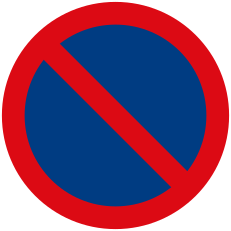
What does this blue sign with a red border and one red diagonal mean?
Practice Your Hazard Perception
Put your knowledge into practice with our interactive hazard perception training.
Start TrainingRelated Scenarios
Practice Your Hazard Perception
Put your knowledge into practice with our interactive hazard perception training.
Start Training