
 Complete guide 2026Updated April 2026
Polish Driving Licence 2026 The Complete Guide
Everything you need to know about getting your driving licence in Poland — WORD theory test format, driving school costs, speed limits, traffic fines, and the reformed penalty system.
Table of Contents
Theory Test
32 questions (20 Yes/No worth 3 pts each + 12 multiple-choice worth 1 pt each), 25 minutes, 68 out of 74 points to pass (92%).
Video-based scenarios included. 50 zł test fee. Administered at WORD centres.
Total Cost
Approximately 3,500–6,000 zł total (~€800–1,400): PKK profile (free), medical exam 200 zł, driving school 3,000–5,000 zł, theory exam 50 zł, practical exam 200 zł, licence fee 100.50 zł.
WORD / Driving SchoolsRoad Deaths
1,651 fatalities in 2025 (~4.3 per 100K), a 35% decrease from 2,909 in 2019.
Poland has improved significantly but remains above the EU average of 4.6 deaths per 100K.
BAC Limit
0.2‰ general limit — one of the strictest in the EU (most EU countries: 0.5‰).
Novice drivers (first 2 years) and professional drivers face a 0.0‰ limit. Criminal offence above 0.5‰.
Fines & Points
Poland's 2022 fine reform (taryfikator mandatów) doubled most fines.
Max on-the-spot fine 5,000 zł. Repeat offenders pay double. 15-point system — reaching 24 points triggers licence suspension and mandatory re-examination.
Global Context
Poland's death rate of ~4.3/100K (52 deaths/million) compares to EU average of 46/million.
Below USA (12.9) but above Germany (3.4), Spain (3.7), and UK (2.5). Licence cost (3,500–6,000 zł / €800–1,400) is moderate by EU standards.
Poland Road Safety: 5-Year Trend (2019–2023)
According to KGP data, road fatalities in Poland dropped significantly over 6 years, from 2,909 in 2019 to 1,651 deaths in 2025 — a 43% reduction. COVID-19 lockdowns accelerated the decline in 2020, but the trend continued with stronger enforcement and the 2022 fine reform. The 2025 figure marks a historic low.
Year-over-year changes
Deaths per 100,000 Population
 USA12.9
- Poland5.2
 Spain3.8
 Germany3.3
 UK2.5
Source: WHO Global Status Report on Road Safety, KGP. Per-capita rates are estimates and may vary by methodology.
Polish Theory Test Format
The computerized theory test is administered at WORD (Wojewódzki Ośrodek Ruchu Drogowego) centres across Poland
The Polish driving theory test (egzamin teoretyczny) for Category B consists of 32 questions — 20 Yes/No questions (each worth 3 points) and 12 multiple-choice questions with 3 answer options (each worth 1 point) — for a maximum of 74 points. To pass, you must score at least 68 points (92%). Questions are video-based with real traffic scenarios displayed on screen. You have 25 minutes total: 20 seconds per Yes/No question and 50 seconds per multiple-choice question. The test fee is 50 zł. The exam is available in Polish and English. It is administered at WORD centres located in every voivodeship capital.
Questions
Duration
Pass Mark
Test Fee
What the Theory Test Covers
- Traffic signs (znaki drogowe) & signals
- Priority rules (pierwszeństwo przejazdu)
- Speed limits (ograniczenia prędkości)
- Pedestrian priority at crossings (since 2021)
- Tram priority rules
- Vehicle equipment & safety systems
- Mandatory fire extinguisher (1kg ABC)
- Seatbelts & child restraint systems
- First aid basics (pierwsza pomoc)
- DRL mandatory year-round
- Motorway & expressway rules
- Hazard perception from video scenarios
- BAC limits & novice driver rules
- Tunnel & level crossing rules
- Points system (punkty karne)
How to Get Your Polish Driving Licence
From PKK profile to prawo jazdy — the complete 6-step process
- 1
Get PKK Profile Number
Apply for your PKK (Profil Kandydata na Kierowcę) at the local Starostwo Powiatowe
Free of charge. Requires ID, photo, and a declaration of your permanent residence. The PKK is valid indefinitely.
- 2
Get Medical Certificate
Complete a medical examination with an authorised physician
Medical exam 200 zł. Tests vision, general health, and fitness to drive. Certificate required before enrolling in a driving school.
- 3
Enrol at a Driving School
Register at a licensed ośrodek szkolenia kierowców (driving school)
Driving school package 3,000–5,000 zł. Includes 30 hours theory + 30 hours practical training (mandatory minimums).
- 4
Pass the Theory Test
Take and pass the theory exam at your regional WORD centre
32 questions, 68/74 pts to pass (92%), 25 min, 50 zł. Video-based scenarios. Available in Polish and English.
- 5
Complete Practical Training
Complete at least 30 hours of practical driving lessons with your instructor
30 hours is the legal minimum. Most students need 30–40 hours. Training must include night driving and motorway/expressway experience.
- 6
Pass the Practical Test
Pass the practical driving test at WORD with an examiner
40 minutes in real traffic, 200 zł. Includes manoeuvres, urban driving, and assessment of road awareness. Get your prawo jazdy (licence card) for 100.50 zł.
Polish Driving Licence Fees
Total cost typically 3,500–6,000 zł (~€800–1,400) depending on location and number of additional lessons
| Fee | Amount |
|---|---|
| PKK profile number | Free |
| Medical examination | 200 zł |
| Driving school (full package) | 3,000–5,000 zł |
| Theory exam (WORD) | 50 zł |
| Practical exam (WORD) | 200 zł |
| Licence card issuance | 100.50 zł |
| Additional practical lessons (per hour) | 60–120 zł |
| Total Typical (Category B) | 3,500–6,000 zł |
Costs vary by city and driving school. Warsaw, Kraków, and Wrocław tend to be more expensive. Additional costs apply if you fail and must retake tests (50 zł theory resit, 200 zł practical resit). Some schools offer packages with extra lessons included.
See how ready you are — practice with real exam questions
Try Free QuestionsMinimum age by licence category
- AM — Mopeds up to 50cc / 45 km/h14years
- A1 — Motorcycles up to 125cc / 11 kW16years
- B1 — Light quadricycles16years
- T — Agricultural tractor16years
- A2 — Motorcycles up to 35 kW18years
- B — Cars up to 3,500 kg18years
- C1 — Medium trucks 3,500–7,500 kg18years
- C — Trucks over 3,500 kg21years
- D1 — Minibuses up to 16 passengers21years
- PT — Tram21years
- A — Motorcycles unlimited24 years, or 20 with 2 years A2 experience24years
- D — Buses (8+ passengers)24years
Licence Validity Periods
| Licence / age | Validity |
|---|---|
| Standard (AM / A / B / T)Issued since 2013 | 15 years |
| Professional (C / D / PT)Medical + psychological exam at every renewal | 5 years |
| Drivers over 70Medical exam required at every renewal | 3 years |
| Pre-2013 legacy licencesMust be exchanged for new EU-format card by 19 January 2033 | Exchange by 2033 |
Young Driver Restrictions
- 2-year probationary period for all new licence holders
- 0.0‰ BAC limit during probationary period (strictest in EU)
- Speed limit reduced by 20 km/h on expressways and motorways for first 2 years
- Must display green leaf sticker on vehicle (symbol młodego kierowcy)
- Licence revoked if 20+ penalty points accrued in first year
Points System (Punkty Karne)
- Drivers accumulate penalty points for infractions (0–15 per offence)
- Reaching 24 points triggers licence suspension and mandatory re-examination
- New drivers (first year): 20-point threshold for licence revocation
- Points expire 12 months after payment of the fine (since September 2023)
- Can reduce 6 points by completing a road safety course (once every 6 months)
- Repeat offenders within 2 years pay double fines (since 2022)
Speed Limits in Poland
As per the Prawo o ruchu drogowym (Road Traffic Act) — all speeds in km/h
Poland has clearly defined speed limits across all road types. Since June 2021, the built-up area limit was unified to 50 km/h at all times (previously 60 km/h at night). Motorways (autostrady) allow 140 km/h for cars — among the highest in the EU. Expressways (drogi ekspresowe) have different limits depending on whether they are single or dual carriageway: 100 km/h and 120 km/h respectively. Residential zones (strefy zamieszkania) are limited to 20 km/h with full pedestrian priority. Trucks have lower limits on all road types. Speed cameras (fotoradary) are operated by CANARD (Centrum Automatycznego Nadzoru nad Ruchem Drogowym) with ongoing expansion.
| Road Type | Cars | Trucks | Note |
|---|---|---|---|
| Strefa zamieszkania (Residential zone) | 20 | 20 | Full pedestrian priority |
| Teren zabudowany (Built-up area) | 50 | 50 | 50 km/h unified since June 2021 |
| Single carriageway (rural) | 90 | 70 | Outside built-up areas |
| Dual carriageway (rural) | 100 | 80 | Two lanes each direction |
| Droga ekspresowa (single) | 100 | 80 | Single-carriageway expressway |
| Droga ekspresowa (dual) | 120 | 80 | Dual-carriageway expressway |
| Autostrada (Motorway) | 140 | 80 | 140 km/h — among highest in EU |
Strefa zamieszkania (Residential zone)
Cars: 20Trucks: 20Full pedestrian priority
Teren zabudowany (Built-up area)
Cars: 50Trucks: 5050 km/h unified since June 2021
Single carriageway (rural)
Cars: 90Trucks: 70Outside built-up areas
Dual carriageway (rural)
Cars: 100Trucks: 80Two lanes each direction
Droga ekspresowa (single)
Cars: 100Trucks: 80Single-carriageway expressway
Droga ekspresowa (dual)
Cars: 120Trucks: 80Dual-carriageway expressway
Autostrada (Motorway)
Cars: 140Trucks: 80140 km/h — among highest in EU
The 50 km/h built-up limit applies 24/7 since June 2021 (previously 60 km/h between 11 PM and 5 AM). Residential zones (strefa zamieszkania) have 20 km/h limit with full pedestrian priority on the carriageway. Trucks are limited to lower speeds on all road types.
Traffic Fines & Penalties
As per the reformed taryfikator mandatów (2022) — repeat offenders within 2 years pay double
Poland's traffic fine system underwent a major reform in January and September 2022, approximately doubling most fines and introducing the principle that repeat offenders within 2 years pay double. Maximum on-the-spot fine increased to 5,000 zł. The points system runs from 0 to 15 per offence, with 24 points triggering licence suspension. Failing to yield to a pedestrian at a crossing now carries one of the harshest penalties at 1,500 zł and 15 points. Since March 2024, driving under the influence above 1.5‰ can result in vehicle confiscation.
Up to 400 zł500–1 500 złOver 1 500 złStandard amount; double for a repeat offence within 2 years
| Violation | Fine | Points | Notes |
|---|---|---|---|
| Speeding 1–10 km/h over limit | 50 zł | 1 pt | — |
| Speeding 11–15 km/h over limit | 100 zł | 2 pt | — |
| Speeding 16–20 km/h over limit | 200 zł | 3 pt | — |
| Speeding 21–25 km/h over limit | 300 zł | 5 pt | — |
| Speeding 26–30 km/h over limit | 400 zł | 7 pt | — |
| Speeding 31–40 km/h over limit | 800 zł | 9 pt | Double for repeat offence |
| Speeding 41–50 km/h over limit | 1 000 zł | 11 pt | Double for repeat offence |
| Speeding 51–60 km/h over limit | 1 500 zł | 13 pt | Double for repeat offence |
| Speeding 61–70 km/h over limit | 2 000 zł | 14 pt | Double for repeat offence |
| Speeding 71+ km/h over limit | 2 500 zł | 15 pt | Double for repeat offence |
| Running a red light | 500 zł | 15 pt | — |
| Mobile phone use while driving | 500 zł | 12 pt | — |
| No seatbelt | 100 zł | 5 pt | — |
| DUI (0.2–0.5‰ BAC) | up to 5 000 zł | — | Wykroczenie + licence ban up to 3 years |
| Failing to yield to pedestrian at crossing | 1 500 zł | 15 pt | Since June 2021 reform |
- 50 zł
Speeding 1–10 km/h over limit
1 pt - 100 zł
Speeding 11–15 km/h over limit
2 pt - 200 zł
Speeding 16–20 km/h over limit
3 pt - 300 zł
Speeding 21–25 km/h over limit
5 pt - 400 zł
Speeding 26–30 km/h over limit
7 pt - 800 złDouble for repeat offence
Speeding 31–40 km/h over limit
9 pt - 1 000 złDouble for repeat offence
Speeding 41–50 km/h over limit
11 pt - 1 500 złDouble for repeat offence
Speeding 51–60 km/h over limit
13 pt - 2 000 złDouble for repeat offence
Speeding 61–70 km/h over limit
14 pt - 2 500 złDouble for repeat offence
Speeding 71+ km/h over limit
15 pt - 500 zł
Running a red light
15 pt - 500 zł
Mobile phone use while driving
12 pt - 100 zł
No seatbelt
5 pt - up to 5 000 złWykroczenie + licence ban up to 3 years
DUI (0.2–0.5‰ BAC)
- 1 500 złSince June 2021 reform
Failing to yield to pedestrian at crossing
15 pt
Fines shown are standard amounts; repeat offenders within 2 years pay double. DUI above 0.5‰ is a criminal offence (przestępstwo) carrying imprisonment, licence revocation, and potential vehicle confiscation (since March 2024 for BAC >1.5‰). Points expire 12 months after fine payment.
Know These Rules Before Your Theory Test
Traffic fines, speed limits, and BAC rules are heavily tested in the WORD theory exam. Practice with real exam-style questions.
How the road worksMandatory, with a penaltyMakes it easier
Right-Hand Traffic
Poland drives on the right.
Priority to vehicles from the right at unmarked intersections. Always keep to the right lane unless overtaking.
BAC 0.2‰ (Strictest in EU)
General limit 0.2‰ — one of the strictest in the EU (most countries: 0.5‰).
Novice and professional drivers: 0.0‰. Above 0.5‰ is a criminal offence with imprisonment and vehicle confiscation above 1.5‰.
OC Mandatory Insurance
OC (odpowiedzialność cywilna) third-party liability insurance is mandatory.
Driving without it carries severe fines (up to 7,500 zł for cars) and personal liability for damages.
Przegląd Techniczny
Vehicle roadworthiness inspection is mandatory: first inspection after 3 years, then every 2 years until 5 years, then annually.
Stacja kontroli pojazdów (SKP) stations perform the inspection.
DRL Mandatory Year-Round
Daytime running lights (DRL) or dipped headlights must be on at all times when driving in Poland, regardless of weather or time of day.
Phone: 500 zł + 12 Points
Using a mobile phone while driving carries a 500 zł fine and 12-point penalty.
Hands-free systems are permitted. One of the harshest phone penalties in Europe.
Child Seats (Under 150 cm)
Children under 150 cm must use an approved child restraint system.
Children under 150 cm may not sit in the front seat unless the vehicle has no rear seats or rear seats are already occupied by other children in CRS.
Fire Extinguisher Mandatory
All vehicles must carry a fire extinguisher (minimum 1 kg ABC type).
This is checked during the przegląd techniczny and can be verified in a police check.
Tram Priority
Trams generally have priority over other vehicles in Poland.
However, trams entering a roundabout with a give-way sign must yield. Be particularly cautious at tram crossings in city centres.
Common Road Hazards in Poland
1,651 road fatalities in 2025 — know these hazards to stay safe on Polish roads
Heavy Snow & Ice
Polish winters bring heavy snowfall, black ice, and sub-zero temperatures from November to March — particularly in southern mountains and eastern regions
Dense Fog
Frequent fog in river valleys and lowlands, especially during autumn and spring mornings — visibility can drop below 50 metres
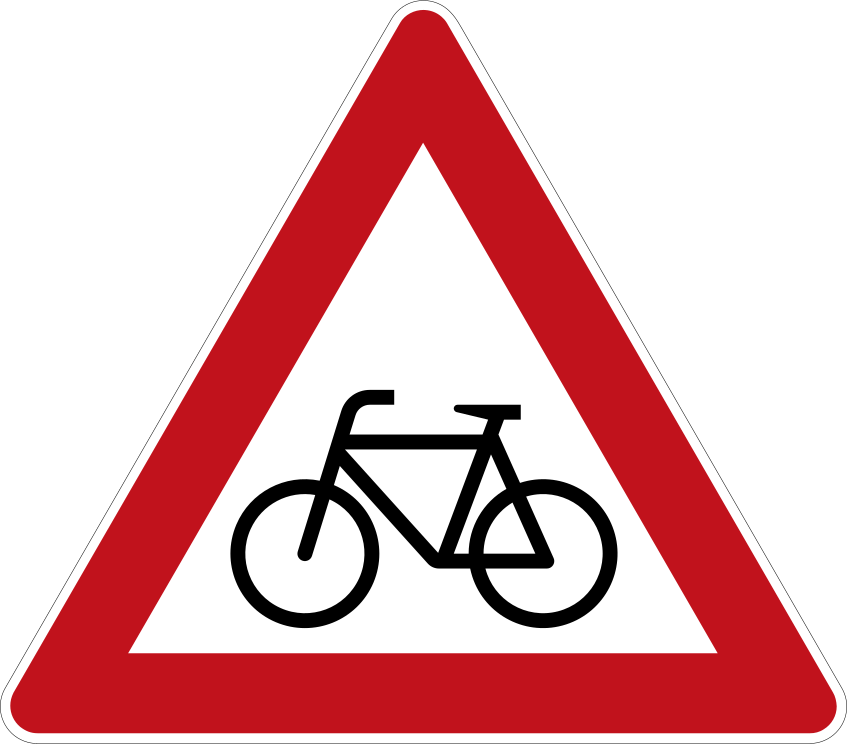
Cyclists
Growing cycling infrastructure but many roads lack separated bike lanes — maintain safe distance and watch for cyclists at intersections
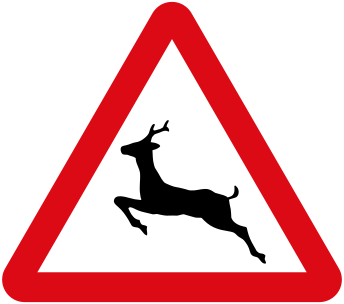
Wild Animals
Deer and wild boar (dziki) frequently cross rural and forest roads, especially at dawn and dusk — collision risk is highest in eastern Poland
Agricultural Vehicles
Slow-moving tractors and farm equipment are common on rural roads — unexpected encounters on two-lane roads require patience and safe overtaking
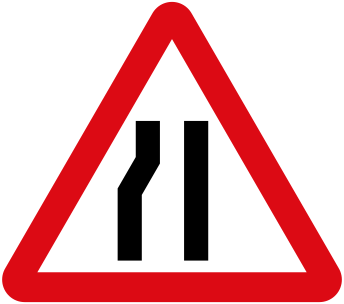
Narrow Historic Streets
Many Polish cities have medieval old towns (stare miasta) with extremely narrow cobblestone streets, tight turns, and limited visibility
Poland's 16 Voivodeships
Driving licence administration is handled by WORD centres located in each voivodeship capital. Each voivodeship has its own WORD for theory and practical examinations.
- 1DolnośląskieWrocław2.9M
- 2Kujawsko-pomorskieBydgoszcz / Toruń2.1M
- 3LubelskieLublin2.1M
- 4LubuskieGorzów Wlkp. / Zielona Góra1.0M
- 5ŁódzkieŁódź2.5M
- 6MałopolskieKraków3.4M
- 7MazowieckieWarszawa5.4M
- 8OpolskieOpole1.0M
- 9PodkarpackieRzeszów2.1M
- 10PodlaskieBiałystok1.2M
- 11PomorskieGdańsk2.3M
- 12ŚląskieKatowice4.5M
- 13ŚwiętokrzyskieKielce1.2M
- 14Warmińsko-mazurskieOlsztyn1.4M
- 15WielkopolskiePoznań3.5M
- 16ZachodniopomorskieSzczecin1.7M
Driving laws are national (Prawo o ruchu drogowym), but each voivodeship has its own WORD examination centre. Driving school costs vary by region — Warsaw and Kraków tend to be the most expensive.
Myth: Winter tyres are mandatory in Poland
Fact: There is NO legal requirement to use winter tyres in Poland. However, they are strongly recommended from November to March. Studded tyres are completely PROHIBITED on Polish roads year-round.
Myth: You must carry a reflective vest in the car
Fact: There is NO legal requirement for private vehicle drivers to carry a reflective vest in Poland (unlike many other EU countries). However, commercial/professional drivers must have one. It is still recommended as a safety precaution.
Myth: The BAC limit is 0.5‰ like most of Europe
Fact: Poland has one of the STRICTEST BAC limits in the EU at 0.2‰ (0.02%). Most EU countries have a 0.5‰ limit. Novice and professional drivers face a 0.0‰ limit. Even a single beer can put you over the Polish limit.
Myth: You can drive 60 km/h at night in cities
Fact: The higher nighttime speed limit in built-up areas (60 km/h between 11 PM and 5 AM) was ABOLISHED in June 2021. The limit is now 50 km/h at all times in built-up areas, 24 hours a day.
Myth: You don't need a fire extinguisher
Fact: A fire extinguisher (minimum 1 kg ABC type) IS mandatory in all vehicles in Poland. It is checked during the przegląd techniczny (roadworthiness inspection) and police can verify it during a roadside check.
Myth: Trams always have right of way
Fact: While trams generally have priority in Poland, there are exceptions. At roundabouts where a tram enters with a give-way (ustąp pierwszeństwa) sign, the tram must yield. Always check the specific signage at tram crossings.
CANARD speed camera expansion
CANARD (Centrum Automatycznego Nadzoru nad Ruchem Drogowym) is expanding by 70 new speed cameras. Average-speed cameras (odcinkowy pomiar prędkości) being rolled out on major routes. Tighter enforcement of built-up area 50 km/h limit.
Vehicle confiscation for extreme DUI
From March 2024, police can confiscate vehicles from drivers caught with BAC above 1.5‰ or causing an accident while intoxicated. The vehicle becomes state property. For repeat offenders, confiscation applies at any BAC level.
Point expiry changed to 12 months from payment
From September 2023, penalty points expire 12 months after the fine is PAID (not from the date of the offence). This closed a loophole where drivers delayed paying fines to reset their points faster.
Major fine reform (taryfikator mandatów)
In January and September 2022, Poland approximately doubled most traffic fines. Repeat offenders within 2 years pay double. Max on-the-spot fine increased to 5,000 zł. Failing to yield to pedestrians at crossings: 1,500 zł + 15 points.
50 km/h unified, pedestrian priority at crossings
June 2021: Built-up speed limit unified to 50 km/h 24/7 (abolishing the 60 km/h nighttime allowance). Pedestrians approaching a crossing gained priority — drivers must yield to pedestrians about to step onto a crossing, not just those already on it.
How Poland Compares Globally
Poland's driving regulations compared to other major countries — data compiled from official government sources
StrictestIn betweenMost lenientBAC limit and minimum age
| Parameter | Poland | Germany | Spain |  France | UK |
|---|---|---|---|---|---|
| BAC Limit | 0.02% | 0.05% | 0.05% | 0.05% | 0.08% |
| Min. Age (Car) | 18 | 18 | 18 | 18 | 17 |
| Driving Side | Right | Right | Right | Right | Left |
| Highway Speed | 140 km/h | No limit* | 120 km/h | 130 km/h | 112 km/h |
| Test Questions | 32 | 30 | 30 | 40 | 50 |
| Licence Cost | 3,500–6,000 zł | €2,000–3,500 | €700–1,400 | €1,500–2,500 | £200–1,500 |
| Road Deaths/yr | 1,893 | 2,770 | 1,806 | 3,170 | 1,695 |
| Deaths/100K | ~5.2 | ~3.3 | ~3.8 | ~4.8 | ~2.5 |
BAC Limit
Poland: 0.02%Germany: 0.05%Spain: 0.05%France: 0.05%UK: 0.08%Min. Age (Car)
Poland: 18Germany: 18Spain: 18France: 18UK: 17Driving Side
Poland: RightGermany: RightSpain: RightFrance: RightUK: LeftHighway Speed
Poland: 140 km/hGermany: No limit*Spain: 120 km/hFrance: 130 km/hUK: 112 km/hTest Questions
Poland: 32Germany: 30Spain: 30France: 40UK: 50Licence Cost
Poland: 3,500–6,000 złGermany: €2,000–3,500Spain: €700–1,400France: €1,500–2,500UK: £200–1,500Road Deaths/yr
Poland: 1,893Germany: 2,770Spain: 1,806France: 3,170UK: 1,695Deaths/100K
Poland: ~5.2Germany: ~3.3Spain: ~3.8France: ~4.8UK: ~2.5
Poland
Strictest in EU alongside Czech Republic. Most EU countries: 0.05%. UK: 0.08%.
Same as Germany, Spain, France. UK allows from 17.
Among highest in EU. Germany has no general Autobahn limit. France/Spain: 130/120.
~€800–1,400. Cheaper than Germany (€2,000–3,500), similar to Spain (€700–1,400).
~5.2 per 100K — above EU average (4.6) but improving fast. UK is best at 2.5/100K.
Road deaths: Poland 1,651 (KGP 2025), Germany 2,814 (Destatis 2025), Spain 1,785 (DGT 2024), France 3,260 (ONISR 2025), UK 1,695 (DfT 2023). BAC: Poland 0.2‰ = 0.02%. UK BAC is 0.08% for England/Wales; Scotland is 0.05%.
Primary Sources
Verification Methodology
Every fact on this page has been cross-referenced against at least two authoritative sources. Our process:
- 1Primary data collected from official Polish legislation (Dziennik Ustaw) and KGP publications
- 2Cross-verified against European Commission road safety data and WORD examination regulations
- 3Regional variations noted where applicable (driving school costs differ by voivodeship)
- 4Page reviewed and fact-checked on April 12, 2026
If you find an error, please contact us so we can correct it immediately.
Frequently Asked Questions
How much does a driving licence cost in Poland?
The total cost for a Category B (car) licence is typically 3,500–6,000 zł (~€800–1,400). This includes: PKK profile (free), medical exam 200 zł, driving school 3,000–5,000 zł, theory exam at WORD 50 zł, practical exam 200 zł, and licence card 100.50 zł. Costs vary by city, with Warsaw and Kraków being the most expensive.
What is the Polish theory test format?
The WORD theory exam for Category B has 32 questions: 20 Yes/No questions (3 pts each, 20 seconds each) and 12 multiple-choice questions with 3 options (1 pt each, 50 seconds each). Maximum 74 points, 68 needed to pass (92%). The test is video-based with real traffic scenarios. Fee: 50 zł. Available in Polish and English.
What is the pass rate for the Polish theory test?
The theory test pass rate varies by WORD centre but averages around 50–60%. The challenging video-based format and high 92% pass mark (68 out of 74 points) make thorough preparation essential. Many candidates fail on the timed Yes/No questions where you have only 20 seconds.
What is the BAC (blood alcohol) limit in Poland?
Poland's general BAC limit is 0.2‰ (0.02%) — one of the strictest in the EU. Novice drivers (first 2 years) and professional drivers: 0.0‰. BAC 0.2–0.5‰ is an administrative offence (wykroczenie) with fines up to 5,000 zł. Above 0.5‰ is a criminal offence (przestępstwo) with imprisonment and licence revocation. Since March 2024, vehicles can be confiscated for BAC above 1.5‰.
How does the Polish penalty points system work?
Poland uses an accumulation system where drivers collect penalty points (punkty karne) for infractions, ranging from 1 to 15 points per offence. Reaching 24 points triggers licence suspension and mandatory re-examination at WORD. New drivers (first year) face a lower 20-point threshold. Points expire 12 months after the fine is paid. You can reduce 6 points by completing a safety course (once every 6 months).
What is a PKK (Profil Kandydata na Kierowcę)?
The PKK is a mandatory candidate profile that must be obtained before starting the licence process. Apply at your local Starostwo Powiatowe (district office) with your ID, photo, and medical certificate. It is free of charge and valid indefinitely. The PKK number is used to track your progress through the training and examination process.
Are winter tyres mandatory in Poland?
No, there is no legal requirement to use winter tyres in Poland, though they are strongly recommended from November to March. IMPORTANT: Studded tyres are completely prohibited on Polish roads year-round. Many drivers opt for all-season tyres as a compromise.
What is the WORD examination centre?
WORD (Wojewódzki Ośrodek Ruchu Drogowego) is the Regional Road Traffic Centre that administers both theory and practical driving examinations in Poland. There is at least one WORD centre in every voivodeship capital. You must take your exams at the WORD in the voivodeship where your PKK was issued.
What speed limits apply in Polish built-up areas?
Since June 2021, the speed limit in built-up areas (teren zabudowany) is 50 km/h at all times — the previous nighttime allowance of 60 km/h was abolished. Residential zones (strefa zamieszkania) have a 20 km/h limit with full pedestrian priority on the carriageway.
What are the mandatory items to carry in a car in Poland?
Mandatory items in Poland: a fire extinguisher (minimum 1 kg ABC type), a warning triangle, vehicle documents (dowód rejestracyjny), valid OC insurance confirmation, and your driving licence. A first aid kit is strongly recommended but not legally mandatory for private vehicles.
Can I convert my foreign driving licence in Poland?
EU/EEA licences are valid in Poland without any conversion. Non-EU licence holders who become Polish residents must exchange their licence within 6 months. Poland has bilateral agreements with some countries for direct exchange. For others, you must pass both the WORD theory and practical tests. An International Driving Permit is valid for 6 months for tourists.
What is the vehicle confiscation law for DUI?
Since March 2024, police can confiscate vehicles from drivers caught with BAC above 1.5‰ or causing an accident while intoxicated. The vehicle becomes state property. For repeat DUI offenders, confiscation applies at any BAC level above the legal limit. If the vehicle is company-owned, the driver must pay the vehicle's value.
Do I need a reflective vest in Poland?
There is no legal requirement for private vehicle drivers to carry a reflective vest in Poland. However, commercial and professional drivers must have one. While not mandatory, carrying a vest is recommended for safety, especially if you need to exit your vehicle on a motorway or expressway.
What is the fine for using a phone while driving?
Using a mobile phone while driving in Poland carries a 500 zł fine and 12 penalty points — one of the harshest phone penalties in Europe. Hands-free systems (Bluetooth, car integration) are permitted. The fine doubles for repeat offenders within 2 years.
How long does the licence process take?
The typical timeline from PKK application to receiving your prawo jazdy is 2–4 months. This includes: PKK and medical (1–2 weeks), driving school theory and practical (4–8 weeks minimum for 30+30 hours), WORD theory exam (scheduled within 1–2 weeks), WORD practical exam (scheduled within 1–4 weeks), and licence card production (2–3 weeks).
Cite This Page
Use the following citations when referencing this article in academic papers, journalism, or reports.
APA 7th Edition
AutoviaTest. (2026, March 24). Polish driving licence facts 2026 — WORD test, driving school costs, fines & rules. https://autoviatest.com/en/driving-test/poland/facts
MLA 9th Edition
AutoviaTest. "Polish Driving Licence Facts 2026 — WORD Test, Driving School Costs, Fines & Rules." AutoviaTest, 24 Mar. 2026, autoviatest.com/en/driving-test/poland/facts.
Chicago 17th Edition
AutoviaTest. "Polish Driving Licence Facts 2026 — WORD Test, Driving School Costs, Fines & Rules." Last modified March 24, 2026. https://autoviatest.com/en/driving-test/poland/facts.
Ready to Pass Your Polish Theory Test?
Practice with 1,000+ official-style WORD theory questions and detailed explanations. Available in 24 languages.
More Country Driving Guides
 India Driving Licence Facts & RTO GuideRTO test format, fees, speed limits, traffic fines, state-wise information, and everything about driving in India.Germany Driving Licence Facts & Fahrschule GuideTÜV/DEKRA test format, Fahrschule costs, Autobahn rules, speed limits, and the Flensburg points system.Spain Driving Licence Facts & DGT GuideDGT test format, autoescuela costs, speed limits, traffic fines, and the permiso por puntos points system.France Driving Licence Facts & Auto-école GuideCode de la route exam, auto-école costs, speed limits, traffic fines, and the permis à points system.