
 Complete guide 2026Updated April 2026
Portuguese Driving Licence 2026 The Complete Guide
Everything you need to know about getting your driving licence in Portugal — IMT theory test format (30 questions, 6000+ question bank, 90% pass mark), training costs, Codigo da Estrada traffic fines, BAC limits, 12-point system, and driving across 18 districts plus the Azores and Madeira.
Table of Contents
Portugal Driving Test Explained — Código da Estrada, Cost & Rules 2026
A 2-minute walkthrough of Portugal's driving licence system — from escola de condução enrolment to passing the IMT theory and practical exams.
 Video Guide · 2 min
Key Takeaways
- The IMT theory test has 30 multiple-choice questions from a 6,000+ question bank — you must score 27/30 (90%) to pass, one of the strictest in Europe.
- Total cost runs €700–€1,200: driving school package (€650–900), IMT theory test (€15), practical test (€30), medical certificate, and licence issuance (€30).
- Enrolment in a licensed escola de condução is mandatory — you must complete 28 theory and 32 practical lessons before testing.
- Speed limits are 50 km/h urban, 90 on rural roads, 100 on expressways, and 120 on motorways (autoestradas).
- BAC limit is 0.5 g/L general, dropping to 0.2 g/L for novice drivers in their first 3 years and professional drivers.
- Portugal uses a 12-point Carta por Pontos system — reaching 0 points triggers licence cancellation and a 2-year ban.
- New drivers receive a carta provisória (provisional licence) for 3 years with stricter BAC limits and infraction penalties.
Read full transcript
Getting a driving licence in Portugal means enrolling at an escola de condução and passing exams administered by IMT — the Instituto da Mobilidade e dos Transportes — the government agency that oversees every theory exam, practical test, and licence issue in the country. Here's everything you need to know in under two minutes.
0:06 Theory Test Format. The Portuguese theory test has 30 multiple-choice questions drawn from a bank of over 6,000 questions, and you must get at least 27 correct. That's a 90% pass mark — one of the strictest in Europe. You have 30 minutes, the test is computer-based at IMT offices or approved private centres, and questions cover the Código da Estrada, traffic signs, road safety, and vehicle mechanics.
0:20 Cost of a Portuguese Licence. Expect to pay between €700 and €1,200 total. That covers the driving school package (€650–900 for 28 theory and 32 practical lessons), the IMT theory test (€15 at IMT or up to €110 at private centres), the practical test (€30 at IMT), medical certificate (€20–50), and licence issuance (€30). Enrolment in a licensed escola de condução is mandatory.
0:35 Portuguese Speed Limits. Portugal uses four main speed tiers: 50 km/h in urban areas (localidades), 90 km/h on rural roads, 100 km/h on expressways (vias reservadas), and 120 km/h on motorways (autoestradas). Coexistence zones shared with pedestrians are limited to 20 km/h. The minimum speed on motorways is 50 km/h.
0:47 Traffic Fines & Points. Portugal uses a 12-point Carta por Pontos system launched in 2016. Serious infractions deduct 2–4 points, very serious ones 4–6 points. Reaching 0 points means licence cancellation and a 2-year ban. Speeding 20–40 km/h over the limit costs €120–300. Phone use while driving is €120 and 2 points. Drink-driving over 0.5 g/L starts at €250 with point deductions.
1:02 Key Road Rules. Portugal drives on the right and gives way to traffic from the right at unmarked intersections. Every vehicle must carry a reflective vest and warning triangle. The BAC limit is 0.5 g/L general, dropping to 0.2 g/L for novice drivers in their first 3 years. New drivers receive a carta provisória — a provisional licence with stricter rules for 3 years.
1:14 Step-by-Step Licence Process. The process: enrol at an escola de condução, obtain a medical certificate, complete 28 theory lessons, pass the 30-question IMT theory exam, complete 32 hours of practical lessons, then pass the practical road test with an IMT examiner. Total time is typically 3 to 6 months.
1:29 Emergency Numbers. Portugal uses the pan-European 112 for any emergency — police, ambulance, or fire. The GNR (Guarda Nacional Republicana) traffic division handles highway incidents.
1:37 Driving Myths vs Facts. Myth: you can easily swap any foreign licence. Fact: only EU and EEA licences are automatically valid — most non-EU licences require passing the full Portuguese theory and practical exam. Myth: the theory test is easy with the question bank available. Fact: with over 6,000 questions, memorising answers is impractical — you need to understand the Código da Estrada. Myth: speed cameras are rare. Fact: Portugal has been rapidly expanding its speed camera network, especially on the IC and IP roads.
Practice the full Portuguese theory question bank for free on AutoviaTest to prepare for your IMT exam.
Theory Test
30 multiple-choice questions from a bank of 6,000+ questions, to be completed within 30 minutes.
Must score 27/30 (90%) to pass. Computer-based test administered at IMT-approved examination centres. Questions cover traffic signs, rules, vehicle safety, and the Codigo da Estrada.
Total Cost
Government fees approximately €75 (theory test €15 at IMT or up to €110 at private centres + practical test €30 + licence issuance €30).
Full driving school package €650-900 including all required lessons. Total: €700-1,200 depending on location and number of extra lessons needed.
Road Deaths
634 fatalities in 2024 (down 1.2% from 642 in 2023).
Per-capita rate of 60.8 deaths per million inhabitants (2023) — 6th worst in the EU. Post-COVID figures have risen steadily from the 2020 low of ~480, though 2024 shows the first year-on-year decrease since the pandemic.
BAC Limits
General limit 0.5 g/L. Novice drivers (first 3 years, carta provisoria) and professional drivers: 0.2 g/L. Criminal threshold: BAC of 1.2 g/L or above — this is a criminal offence punishable by prison up to 1 year. Fines range from €250 to €2,500 for administrative offences.
Codigo da Estrada12-Point System
Carta por Pontos (points-based licence) system launched June 1, 2016.
Every driver starts with 12 points. Points are deducted for serious and very serious offences (2-6 points per infraction). Reaching 0 points results in licence cancellation and a 2-year ban. Good driving earns bonus points, up to a maximum of 15.
European Context
Portugal's road fatality rate (60.8/million in 2023) is significantly above the EU average (~46/million).
Compared to neighbours: Spain 37, France 48, Germany 35 per million. However, Portugal has improved dramatically since 2001 (1,671 deaths) — a reduction of over 60%. The EU target is to halve deaths by 2030.
Portugal Road Safety: 5-Year Trend (2020–2024)
Portugal saw a sharp drop in road fatalities during the COVID-19 pandemic in 2020 (~480 deaths), but figures have risen steadily since as traffic volumes recovered. The 2023 figure of 642 was the highest since 2019, placing Portugal among the worst-performing EU countries per capita at 60.8 deaths per million inhabitants. In 2024, Portugal recorded 634 deaths — a marginal 1.2% decrease that may signal a turning point, particularly as speed camera networks expand and the planned Codigo da Estrada overhaul approaches.
Year-over-year changes
Deaths per Million Inhabitants (2023)
 Romania81
- Portugal60.8
 France48
 Spain37
 Germany35
Source: European Commission Road Safety Statistics, ANSR Portugal. Per-capita rates are 2023 estimates based on Eurostat population data.
Portuguese Theory Test Format
Computer-based theory test administered at IMT-approved examination centres across Portugal
The Portuguese driving theory test (exame teorico) for category B consists of 30 multiple-choice questions drawn from an official bank of over 6,000 questions, to be completed within 30 minutes. To pass, you must answer at least 27 out of 30 questions correctly (90%). The test is computer-based and administered at IMT offices or approved private examination centres. Questions cover the Codigo da Estrada (Highway Code), traffic signs and signals, road safety, vehicle mechanics, and first aid basics. The theory test fee at IMT is approximately €15, while private examination centres may charge up to €110. You must complete a minimum of 28 theory lessons at a licensed driving school (escola de conducao) before being eligible to sit the exam.
Questions
Duration
Pass Mark
Test Fee
What the Theory Test Covers
- Codigo da Estrada — Portuguese Highway Code
- Traffic signs, signals & road markings
- Right-of-way rules at intersections & roundabouts
- Speed limits by road type & vehicle category
- Pedestrian crossings & school zones
- Vehicle inspection (IPO) requirements
- Mandatory equipment: reflective vest & warning triangle
- Seatbelt and child restraint regulations
- Tyre condition, braking systems & lights
- First aid basics & emergency procedures
- Motorway driving & minimum speed rules
- Alcohol limits & point deduction system
- Tunnel driving & overtaking rules
- Environmental zones & emission rules
- Via Verde electronic toll system
How to Get Your Portuguese Driving Licence
From escola de conducao to carta de conducao — the complete process
- 1
Enrol at a Driving School
Register at a licensed escola de conducao (driving school)
Choose an IMT-licensed driving school. You will need to provide identification (citizen card or residence permit), proof of address, and a recent photo. School packages typically cost €650-900.
- 2
Obtain Medical Certificate
Get a medical fitness certificate from an authorized physician
Visit an approved medical centre for a driving fitness assessment including vision, hearing, and general health. Cost: €20-50. Valid for the duration of the licence application.
- 3
Complete Theory Training
Attend a minimum of 28 theory lessons at your driving school
Theory lessons cover the Codigo da Estrada, traffic signs, road safety, vehicle mechanics, and first aid. Lessons are typically 50 minutes each. Many schools offer flexible scheduling.
- 4
Pass the Theory Test at IMT
Take the computer-based theory exam (30 questions, 27/30 to pass)
30 multiple-choice questions in 30 minutes. Pass mark: 27/30 (90%). Test at an IMT office (€15) or private centre (up to €110). Results are immediate. If you fail, you can retake after a waiting period.
- 5
Complete Practical Training & Test
Minimum 32 hours of practical driving lessons, then pass the road test
Practical lessons cover urban driving, motorway driving, night driving, and manoeuvres. The practical test is conducted by an IMT examiner in your driving school's vehicle. Fee: €30 at IMT or up to €120 at private centres.
- 6
Receive Your Carta de Conducao
Collect your Portuguese driving licence after passing all tests
Licence issuance fee: €30. Processing time: approximately 15-20 working days. The carta de conducao is an EU-standard credit-card format licence valid across all EU/EEA countries.
Portuguese Driving Licence Fees
Total cost typically €700-1,200 including driving school, government fees, and medical certificate
| Fee | Amount |
|---|---|
| Driving school package (28 theory + 32 practical) | €650-900 |
| Medical certificate | €20-50 |
| Theory test fee (IMT / private) | €15-110 |
| Practical test fee (IMT / private) | €30-120 |
| Licence issuance | €30 |
| Photos & documents | €10-15 |
| Extra lessons (per hour, if needed) | €12-20 |
| Total Typical (Category B) | €700-1,200 |
Prices vary by region and driving school. Lisbon and Porto tend to be more expensive than rural areas. IMT exam fees are fixed by law; private examination centre fees are market-rate. Retake fees apply for failed attempts. Some schools offer installment payment plans.
See how ready you are — practice with real exam questions
Try Free QuestionsMinimum age by licence category
- AM — Mopeds up to 50ccAge 1616years
- A1 — Motorcycles up to 125cc / 11 kWAge 1616years
- A2 — Motorcycles up to 35 kWAge 1818years
- A — Unrestricted motorcyclesAge 24, or 20 with 2yr A2 experience24years
- B — Cars up to 3,500 kg, max 9 seatsAge 1818years
- C1 — Medium trucks 3,500-7,500 kgAge 2121years
- C — Heavy trucks over 3,500 kgAge 2121years
- D — Buses with 8+ passengersAge 2424years
Licence Validity Periods
| Licence / age | Validity |
|---|---|
| AM / A1 / A2 / A / B / BEEvery 15 years until age 60; then at 65, 70; every 2 years after 70 | 15 years |
| C1 / C / D1 / D and subcategoriesMedical exam required for each renewal | 5 years |
| Ages 60-70Renewal required at 60, 65, and 70 | At specific ages |
| Age 70+Medical exam mandatory at each renewal | Every 2 years |
Probationary Period (Carta Provisoria)
- New drivers receive a carta provisoria (provisional licence) for 3 years
- BAC limit reduced to 0.2 g/L during probation (vs 0.5 g/L general)
- Serious or very serious infractions during probation can result in licence cancellation
- After 3 infraction-free years, the licence becomes permanent (carta de conducao definitiva)
- Probationary drivers must display a green 'P' disc on the vehicle (recommended)
12-Point Licence System (Carta por Pontos)
- Every driver starts with 12 points (since June 1, 2016)
- Serious infractions deduct 2-4 points; very serious deduct 4-6 points
- Good driving behaviour earns bonus points, up to a maximum of 15
- 0 points = licence cancelled, 2-year driving ban
- Points can be recovered through voluntary road safety courses
Speed Limits in Portugal
As per Codigo da Estrada — all speeds in km/h
Portugal's speed limits are structured by road type and vehicle category. In urban areas (localidades), the general limit is 50 km/h. Coexistence zones (zonas de coexistencia) shared with pedestrians are limited to 20 km/h. On rural roads outside built-up areas, cars may travel up to 90 km/h, while cars towing trailers are limited to 70 km/h and heavy vehicles to 80 km/h. Expressways (vias reservadas) allow up to 100 km/h for cars (80 km/h with trailer, 90 km/h for trucks). Motorways (autoestradas) have a maximum of 120 km/h for cars, 100 km/h with trailer, and 110 km/h for trucks. The minimum speed on motorways is 50 km/h. Posted signs always take precedence over default limits.
| Road Type | Cars | Cars + Trailer | Trucks / Buses | Note |
|---|---|---|---|---|
| Coexistence Zone | 20 | 20 | 20 | Shared with pedestrians |
| Urban (Localidade) | 50 | 50 | 50 | Within built-up areas |
| Rural Road | 90 | 70 | 80 | Outside built-up areas |
| Expressway (Via Reservada) | 100 | 80 | 90 | Dual carriageway, no intersections |
| Motorway (Autoestrada) | 120 | 100 | 110 | Minimum speed 50 km/h |
Coexistence Zone
Cars: 20Cars + Trailer: 20Trucks / Buses: 20Shared with pedestrians
Urban (Localidade)
Cars: 50Cars + Trailer: 50Trucks / Buses: 50Within built-up areas
Rural Road
Cars: 90Cars + Trailer: 70Trucks / Buses: 80Outside built-up areas
Expressway (Via Reservada)
Cars: 100Cars + Trailer: 80Trucks / Buses: 90Dual carriageway, no intersections
Motorway (Autoestrada)
Cars: 120Cars + Trailer: 100Trucks / Buses: 110Minimum speed 50 km/h
Coexistence zones are limited to 20 km/h for all vehicles. Posted speed signs always override default limits. Some motorway sections have reduced limits (e.g. A25 reduced to 100 km/h). Radar tolerance is typically 5 km/h below 100 km/h and 5% above 100 km/h.
Traffic Fines & Penalties
As per the Codigo da Estrada and related legislation — fines in euros
Portuguese traffic fines are classified into three categories: light (leves), serious (graves), and very serious (muito graves). Fines range from €60 for minor infractions to over €2,500 for the most severe offences. Serious and very serious infractions also result in point deductions under the Carta por Pontos system and may carry licence suspension. Speed camera enforcement has expanded significantly since 2023. Payment within 15 days typically results in a reduced fine amount.
Up to €100€101–€300Over €300
| Violation | Fine (€) | Points | Suspension |
|---|---|---|---|
| Speeding 1-20 km/h over limit | €60-300 | — | — |
| Speeding 21-40 km/h over limit | €120-600 | 2-3 pt | Up to 1 month |
| Speeding 41-60 km/h over limit | €300-1,500 | 4-5 pt | 1-3 months |
| Speeding 60+ km/h over limit | €500-2,500 | 5-6 pt | 2-12 months |
| BAC 0.5-0.8 g/L (general) | €250-1,250 | 3 pt | 1-12 months |
| BAC 0.8-1.2 g/L | €500-2,500 | 5 pt | 2-24 months |
| BAC >=1.2 g/L (criminal) | Criminal prosecution | 6 pt | 3-36 months |
| Running red light | €120-600 | 3-4 pt | Up to 2 months |
| Using phone while driving | €250–1,250 | 3 pt | Up to 1 year |
| No seatbelt | €120-600 | 2-3 pt | — |
| No reflective vest when exiting vehicle | €60-300 | — | — |
| Driving without valid licence | €500-2,500 | — | Vehicle seizure |
- €60-300—
Speeding 1-20 km/h over limit
- €120-600Up to 1 month
Speeding 21-40 km/h over limit
2-3 pt - €300-1,5001-3 months
Speeding 41-60 km/h over limit
4-5 pt - €500-2,5002-12 months
Speeding 60+ km/h over limit
5-6 pt - €250-1,2501-12 months
BAC 0.5-0.8 g/L (general)
3 pt - €500-2,5002-24 months
BAC 0.8-1.2 g/L
5 pt - Criminal prosecution3-36 months
BAC >=1.2 g/L (criminal)
6 pt - €120-600Up to 2 months
Running red light
3-4 pt - €250–1,250Up to 1 year
Using phone while driving
3 pt - €120-600—
No seatbelt
2-3 pt - €60-300—
No reflective vest when exiting vehicle
- €500-2,500Vehicle seizure
Driving without valid licence
Fines shown are minimum-maximum ranges. Actual amounts depend on severity and circumstances. Payment within 15 days of notification typically qualifies for a reduced rate. Very serious infractions may result in additional penalties including vehicle seizure. Criminal offences (BAC >=1.2 g/L) are prosecuted under the Penal Code.
Know These Rules Before Your Theory Test
Traffic fines, speed limits, and the point system are heavily tested in the Portuguese theory exam. Practice with real exam-style questions.
How the road worksMandatory, with a penaltyMakes it easier
Drive on the Right
Portugal uses right-hand traffic.
Overtake on the left. Keep right except when overtaking on multi-lane roads.
Blood Alcohol Limits
General limit: 0.5 g/L. Novice drivers (first 3 years) and professional drivers: 0.2 g/L. Criminal offence at 1.2 g/L or above — punishable by up to 1 year imprisonment.
Via Verde Electronic Tolls
Portugal's Via Verde system (since 1991) enables electronic toll payment on motorways.
Some motorways (former SCUT roads) are electronic-only with no cash booths. Rental cars should have a Via Verde device or use an online portal to pay within 5 days.
IPO Vehicle Inspection
Inspecao Periodica Obrigatoria (IPO) is mandatory.
First inspection at 4 years after registration, every 2 years until age 8, then annually. Similar to MOT in the UK or TUV in Germany.
Phone Use Prohibited
Handheld phone use while driving is prohibited.
Fine: €250–1,250 + 3 points (updated 2023). Hands-free systems (Bluetooth, built-in) are permitted. Applies to any handheld electronic device.
Seatbelts & Child Seats
Seatbelts mandatory for all occupants (front and rear).
Children under 12 and shorter than 135 cm must use an appropriate child restraint system. Children under 3 must use a rear-facing seat in the back.
Reflective Vest & Warning Triangle
You must carry both a reflective vest and a warning triangle in the vehicle at all times.
The vest must be worn when exiting the vehicle on motorways or outside built-up areas. Fine for non-compliance: €60-300.
Digital Driving Licence
Since 2024, Portuguese drivers can use a digital version of their carta de conducao via the id.gov.pt app on their smartphone.
The digital licence is legally valid for identification and traffic stops within Portugal.
Roundabout Priority
Traffic already on the roundabout has priority over vehicles entering.
Signal right when exiting the roundabout. In multi-lane roundabouts, use the outer lane for the first exit and inner lanes for later exits.
Common Road Hazards in Portugal
634 road fatalities in 2024 — know these hazards to stay safe on Portuguese roads
Atlantic Storms
Autumn and winter storms bring heavy rain, strong winds, and reduced visibility — particularly along the Atlantic coast and in elevated areas of the north
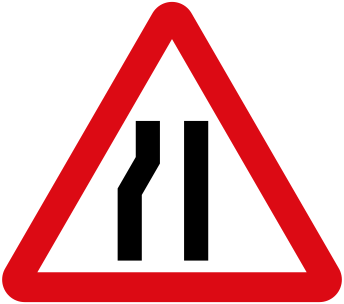
Narrow Historic Streets
Medieval town centres (Lisbon's Alfama, Porto's Ribeira, Evora, Sintra) have extremely narrow cobblestone streets with tight turns and limited visibility
Tram Traffic (Lisbon)
Lisbon's iconic tram network shares roads with cars in narrow streets. Trams have priority and tracks can be slippery — give them wide clearance
Steep Hills (Porto)
Porto's steep riverside terrain means sharp inclines, tight hairpin bends, and heavy braking zones — particularly in the Ribeira and Gaia districts
Tourist Traffic (Algarve)
The Algarve coast sees massive seasonal traffic surges in summer, with unfamiliar drivers, rental cars, and congested coastal roads between resort towns
Winding Mountain Roads
Serra da Estrela, Geres, and other mountain areas feature narrow winding roads with steep drop-offs, limited barriers, and occasional fog or ice in winter
Portugal's Districts & Autonomous Regions
Driving licence administration is handled by IMT offices across 18 districts and 2 autonomous regions (Azores and Madeira)
- 1LisboaDistrictLisboa2.9M
- 2PortoDistrictPorto1.7M
- 3BragaDistrictBraga850K
- 4SetúbalDistrictSetúbal870K
- 5AveiroDistrictAveiro720K
- 6FaroDistrictFaro470K
- 7LeiriaDistrictLeiria480K
- 8CoimbraDistrictCoimbra430K
- 9AçoresAutonomous RegionPonta Delgada240K
- 10MadeiraAutonomous RegionFunchal250K
Portugal has 18 districts on the mainland plus 2 autonomous regions (Azores and Madeira). Driving licence testing is administered by IMT (Instituto da Mobilidade e dos Transportes) offices and authorized examination centres. Test availability and wait times vary by district.
Myth: All Portuguese motorways are free to use
Fact: Many Portuguese motorways require tolls, and some former SCUT (shadow toll) roads now use electronic-only tolling with no cash booths. Drivers without a Via Verde device must register online and pay within 5 days or face penalties. Only some urban motorway sections are toll-free.
Myth: The speed limit on motorways is always 120 km/h
Fact: While 120 km/h is the default motorway limit, some sections have reduced limits. For example, the A25 has been reduced to 100 km/h in certain stretches. Posted signs always take precedence. Weather conditions and roadworks may further reduce limits temporarily.
Myth: New drivers have no special restrictions
Fact: New drivers receive a carta provisoria (provisional licence) for 3 years. During this probationary period, the BAC limit is reduced to 0.2 g/L (vs 0.5 g/L for experienced drivers). Serious infractions during probation can result in licence cancellation.
Myth: You don't need a reflective vest if you have a warning triangle
Fact: Portuguese law requires drivers to carry BOTH a reflective vest and a warning triangle in the vehicle. The vest must be worn when exiting the vehicle on motorways or outside built-up areas. Having only one of the two is not sufficient and can result in a fine of €60-300.
Myth: Roundabouts give priority to entering traffic
Fact: In Portugal, traffic already circulating on the roundabout has priority over vehicles entering. You must yield to vehicles already on the roundabout before entering. This is consistent with most European countries. Signal right when preparing to exit.
Myth: Foreign driving licences work indefinitely in Portugal
Fact: EU/EEA licence holders must register their licence with IMT after 185 days of residence in Portugal (no exchange required, but registration is mandatory). Non-EU licence holders must exchange their licence for a Portuguese one within 2 years of establishing residence, provided a bilateral agreement exists with their country.
Recent Changes to Portuguese Driving Laws
Key regulatory updates affecting drivers in Portugal
Codigo da Estrada overhaul planned
Major revision of the Highway Code expected to introduce stricter penalties for serious infractions, potential alcohol interlock requirements for repeat DUI offenders, and updated rules for electric scooters and micro-mobility vehicles.
Accompanied driving & A25 speed reduction
Introduction of accompanied driving (conducao acompanhada) allowing learners aged 17+ to drive with an approved family tutor before obtaining a full licence. Speed limit on the A25 motorway reduced in several stretches for safety.
Digital driving licence & EU GSR2 Phase 2
Portugal launched the digital driving licence via the id.gov.pt app, allowing drivers to carry a legally valid digital version on their smartphone. EU General Safety Regulation Phase 2 mandates new vehicle safety features including intelligent speed assistance.
Speed cameras expanded & point system updated
Significant expansion of fixed and mobile speed camera networks across Portuguese motorways and urban areas. Updates to the point deduction system to align with EU road safety targets.
Mandatory rollover bars for agricultural vehicles
New regulation requiring rollover protection structures (ROPS) on all agricultural tractors and vehicles. Aimed at reducing fatalities in rural areas where tractor accidents are a leading cause of road deaths.
Carta por Pontos (points system) launched
On June 1, 2016, Portugal introduced the Carta por Pontos — a 12-point licence system. Drivers who accumulate enough infractions to reach 0 points face licence cancellation and a 2-year ban. The system incentivizes safe driving through bonus points (up to 15 max).
How Portugal Compares Internationally
Portugal's driving regulations compared to neighbouring European countries — data compiled from official government sources
StrictestIn betweenMost lenientBAC limit and minimum age
| Parameter | Portugal | Spain | France | Germany |  UK |
|---|---|---|---|---|---|
| BAC Limit | 0.05% | 0.05% | 0.05% | 0.05% | 0.08% |
| Min. Age (Car) | 18 | 18 | 18 | 18 | 17 |
| Driving Side | Right | Right | Right | Right | Left |
| Motorway Speed | 120 | 120 | 130 | No limit* | 112 |
| Test Questions | 30 | 30 | 40 | 30 | 50 |
| Licence Cost | €700–1,200 | €700–1,400 | €1,500–2,000 | €2,000–3,500 | £1,000–1,500 |
| Road Deaths/yr | 634 | 1,790 | 3,170 | 2,770 | 1,695 |
| Deaths/Million | 60.8 | 37 | 48 | 35 | 25 |
BAC Limit
Portugal: 0.05%Spain: 0.05%France: 0.05%Germany: 0.05%UK: 0.08%Min. Age (Car)
Portugal: 18Spain: 18France: 18Germany: 18UK: 17Driving Side
Portugal: RightSpain: RightFrance: RightGermany: RightUK: LeftMotorway Speed
Portugal: 120Spain: 120France: 130Germany: No limit*UK: 112Test Questions
Portugal: 30Spain: 30France: 40Germany: 30UK: 50Licence Cost
Portugal: €700–1,200Spain: €700–1,400France: €1,500–2,000Germany: €2,000–3,500UK: £1,000–1,500Road Deaths/yr
Portugal: 634Spain: 1,790France: 3,170Germany: 2,770UK: 1,695Deaths/Million
Portugal: 60.8Spain: 37France: 48Germany: 35UK: 25
Portugal
Same as Spain and France. Germany also 0.5 g/L. UK is higher at 0.8 g/L (0.5 in Scotland). Portugal has stricter novice limit of 0.2 g/L.
Same as Spain, France, and Germany. UK allows from 17. Portugal permits accompanied driving from 17 (from 2025).
Same as Spain and France. Germany has no general motorway limit (recommended 130). UK: 113 km/h (70 mph).
Similar to Spain (€600-1,000). France is more expensive (€1,500-2,000). Germany is among the costliest in Europe (€2,000-3,500). UK: £1,000-1,500.
60.8 per million inhabitants (2023) — higher than Spain (37), France (48), Germany (35). UK is lowest at ~25 per million.
Road deaths: Portugal 634 (ANSR 2024), Spain 1,790 (DGT 2023), France 3,267 (ONISR 2023), Germany 2,839 (Destatis 2023), UK 1,645 (DfT 2023). Per-million rates: Portugal 60.8, Spain 37, France 48, Germany 35, UK ~25 (2023). Sources: European Commission Road Safety Statistics, national authorities.
Primary Sources
Verification Methodology
Every fact on this page has been cross-referenced against at least two authoritative sources. Our process:
- 1Primary data collected from Portuguese legislation (Codigo da Estrada) and IMT publications
- 2Cross-verified against ANSR statistics, European Commission data, and WHO reports
- 3Regional variations noted where applicable (fees differ by district and provider)
- 4Page reviewed and fact-checked on March 27, 2026
If you find an error, please contact us so we can correct it immediately.
Frequently Asked Questions
How much does a driving licence cost in Portugal?
The total cost for a Category B driving licence in Portugal is typically €700-1,200. This includes: driving school package €650-900 (28 theory + 32 practical lessons), medical certificate €20-50, theory test €15 (IMT) to €110 (private centre), practical test €30 (IMT) to €120 (private centre), licence issuance €30, and photos/documents €10-15. Extra lessons cost €12-20 per hour. Lisbon and Porto are generally more expensive than rural areas.
What is the Portuguese theory test format?
The theory test (exame teorico) for Category B consists of 30 multiple-choice questions drawn from an official bank of over 6,000 questions. You have 30 minutes to complete the test and must answer at least 27 questions correctly (90% pass mark). The test is computer-based and administered at IMT offices (€15) or approved private centres (up to €110). Questions cover the Codigo da Estrada, traffic signs, road safety, vehicle mechanics, and first aid.
What is the blood alcohol limit in Portugal?
Portugal has a 0.5 g/L BAC limit for general drivers. Novice drivers (first 3 years with carta provisoria) and professional drivers have a reduced limit of 0.2 g/L. A BAC of 1.2 g/L or above is a criminal offence punishable by up to 1 year imprisonment. Fines for administrative BAC offences range from €250 to €2,500 with possible licence suspension of 1-36 months.
What are the speed limits in Portugal?
Coexistence zones: 20 km/h. Urban areas: 50 km/h. Rural roads: 90 km/h (cars), 70 km/h (with trailer), 80 km/h (trucks). Expressways: 100 km/h (cars), 80 km/h (with trailer), 90 km/h (trucks). Motorways: 120 km/h (cars), 100 km/h (with trailer), 110 km/h (trucks). Minimum motorway speed: 50 km/h. Posted signs always take precedence.
What are the emergency numbers in Portugal?
Portugal's key emergency numbers: 112 — European Emergency Number, which routes directly to INEM for medical emergencies, PSP/GNR for police, and the fire service. 808 24 24 24 — SNS 24 health helpline (non-emergency medical advice). 117 — Forest fire reporting. 808 201 855 — Transit SOS (road assistance). 112 is available 24/7 and operators speak multiple languages.
How does the Portuguese points system work?
The Carta por Pontos system (launched June 1, 2016) gives every driver 12 points. Serious infractions deduct 2-4 points; very serious infractions deduct 4-6 points. Reaching 0 points results in licence cancellation and a 2-year driving ban. Good driving earns bonus points up to a maximum of 15. Points can also be recovered through voluntary road safety training courses.
Can I use my foreign driving licence in Portugal?
EU/EEA licence holders can drive in Portugal with their home licence but must register it with IMT after 185 days of residence. Non-EU licence holders can drive with their licence plus an International Driving Permit for up to 185 days. After establishing residence, non-EU holders must exchange their licence for a Portuguese one within 2 years, provided a bilateral agreement exists with their home country. If no agreement exists, you must take the full test.
What is the Via Verde toll system?
Via Verde is Portugal's electronic toll payment system, operational since 1991. A device on the windshield is detected at toll gantries, automatically charging the registered account. Some motorways (former SCUT roads) are electronic-only with no cash booths. Rental car drivers without Via Verde should use the online CTT post-payment system within 5 days. Via Verde also works at parking, fuel stations, and drive-throughs.
What equipment must I carry in my car in Portugal?
Portuguese law requires you to carry a reflective vest (colete refletor) and a warning triangle (triangulo de pre-sinalizacao) at all times. The vest must be worn when exiting the vehicle on motorways or outside built-up areas. A spare wheel or tyre repair kit is recommended. You must also carry your carta de conducao (or digital version via id.gov.pt), vehicle registration document, and insurance certificate.
How long is a Portuguese driving licence valid?
Category AM/A1/A2/A/B/BE licences are valid for 15 years. Renewals every 15 years until age 60, then at 65, 70, then every 2 years after 70. Commercial categories (C1/C/D1/D) are valid for 5 years with a medical exam at each renewal. The digital licence via id.gov.pt mirrors the validity of the physical card.
What is the probationary period for new drivers?
New drivers in Portugal receive a carta provisoria (provisional licence) for 3 years. During this probationary period, the BAC limit is reduced to 0.2 g/L (vs 0.5 g/L for experienced drivers). Committing serious or very serious infractions during probation can result in licence cancellation. After 3 infraction-free years, the licence automatically becomes a carta de conducao definitiva (permanent licence).
What is the IPO vehicle inspection in Portugal?
IPO (Inspecao Periodica Obrigatoria) is Portugal's mandatory vehicle inspection. The first inspection is required 4 years after the vehicle's initial registration. After that, inspections are every 2 years until the vehicle is 8 years old, then annually. The inspection covers brakes, lights, emissions, chassis condition, and safety equipment. Driving without a valid IPO can result in fines of €250-1,250.
Is there a digital driving licence in Portugal?
Yes, since 2024, Portuguese drivers can use a digital version of their carta de conducao via the id.gov.pt app on their smartphone. The digital licence is legally valid for identification during traffic stops within Portugal. It contains the same information as the physical card, including photo, categories, and validity dates. The physical card remains valid and is still needed for driving abroad.
What are the main traffic fines in Portugal?
Key fines: Speeding 1-20 km/h over — €60-300. Speeding 21-40 km/h over — €120-600 + 2-3 points. Running red light — €120-600 + 3-4 points. Phone use — €250–1,250 + 3 points. No seatbelt — €120-600 + 2-3 points. BAC 0.5-0.8 g/L — €250-1,250 + 3 points + suspension. BAC >=1.2 g/L — criminal prosecution + 6 points + 3-36 month suspension. Driving without licence — €500-2,500.
What is the minimum driving age in Portugal?
Minimum ages by category: AM (mopeds up to 50cc) — 16 years. A1 (motorcycles up to 125cc) — 16 years. A2 (motorcycles up to 35 kW) — 18 years. A (unrestricted motorcycles) — 24 years (or 20 with 2 years A2 experience). B (cars up to 3,500 kg) — 18 years. C1 (medium trucks) — 21 years. C (heavy trucks) — 21 years. D (buses) — 24 years. Accompanied driving from age 17 was introduced in 2025.
Cite This Page
Use the following citations when referencing this article in academic papers, journalism, or reports.
APA 7th Edition
AutoviaTest. (2026, March 27). Portugal driving licence facts 2026 — IMT test, fees, fines & rules. https://autoviatest.com/en/driving-test/portugal/facts
MLA 9th Edition
AutoviaTest. "Portugal Driving Licence Facts 2026 — IMT Test, Fees, Fines & Rules." AutoviaTest, 27 Mar. 2026, autoviatest.com/en/driving-test/portugal/facts.
Chicago 17th Edition
AutoviaTest. "Portugal Driving Licence Facts 2026 — IMT Test, Fees, Fines & Rules." Last modified March 27, 2026. https://autoviatest.com/en/driving-test/portugal/facts.
Ready to Pass Your Portuguese Theory Test?
Practice with thousands of official theory questions from the 6,000+ question bank and detailed explanations. Available in Portuguese and English.
More Country Driving Guides
Spain Driving Licence Facts & DGT GuideDGT test format, fees, speed limits, traffic fines, and everything about driving in Spain.French Driving Licence 2026 — The Complete GuideCode de la route test, driving school costs, speed limits, traffic fines, and the points system.German Driving Licence 2026 — The Complete GuideTUV theory test, Fahrschule costs, Autobahn rules, traffic fines, and the Flensburg points system. Italian Driving Licence 2026 — The Complete GuideMotorizzazione theory test, autoscuola costs, speed limits, traffic fines, and the points system.