
 Complete guide 2026Updated April 2026
Iceland Driving Licence 2026 The Complete Guide
Everything you need to know about getting your driving licence in Iceland — Samgöngustofa theory test (50 true/false, 90% pass mark), total cost (ISK 270,000–400,000 / ~$2,000–3,000 USD), 0.02% BAC (one of the strictest in the world), mandatory winter tyres, F-road restrictions, and the Ring Road.
Table of Contents
Iceland Driving Test Explained — Theory, Cost & Pass Rate 2026
A 2-minute walkthrough of Iceland's driving licence system — run by Samgöngustofa, with gravel-road rules no other country teaches.
 Video Guide · 2 min
Key Takeaways
- Iceland's theory test is 50 multiple-choice questions with a 90% pass mark (45 of 50 correct), available in English, Icelandic, and other languages.
- Total cost runs roughly 270,000–400,000 ISK (around €1,800–€2,700) including mandatory driving school and the Samgöngustofa exam fees.
- Mandatory classroom training at an approved ökuskóli is required before you can sit the practical exam.
- Speed limits are 50 km/h urban, 80 km/h on gravel rural roads, 90 km/h on paved rural roads — gravel is a distinct category.
- Alcohol limit is 0.05% BAC with zero-tolerance enforcement; fines escalate quickly for novice drivers.
- Minimum age is 17 for a Class B licence — you can start learning with a provisional permit earlier.
- Iceland's unique hazards — midnight sun glare, sudden weather, single-lane bridges, sheep on the road — are all tested.
Read full transcript
Iceland's driving licence system is run by Samgöngustofa — the Icelandic Transport Authority — and uniquely tests skills that no other European country covers: gravel-road handling, midnight sun driving, and single-lane bridge etiquette. Here's the 2-minute breakdown.
0:06 Theory Test Format. Iceland's theory test has 50 multiple-choice questions, and you need to answer at least 45 correctly to pass — a 90% threshold. It's available in Icelandic, English, Polish, and several other languages. You're tested on both standard European road rules and Iceland-specific hazards like sudden weather, loose gravel, and wildlife on the road.
0:20 Cost of an Icelandic Licence. Expect to pay roughly 270,000 to 400,000 Icelandic krónur — around €1,800 to €2,700 — for your licence. That includes mandatory classroom lessons at an approved ökuskóli (driving school), practical driving lessons, the medical check, and Samgöngustofa exam fees. Unlike some countries, there's no shortcut: all lessons at a registered ökuskóli are mandatory.
0:35 Icelandic Speed Limits. Speed limits are 50 km/h in urban areas, 80 km/h on gravel rural roads, and 90 km/h on paved rural roads — Iceland is one of the only countries where gravel is a distinct legal speed category. There are no motorways above 90 km/h anywhere in the country.
0:47 Traffic Fines. Fines are among the steepest in Europe per offence. Speeding 21 to 30 km/h over the limit is around 30,000 krónur. Using a phone while driving is 40,000. No seatbelt is 20,000. Drink-driving above the 0.05% BAC limit triggers an automatic minimum 20-day licence suspension and fines starting at 100,000 krónur.
1:02 Key Road Rules. Iceland drives on the right. Headlights must be on 24 hours a day, year-round. Off-road driving is strictly illegal and carries heavy fines — Iceland's fragile volcanic soil takes decades to recover from tyre damage. Winter tyres are legally required from November to mid-April.
1:14 Step-by-Step Licence Process. The process: pick an approved ökuskóli, complete mandatory classroom training, pass the 50-question theory exam, take practical lessons, and pass the driving test with a Samgöngustofa examiner. Minimum age is 17 for Class B. Full licensing typically takes 3 to 4 months.
1:29 Emergency Numbers. Iceland uses 112 for all emergencies — police, ambulance, and fire. Rescue services (Landsbjörg) are also reached through 112. The tourist emergency line SafeTravel is 1717.
1:37 Driving Myths vs Facts. Myth: you can drive on any road with a regular rental car. Fact: F-roads — marked with the letter F — legally require a 4-wheel-drive vehicle, and driving a 2WD car on them voids your insurance. Myth: the theory test is just European basics. Fact: Iceland-specific questions on gravel, wildlife, and single-lane bridges are common and frequently fail unprepared drivers.
Practice the full Samgöngustofa question bank for free on AutoviaTest to prepare for your Icelandic theory exam.
Theory Test
The Icelandic driving theory test consists of 50 true/false statements.
Duration: 25 minutes. Pass mark: 90% (45/50 correct). Fee: ISK 7,583. The test is administered by Samgöngustofa (ICETRA) at authorised test centres. Available in Icelandic, English, and Polish.
Total Cost
ISK 270,000–400,000 (~$2,000–3,000 USD) for the complete driving licence process.
This includes driving school enrolment and training, theory test fee (ISK 7,583), practical test fee (ISK 18,820), and licence fee (ISK 8,600). Costs vary depending on the driving school and how many additional lessons are needed.
Road Deaths
10 fatalities in 2025 (~2.6 per 100K).
Iceland recorded 13 deaths in 2024, 8 in 2023, and 9 in 2022. With a population of ~383,000, even small changes in absolute numbers cause large swings in the per-capita rate. Key hazards include extreme wind, single-lane bridges, and sheep on roads.
BAC Limit
0.02% (0.2‰) — one of the strictest in the world.
Lowered from 0.05% in 2019. Effectively a zero-tolerance policy. Penalties include heavy fines (ISK 100,000+), licence suspension, and imprisonment for repeat offences. Same strictness as Norway and Sweden.
F-Roads & Highlands
Iceland’s F-roads (highland roads) require 4WD vehicles and are only open mid-June to early October.
They involve river crossings without bridges, rough gravel surfaces, and extreme isolation. Driving a 2WD vehicle on F-roads is illegal and carries heavy fines. Off-road driving is strictly prohibited and can result in fines up to ISK 400,000.
Global Context
Death rate ~2.6/100K vs Norway ~2.0, Finland ~3.2, Germany ~3.4, USA 12.2.
Drives on the right. 0.02% BAC. No motorways (90 km/h maximum). Mandatory winter tyres Nov 1–Apr 15. Headlights mandatory 24/7. Km-based road tax since Jan 2026 (6.95 ISK/km).
Iceland Road Safety: Trends (2021–2025)
According to Samgöngustofa and Statistics Iceland, Iceland recorded 10 deaths in 2025, down from 13 in 2024. With a population of only ~383,000, Iceland’s road fatality statistics are volatile — a single multi-fatality crash can significantly alter the annual rate. Key challenges include extreme weather (wind gusts of 90–145 km/h), single-lane bridges (~30 on the Ring Road), sheep wandering onto roads in summer, volcanic ash/sandstorms, and winter darkness. Despite these hazards, Iceland maintains one of the world’s lowest road death rates at approximately 2.6 per 100,000.
Year-over-year changes
Deaths per 100,000 Population
 Germany3.4
 Finland3.2
- Iceland2.6
 Sweden2
 Norway1.6
Source: Samgöngustofa (Icelandic Transport Authority), Statistics Iceland, ETSC. Per-capita rates are estimates and may vary by methodology.
Iceland Theory Test Format
Theory tests are administered by Samgöngustofa (ICETRA) at authorised test centres in Iceland
Iceland requires a computer-based theory test administered by Samgöngustofa (Icelandic Transport Authority / ICETRA). The test consists of 50 true/false statements covering traffic rules, road signs, speed limits, hazard awareness, and Icelandic-specific regulations such as F-road rules, single-lane bridge etiquette, and winter driving. Duration: 25 minutes. The pass mark is 90% — you must answer at least 45 out of 50 correctly. This is one of the highest pass marks in Europe. Available in Icelandic, English, and Polish.
Questions
Duration
Pass Mark
Test Fee
What the Theory Test Covers
- Traffic signals, road signs, and road markings
- Right-of-way rules and roundabout priority
- Speed limits by road type (urban, gravel, paved rural)
- Parking and stopping regulations
- Single-lane bridge etiquette (yield to closer vehicle)
- Seatbelt and child restraint regulations
- Winter tyre requirements (Nov 1–Apr 15, min 3mm tread)
- Headlights mandatory 24/7 — day and night, year-round
- Warning triangle and hazard light usage
- Accident procedures and reporting to Lögreglan (police)
- F-roads: 4WD only, river crossings, seasonal closures
- Off-road driving strictly prohibited (fines up to ISK 400,000)
- Sheep and livestock on roads (driver’s responsibility)
- Extreme wind safety (gusts 90–145 km/h)
- Ring Road (Route 1) driving: single-lane sections, blind hills
How to Get Your Icelandic Driving Licence
From enrolment to full licence — the complete step-by-step process
- 1
Enrol at a Driving School (Ökuskóli)
Register and begin theory instruction
Register at a licensed driving school (ökuskóli). You must be at least 16 to obtain a learner permit (æfingarleyfi). For a B-category licence, the minimum age is 17. Bring your national ID (kennitala) or passport. Training includes both theory and practical instruction.
- 2
Complete Theory Training
Classroom instruction on traffic rules and Icelandic-specific topics
Complete the required theory training covering Icelandic traffic law, road signs, right-of-way rules, speed limits, F-road regulations, single-lane bridge etiquette, winter driving, livestock hazards, and emergency procedures.
- 3
Pass the Theory Test (Bílpróf — fræðiprufa)
50 true/false statements, 25 minutes, 90% pass mark (45/50)
The computer-based theory test consists of 50 true/false statements. Duration: 25 minutes. Pass mark: 90% (45/50 correct). Fee: ISK 7,583. Available in Icelandic, English, and Polish. You can retake the test after a waiting period if you fail.
- 4
Complete Practical Driving Training
Learn driving skills including winter and rural road techniques
Practical training includes basic vehicle control, parking, lane changes, roundabout navigation, rural road driving, and defensive driving. Iceland’s driving schools emphasize winter driving, single-lane bridge approaches, gravel road handling, and wind safety.
- 5
Pass the Practical Test & Receive Your Licence
Practical test fee ISK 18,820, then 3-year probation
The practical driving test costs ISK 18,820 and evaluates your ability to drive safely in real traffic conditions. Upon passing, apply for your licence (ISK 8,600). You enter a 3-year probation period (reynslutími) during which stricter rules apply. After probation, the licence is valid for 15 years.
Iceland Driving Licence Fees
Total cost typically ISK 270,000–400,000 (~$2,000–3,000 USD) including driving school, tests, and licence
| Fee | Amount |
|---|---|
| Driving school enrolment and training | ISK 200,000–320,000 |
| Theory test fee | ISK 7,583 |
| Practical test fee | ISK 18,820 |
| Licence fee (Ökuskírteini) | ISK 8,600 |
| Additional driving lessons (per lesson) | ISK 8,000–12,000 |
| First aid course (if required) | ISK 10,000–20,000 |
| Medical certificate (læknisvottorð) | ISK 5,000–10,000 |
| Licence renewal (after 15 years) | ISK 8,600 |
| Total Typical (driving school + tests + licence) | ISK 270,000–400,000 |
Costs vary by driving school. Reykjavík tends to have slightly more options and competitive pricing. The number of additional lessons needed varies greatly between learners. Exchange rate context: approximately ISK 1 ≈ $0.0073 USD / ISK 137 ≈ $1 USD (March 2026).
See how ready you are — practice with real exam questions
Try Free QuestionsMinimum age by licence category
- AM — Moped15 years — mopeds up to 45 km/h15years
- A1 — Light motorcycle16 years — up to 125cc / 11 kW16years
- B — Car17 years — standard car licence17years
- C — Truck21 years — heavy goods vehicles21years
Licence Validity
| Licence / age | Validity |
|---|---|
| Probation (new drivers)Stricter rules during probation period (reynslutími) | 3 years |
| Standard (under 70)Full licence after probation | 15 years |
| Age 70–79Medical check required at renewal | 4 years (progressive) |
| Age 80+Annual medical check required | 1 year |
Penalty Points System
- Iceland uses a 12-point system over a rolling 3-year period
- Accumulating 12 points results in a 3-month licence suspension
- Points are assigned based on offence severity (1–4 points per offence)
- After suspension, you must retake the theory test to regain your licence
- Probationary drivers face stricter thresholds for suspension
Foreign Licence Conversion
- EEA licences: valid in Iceland, voluntary exchange available
- Non-EEA licences: valid for 1 month after establishing residence
- After 1 month, must convert to an Icelandic licence — theory and practical tests may be required
- US and Canadian licences: simplified conversion process available
- International Driving Permit (IDP) accepted for tourists for up to 1 year
- All conversions require a valid medical certificate (læknisvottorð)
- Apply through Sýslumannsínni (District Commissioner)
- Auto-only licence available since 2017 (limits you to automatic transmission only)
Speed Limits in Iceland
As per the Road Traffic Act (Umferðarlög) — all speeds in km/h. Iceland has NO motorways.
Iceland has no motorways. The maximum speed limit is 90 km/h on paved rural roads (including the Ring Road / Route 1). Urban areas are typically 50 km/h. Gravel roads are limited to 80 km/h due to reduced traction and dust hazards. Speed enforcement uses both fixed cameras and mobile police patrols. Iceland’s relatively low speed limits reflect the challenging driving conditions: narrow roads, blind hills, single-lane bridges, livestock, extreme weather, and volcanic terrain. Always reduce speed in poor visibility or wet/icy conditions.
| Road Type | Cars | Trucks | Note |
|---|---|---|---|
| Urban Roads | 50 | 50 | 30 km/h in some residential and school zones |
| Gravel Roads | 80 | 80 | Reduced traction; dust hazard in summer |
| Paved Rural Roads (incl. Ring Road) | 90 | 90 | Maximum speed in Iceland — no motorways |
Urban Roads
Cars: 50Trucks: 5030 km/h in some residential and school zones
Gravel Roads
Cars: 80Trucks: 80Reduced traction; dust hazard in summer
Paved Rural Roads (incl. Ring Road)
Cars: 90Trucks: 90Maximum speed in Iceland — no motorways
Iceland has no motorways. 90 km/h is the absolute maximum speed limit in the country. Gravel roads require extra caution due to loose surfaces, dust clouds, and sudden transitions from paved to gravel. Speeding fines start at ISK 30,000 and increase with severity. Always observe posted signs and reduce speed in adverse conditions.
Traffic Fines & Penalties
Iceland enforces strict fines with a penalty points system — 12 points in 3 years = 3-month suspension
Iceland imposes significant fines for traffic violations, particularly for off-road driving (up to ISK 400,000 — classified as a criminal offence), DUI (0.02% BAC limit), and speeding. The penalty points system assigns 1–4 points per offence; accumulating 12 points within a rolling 3-year period triggers an automatic 3-month licence suspension. Fines are higher than many European countries relative to average income, reflecting Iceland’s strict approach to road safety.
Up to ISK 30,000ISK 30,001–80,000More than ISK 80,000
| Violation | Fine | Points | Other |
|---|---|---|---|
| Speeding — 1–10 km/h over | ISK 30,000 | 1 | — |
| Speeding — 11–20 km/h over | ISK 50,000 | 2 | — |
| Speeding — 21–30 km/h over | ISK 80,000+ | 3 | Possible licence suspension |
| Running a red light | ISK 50,000+ | 2 | — |
| Phone use while driving | ISK 40,000 | 1 | — |
| Off-road driving | Up to ISK 400,000 | — | Criminal offence |
| DUI (over 0.02%) | ISK 100,000+ | 4 | Licence suspension + possible prison |
| Winter tyres violation (wrong season) | ISK 20,000/tyre | — | Per tyre |
| No headlights (mandatory 24/7) | ISK 15,000 | — | — |
| No seatbelt | ISK 15,000 | — | — |
- ISK 30,000
Speeding — 1–10 km/h over
1 - ISK 50,000
Speeding — 11–20 km/h over
2 - ISK 80,000+Possible licence suspension
Speeding — 21–30 km/h over
3 - ISK 50,000+
Running a red light
2 - ISK 40,000
Phone use while driving
1 - Up to ISK 400,000Criminal offence
Off-road driving
- ISK 100,000+Licence suspension + possible prison
DUI (over 0.02%)
4 - ISK 20,000/tyrePer tyre
Winter tyres violation (wrong season)
- ISK 15,000
No headlights (mandatory 24/7)
- ISK 15,000
No seatbelt
Off-road driving is a criminal offence in Iceland and can result in fines up to ISK 400,000 plus prosecution. Iceland’s fragile volcanic landscape takes decades to recover from vehicle damage. Penalty points: red light +2, phone +1, DUI +4, speeding varies. Fines may be doubled for repeat offences. Payment within 15 days may qualify for a discount. All fines in ISK (Icelandic króna). Exchange rate: ~ISK 137 = $1 USD (March 2026).
Know these rules before your theory test
Traffic fines, speed limits, BAC rules, and F-road regulations are frequently tested in the Samgöngustofa theory exam. Practice with real exam-style questions.
How the road worksMandatory, with a penaltyMakes it easier
Drive on the Right
Iceland drives on the right side of the road.
Overtake only on the left. At roundabouts, traffic already in the roundabout has priority. Left-hand drive vehicles are standard.
BAC Limit 0.02% (0.2‰)
One of the strictest in the world.
Lowered from 0.05% in 2019. Effectively zero tolerance. Penalties: heavy fines (ISK 100,000+), licence suspension, potential imprisonment. Same as Norway and Sweden.
F-Roads: 4WD Only
Highland F-roads require a 4WD vehicle.
Open mid-June to early October. River crossings without bridges are common. Driving a 2WD on F-roads is illegal. Check road.is for current conditions before setting out.
Off-Road Driving Strictly Banned
Driving off marked roads is a criminal offence in Iceland.
Fines up to ISK 400,000. Iceland’s fragile moss and volcanic terrain takes 50–100 years to recover from vehicle tracks. There is zero tolerance for off-road driving.
Winter Tyres Mandatory (Nov 1 – Apr 15)
Winter tyres are mandatory from November 1 to April 15 with minimum 3mm tread depth.
Studded tyres are allowed during the same period. Using studded tyres outside season: ISK 20,000/tyre fine. All-season M+S tyres are acceptable if they meet tread requirements.
Headlights Mandatory 24/7
Dipped headlights must be used at all times while driving, day and night, year-round.
This applies to all vehicles. Required even in the 24-hour daylight of Icelandic summers. Fine: ISK 15,000.
Single-Lane Bridges
Approximately 30 single-lane bridges exist on the Ring Road (Route 1).
The vehicle closer to the bridge has right of way. Slow down, look ahead, and yield to oncoming traffic if they are already on or closer to the bridge. Many are unmarked — watch for the road sign.
Km-Based Road Tax (Jan 2026)
Since January 2026, Iceland charges a distance-based road tax of 6.95 ISK/km, replacing the previous fuel tax.
This applies to all vehicles. Odometer readings are verified at annual inspections (skoðun). This tax shift was introduced to maintain road funding as the fleet transitions to EVs.
Ring Road (Route 1)
The Ring Road (Hringvegur) is a 1,332 km route circling Iceland.
Mostly paved, single-lane each direction. Speed limit: 90 km/h on paved sections, 80 km/h on gravel sections. Contains ~30 single-lane bridges and numerous blind hills. The most popular driving route in Iceland.
Common Road Hazards in Iceland
10 road fatalities in 2025 — know these hazards to stay safe on Icelandic roads
Volcanic Ash & Sandstorms
Iceland’s volcanic desert areas (sandur) experience fierce sandstorms that strip paint from vehicles and reduce visibility to near zero. Sandstorms occur primarily in southern and eastern Iceland. Check weather forecasts (vedur.is) and road conditions (road.is) before travelling through exposed areas.

Sheep on Roads
From June to September, over 800,000 sheep roam freely across Icelandic roads, including the Ring Road. Sheep are unpredictable and may dart across suddenly. If you hit a sheep, you are legally required to find the farmer (contact the nearest farm) and are liable for compensation. Slow down in rural areas.
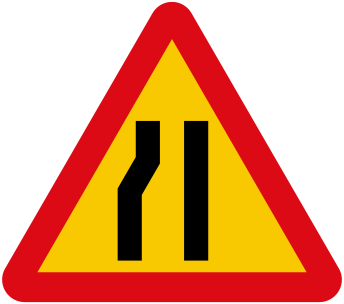
Single-Lane Bridges
Approximately 30 single-lane bridges on the Ring Road (Route 1) and many more on secondary roads. The vehicle closer to the bridge has right of way. Approach slowly, check for oncoming traffic, and be prepared to stop. They are a leading factor in head-on collisions.
Extreme Wind
Iceland regularly experiences wind gusts of 90–145 km/h (50–90 mph), capable of pushing vehicles off roads and ripping open car doors. Wind is especially dangerous on open highland and coastal sections. Check vedur.is for wind warnings. Avoid parking with the wind facing your door — it can be torn from its hinges.
F-Road River Crossings
Highland F-roads require fording rivers without bridges. Water levels change rapidly with rainfall and glacial melt. Never cross alone; walk the crossing first; cross at the widest, shallowest point; drive upstream at a 45° angle. Vehicles have been lost to river crossings. 4WD mandatory.
Winter Darkness & Ice
In December, Reykjavík gets only 4–5 hours of daylight. Northern Iceland has near-total darkness. Black ice is common on all road types. Winter driving requires extreme caution, slow speeds, and winter tyres (mandatory Nov 1–Apr 15). Carry emergency supplies and a charged phone.
Driving Test Centres in Iceland
Iceland has 3 main areas where driving tests are administered by Samgöngustofa
- 1Reykjavík & Capital AreaReykjavík~235K
- 2Akureyri & North IcelandAkureyri~20K
- 3Selfoss & South IcelandSelfoss~10K
Icelandic driving rules and traffic law apply uniformly across the entire country. Samgöngustofa operates test services in these areas. Reykjavík has the most driving schools and shortest wait times. A licence obtained at any centre is valid nationwide.
Myth: You can drive anywhere in Iceland with a regular car
Fact: F-roads (highland roads) legally require a 4WD vehicle. Driving a 2WD on F-roads is illegal and your insurance will not cover damage. Off-road driving is a criminal offence with fines up to ISK 400,000. Even SUVs without proper 4WD capability are not permitted on F-roads.
Myth: The Ring Road is a highway you can drive fast on
Fact: The Ring Road (Route 1) is mostly single-lane each direction with a 90 km/h speed limit. It has ~30 single-lane bridges, numerous blind hills, gravel sections, and sheep crossings. It is NOT a motorway. Average driving time for the full 1,332 km circuit is 16–18 hours in ideal conditions.
Myth: Iceland has mild weather for driving
Fact: Iceland regularly experiences extreme wind gusts of 90–145 km/h, volcanic sandstorms, blizzards, black ice, and near-zero visibility. Wind alone has pushed vehicles off roads. Weather can change in minutes. Always check vedur.is and road.is before any journey.
Myth: You don’t need headlights during Iceland’s midnight sun
Fact: Headlights are mandatory 24/7 in Iceland, even during the 24-hour daylight of summer. This is a legal requirement, not optional. Fine: ISK 15,000. Dipped headlights must be on at all times while driving.
Myth: Iceland’s BAC limit is similar to other European countries
Fact: Iceland’s 0.02% (0.2‰) BAC limit is one of the strictest in the world — effectively zero tolerance. Most of Europe uses 0.05% or 0.08%. Iceland lowered its limit from 0.05% in 2019. Even a single beer can put you over the limit.
Myth: Sheep on the road are not a serious hazard
Fact: Over 800,000 sheep roam freely June–September. They are completely unpredictable and can dart across roads without warning. Hitting a sheep can cause significant vehicle damage and you are legally liable for compensation to the farmer. Multiple fatalities have involved livestock collisions.
Km-based road tax: 6.95 ISK/km replaces fuel tax
Iceland introduced a distance-based road tax of 6.95 ISK/km, replacing the previous fuel tax system. This ensures all vehicles, including EVs and hybrids, contribute to road maintenance. Odometer readings are verified at annual vehicle inspections.
BAC limit lowered from 0.05% to 0.02%
Iceland lowered its blood alcohol content limit from 0.05% to 0.02%, making it one of the strictest in the world alongside Norway and Sweden. This effectively created a zero-tolerance policy for drink driving.
Auto-only driving licence introduced
Iceland introduced the option to obtain an automatic-transmission-only driving licence. Holders are restricted to driving vehicles with automatic transmission. This mirrors similar provisions in other European countries.
Theory test available in more languages; F-road closures tightened
The theory test was made available in additional languages including Polish. F-road opening and closing dates were more strictly enforced, with GPS monitoring trialled to detect early access violations.
Increased penalties for off-road driving; 112 app promoted
Maximum fines for off-road driving were increased to ISK 400,000 with potential criminal prosecution. The 112 Iceland emergency app was heavily promoted to tourists for automatic GPS location sharing in emergencies.
How Iceland Compares Globally
Iceland driving regulations compared to other Nordic/European countries — data compiled from official government sources
StrictestIn betweenMost lenientBAC limit and minimum age
| Parameter | Iceland | Norway | Finland | Sweden | Germany |
|---|---|---|---|---|---|
| BAC Limit | 0.02% | 0.02% | 0.05% | 0.02% | 0.05% |
| Min. Age (Car) | 17 | 18 | 18 | 18 | 18 |
| Driving Side | Right | Right | Right | Right | Right |
| Highway Speed | 90 | 110 | 120 | 120 | No limit* |
| Test Questions | 50 | 45 | 70 | 70 | 30 |
| Licence Cost | ISK 270–400K | NOK 25–50K | €1.2–3K | SEK 15–25K | €2–3.5K |
| Road Deaths/yr | 10 | 111 | 180 | 208 | 2,814 |
| Deaths/100K | ~2.6 | ~2.0 | ~3.2 | ~2.0 | ~3.4 |
BAC Limit
Iceland: 0.02%Norway: 0.02%Finland: 0.05%Sweden: 0.02%Germany: 0.05%Min. Age (Car)
Iceland: 17Norway: 18Finland: 18Sweden: 18Germany: 18Driving Side
Iceland: RightNorway: RightFinland: RightSweden: RightGermany: RightHighway Speed
Iceland: 90Norway: 110Finland: 120Sweden: 120Germany: No limit*Test Questions
Iceland: 50Norway: 45Finland: 70Sweden: 70Germany: 30Licence Cost
Iceland: ISK 270–400KNorway: NOK 25–50KFinland: €1.2–3KSweden: SEK 15–25KGermany: €2–3.5KRoad Deaths/yr
Iceland: 10Norway: 111Finland: 180Sweden: 208Germany: 2,814Deaths/100K
Iceland: ~2.6Norway: ~2.0Finland: ~3.2Sweden: ~2.0Germany: ~3.4
Iceland
Iceland 0.02% (since 2019), same as Norway and Sweden. Finland 0.05%, Germany 0.05%. One of the strictest in the world.
Iceland allows B-licence at 17. Norway, Finland, Sweden, Germany all 18. Learner permit at 16 in Iceland.
Norway Right · Finland Right · Sweden Right · Germany Right
Iceland has NO motorways. 90 km/h maximum. Norway 110, Finland 120, Sweden 120, Germany no limit*.
Norway 45 · Finland 70 · Sweden 70 · Germany 30
~$2,000–3,000 USD. Norway NOK 25–50K, Finland €1.2–3K, Sweden SEK 15–25K, Germany €2–3.5K.
~2.6 per 100K. Norway 111 (~2.0/100K), Finland 180 (~3.2/100K), Sweden 208 (~2.0/100K), Germany 2,814 (~3.4/100K).
Norway ~2.0 · Finland ~3.2 · Sweden ~2.0 · Germany ~3.4
Road deaths: Iceland 10 (Samgöngustofa 2025), Norway 111 (SSB 2025), Finland 180 (Liikenneturva 2025), Sweden 208 (Trafikanalys 2025), Germany 2,814 (Destatis 2025). Per-100K rates calculated from national population data. *Germany has no general speed limit on certain Autobahn sections. Iceland has no motorways — 90 km/h is the national maximum.
Primary Sources
Verification Methodology
Every fact on this page has been cross-referenced against at least two authoritative sources. Our process:
- 1Primary data collected from official Samgöngustofa publications, the Road Traffic Act (Umferðarlög via althingi.is), and Lögreglan statistics
- 2Cross-verified against Vegagerðin, Statistics Iceland, and ETSC reports
- 3National regulations apply uniformly across all of Iceland — no regional variations in traffic law
- 4Page reviewed and fact-checked on March 27, 2026
If you find an error, please contact us so we can correct it immediately.
Frequently Asked Questions
How much does an Icelandic driving licence cost?
The total cost is ISK 270,000–400,000 (~$2,000–3,000 USD), including driving school (ISK 200,000–320,000), theory test (ISK 7,583), practical test (ISK 18,820), and licence fee (ISK 8,600). Costs vary by driving school.
What is the theory test format?
50 true/false statements. Duration: 25 minutes. Pass mark: 90% (45/50 correct). Computer-based, available in Icelandic, English, and Polish. Fee: ISK 7,583.
What are the speed limits in Iceland?
Urban: 50 km/h. Gravel roads: 80 km/h. Paved rural roads (incl. Ring Road): 90 km/h. Iceland has NO motorways — 90 km/h is the national maximum.
What is the BAC limit?
0.02% (0.2‰) — one of the strictest in the world. Lowered from 0.05% in 2019. Effectively zero tolerance. Penalties include heavy fines and licence suspension.
What are F-roads?
Highland roads requiring 4WD vehicles. Open mid-June to early October. Feature river crossings, rough gravel, and extreme isolation. Driving a 2WD on F-roads is illegal. Check road.is for current status.
Is off-road driving allowed in Iceland?
Absolutely not. Off-road driving is a criminal offence with fines up to ISK 400,000. Iceland’s fragile volcanic moss and lava terrain takes 50–100 years to recover. There is zero tolerance.
What are single-lane bridges?
Approximately 30 single-lane bridges on the Ring Road. The vehicle closer to the bridge has right of way. Slow down, check for oncoming traffic, and yield if another vehicle is already on or closer to the bridge.
Are headlights mandatory during summer?
Yes. Headlights (dipped beam) are mandatory 24/7 in Iceland, including during the midnight sun in summer. Fine: ISK 15,000.
What are the winter tyre requirements?
Winter tyres mandatory November 1 to April 15 with minimum 3mm tread. Studded tyres allowed during the same period. Fine for wrong tyres outside season: ISK 20,000 per tyre.
What is the penalty points system?
12 points in a rolling 3-year period = 3-month licence suspension. Points assigned per offence: speeding 1–3, red light 2, phone 1, DUI 4. Must retake theory test after suspension.
Can I drive with a foreign licence in Iceland?
EEA licences: valid in Iceland. Non-EEA licences: valid for 1 month after establishing residence. Tourists: IDP accepted for up to 1 year. US/Canadian licences have simplified conversion.
What is the emergency number?
112 — the unified emergency number for all services (police, fire, ambulance). Download the 112 Iceland app for automatic GPS location sharing in emergencies.
How dangerous is wind in Iceland?
Very. Wind gusts of 90–145 km/h are common, capable of pushing cars off roads and ripping doors from hinges. Check vedur.is before driving. Avoid parking with wind facing your door.
What about sheep on the roads?
Over 800,000 sheep roam freely June–September. They are unpredictable and dart across roads. If you hit one, you must find the farmer and pay compensation. Slow down in rural areas during summer.
How old do you have to be to drive in Iceland?
Car (B): 17 years. Learner permit: 16. Moped (AM): 15 years. Light motorcycle (A1): 16 years. Truck (C): 21 years.
APA 7th
AutoviaTest. (2026). Iceland driving licence 2026 — The complete guide. AutoviaTest. https://autoviatest.com/en/driving-test/iceland/facts
MLA 9th
"Iceland Driving Licence 2026 — The Complete Guide." AutoviaTest, 2026, autoviatest.com/en/driving-test/iceland/facts.
Chicago 17th
AutoviaTest. "Iceland Driving Licence 2026 — The Complete Guide." AutoviaTest. Accessed March 27, 2026. https://autoviatest.com/en/driving-test/iceland/facts.
Ready to Pass Your Icelandic Driving Test?
Practice with real exam-style questions covering all topics on the Samgöngustofa theory test. 50 questions, 90% pass mark — be prepared.
More Country Driving Guides
 India Driving Licence Facts 2026RTO test format, fees, speed limits, and traffic fines across 36 statesGermany Driving Licence Facts 2026TÜV/DEKRA test, Führerschein costs, Autobahn rules, and traffic finesNorway Driving Licence Facts 2026Statens vegvesen test format, fees, speed limits, and traffic finesFinland Driving Licence Facts 2026Traficom test format, fees, income-based day-fines, and winter tyre rules