 Facts and figures 2026Updated November 2026
Qatar Driving Licence 2026 Rules, Fees and Fines
What Qatar's Traffic Law and the Ministry of Interior say about getting and keeping a driving licence: who can apply, the two-stage test, official licence fees, default speed limits, settlement amounts and the points system. A new Traffic Law, Law No. 19 of 2026, was issued on 4 November 2026. Its text had not been published on Al Meezan when this page was checked, so the page describes the 2007 law.
On This Page
Driving test
The driving test has two stages, a theory test and then a practical test, and the Traffic Department runs both.
The theory test covers traffic rules and etiquette, road signs and signals, and the basic principles of how a vehicle works and is used.
Licence fees
A light-vehicle licence costs QAR 250 for five years for non-Qataris and QAR 500 for ten years for Qatari citizens.
A learner's licence costs QAR 150 and lasts three months.
Road deaths
140 people died in traffic accidents in Qatar in 2024.
The count was 172 in 2023 and 222 in 2022.
Alcohol
Driving under the influence of alcohol, drugs or any other psychotropic substance is banned, and the Traffic Law sets no permitted level.
The penalty is one month to three years in prison, a fine of QAR 10,000 to 50,000, or both.
Fines and points
Listed offences can be settled by paying a fixed amount: QAR 500 for not wearing a seat belt or for holding a phone, QAR 6,000 for ignoring a traffic light.
A licence is withdrawn for three months the first time its points reach 14.
Other countries
The World Health Organization estimates Qatar's road traffic death rate at 7.3 per 100,000 people for 2023.
Its estimates for the same year are 14.7 for Saudi Arabia, 5.1 for the United Arab Emirates and 2.5 for the United Kingdom.
Road Deaths in Qatar (2020–2024)
The National Planning Council publishes the number of people killed in traffic accidents each year. It counted 140 deaths in 2024, 172 in 2023 and 222 in 2022.
Deaths from traffic accidents, by year
Estimated road traffic deaths per 100,000 people (WHO, 2023)
 Saudi Arabia14.7
- Qatar7.3
 UAE5.1
 France4.9
 Germany3.4
 UK2.5
Yearly deaths: National Planning Council, Qatar Open Data Portal. Rates: World Health Organization, Global Health Observatory, estimated road traffic death rate for 2023. The WHO figures are estimates.
How the Qatar Driving Test Works
Run by the Traffic Department of the Ministry of Interior
Under the Executive Bylaw of the Traffic Law, the driving test has two stages: a theory stage, then a practical stage. The Traffic Department runs both. If you fail the theory test you may take it again, on terms the Traffic Department decides. Within the Ministry of Interior, the Licensing Affairs Department of the General Directorate of Traffic tests applicants and issues licences.
Run by
Stages
Theory training
Practical training
The Traffic Department may reduce the training hours or waive training; the tests still apply (Bylaw Art. 114).
What the Tests and Training Cover
- Traffic rules and etiquette
- Road signs and signals
- Basic principles of how a vehicle works
- How to use the vehicle
- The Traffic Law and the decisions that implement it
- Traffic rules and etiquette, and signals and their types
- Principles of driving motor vehicles
- Basics of vehicle mechanics
- First aid
- Starting the engine and moving forwards and backwards
- Normal and sudden stops, including on slopes
- Parking beside the kerb and between other vehicles
- Changing lanes and turning right and left
- Crossing junctions, squares and roundabouts
How to Get a Driving Licence in Qatar
The steps set out in the Traffic Law and its Executive Bylaw
- 1
Check that you qualify
You must be at least 18 for a motorcycle or light-vehicle (car) licence, and 21 for a heavy-vehicle, machinery or public-vehicle licence.
Expatriates need legal residence in Qatar (Bylaw Art. 41).
- 2
Get a medical fitness certificate
A medical body named by the Traffic Department confirms your eyesight and physical fitness. Glasses and other medical aids are allowed.
Bylaw Arts. 44–45. Your blood group is recorded on the form and on the licence.
- 3
Apply to the Traffic Department
Hand in the application form with two recent 4 × 6 cm photos, proof of your identity, nationality, occupation, address and age, and the medical certificate.
Bylaw Art. 40.
- 4
Train on a learner's licence
A learner's licence is valid for three months and can be renewed. A licensed instructor sits beside you, and the car carries a sign reading "تعليم" (learner) in red at the front and the rear.
Traffic Law Arts. 33 and 35. Minimum training for a light vehicle: 15 hours of theory and 35 hours of practice (Bylaw Art. 114).
- 5
Pass the theory test, then the practical test
The Traffic Department runs both stages. The practical test is taken in the type of vehicle the licence is for.
Bylaw Arts. 48–52. If you fail the practical test, you are tested again after a suitable period.
- 6
Pay the fee and collect the licence
The licence is issued once the conditions are met and the fee is paid. It is valid for five years for non-Qataris and ten years for Qatari citizens.
Bylaw Art. 53 and Traffic Law Art. 35. Renew it no later than 30 days after it expires (Art. 36).
Driving Licence Fees in Qatar
The Ministry of Interior's fees for issuing and renewing licences, in Qatari riyals
| Fee | Amount |
|---|---|
| Light-vehicle licence, issue or renewal: Qatari citizens, ten years | QAR 500 |
| Light-vehicle licence, issue or renewal: non-Qataris, five years | QAR 250 |
| Heavy-vehicle licence, issue or renewal: Qatari citizens, ten years | QAR 600 |
| Heavy-vehicle licence, issue or renewal: non-Qataris, five years | QAR 300 |
| Motorcycle licence, issue or renewal: Qatari citizens, ten years | QAR 300 |
| Motorcycle licence, issue or renewal: non-Qataris, five years | QAR 150 |
| Learner's licence, any vehicle type, issue or renewal: three months | QAR 150 |
| Temporary licence for tourists, visitors and foreigners: three months | QAR 150 |
| Replacement for a lost or damaged licence | Same as the issue fee |
Source: Table 3 of Minister of Interior Decision No. 19 of 2007 on the ministry's service fees, as replaced by Decision No. 7 of 2010 (Al Meezan, listed as in force on 17 November 2026). The Ministry of Interior's "Fees for Traffic Services" web page shows the same amounts and carries no date.
Minimum age by licence category
- MotorcycleTraffic Law Art. 30(1)18years
- Light vehicle (car)Vehicles the licensing authority specifies18years
- Special-needs licenceFor a car with special specifications18years
- Heavy vehicleVehicles the licensing authority specifies21years
- Machinery and equipmentTraffic Law Art. 30(4)21years
- Public vehicleTaxis, limousines, passenger and public transport21years
How Long a Licence Lasts
| Licence / age | Validity |
|---|---|
| Qatari citizensAll licence types | 10 years |
| Non-QatarisAll licence types | 5 years |
| Public-vehicle licenceRenewable | 1 year |
| Learner's licenceRenewable | 3 months |
Points: When a Licence Is Withdrawn
- 14 points, the first time: 3 months
- 12 points, the second time: 6 months
- 10 points, the third time: 9 months
- 8 points, the fourth time: 1 year
- 6 points, the fifth time: withdrawn permanently. A new licence needs a fresh test and a wait of at least a year
- Points are erased after a year with no new offence, and when the licence is withdrawn (Art. 93)
Who Can Drive Without a Qatari Licence
- GCC citizens with a valid licence from their own country. When it expires during their stay, it is replaced with a Qatari licence (Traffic Law Art. 29)
- Visitors and tourists with a valid foreign licence, if they present it to the licensing authority within 15 days of entering Qatar (Art. 29)
- Visitors and tourists with a valid international driving licence (Art. 29)
- Residents of GCC states, on a valid licence issued by their country of residence (Bylaw Art. 56)
- If you hold a foreign licence and apply for a Qatari one, the Traffic Department may exempt you from the test (Bylaw Art. 47)
Default Speed Limits in Qatar
Maximum speeds where no sign sets a different limit, in km/h
Article 176 of the Executive Bylaw sets the default maximum speeds. Private cars, taxis, rental cars, limousines and motorcycles may travel at up to 120 km/h on external roads and 100 km/h in towns, villages and populated areas. All other motor vehicles are limited to 80 km/h and 50 km/h. A limit shown on a road sign applies instead.
| Road | Cars and motorcycles | Other motor vehicles | Note |
|---|---|---|---|
| Towns, villages and populated areas | 100 | 50 | Applies where no sign shows another limit |
| External roads | 120 | 80 | Applies where no sign shows another limit |
Towns, villages and populated areas
Cars and motorcycles: 100Other motor vehicles: 50Applies where no sign shows another limit
External roads
Cars and motorcycles: 120Other motor vehicles: 80Applies where no sign shows another limit
Source: Executive Bylaw of the Traffic Law (Minister of Interior Decision No. 6 of 2010), Art. 176. The settlement amount for speeding is QAR 500, rising by QAR 100 for every 10 km/h, to a maximum of QAR 1,000.
Traffic Fines and Points in Qatar
Settlement amounts from the conciliation table annexed to the Traffic Law
Article 105 of the Traffic Law lets a driver settle a listed offence by paying the amount fixed in the conciliation table. The licensing authority may waive up to half of that amount if it is paid within 30 days of the violation being recorded. A driver who refuses to settle is sent to trial. Offences such as driving under the influence fall under Article 94: one month to three years in prison, a fine of QAR 10,000 to 50,000, or both. Points come from a separate table annexed to the law.
Up to QAR 500QAR 501–1,000Over QAR 1,000, or a court case
| Offence | Traffic Law | Amount | Points |
|---|---|---|---|
| Not obeying traffic lights or a police officer's hand signals | Art. 72 | QAR 6,000 | 7 |
| Driving against the direction of traffic | Art. 45 | QAR 6,000 | 6 |
| Stopping outside a designated place, reversing or turning back on an expressway | Art. 47 | QAR 6,000 | — |
| Speeding | Art. 53 | QAR 500–1,000 | 1–4 |
| Breaking the overtaking and following-distance rules | Art. 64 | QAR 1,000 | — |
| Parking in a space reserved for people with special needs | Art. 78 | QAR 1,000 | 3 |
| Driver or front-seat passenger not wearing a seat belt | Art. 54 | QAR 500 | — |
| Holding a phone while driving, or a child under 10 in a front seat | Art. 55 | QAR 500 | — |
| Not carrying your driving licence | Art. 37 | QAR 500 | — |
| Not giving priority at a junction without signs | Art. 74 | QAR 300 | — |
| Driving under the influence of alcohol or drugs | Arts. 57, 94 | Court: QAR 10,000–50,000 | 6 |
| Reckless driving that endangers people or property | Arts. 57, 94 | Court: QAR 10,000–50,000 | 4 |
| Driving without a licence | Arts. 29, 94 | Court: QAR 10,000–50,000 | — |
- QAR 6,000
Not obeying traffic lights or a police officer's hand signals
Art. 72 - QAR 6,000
Driving against the direction of traffic
Art. 45 - QAR 6,000
Stopping outside a designated place, reversing or turning back on an expressway
Art. 47 - QAR 500–1,000
Speeding
Art. 53 - QAR 1,000
Breaking the overtaking and following-distance rules
Art. 64 - QAR 1,000
Parking in a space reserved for people with special needs
Art. 78 - QAR 500
Driver or front-seat passenger not wearing a seat belt
Art. 54 - QAR 500
Holding a phone while driving, or a child under 10 in a front seat
Art. 55 - QAR 500
Not carrying your driving licence
Art. 37 - QAR 300
Not giving priority at a junction without signs
Art. 74 - Court: QAR 10,000–50,000
Driving under the influence of alcohol or drugs
Arts. 57, 94 - Court: QAR 10,000–50,000
Reckless driving that endangers people or property
Arts. 57, 94 - Court: QAR 10,000–50,000
Driving without a licence
Arts. 29, 94
Amounts are the settlement amounts in the conciliation table annexed to the Traffic Law, as amended by Law No. 5 of 2010 and Law No. 16 of 2015. Points are from the points table annexed to the same law. A dash means the points table has no entry for the offence as worded here; the table separately gives 3 points for turning, making a U-turn or reversing against the direction of traffic. The 6 points for driving against traffic apply on expressways and ring roads. Speeding carries 1 point above 30 km/h over the limit, 2 above 40, 3 above 50 and 4 above 60. Offences marked "Court" can also bring one month to three years in prison (Art. 94). For a repeat offence of driving without a licence, prison is mandatory and the fine is QAR 20,000 to 50,000. Law No. 19 of 2026, issued on 4 November 2026, issues a new Traffic Law; its tables had not been published when this page was checked.
Learn the Rules Behind These Fines
Practise questions on Qatar's traffic rules and road signs before your theory test.
How the road worksMandatory, with a penaltyMakes it easier
Keep to the right
Traffic in Qatar moves on the right-hand side of the road.
Stay near the right-hand edge of the road when meeting oncoming traffic, when being overtaken and when visibility is poor, and overtake on the left (Traffic Law, Articles 1, 43 and 64).
No alcohol or drugs
Driving under the influence of alcohol, drugs or any other psychotropic substance is banned.
The law sets no permitted level (Traffic Law, Article 57).
Seat belts in the front seats
The driver and the front-seat passenger must wear a seat belt while the vehicle is moving (Traffic Law, Article 54).
No hand-held phone
You may not hold or use a mobile phone or any other device in your hand while driving, or watch anything on the vehicle's television screen (Traffic Law, Article 55).
Children under 10 sit in the back
The driver must keep children under ten out of the front seats while the vehicle is moving (Traffic Law, Article 55).
Priority from the left
At a junction of equal roads with no signs or signals, vehicles coming from the left have priority.
The same applies at a roundabout (Traffic Law, Articles 73–74).
Traffic lights and police signals
Red means stop, yellow means get ready and does not mean move, green means go.
When a police officer directs traffic by hand, follow those signals and no others (Traffic Law, Article 72).
After a crash
If someone is hurt, help the injured, tell the police at once and leave the vehicle where it is unless the police allow you to move it or moving it is needed to help the injured.
If nobody is hurt and the vehicles can move, take them to the nearest service parking area and tell the traffic police (Traffic Law, Article 66). A minor crash between two vehicles can be reported in the Ministry of Interior's Metrash2 app.
Carry your licence
Carry your licence whenever you drive and show it to the police when asked.
Renew it no later than 30 days after it expires; you may not drive on a licence that has not been renewed (Traffic Law, Articles 36–37).
Where the Law Tells You to Slow Down
Situations the Traffic Law and its Executive Bylaw single out
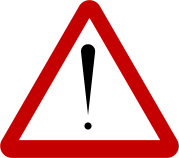
Pedestrian crossings, schools and hospitals
Reduce your speed when you approach pedestrian crossings, populated areas, schools and hospitals (Traffic Law Art. 53).
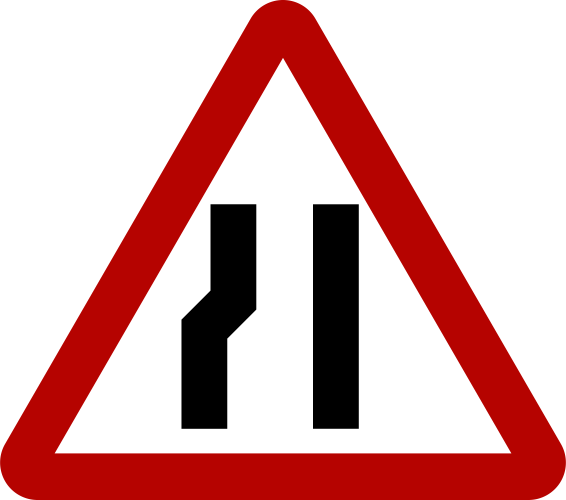
Bends, slopes, bridges and tunnels
The same article requires a lower speed at turns, curves, slopes, junctions, roundabouts, bridges and tunnels.
Weather and poor visibility
Match your speed to the road, the vehicle, its load and the weather, so that you can stop when you need to. From sunset to sunrise, and when weather limits visibility by day, drive with dipped headlights and rear lights on (Traffic Law Arts. 53 and 70).
Emergency vehicles
Make way for police, Internal Security Force (Lekhwiya), civil defence and ambulance vehicles on an urgent call, do not overtake them, and stay at least 50 metres behind them (Traffic Law Art. 64).
Animals on the road
Livestock and draught, pack or riding animals must have enough handlers to keep them under control. They may not be left alone on the road unless tethered (Bylaw Art. 177).
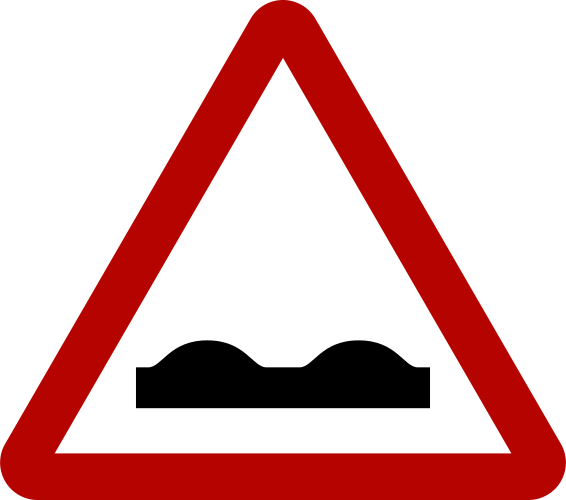
Paved and unpaved roads
Where a paved road meets an unpaved one, vehicles coming from the paved road have priority (Traffic Law Art. 75).
Myth: A small amount of alcohol is within the legal limit.
Fact: The Traffic Law bans driving under the influence of alcohol and sets no permitted level. The penalty is one month to three years in prison, a fine of QAR 10,000 to 50,000, or both (Arts. 57 and 94).
Myth: At a junction without signs you give way to traffic from the right.
Fact: Where equal roads cross and no sign or signal sets priority, vehicles coming from the left go first (Traffic Law Art. 74).
Myth: Every driving licence in Qatar lasts ten years.
Fact: Ten years applies to Qatari citizens. For non-Qataris a licence is valid for five years (Traffic Law Art. 35).
Myth: Points stay on your record for good.
Fact: Points are erased automatically if you commit no other traffic offence within a year of your last one (Traffic Law Art. 93).
Myth: Visitors can drive on any foreign licence for as long as they stay.
Fact: A visitor with a valid foreign licence must present it to the licensing authority within 15 days of entering Qatar. A valid international driving licence is also accepted (Traffic Law Art. 29).
Myth: It makes no difference when you pay a traffic fine.
Fact: The licensing authority may waive up to half of a settlement amount if it is paid within 30 days of the violation being recorded (Traffic Law Art. 105).
Changes to Qatar's Traffic Law
The law, its Executive Bylaw and the instruments that amended them
New Traffic Law issued
On 4 November 2026 the Amir issued Law No. 19 of 2026, which issues a new Traffic Law, the Qatar News Agency reported. On 17 November 2026 the text was not yet on Al Meezan, which still listed Decree-Law No. 19 of 2007 as in force. This page describes the 2007 law and will be updated when the new text is published.
Bylaw amended: plates and exit permits
Minister of Interior Decision No. 39 of 2025 replaced Articles 30, 31 and 39 of the Executive Bylaw. The list of plate types now includes plates for electric vehicles, and a vehicle exit permit covers one trip or several trips over three months, up to a maximum of six months.
Parking law
Law No. 13 of 2021 regulates vehicle parking.
Motorcycle rental and sales offices
Minister of Interior Decision No. 9 of 2018 added a chapter to the Executive Bylaw on offices that rent and sell motorcycles.
Traffic Law amended
Law No. 16 of 2015 amended the Traffic Law. It replaced the speeding entry in the points table, added 3 points for parking in a space reserved for people with special needs, and set the settlement amount at QAR 1,000 for Article 64 and for Article 78, item 11. The amended Article 105 allows up to half of a settlement amount to be waived when it is paid within 30 days.
Executive Bylaw issued
Minister of Interior Decision No. 6 of 2010 issued the Executive Bylaw, which sets the licence procedure, the driving test and the default speed limits. In the same year, Law No. 5 of 2010 banned parking trucks outside permitted places.
Traffic Law issued
Decree-Law No. 19 of 2007 issued the Traffic Law described on this page. Al Meezan listed it as in force on 17 November 2026.
How Qatar Compares
Qatar next to the United Kingdom, France and Germany, from each country's official sources
StrictestIn betweenMost lenientBAC limit and minimum age
| Measure | Qatar | United Kingdom | France | Germany |
|---|---|---|---|---|
| Alcohol limit for drivers | No permitted level | 80 mg per 100 ml of blood* | 0.5 g per litre of blood | 0.5 per mille |
| Minimum age to drive a car | 18 | 17 | 17 | 18 (17 accompanied) |
| Highest default limit for cars | 120 km/h | 70 mph (112 km/h) | 130 km/h | 130 km/h, recommended |
| Estimated road deaths per 100,000 people (WHO, 2023) | 7.3 | 2.5 | 4.9 | 3.4 |
Alcohol limit for drivers
Qatar: No permitted levelUnited Kingdom: 80 mg per 100 ml of blood*France: 0.5 g per litre of bloodGermany: 0.5 per milleMinimum age to drive a car
Qatar: 18United Kingdom: 17France: 17Germany: 18 (17 accompanied)Highest default limit for cars
Qatar: 120 km/hUnited Kingdom: 70 mph (112 km/h)France: 130 km/hGermany: 130 km/h, recommendedEstimated road deaths per 100,000 people (WHO, 2023)
Qatar: 7.3United Kingdom: 2.5France: 4.9Germany: 3.4
Qatar
The Traffic Law bans driving under the influence and sets no permitted level.
For cars and motorcycles. It is 21 for heavy vehicles, machinery and public vehicles.
For cars on external roads, where no sign sets another limit.
WHO estimate for 2023, per 100,000 people.
*England, Wales and Northern Ireland; the limit in Scotland is 50 mg. Lower limits apply to new drivers: 0.2 g per litre in France for holders of a probationary licence, and no alcohol at all in Germany during the probationary period or under the age of 21. GOV.UK says most people can start learning to drive a car at 17. Germany recommends a speed of no more than 130 km/h on motorways where no limit is posted. National rules are as published on 17 November 2026; death rates are WHO estimates for 2023. Sources: Qatar Traffic Law and Executive Bylaw; GOV.UK; Service-Public.fr; Germany's Road Traffic Act (StVG §§ 24a and 24c), Driving Licence Regulation (FeV § 10) and motorway recommended-speed regulation; WHO Global Health Observatory.
Primary Sources
How We Checked
Each figure on this page comes from an official source that we opened and read. Last check: 17 November 2026.
- 1Legal rules come from the consolidated Arabic text of the Traffic Law (Decree-Law No. 19 of 2007) and its Executive Bylaw on Al Meezan, with the amendments of 2010, 2015, 2018 and 2025. Law No. 19 of 2026, issued on 4 November 2026, is not covered: its text was not on Al Meezan on the date of the last check.
- 2Fees come from the fee table of Minister of Interior Decision No. 19 of 2007, as replaced in 2010, on Al Meezan. The ministry's website shows the same amounts on a page without a date. Phone numbers come from the ministry's website.
- 3Yearly road deaths come from the National Planning Council. Death rates come from the World Health Organization.
- 4Where no official source publishes a figure, the page leaves it out.
Found an error? Write to us and we will correct it.
Questions About Driving in Qatar
What is the minimum age to get a driving licence in Qatar?
18 for a motorcycle, light-vehicle (car) or special-needs licence, and 21 for a heavy-vehicle, machinery or public-vehicle licence. The same ages apply to the learner's licence for each type (Traffic Law Art. 31).
Who runs the driving test in Qatar?
The Traffic Department of the Ministry of Interior. The test has a theory stage followed by a practical stage, and the department runs both (Executive Bylaw Art. 48).
What does the Qatar theory test cover?
Traffic rules and etiquette, road signs and signals, and the basic principles of how a vehicle works and how to use it (Executive Bylaw Art. 49).
How much does a driving licence cost in Qatar?
The Ministry of Interior lists QAR 250 for a five-year light-vehicle licence for non-Qataris and QAR 500 for a ten-year licence for Qatari citizens. A learner's licence costs QAR 150 for three months. The fees are set in Table 3 of Minister of Interior Decision No. 19 of 2007.
How long is a Qatar driving licence valid?
Ten years for Qatari citizens and five years for non-Qataris. A public-vehicle licence lasts one year and a learner's licence three months. Each can be renewed for the same period (Traffic Law Art. 35).
What is the alcohol limit for driving in Qatar?
There is no permitted level. The Traffic Law bans driving under the influence of alcohol, drugs or any other psychotropic substance. The penalty is one month to three years in prison, a fine of QAR 10,000 to 50,000, or both (Arts. 57 and 94).
What are the speed limits in Qatar?
Where no sign sets a limit, cars and motorcycles may drive at up to 100 km/h in towns, villages and populated areas and 120 km/h on external roads. Other motor vehicles are limited to 50 km/h and 80 km/h (Executive Bylaw Art. 176).
How does the points system work in Qatar?
Listed offences carry points. The licence is withdrawn for three months the first time the total reaches 14, for six months at 12 the second time, for nine months at 10 the third time and for one year at 8 the fourth time. At 6 points the fifth time it is withdrawn permanently. Points are erased after a year with no new offence (Traffic Law Arts. 92–93).
Can I drive in Qatar with a foreign licence?
GCC citizens may drive on a valid licence from their own country. Visitors and tourists may drive on a valid international licence, or on a valid foreign licence that they present to the licensing authority within 15 days of entering Qatar (Traffic Law Art. 29). If you hold a foreign licence and apply for a Qatari one, the Traffic Department may exempt you from the test (Executive Bylaw Art. 47).
What is the fine for using a phone or not wearing a seat belt in Qatar?
The settlement amount is QAR 500 for each. The seat-belt rule covers the driver and the front-seat passenger (Traffic Law Arts. 54–55 and the conciliation table).
Is there a discount for paying a traffic fine early in Qatar?
The Traffic Law allows the licensing authority to waive up to half of a settlement amount when it is paid within 30 days of the violation being recorded (Art. 105).
What is the emergency number in Qatar?
999 reaches the police, ambulance and fire services. The Ministry of Interior also lists 992 as the emergency line for people with a hearing disability.
Which side of the road does Qatar drive on?
The right. The Traffic Law defines the direction of traffic as the right-hand side of the road. Drivers keep near the right-hand edge and overtake on the left (Traffic Law Arts. 1, 43 and 64).
How many hours of driving lessons are required in Qatar?
For a light-vehicle licence the Executive Bylaw sets a minimum of 15 hours of theory and 35 hours of practical training. The Traffic Department may reduce these hours or waive training (Art. 114).
How many people die on Qatar's roads each year?
The National Planning Council recorded 140 deaths from traffic accidents in 2024, 172 in 2023 and 222 in 2022.
Has Qatar issued a new traffic law?
Yes. On 4 November 2026 the Amir issued Law No. 19 of 2026, which issues a new Traffic Law, according to the Qatar News Agency. On 17 November 2026 its text was not yet on Al Meezan, the official legal portal, which still listed Decree-Law No. 19 of 2007 as in force. The rules, amounts and points on this page are those of the 2007 law.
Cite This Page
Use one of these citations when you refer to this page in research, journalism or a report.
APA 7th Edition
AutoviaTest. (2026, November 17). Qatar driving licence 2026: Rules, fees and fines. https://autoviatest.com/en/driving-test/qatar/facts
MLA 9th Edition
AutoviaTest. "Qatar Driving Licence 2026: Rules, Fees and Fines." AutoviaTest, 17 Nov. 2026, autoviatest.com/en/driving-test/qatar/facts.
Chicago 17th Edition
AutoviaTest. "Qatar Driving Licence 2026: Rules, Fees and Fines." Last modified November 17, 2026. https://autoviatest.com/en/driving-test/qatar/facts.
Getting Ready for the Qatar Theory Test?
Practise questions on Qatar's traffic rules and road signs before you sit the theory test.
More Country Driving Guides
UAE driving licence factsLicence process, speed limits, fines and road rules in the United Arab Emirates.Saudi Arabia driving licence factsLicence process, speed limits, fines and road rules in Saudi Arabia. Egypt driving licence factsLicence process, speed limits, fines and road rules in Egypt.UK driving licence factsTheory test, speed limits, penalty points and road rules in the United Kingdom.
 India driving licence factsLicence process, speed limits, fines and road rules in India.