Warning Signs
Alert drivers to potential hazards ahead. Usually triangular with red border.
12 signs in this category
About {category}
Danger warning signs are defined in Annex 1, Section A of the 1968 Vienna Convention on Road Signs and Signals. The Convention prescribes two permitted models: model Aa, an equilateral triangle pointing upward with a white or pale-yellow ground and a red border, and model Ab, a square or diamond with a yellow ground and a black rim. Section A covers hazards such as dangerous bends (Section A.1a), slippery road surfaces (Section A.9), pedestrian crossings ahead (Section A.12), areas frequented by children (Section A.13), road works (Section A.16) and intersection types (Section A.18 through Section A.21).
The defining driver-action principle of Section A is that warning signs alert drivers to a hazard ahead but do not in themselves impose a legal restriction. Drivers are required to adjust their speed and attention to the conditions described, but the operational response — slowing, changing lanes, increasing following distance — remains a matter of judgement governed by the general rules of the road.
All Warning Signs
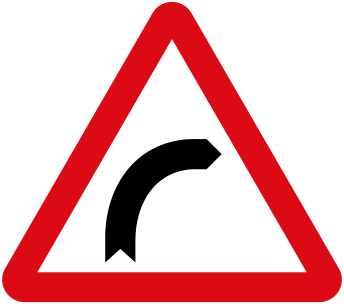
Curve Ahead
Warns that the road ahead contains a dangerous bend or a sequence of bends; the curve direction shown by the symbol indicates the first bend.
- roadSigns.labels.whenYouSee
- You see this sign on the approach to a sharp single bend, a hairpin or a series of bends that cannot be read in time from the road geometry alone.
- roadSigns.labels.whatToDo
- You must reduce speed before entering the bend, stay in your lane and refrain from overtaking until the road geometry is again clear.
- Tip
- The direction of the curve is shown by the arrow on the sign.
roadSigns.labels.source: Vienna 1968 Section A.1a
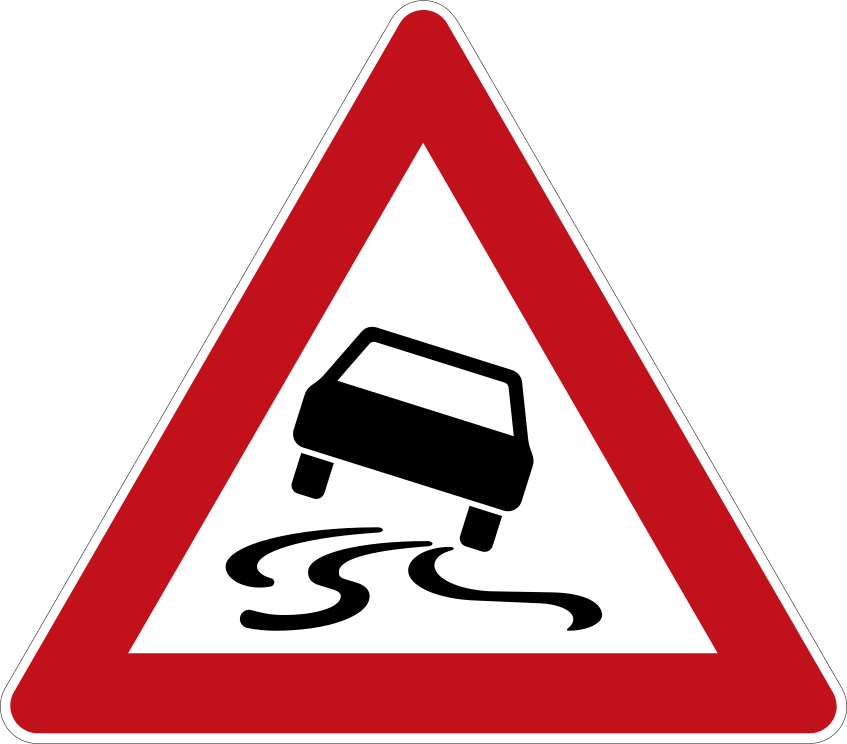
Slippery Road
Warns that the road surface ahead may be slippery from ice, snow, water, oil, mud or loose gravel and that normal tyre grip cannot be assumed.
- roadSigns.labels.whenYouSee
- You see this sign in cold-weather mountain passes, on stretches prone to flooding or oil spillage, and at points where the surface changes from asphalt to a less grippy material.
- roadSigns.labels.whatToDo
- You must reduce speed, increase your following distance and avoid sudden braking, acceleration or steering inputs until the hazard has passed.
roadSigns.labels.source: Vienna 1968 Section A.9
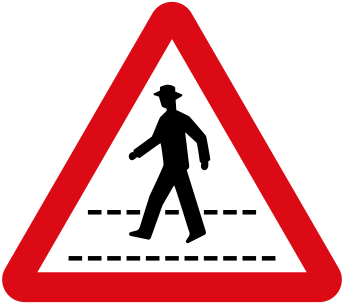
Pedestrian Crossing Ahead
Warns of a pedestrian crossing ahead at which pedestrians have priority over vehicles when stepping onto the carriageway.
- roadSigns.labels.whenYouSee
- You see this sign on the approach to a marked zebra or signalised pedestrian crossing, typically on urban roads, near schools, shops or transit stops.
- roadSigns.labels.whatToDo
- You must reduce speed, be ready to stop, and must give way to any pedestrian who is on or stepping onto the crossing.
- roadSigns.labels.countryNotes
- The pedestrian symbol is rendered as a walking figure; in some jurisdictions the figure walks left, in others right — both forms are accepted under Vienna 1968 Section A.12.
roadSigns.labels.source: Vienna 1968 Section A.12
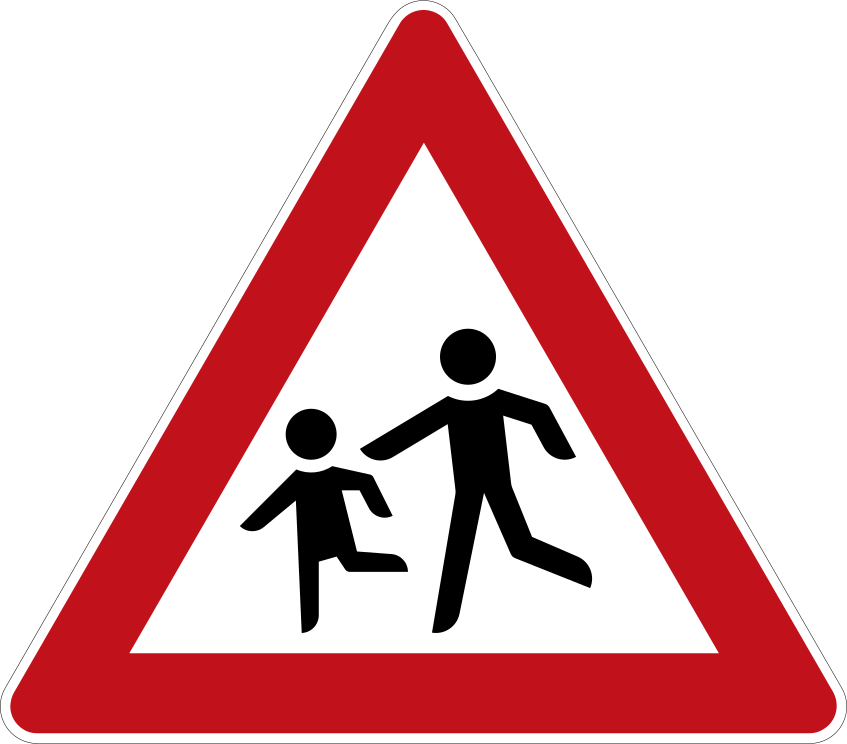
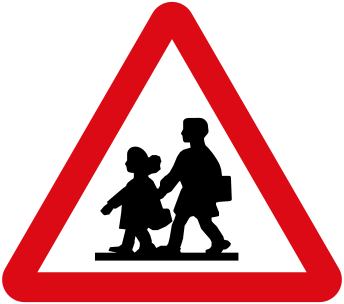
Children Crossing
Warns of a stretch of road frequented by children — typically near schools, playgrounds, parks or residential streets — where children may step into the carriageway without warning.
- roadSigns.labels.whenYouSee
- You see this sign on the approach to schools, kindergartens, recreation grounds and roads with high concentrations of child pedestrians.
- roadSigns.labels.whatToDo
- You must reduce speed substantially, scan the verges and parked vehicles for children, and be prepared to stop without warning.
roadSigns.labels.source: Vienna 1968 Section A.13
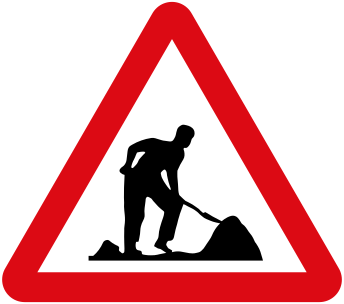
Roadwork Ahead
Warns of road works ahead — construction, maintenance, surfacing or utility work — where lane availability, surface condition and personnel exposure may differ from normal.
- roadSigns.labels.whenYouSee
- You see this sign on the approach to active construction zones, resurfacing operations, utility excavations and short-term maintenance such as line painting.
- roadSigns.labels.whatToDo
- You must reduce speed, follow any posted reduced limit, obey lane diversions and signals from workers, and refrain from overtaking within the works.
- roadSigns.labels.countryNotes
- Many jurisdictions use a yellow-ground variant (model Ab in Vienna 1968 Section A) or temporary orange diamond panels for road-works warnings; both are accepted under the Convention.
roadSigns.labels.source: Vienna 1968 Section A.16
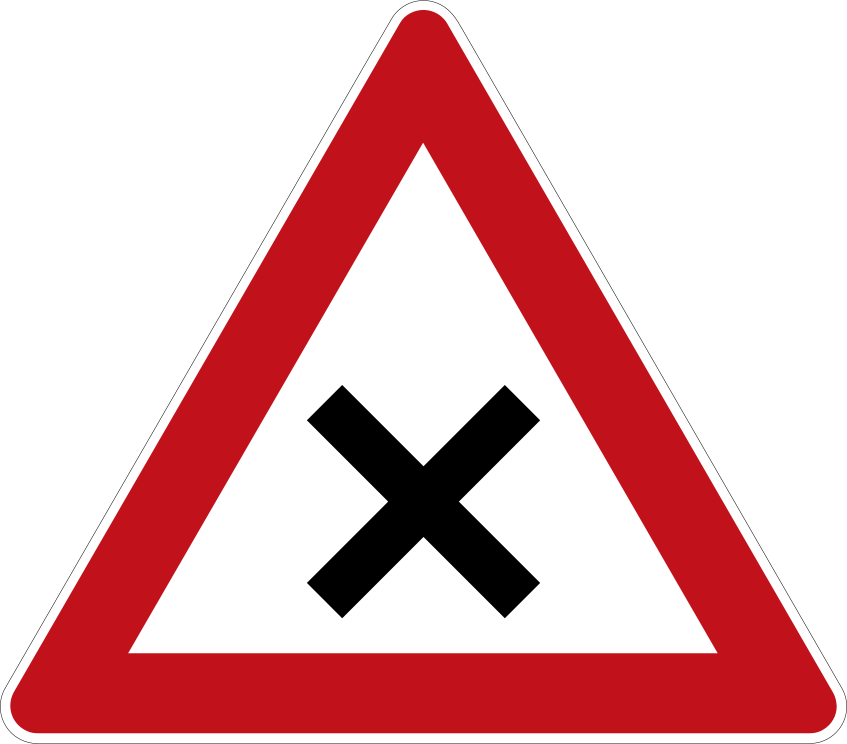
Intersection Ahead
Warns of an intersection ahead — a crossroads, a T-junction, a Y-junction or a junction with a minor side road — where conflicting streams of traffic meet.
- roadSigns.labels.whenYouSee
- You see this sign on the approach to a crossroads, T-junction, Y-junction or oblique side-road junction, particularly where the side roads have low visibility or unusual geometry.
- roadSigns.labels.whatToDo
- You must reduce speed, check for cross-traffic from both sides, and yield to any vehicle that has priority under the local rules or other signage.
roadSigns.labels.source: Vienna 1968 Section A.18 to Section A.21
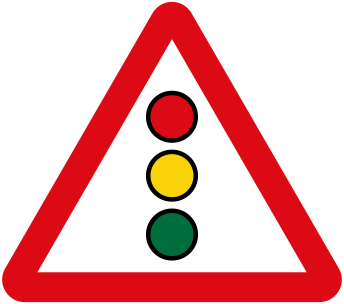
Traffic Signals Ahead
Warns that you are approaching a road section controlled by traffic signals; the pictogram shows a stylised three-aspect signal head (red, amber and green) on a triangular ground.
- roadSigns.labels.whenYouSee
- You see this sign on the approach to the first signalised junction on a route, after a long stretch of unsignalised road, or where forward visibility of the signal head is restricted by curvature, foliage or buildings.
- roadSigns.labels.whatToDo
- You must reduce speed and be prepared to stop at the signal; you shall obey whichever aspect the signal displays as you arrive at the stop line.
roadSigns.labels.source: Vienna 1968 Section A.17
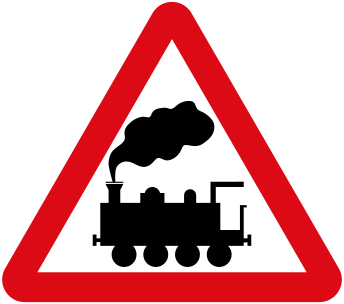
Level Crossing Without Barriers
Warns of a railway level crossing that is not equipped with gates or barriers; the pictogram shows a stylised steam locomotive (or, in newer national variants, a simplified train) inside the warning triangle.
- roadSigns.labels.whenYouSee
- You see this sign on the approach to unguarded rural and industrial railway crossings, typically supplemented by Saint Andrew's cross markers (Section A.28) at the crossing itself and, where present, by flashing red lights.
- roadSigns.labels.whatToDo
- You must reduce speed, look and listen for approaching trains in both directions, and shall stop short of the crossing if a train is in sight or if any audible or visual warning is active.
- roadSigns.labels.countryNotes
- Most European jurisdictions still use the steam-locomotive pictogram even though steam traction has long since ceased; the symbol is retained for international recognition.
roadSigns.labels.source: Vienna 1968 Section A.26
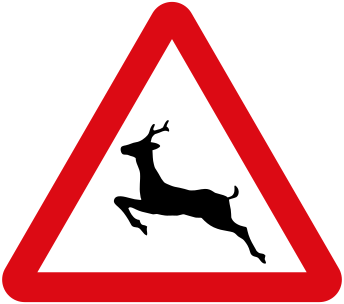
Wild Animals
Warns of a stretch of road on which wild animals — most commonly deer, elk or wild boar — are known to cross the carriageway. The pictogram is a leaping deer in profile.
- roadSigns.labels.whenYouSee
- You see this sign on rural roads through forests, game reserves and migration corridors, typically with supplementary panels showing the length of the affected stretch.
- roadSigns.labels.whatToDo
- You must reduce speed, scan the verges actively (particularly at dawn and dusk), and be prepared to stop or take evasive action if an animal enters the carriageway.
- roadSigns.labels.countryNotes
- The Convention permits the deer pictogram to be replaced with a moose/elk in Scandinavia, with a camel in some Middle Eastern states, or with a kangaroo in Australia; all are accepted as Section A.15b variants.
roadSigns.labels.source: Vienna 1968 Section A.15b
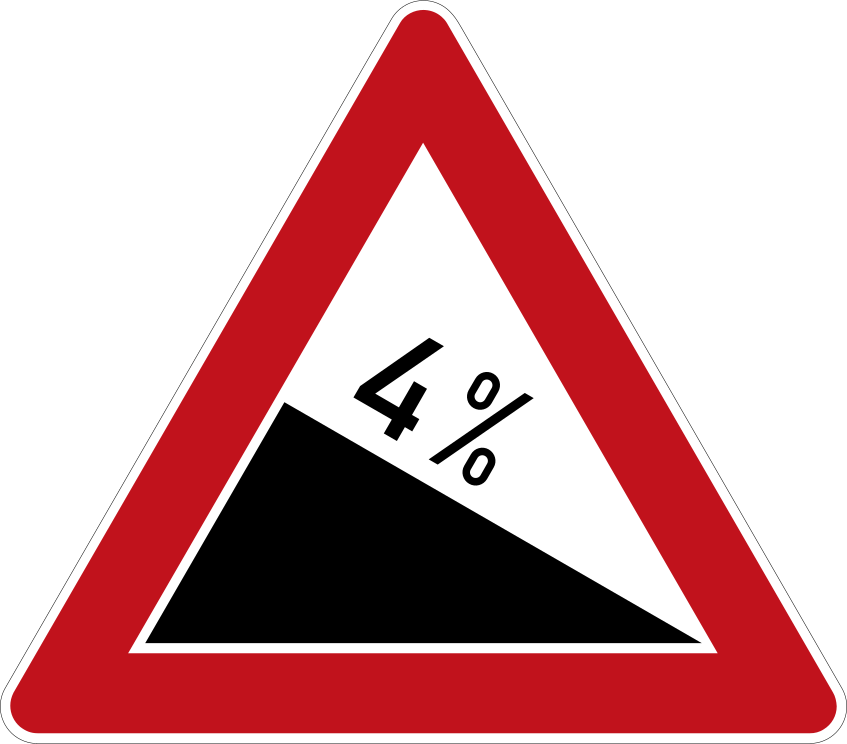
Steep Descent
Warns of a steep downhill gradient ahead. The pictogram shows a vehicle silhouette descending an inclined line, with the gradient percentage shown alongside.
- roadSigns.labels.whenYouSee
- You see this sign on the approach to mountain passes, descending alpine routes and any sustained gradient steeper than the local default (typically 7% or more across Europe).
- roadSigns.labels.whatToDo
- You must reduce speed before the descent, engage a lower gear to use engine braking, and shall avoid prolonged use of the service brakes to prevent overheating; heavy vehicles must obey any associated lorry-restriction panels.
roadSigns.labels.source: Vienna 1968 Section A.2a
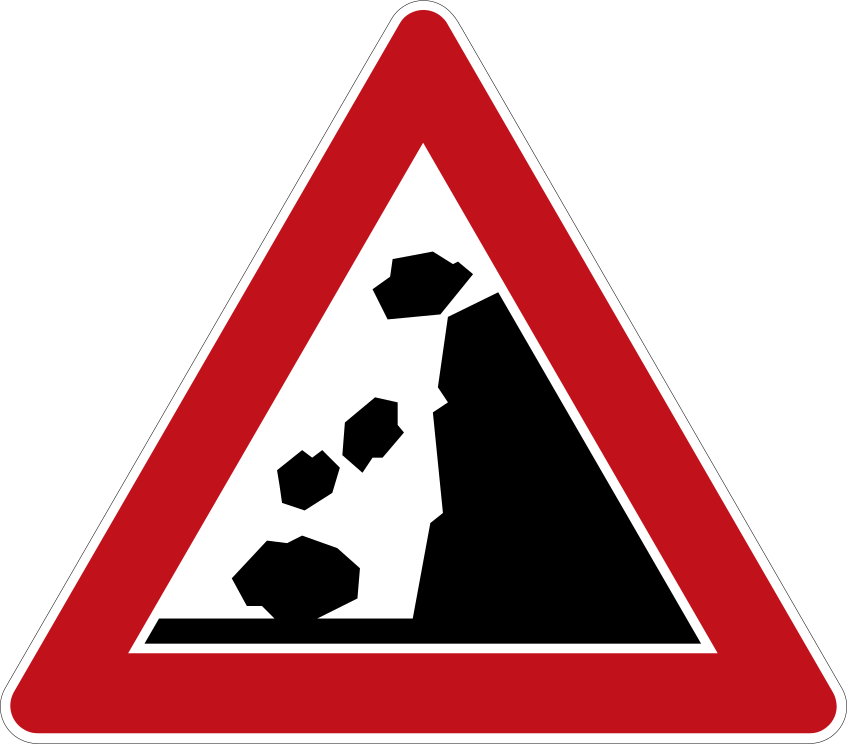
Falling Rocks
Warns of a section of road exposed to falling or fallen rocks. The pictogram shows rocks tumbling down a stylised slope onto the carriageway.
- roadSigns.labels.whenYouSee
- You see this sign in mountainous terrain, in cuttings through unstable strata, after heavy rainfall on alpine roads, and at any point where the verge has been recently undercut by erosion.
- roadSigns.labels.whatToDo
- You must reduce speed, scan the carriageway and verges for debris, and shall not stop or park within the affected stretch; if rocks are on the road you must navigate around them with care or stop at a safe distance.
roadSigns.labels.source: Vienna 1968 Section A.11
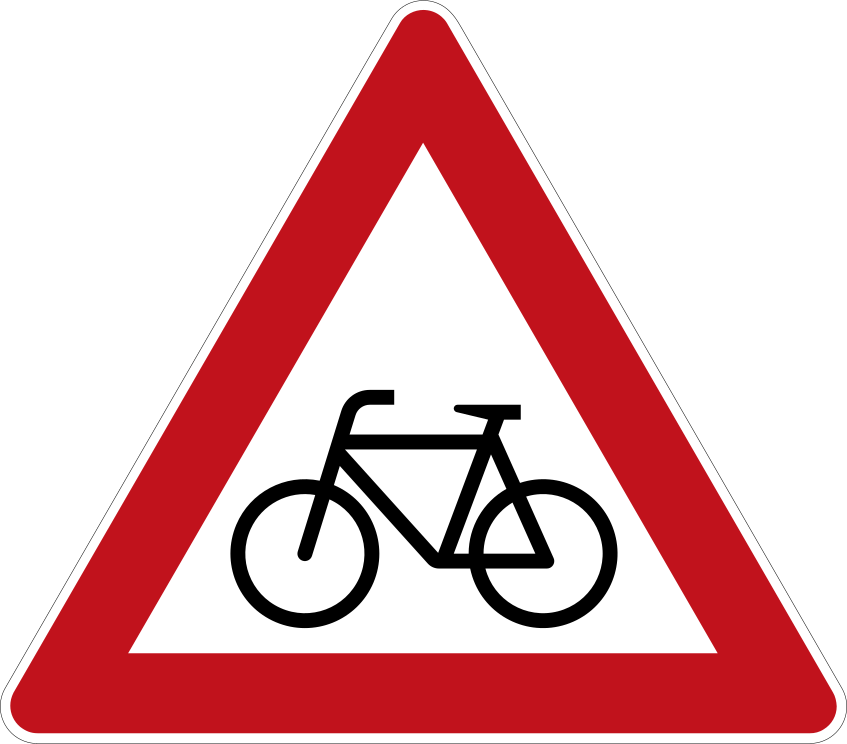
Cyclists
Warns of a stretch of road frequently used by cyclists, either where a cycle track joins or crosses the carriageway or where cyclists share the roadway in significant numbers.
- roadSigns.labels.whenYouSee
- You see this sign where a separated cycle path crosses the road, at the entry to rural roads that form part of a designated cycle route, and on urban streets without dedicated cycle infrastructure.
- roadSigns.labels.whatToDo
- You must reduce speed, check for cyclists before changing lanes or turning, and shall give cyclists adequate lateral clearance when overtaking — typically at least 1.5 m in most Vienna parties.
roadSigns.labels.source: Vienna 1968 Section A.14
Key Information About Warning Signs
How to Recognize
Warning signs are typically triangular with a red border and white background. They alert you to hazards ahead.
Required Action
Slow down, increase attention, and prepare for the indicated hazard ahead.
Penalties
Ignoring warning signs and causing an accident can result in severe penalties and liability.
Explore Other Categories



Spremni da položite vozački ispit?
Sve što vam je potrebno da položite iz prvog puta
- 30+ probnih testova
- 16 lekcija
- Praćenje napretka
- Tess AI trener
Content translated by AI and validated by a second LLM. Native speakers — please report corrections at our issue tracker.