
 Complete guide 2026Updated April 2026
Swedish Driving Licence 2026 The Complete Guide
Everything you need to know about getting your driving licence in Sweden — Trafikverket theory test (70 MCQ, 50 min), trafikskola costs, Vision Zero road safety, speed limits, traffic fines, and the licence revocation system.
Table of Contents
Theory Test
70 multiple-choice questions (65 scored + 5 unscored trial questions), completed in 50 minutes.
52/65 correct to pass (80%). Administered by Trafikverket at test centres nationwide. Fee: SEK 420 (weekday) / SEK 520 (evening/weekend). Covers road signs, speed & distance, right of way, vehicle technology, risk assessment, and winter driving.
Total Cost
Approximately SEK 15,000–25,000 (~€1,300–2,200) total: trafikskola (driving school) SEK 8,000–15,000, riskutbildning del 1 SEK 1,000–2,000, riskutbildning del 2 (skid training) SEK 1,500–2,500, theory test SEK 420, practical test SEK 1,000, körkortstillstånd (learner's permit) SEK 220, licence issuance SEK 375.
Trafikverket / TransportstyrelsenRoad Deaths
208 fatalities in 2025 (~2.0 per 100K).
Vision Zero policy adopted in 1997 — the world's first zero-fatality road safety policy. Deaths have halved since adoption. 2030 target: 50% reduction from 2017–2019 levels.
BAC Limit
0.02% (0.2‰) — one of Europe's strictest.
Aggravated drink driving at 0.10% (1.0‰). Income-based fines (dagsböter) for severe cases. Alkolås (alcohol interlock) programme available as alternative to licence revocation.
Vision Zero
World's first zero-fatality road safety policy, adopted by the Swedish Parliament (Riksdag) in 1997.
Road design shares responsibility with drivers. Deaths halved since adoption. 2030 target: 50% reduction from 2017–2019 levels. Model exported to dozens of countries worldwide.
Global Context
Death rate ~2.0/100K vs USA 12.2, Germany 3.4, UK 2.5, Japan 2.0.
No penalty points system — uses licence revocation instead. Among the most expensive licences in Europe at SEK 15,000–25,000 (~€1,300–2,200).
Sweden Road Safety: 6-Year Trend (2019–2024)
According to Trafikanalys, road fatalities dropped 7.7% in 2020 due to COVID-19 restrictions but rebounded in subsequent years. The 2025 figure of 208 deaths represents a significant improvement, reaching near-historic lows. Sweden's Vision Zero policy, adopted in 1997, continues to drive systemic improvements in road design, vehicle safety, and enforcement.
Year-over-year changes
Deaths per 100,000 Population
 USA12.2
- Sweden2.2
 Germany3.3
 UK2.5
 India11.7
Source: WHO Global Status Report on Road Safety, Trafikanalys. Per-capita rates are estimates and may vary by methodology.
Swedish Theory Test Format
The computerized theory test is administered at Trafikverket test centres across Sweden
The Swedish driving theory test (kunskapsprov) for Category B consists of 70 multiple-choice questions, of which 65 are scored and 5 are unscored trial questions (you do not know which are which). You have 50 minutes to complete the test. To pass, you must answer at least 52 of the 65 scored questions correctly — an 80% pass rate. The test is conducted on a computer at a Trafikverket test centre. Topics include road signs and signals, speed and distance, right of way and intersections, vehicle technology and maintenance, risk assessment (riskmedvetenhet), and winter driving and moose awareness. The test fee is SEK 420 for weekday sessions or SEK 520 for evening and weekend sessions.
Questions
Duration
Pass Mark
Test Fee
What the Theory Test Covers
- Warning, prohibition & mandatory signs (vägmärken)
- Right of way (väjningsplikt) at intersections
- Speed limits by road type
- Stopping, parking & congestion tax rules
- Road markings and traffic signals
- Vehicle technology & maintenance (fordonskännedom)
- Winter tire requirements (Dec 1 – Mar 31)
- Trafikförsäkring (mandatory insurance) requirements
- Eco-driving (sparsam körning) and environmental impact
- ADAS and modern vehicle safety systems
- Risk assessment (riskmedvetenhet) and hazard perception
- BAC limits & drug testing rules
- Winter driving, ice, and moose awareness
- Motorway (motorväg) rules and 2+1 roads
- Darkness and limited visibility conditions
How to Get Your Swedish Driving Licence
From körkortstillstånd to körkort — the complete 6-step process
- 1
Apply for Körkortstillstånd (Learner's Permit)
Apply to Transportstyrelsen for a learner's permit — requires health declaration and eye test
Fee: SEK 220. Submit a health declaration (hälsodeklaration) and pass an eye test. Must be at least 16 years old to apply. Valid for 5 years.
- 2
Complete Risk Education Part 1 (Riskutbildning del 1)
Mandatory course on alcohol, drugs, and fatigue — their effects on driving ability
Cost: SEK 1,000–2,000. Covers alcohol, drugs, fatigue, and their impact on driving. Classroom or online format. Must be completed before the theory test.
- 3
Practice Driving (Private or Trafikskola)
Learn to drive with a private supervisor (handledare) or at a driving school (trafikskola)
Minimum age 16. Private practice requires a handledare (supervisor) aged 24+ with 5+ years of licence. Trafikskola package: SEK 8,000–15,000. No minimum hours required, but most need 20–30 lessons.
- 4
Pass the Theory Test at Trafikverket
Take and pass the computerized multiple-choice exam at a Trafikverket test centre
70 MCQ (65 scored + 5 trial), 50 min, 52/65 to pass (80%). Fee: SEK 420 weekday / SEK 520 evening-weekend.
- 5
Complete Risk Education Part 2 (Riskutbildning del 2)
Mandatory practical skid training on a slippery track — learn to handle loss of control
Cost: SEK 1,500–2,500. Practical training on a slippery surface (halkbana). Learn to handle skids, aquaplaning, and emergency braking. Must be completed before the practical test.
- 6
Pass the Practical Driving Test
Pass the driving test with a Trafikverket examiner in real traffic
45–60 minutes in real traffic. Fee: SEK 1,000 (weekday) / SEK 1,400 (evening). Tested on: vehicle checks, manoeuvres, traffic navigation, eco-driving, and hazard awareness.
Swedish Driving Licence Fees
Total cost typically SEK 15,000–25,000 (~€1,300–2,200) — private practice can reduce costs
| Fee | Amount |
|---|---|
| Körkortstillstånd (learner's permit) | SEK 220 |
| Trafikskola package (theory + lessons) | SEK 8,000–15,000 |
| Risk Education Part 1 (alcohol/drugs/fatigue) | SEK 1,000–2,000 |
| Risk Education Part 2 (skid training) | SEK 1,500–2,500 |
| Theory test fee | SEK 420 |
| Practical test fee | SEK 1,000 |
| Licence issuance | SEK 375 |
| Additional driving lessons (per 40 min) | SEK 500–800 |
| Total Typical (Category B via trafikskola) | SEK 15,000–25,000 |
Costs vary by city and driving school. Stockholm, Gothenburg, and Malmö tend to be more expensive. Private practice with a handledare (supervisor) can significantly reduce costs, though both riskutbildning courses must still be completed at an approved provider. Government fees are fixed nationwide. Total in euros: approximately €1,300–2,200.
See how ready you are — practice with real exam questions
Try Free QuestionsMinimum age by licence category
- AM — Moped, A-traktor (≤45 km/h)15years
- A1 — Light motorcycle (≤125cc), snowmobile16years
- A2 — Medium motorcycle (≤35 kW)18years
- B — Cars up to 3,500 kgMost common licence category18years
- A — Unrestricted motorcycles20 with 2 years A2 experience, or 24 direct24years
- C — Trucks over 3,500 kgProfessional qualification required21years
- D — Buses (8+ passengers)Professional qualification required24years
Licence Validity Periods
| Licence / age | Validity |
|---|---|
| Standard (Category B)Standard renewal period | 10 years |
| C and D categoriesMedical exam required at renewal | 5 years |
| Over 75 yearsMedical exam required | 5 years |
| Over 80 yearsMedical examination required | 3 years |
Probationary Period (Prövotid)
- 2-year probationary period after obtaining licence
- Standard BAC limit of 0.02% applies (among Europe's strictest for all drivers)
- Violations during probation can result in immediate licence revocation
- No formal power restrictions for new drivers beyond standard rules
- Must retake both theory and practical tests if licence is revoked during probation
Licence Revocation System (No Points)
- Sweden does NOT use a penalty points system
- Serious violations result in varning (warning) or återkallelse (revocation)
- Revocation period: 1 month to 3 years depending on severity
- Must retake theory and practical tests after revocation
- Repeated minor offences can also trigger revocation
- Transportstyrelsen decides on all revocation matters
Speed Limits in Sweden
As per Swedish traffic regulations — all speeds in km/h
Sweden has five tiers of speed limits based on road classification. Urban areas (tätort) are limited to 50 km/h, with 30 km/h zones near schools and playgrounds. Rural roads (landsväg) allow 70 km/h, with some roads posted at 80–90 km/h. Main roads (riksväg) allow 90 km/h, including the distinctive 2+1 roads with cable barriers and alternating passing lanes. Motorways (motorväg) allow 110 km/h, with some sections posted at 120 km/h. Trucks over 3.5 tonnes are limited to 80 km/h on motorways. Sweden uses both fixed speed cameras and mobile enforcement.
| Road Type | Cars | Trucks >3.5t | Note |
|---|---|---|---|
| Urban (Tätort) | 50 | 50 | 30 km/h zones near schools |
| Rural (Landsväg) | 70 | 70 | Some roads 80–90 km/h |
| Main road (Riksväg) | 90 | 80 | 2+1 roads with cable barrier |
| Motorway (Motorväg) | 110 | 80 | Some sections 120 km/h |
| Residential (30-zone) | 30 | 30 | Near schools, playgrounds |
Urban (Tätort)
Cars: 50Trucks >3.5t: 5030 km/h zones near schools
Rural (Landsväg)
Cars: 70Trucks >3.5t: 70Some roads 80–90 km/h
Main road (Riksväg)
Cars: 90Trucks >3.5t: 802+1 roads with cable barrier
Motorway (Motorväg)
Cars: 110Trucks >3.5t: 80Some sections 120 km/h
Residential (30-zone)
Cars: 30Trucks >3.5t: 30Near schools, playgrounds
Trucks over 3.5 tonnes are limited to 80 km/h on motorways and main roads. Speed limits are strictly enforced with both fixed and mobile speed cameras. Sweden's 2+1 roads — a unique road design with alternating passing lanes separated by cable barriers — are typically posted at 90 km/h and have significantly reduced head-on collisions.
Traffic Fines & Penalties
Fixed fines (ordningsbot) for common violations — severe cases use income-based fines (dagsböter)
Sweden uses a system of fixed fines (ordningsbot) for common traffic violations and income-based fines (dagsböter) for more severe offences. Speeding fines are tiered by how much you exceed the limit, with fines ranging from SEK 2,000 for 1–10 km/h over to SEK 3,600 for 26–30 km/h over. Exceeding the limit by 31+ km/h triggers dagsböter, calculated based on income. Running a red light costs SEK 3,000. Sweden does not use a penalty points system — instead, serious or repeated offences lead to licence revocation (återkallelse) for 1 month to 3 years.
Up to SEK 1,500SEK 1,501–3,000Over SEK 3,000, or day-fines
| Violation | Fine | Revocation | Other |
|---|---|---|---|
| Speeding 1–10 km/h over | SEK 2,000 | — | — |
| Speeding 11–15 km/h over | SEK 2,400 | — | — |
| Speeding 16–20 km/h over | SEK 2,800 | — | — |
| Speeding 21–25 km/h over | SEK 3,200 | — | — |
| Speeding 26–30 km/h over | SEK 3,600 | — | — |
| Speeding 31+ km/h over | Dagsböter (income-based) | Possible | Dagsböter |
| Running a red light | SEK 3,000 | Possible | — |
| No seatbelt | SEK 1,500 | — | — |
| Handheld phone use while driving | SEK 1,500 | — | — |
| No headlights (required 24/7) | SEK 1,500 | — | — |
| Wrong/no winter tires (Dec 1 – Mar 31) | SEK 1,200 | — | — |
| Parking violation | SEK 500–1,300 | — | — |
- SEK 2,000—
Speeding 1–10 km/h over
- SEK 2,400—
Speeding 11–15 km/h over
- SEK 2,800—
Speeding 16–20 km/h over
- SEK 3,200—
Speeding 21–25 km/h over
- SEK 3,600—
Speeding 26–30 km/h over
- Dagsböter (income-based)Dagsböter
Speeding 31+ km/h over
Possible - SEK 3,000—
Running a red light
Possible - SEK 1,500—
No seatbelt
- SEK 1,500—
Handheld phone use while driving
- SEK 1,500—
No headlights (required 24/7)
- SEK 1,200—
Wrong/no winter tires (Dec 1 – Mar 31)
- SEK 500–1,300—
Parking violation
Fixed fines (ordningsbot) are set amounts for standard violations. Dagsböter (day-fines) are calculated based on the offender's income and can be substantially higher. Drink driving (rattfylleri) at BAC 0.02–0.10% carries dagsböter; aggravated drink driving (grovt rattfylleri) at BAC 0.10%+ is a criminal offence with up to 2 years imprisonment. Sweden does not have a penalty points system — serious violations result in licence revocation (återkallelse).
Know These Rules Before Your Theory Test
Traffic fines, speed limits, BAC laws, and winter driving rules are heavily tested in the Swedish kunskapsprov. Practice with real exam-style questions.
How the road worksMandatory, with a penaltyMakes it easier
Drive on the Right
Sweden drives on the right side.
Overtake only on the left. At unmarked intersections, yield to vehicles coming from the right (högerregeln).
Vision Zero Policy
Sweden's Vision Zero policy (adopted 1997) means road design shares responsibility with drivers.
Infrastructure is built to minimise fatal outcomes — cable barriers, roundabouts, and separated pedestrian/cycling paths are standard.
Headlights 24/7
Dipped headlights (halvljus) or DRL are mandatory at ALL times, year-round — even in bright summer daylight.
This applies to all vehicles on all roads. Fine: SEK 1,500.
Winter Tires (Dec 1 – Mar 31)
Winter tires are mandatory December 1 through March 31 when conditions are wintry.
Minimum 3mm tread depth. Studded tires (dubbdäck) permitted October 1 – April 15. Fine: SEK 1,200.
Trafikförsäkring (Mandatory Insurance)
Third-party liability insurance (trafikförsäkring) is mandatory for all registered vehicles.
Driving without insurance is a criminal offence. Uninsured vehicles are charged a penalty fee by Trafikförsäkringsföreningen.
BAC 0.02% — One of Europe's Strictest
Blood alcohol limit is 0.02% (0.2‰) — one of the lowest in Europe.
Aggravated drink driving (grovt rattfylleri) at 0.10% (1.0‰). Income-based fines (dagsböter). Alkolås (alcohol interlock) programme available as alternative to revocation.
Phone Ban — Handheld Prohibited
Using a handheld phone while driving is prohibited.
Hands-free devices are permitted. Fine: SEK 1,500. Applies to all mobile devices including tablets.
Congestion Tax (Trängselskatt)
Congestion tax applies in Stockholm and Gothenburg.
Camera-based automatic detection — no toll booths. Charges vary by time of day (SEK 11–45 in Stockholm). Foreign vehicles are also liable.
Child Safety
Children under 135cm must use an appropriate child restraint.
The driver is responsible for ensuring all passengers under 15 are properly restrained. Rear-facing child seats recommended until at least age 4.
Common Road Hazards in Sweden
208 road fatalities in 2025 — know these hazards to stay safe on Swedish roads
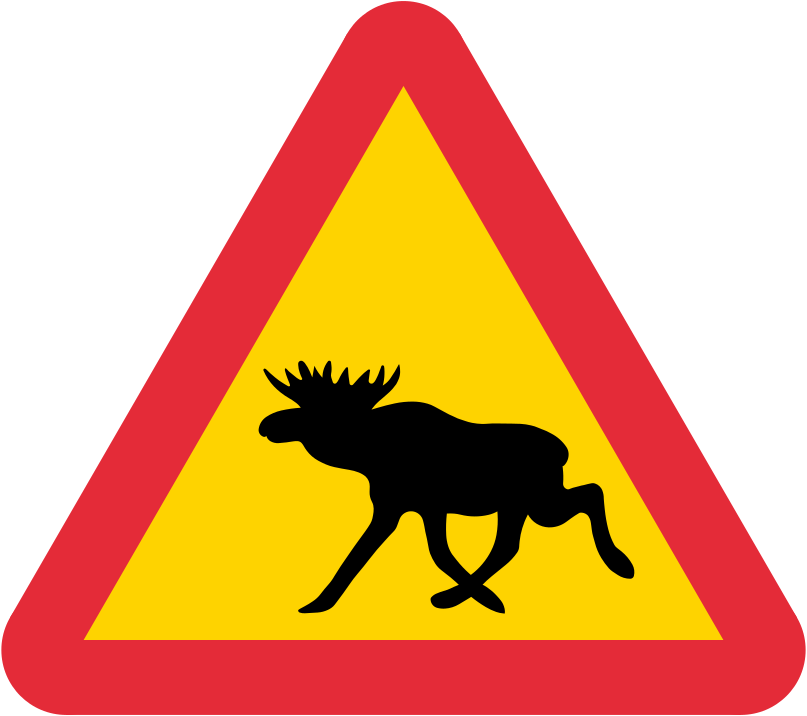
Moose Collisions (Älgolyckor)
Approximately 5,000 moose collisions per year. An adult moose weighs up to 550kg. Most common at dawn and dusk. Watch for warning signs (varning för älg) and reduce speed in forested areas.

Winter Ice & Snow
Black ice (svartis), snowstorms, and packed snow create extremely slippery conditions. Winter tires are mandatory Dec 1 – Mar 31. Allow extra stopping distance and reduce speed.
Darkness & Limited Daylight
Northern Sweden has as little as 6 hours of daylight in winter. Reduced visibility combined with icy roads significantly increases risk. Use headlights (mandatory 24/7) and reflective clothing.
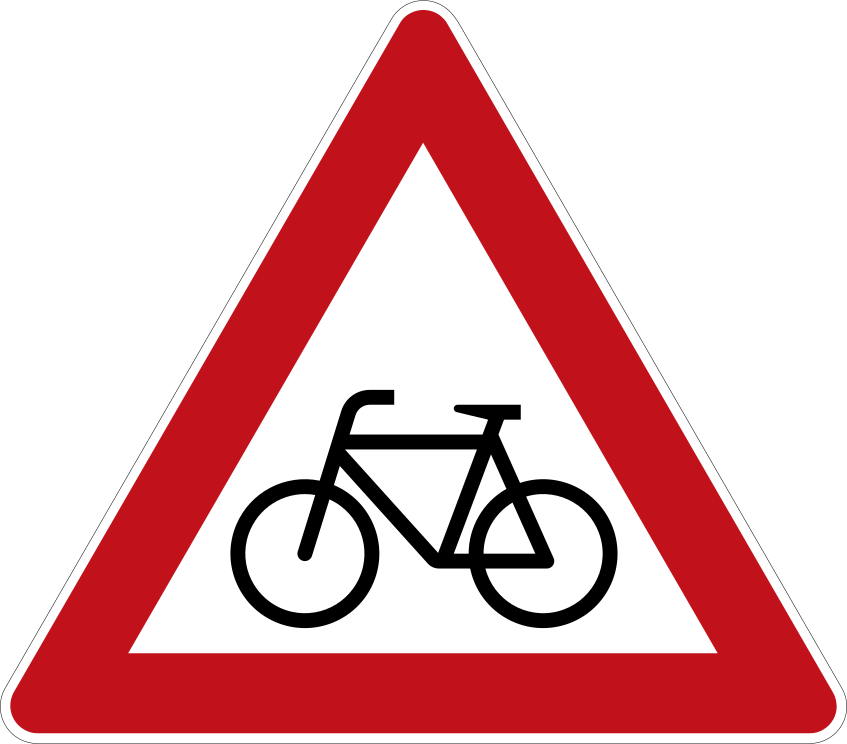
Cyclists (Cyklister)
Sweden has extensive cycling infrastructure. Cyclists have priority at marked crossings (cykelöverfarter). Always check for cyclists when turning and give at least 1.5m clearance when passing.
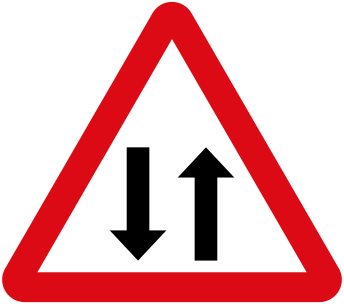
2+1 Roads (Mötesfria vägar)
Cable barrier roads with alternating passing lanes are unique to Sweden. Overtaking is only permitted in the single-lane direction when the passing lane is on your side. Do not cross the cable barrier.
Roundabouts (Rondeller)
Roundabouts are very common throughout Sweden. Traffic already inside the roundabout has priority. Signal left when exiting. Multi-lane roundabouts require correct lane positioning.
Sweden's 21 Counties (Län)
Driving licence administration is handled by Trafikverket test centres across all counties
- 1StockholmStockholm2.4M
- 2Västra GötalandGothenburg1.7M
- 3SkåneMalmö1.4M
- 4ÖstergötlandLinköping0.5M
- 5UppsalaUppsala0.4M
- 6JönköpingJönköping0.4M
- 7HallandHalmstad0.3M
- 8ÖrebroÖrebro0.3M
- 9DalarnaFalun0.3M
- 10GävleborgGävle0.3M
- 11SödermanlandNyköping0.3M
- 12VärmlandKarlstad0.3M
- 13NorrbottenLuleå0.2M
- 14VästerbottenUmeå0.3M
- 15VästmanlandVästerås0.3M
- 16KalmarKalmar0.2M
- 17BlekingeKarlskrona0.2M
- 18KronobergVäxjö0.2M
- 19VästernorrlandHärnösand0.2M
- 20GotlandVisby0.1M
- 21JämtlandÖstersund0.1M
Traffic laws are national (Trafikförordningen), applying uniformly across all 21 counties. Trafikverket operates test centres in all counties. Congestion tax currently applies only in Stockholm and Gothenburg.
Myth: Sweden has a penalty points system like most countries
Fact: Sweden does NOT use penalty points. Instead, the system relies on licence revocation (återkallelse). Transportstyrelsen can revoke your licence for 1 month to 3 years for serious or repeated offences. After revocation, you must retake both the theory and practical tests.
Myth: The theory test is 70 questions and you need 75% to pass
Fact: While there are 70 questions, only 65 are scored — 5 are unscored trial questions. You need 52 out of 65 scored questions correct, which is 80%, not 75%. You do not know which questions are trial questions.
Myth: You can drive with just a foreign licence indefinitely
Fact: EU/EEA licence holders can drive in Sweden as long as the licence is valid. However, non-EU residents must obtain a Swedish driving licence within 1 year of becoming a resident. Some non-EU licences can be exchanged without retesting.
Myth: Headlights are only needed in winter darkness
Fact: Dipped headlights or DRL are mandatory at ALL times, year-round — even on the brightest summer day. This applies to all vehicles on all roads in Sweden. Fine: SEK 1,500 for non-compliance.
Myth: Sweden has zero-tolerance for alcohol when driving
Fact: The BAC limit is 0.02% (0.2‰), not absolute zero. This is among Europe's strictest but still allows a trace amount. Even a small beer could put you over the limit. Aggravated drink driving starts at 0.10% (1.0‰).
Myth: Moose accidents are exaggerated tourist stories
Fact: Approximately 5,000 moose collisions occur every year in Sweden, causing 5–20 fatalities and hundreds of injuries. An adult moose weighs up to 550kg — a collision at 80 km/h is often fatal. This is a very real and serious hazard, especially at dawn and dusk.
Updated risk education & licence exchange rules
Updated riskutbildning (risk education) requirements for new drivers. New licence exchange rules for non-EU holders, specifying which countries qualify for direct exchange without retesting.
Theory test question bank refreshed
Trafikverket updated the kunskapsprov (theory test) question bank with new questions on eco-driving (sparsam körning) and Advanced Driver Assistance Systems (ADAS).
Speed camera expansion & congestion tax update
Speed camera network expanded across major highways. Congestion tax rates in Stockholm and Gothenburg adjusted to reflect inflation and traffic patterns.
COVID-19 disruptions & digital licence pilot
Temporary suspension of driving tests during COVID-19 restrictions. Transportstyrelsen launched a digital driving licence pilot programme.
Vision Zero adopted by Swedish Parliament
The Riksdag adopted Vision Zero (Nollvisionen), the world's first zero-fatality road safety policy. The policy holds that no loss of life on roads is acceptable and places shared responsibility on road design, vehicle safety, and driver behaviour.
How Sweden Compares Globally
Sweden's driving regulations compared to other major countries — data compiled from official government sources
StrictestIn betweenMost lenientBAC limit and minimum age
| Parameter | Sweden | Germany | USA | UK |  Japan |
|---|---|---|---|---|---|
| BAC Limit | 0.02% | 0.05% | 0.08% | 0.08% | 0.03% |
| Min. Age (Car) | 18 | 18 | 16 | 17 | 18 |
| Driving Side | Right | Right | Right | Left | Left |
| Highway Speed | 110 km/h | No limit* | 105–137 | 113 km/h | 100–120 |
| Test Questions | 70 MCQ | 30 MCQ | 20–50 | 50 | 50 |
| Licence Cost | SEK 15–25K | €2,000–3,500 | $30–90 | £200–1,500 | ¥300K+ |
| Road Deaths/yr | 229 | 2,770 | 40,901 | 1,695 | 2,678 |
| Deaths/100K | ~2.2 | ~3.3 | 12.2 | 2.5 | 2.1 |
BAC Limit
Sweden: 0.02%Germany: 0.05%USA: 0.08%UK: 0.08%Japan: 0.03%Min. Age (Car)
Sweden: 18Germany: 18USA: 16UK: 17Japan: 18Driving Side
Sweden: RightGermany: RightUSA: RightUK: LeftJapan: LeftHighway Speed
Sweden: 110 km/hGermany: No limit*USA: 105–137UK: 113 km/hJapan: 100–120Test Questions
Sweden: 70 MCQGermany: 30 MCQUSA: 20–50UK: 50Japan: 50Licence Cost
Sweden: SEK 15–25KGermany: €2,000–3,500USA: $30–90UK: £200–1,500Japan: ¥300K+Road Deaths/yr
Sweden: 229Germany: 2,770USA: 40,901UK: 1,695Japan: 2,678Deaths/100K
Sweden: ~2.2Germany: ~3.3USA: 12.2UK: 2.5Japan: 2.1
Sweden
Strictest among compared countries. Germany 0.05%, USA/UK 0.08%, Japan 0.03%. Aggravated at 0.10%.
Same as Germany and Japan. USA allows from 16, UK from 17. Practice from age 16 with handledare.
Some sections 120 km/h. Germany has no general limit. Lower than most European motorways.
~€1,300–2,200. Among Europe's most expensive. Cheaper than Germany (€2–3.5K) but much more than USA ($30–90).
~2.2 per 100K — among world's lowest. Vision Zero policy since 1997. USA: 12.2, Germany: 3.3, UK: 2.5.
Road deaths: Sweden 208 (Trafikanalys 2025), Germany 2,814 (Destatis 2025), USA 40,901 (NHTSA 2023), UK 1,695 (DfT 2023), Japan 2,547 (NPA 2025). Per-100K rates calculated from national population data. UK BAC is 0.08% for England/Wales; Scotland is 0.05%. Sweden highway speed: most motorways 110 km/h, some sections 120 km/h.
Primary Sources
Verification Methodology
Every fact on this page has been cross-referenced against at least two authoritative sources. Our process:
- 1Primary data collected from official Swedish legislation and government portals
- 2Cross-verified against Trafikanalys publications, Transportstyrelsen data, and Trafikverket resources
- 3National regulations apply uniformly — no regional variations noted
- 4Page reviewed and fact-checked on April 12, 2026
If you find an error, please contact us so we can correct it immediately.
Frequently Asked Questions
How much does a Swedish driving licence cost?
The total cost for a Category B (car) licence is typically SEK 15,000–25,000 (~€1,300–2,200). This includes: körkortstillstånd (learner's permit) SEK 220, trafikskola (driving school) package SEK 8,000–15,000, riskutbildning del 1 SEK 1,000–2,000, riskutbildning del 2 (skid training) SEK 1,500–2,500, theory test SEK 420, practical test SEK 1,000, and licence issuance SEK 375. Private practice with a handledare can reduce the driving school portion significantly.
What is the Swedish theory test format?
The Swedish kunskapsprov (theory test) for Category B consists of 70 multiple-choice questions, of which 65 are scored and 5 are unscored trial questions. You have 50 minutes. You must answer at least 52 of the 65 scored questions correctly (80%). You do not know which questions are trial questions. Topics include road signs, speed limits, right of way, vehicle technology, risk assessment, and winter driving.
What are the speed limits in Sweden?
Urban areas (tätort): 50 km/h (30 km/h zones near schools). Rural roads (landsväg): 70 km/h (some 80–90 km/h). Main roads (riksväg): 90 km/h. Motorways (motorväg): 110 km/h (some sections 120 km/h). Trucks over 3.5t are limited to 80 km/h on motorways. Sweden's unique 2+1 roads are typically posted at 90 km/h.
What is the BAC limit in Sweden?
0.02% (0.2‰) — one of Europe's strictest blood alcohol limits. Drink driving (rattfylleri) at BAC 0.02–0.10%: income-based fines (dagsböter) and possible licence revocation. Aggravated drink driving (grovt rattfylleri) at BAC 0.10%+: criminal offence with up to 2 years imprisonment and mandatory licence revocation. An alkolås (alcohol interlock) programme is available as an alternative.
What is Vision Zero?
Vision Zero (Nollvisionen) is Sweden's road safety policy adopted by Parliament in 1997 — the world's first zero-fatality road safety policy. It holds that no loss of life on roads is acceptable. Road design, vehicle safety, and driver behaviour all share responsibility. Since adoption, road deaths have halved despite increased traffic. The 2030 target is a 50% reduction from 2017–2019 levels. The policy has been adopted by dozens of cities and countries worldwide.
What are the winter tire requirements?
Winter tires are mandatory from December 1 through March 31 when road conditions are wintry. Minimum tread depth: 3mm. Studded tires (dubbdäck) are permitted from October 1 through April 15. All-season tires with the 3PMSF (three-peak mountain snowflake) symbol are accepted as winter tires. Fine for non-compliance: SEK 1,200.
Are headlights required during the day in Sweden?
Yes, at ALL times, year-round. Dipped headlights (halvljus) or daytime running lights (DRL) must be on whenever the vehicle is in motion — even on the brightest summer day. This applies to all vehicles on all roads. Fine: SEK 1,500. This is one of the most commonly missed rules by foreign drivers.
Does Sweden have a penalty points system?
No. Unlike most European countries, Sweden does not use a penalty points system. Instead, Transportstyrelsen can issue a varning (warning) or a full återkallelse (licence revocation) for 1 month to 3 years. After revocation, you must retake both the theory and practical driving tests. Serious single offences (drink driving, reckless driving) can result in immediate revocation.
What is riskutbildning (risk education)?
Riskutbildning is a mandatory two-part risk education programme. Part 1 covers alcohol, drugs, and fatigue — their effects on driving ability (classroom or online, SEK 1,000–2,000). Part 2 is practical skid training on a slippery track (halkbana), teaching how to handle loss of control, aquaplaning, and emergency braking (SEK 1,500–2,500). Both parts must be completed before obtaining a licence.
How dangerous are moose on Swedish roads?
Very. Approximately 5,000 moose collisions occur every year, causing 5–20 fatalities and hundreds of injuries. An adult moose weighs up to 550kg — their legs elevate the body to windshield height, making impacts particularly dangerous. Moose are most active at dawn and dusk. Watch for varning för älg (moose warning) signs and reduce speed in forested areas.
What equipment must I carry in my car?
Sweden has no legal requirement to carry a warning triangle, first aid kit, or reflective vest in private vehicles (unlike many EU countries). However, it is strongly recommended to carry a warning triangle, reflective vest, first aid kit, and a torch, especially during winter. Winter tires are mandatory Dec 1 – Mar 31, and studded tires are recommended in northern Sweden.
How does the congestion tax work?
Congestion tax (trängselskatt) applies in Stockholm and Gothenburg. Camera-based automatic detection reads licence plates at entry/exit points — there are no toll booths. Charges vary by time of day (SEK 11–45 in Stockholm during peak hours). The tax applies on weekdays only, not on weekends, holidays, or evenings. Foreign-registered vehicles are also liable. Payment is via a monthly invoice.
What is the minimum age for driving in Sweden?
AM (moped, A-traktor): 15 years. A1 (light motorcycle ≤125cc, snowmobile): 16 years. A2 (medium motorcycle ≤35 kW): 18 years. B (cars): 18 years. A (unrestricted motorcycles): 20 with 2 years A2, or 24 direct access. C (trucks): 21 years. D (buses): 24 years. Practice driving (övningskörning) for Category B can begin at age 16 with an approved handledare (supervisor).
How long is a Swedish driving licence valid?
A standard Category B licence is valid for 10 years. C and D categories (trucks and buses): 5 years with medical examination at renewal. Drivers over 75: 5 years. Drivers over 80: 3 years with medical examination. The licence can be renewed up to 3 months before expiry at Transportstyrelsen.
What are the emergency numbers in Sweden?
112 — General emergency (SOS Alarm), available 24/7, operators speak multiple languages. 114 14 — Police non-emergency. 1177 — Healthcare advice (Vårdguiden), available 24/7. +46 771-912 912 — Assistancekåren roadside assistance. You can dial 112 from any phone, even without a SIM card. SOS Alarm coordinates police, fire, and ambulance services.
Cite This Page
Use the following citations when referencing this article in academic papers, journalism, or reports.
APA 7th Edition
AutoviaTest. (2026, March 25). Sweden driving licence facts 2026 — Trafikverket theory test, fees, Vision Zero & traffic fines. https://autoviatest.com/en/driving-test/sweden/facts
MLA 9th Edition
AutoviaTest. "Sweden Driving Licence Facts 2026 — Trafikverket Theory Test, Fees, Vision Zero & Traffic Fines." AutoviaTest, 25 Mar. 2026, autoviatest.com/en/driving-test/sweden/facts.
Chicago 17th Edition
AutoviaTest. "Sweden Driving Licence Facts 2026 — Trafikverket Theory Test, Fees, Vision Zero & Traffic Fines." Last modified March 25, 2026. https://autoviatest.com/en/driving-test/sweden/facts.
Ready to Pass Your Trafikverket Theory Test?
Practice with 700+ official-style kunskapsprov questions and detailed explanations. Available in 24 languages.
More Country Driving Guides
India Driving Licence Facts & RTO GuideRTO test format, fees, speed limits, traffic fines, state-wise information, and everything about driving in India.German Driving Licence 2026 — The Complete GuideTÜV/DEKRA test format, Fahrschule costs, Autobahn rules, speed limits, and the Flensburg points system. French Driving Licence 2026 — The Complete GuideCode de la route, auto-école costs, speed limits, traffic fines, and the permis à points system.
 Italian Driving Licence 2026 — The Complete GuideQuiz patente format, autoscuola costs, ZTL zones, speed limits, and the patente a punti points system.