 Complete guide 2026Updated November 2026
French Driving License 2026 The Complete Guide
France driving license guide (2026): Code de la route test format, auto-école costs, speed limits, traffic fines, and the permis à points system.
Table of Contents
Theory Test
40 multiple-choice questions (Code de la route), 35 correct answers out of 40 to pass (87.5%).
You sit the épreuve théorique générale (ETG) at an approved exam center, La Poste, SGS, Dekra, Pearson VUE or Bureau Veritas, and each attempt costs €30.
Cost
Driving-school preparation costs €1,200 on average, according to the Sécurité routière; the amount depends on how many hours of training you need.
Each attempt at the theory exam (ETG) costs €30. Registration and the practical test are free, and so is the license application through ANTS.
Road Deaths
3,263 deaths in mainland France in 2025 (~4.9 per 100K), up 2.2% from 3,193 in 2024; 3,515 including overseas territories.
The 2020 figure of 2,541 was anomalously low due to COVID-19 lockdowns. France records 49 deaths per million inhabitants, above the EU average of 43.
BAC Limit
0.5 g/L (0.05% BAC) general limit.
0.2 g/L for novice drivers (permis probatoire, first 3 years) and drivers of public-transport vehicles. Exceeding 0.5–0.8 g/L: €135 fine + 6 points. Above 0.8 g/L: criminal offense, up to €9,000 fine + 3 years in prison + 6 points + license suspension.
Fines & Points
France uses a 5-class fine system and a 12-point permis à points (you lose points for offenses).
Speeding under 5 km/h over: €68 (€135 where the limit is 50 km/h or less), 0 points. Red light: €135, 4 points. Phone use: €135, 3 points. Paid within 15 days, a €135 fine drops to €90.
Global Context
France has a road death rate of ~4.9/100K, compared to Germany (3.4), Spain (3.6), Great Britain (2.4), and USA (11.5).
ONISR / European Commission / DfT / NHTSAFrance Road Safety: 6-Year Trend (2020–2025)
According to ONISR and Sécurité Routière, road deaths in mainland France dropped sharply in 2020 due to COVID-19 lockdowns but rebounded in 2021–2022. The 2023 figure of 3,167 was 3.1% below 2022, and 2024 rose slightly to 3,193. In 2025 deaths rose again, to 3,263 deaths.
Year-over-year changes
Deaths per 100,000 Population
 USA11.5
- France4.9
 Germany3.4
 Spain3.6
 Great Britain2.4
Sources: ONISR and European Commission (France, Germany, Spain, 2025), DfT (Great Britain, 2024), NHTSA (USA, 2024).
French Theory Test Format
40 multiple-choice questions, sat at an approved exam center
The French driving theory test, known as the Code de la route or épreuve théorique générale (ETG), is a multiple-choice paper of 40 questions. To pass, you must answer at least 35 of them correctly (87.5% pass mark). You sit it at an approved exam center, La Poste, SGS, Dekra, Pearson VUE or Bureau Veritas, where you book your seat for €30, payable again at every re-sit. France Titres, ANTS issues the NEPH registration number you need for the exam. The ETG result is valid for 5 years. The overall pass rate was 49.3% in 2025 (58.9% at the first attempt).
Questions
Who runs it
Pass Mark
Test Fee
How to Get Your French Driving License
From auto-école to permis de conduire, the complete 5-step process
- 1
Enroll at an Auto-école & Get NEPH Number
Register at a licensed driving school (auto-école) or online platform
You receive a NEPH (Numéro d'Enregistrement Préfectoral Harmonisé) via ANTS, required for all exams.
- 2
Study & Pass the Code de la route (ETG)
Prepare for and pass the theory exam, 40 questions, 35/40 to pass
Study via auto-école or online platforms. ETG exam costs €30 at authorized centers (La Poste, SGS, etc.). Result valid 5 years.
- 3
Take Practical Driving Lessons
Complete a minimum of 20 hours of in-car instruction
20 hours minimum, of which at least 15 hours on the road (10 hours if a simulator is used). Automatic license (BEA) requires 13 hours minimum.
- 4
Pass the Practical Driving Test
Demonstrate safe driving for 32 minutes with an examiner
The practical test lasts 32 minutes. You need a favorable opinion (avis favorable) with at least 20 points and no eliminatory errors.
- 5
Receive Your License via ANTS
Apply online and receive your permis de conduire
Apply through ANTS (ants.gouv.fr), France Titres manufactures the card. The application is free. License arrives by post. You then enter the permis probatoire: 3 years, or 2 years if you learned through conduite accompagnée, starting with 6 points.
French Driving License Fees
Only the €30 theory-exam fee is fixed, driving schools set their own prices
| Fee | Amount |
|---|---|
| Driving-school preparation (average, Sécurité routière) | €1,200 |
| ETG exam (Code de la route), per attempt | €30 |
| Practical test | Free |
| License application via ANTS | Free |
€1,200 is the average the Sécurité routière gives for driving-school preparation; the cost depends on the number of training hours you need. Schools assess each candidate and give a quote covering theory and driving. If you fail, extra training and another €30 theory fee add to the bill.
See how ready you are with exam-style mock questions
Try Free QuestionsMinimum age by license category
- AM — Mopeds, small scooters (≤45 km/h)14years
- A1 — Motorcycles up to 125cc / 11 kW16years
- B1 — Heavy quadricycles16years
- A2 — Motorcycles up to 35 kW18years
- B — Cars up to 3,500 kg17 since January 2024 (was 18)17years
- A — Motorcycles unlimited20, after 2 years with an A2 license20years
- C — Trucks over 3,500 kg21years
- D — Buses (8+ passengers)24years
License Validity Periods
| License / age | Validity |
|---|---|
| B (Standard)EU card format; driving right is permanent, document must be renewed | 15 years |
| C / CE (Trucks)Medical examination required for renewal; every 2 years from age 60, every year from 76 | 5 years |
| D / DE (Buses)Medical examination required for renewal; every year from age 60 | 5 years |
| Old pink license (papier rose)Must be exchanged for EU card format by 2033 | Exchange by 2033 |
Permis Probatoire (Probationary Period)
- 3-year probationary period for all new license holders, 2 years with conduite accompagnée (AAC)
- An optional 7-hour formation complémentaire, taken between the 6th and 12th month, cuts the probation to 2 years, 1 year and 6 months after AAC
- Start with 6 points out of 12, gain 2 points per year if no offense
- Full 12 points after 3 clean years (or 2 with AAC)
- Losing 3+ points during the probationary period: mandatory stage de sensibilisation (2 days, about €200 on average)
- Losing all 6 points: license invalidated, must restart from scratch
Permis à Points System
- 12 points maximum, you start with 12 (6 for new drivers)
- Points are deducted for offenses, not added
- Loss of all points = license invalidated (must wait 6 months + retake tests)
- Voluntary awareness course: recover up to 4 points (once per year, about €200 on average)
- Points automatically restored after 2–3 years without offense (depending on severity)
- Maximum 8 points deducted for a single incident, regardless of number of offenses
Speed Limits in France
As per the Code de la route, all speeds in km/h
Speed limits in France depend on the road type and the weather. The autoroute limit is 130 km/h, reduced to 110 km/h in rain and for novice drivers (permis probatoire). Since 1 July 2018, two-way roads without a central divider have been limited to 80 km/h, down from 90 km/h, but the local traffic authority may raise the limit back to 90 km/h on the roads it manages, so always follow the posted signs. Built-up areas are limited to 50 km/h, and the local authority can set lower limits. Novice drivers have lower limits on motorways and dual carriageways during their probationary period.
| Road Type | Standard | Rain | Novice | Note |
|---|---|---|---|---|
| Autoroute | 130 | 110 | 110 | Most motorways are toll roads |
| Dual Carriageway (Voie express) | 110 | 100 | 100 | Separated carriageways |
| Secondary Road | 80 | 80 | 80 | 80 km/h since 1 July 2018, 90 km/h where the local authority has restored it (signposted) |
| Urban Area (Agglomération) | 50 | 50 | 50 | Default in built-up areas |
Autoroute
Standard: 130Rain: 110Novice: 110Most motorways are toll roads
Dual Carriageway (Voie express)
Standard: 110Rain: 100Novice: 100Separated carriageways
Secondary Road
Standard: 80Rain: 80Novice: 8080 km/h since 1 July 2018, 90 km/h where the local authority has restored it (signposted)
Urban Area (Agglomération)
Standard: 50Rain: 50Novice: 50Default in built-up areas
Novice limits apply throughout the permis probatoire, 3 years, or 2 years with conduite accompagnée, each cut by a further year (six months with AAC) if you take the optional 7-hour formation complémentaire. In rain, limits are reduced by 10–20 km/h on open roads. In fog with visibility under 50m, all roads are limited to 50 km/h.
Traffic Fines & Penalties
France uses a 5-class fine system with early payment discounts, plus the permis à points deduction system
France operates a 5-class contravention system alongside the permis à points. Most traffic fines are reduced if paid within 15 days (30 days for online payment): a €135 fine drops to €90. Speeding less than 5 km/h over the limit incurs a €68 fine (€135 where the limit is 50 km/h or less) with no point deduction. Running a red light costs €135 plus 4 points. Phone use while driving: €135 plus 3 points. DUI between 0.5–0.8 g/L: €135 plus 6 points. DUI above 0.8 g/L is a criminal offense carrying up to €9,000, 6 points, license suspension, and potential imprisonment. Since December 2025, exceeding the speed limit by 50+ km/h is classified as a criminal offense (délit routier).
Up to €100€101–€500Over €500
| Violation | Fine | Points Lost | Additional |
|---|---|---|---|
| Speeding under 5 km/h over | €68–135 | 0 pt | — |
| Speeding 5–20 km/h over | €68–135 | 1 pt | — |
| Speeding 20–30 km/h over | €135 | 2 pt | — |
| Speeding 30–40 km/h over | €135 | 3 pt | License suspension possible |
| Speeding 40–50 km/h over | €135 | 4 pt | License suspension, license retained on the spot |
| Speeding 50+ km/h over | Up to €3,750 | 6 pt | Criminal offense since Dec 2025 |
| Red light / stop sign | €135 | 4 pt | — |
| Phone use while driving | €135 | 3 pt | License suspension up to 6 months possible |
| No seatbelt | €135 | 3 pt | — |
| DUI 0.5–0.8 g/L (1st offense) | €135 | 6 pt | License suspension |
| DUI above 0.8 g/L | Up to €9,000 | 6 pt | Criminal offense, imprisonment possible |
| No Crit'Air vignette in ZFE | €68 | 0 pt | — |
- €68–135
Speeding under 5 km/h over
0 pt - €68–135
Speeding 5–20 km/h over
1 pt - €135
Speeding 20–30 km/h over
2 pt - €135License suspension possible
Speeding 30–40 km/h over
3 pt - €135License suspension, license retained on the spot
Speeding 40–50 km/h over
4 pt - Up to €3,750Criminal offense since Dec 2025
Speeding 50+ km/h over
6 pt - €135
Red light / stop sign
4 pt - €135License suspension up to 6 months possible
Phone use while driving
3 pt - €135
No seatbelt
3 pt - €135License suspension
DUI 0.5–0.8 g/L (1st offense)
6 pt - Up to €9,000Criminal offense, imprisonment possible
DUI above 0.8 g/L
6 pt - €68
No Crit'Air vignette in ZFE
0 pt
Standard (forfaitaire) fines shown. Paid within 15 days, the reduced amount (minorée) applies: €90 instead of €135. Late payment after 45 days increases the fine (majorée). Criminal offenses (DUI >0.8 g/L, speeding 50+ km/h since Dec 2025) are prosecuted in court with higher penalties.
Know These Rules Before Your Theory Test
Traffic fines, speed limits and BAC rules are part of what you revise for the Code de la route exam. Practice with exam-style questions.
How the road worksMandatory, with a penaltyMakes it easier
Right-Hand Traffic
France drives on the right: you must keep to the right-hand edge of the carriageway.
Overtaking is done on the left.
BAC Limits: 0.5 g/L / 0.2 g/L
General limit 0.5 g/L. Novice drivers (permis probatoire) and drivers of public-transport vehicles: 0.2 g/L. Above 0.8 g/L is a criminal offense with imprisonment possible.
Mandatory Insurance
Third-party liability insurance (assurance au tiers) is compulsory for every motor vehicle, even when it is not being driven.
Since 1 April 2024 there is no green card or windscreen insurance sticker: police check cover in the national insured-vehicles file (Fichier des véhicules assurés, FVA) using the number plate. Driving uninsured is a criminal offense: a fine of up to €3,750, or a €500 flat-rate fine (€750 with the 50% guarantee-fund surcharge), and the vehicle can be impounded or confiscated.
Contrôle Technique
Mandatory vehicle inspection every 2 years (first inspection at 4 years).
Vehicles failing the inspection have 2 months for repairs. Since 2024, motorcycles also require a contrôle technique.
Crit'Air & ZFE Zones
Crit'Air vignettes classify vehicles by emissions.
Since 2025, the Paris and Lyon ZFEs (Zones à Faibles Émissions) must restrict the most polluting vehicles; other large cities set their own rules. Driving without the correct vignette: €68 fine.
Phone Use Prohibited
Using a handheld phone while driving is prohibited: €135 + 3 points.
The préfet can also suspend the license for up to 6 months. A system built into the vehicle is allowed; earbuds, earpieces and headphones are not.
Child Seats (Under 10)
Children under 10 must use an appropriate child restraint system in the rear.
The seat must suit the child's build and weight; child seats are designed for heights up to 1.50 m. Violation: €135 fine.
Gilet Jaune & Triangle
Every vehicle must carry a reflective vest (gilet jaune) and a warning triangle (triangle de signalisation).
The vest must be accessible from inside the vehicle. Fine: up to €38 if you cannot show them at a check.
Priorité à Droite
Where a junction has no signs, no traffic lights and no officer directing traffic, you give way to vehicles coming from your right.
Common Road Hazards in France
3,263 road deaths in mainland France in 2025, know these hazards to stay safe on French roads
Rain
In rain the limits drop to 110 km/h on motorways, 100 km/h on dual carriageways and 80 km/h on other roads outside built-up areas
Winter in the Mountains
From 1 November to 31 March, winter tires or snow chains are compulsory in certain communes of the mountain areas
Mistral Wind
A turbulent, usually dry wind in the lower Rhône valley and Provence, about 50 km/h on average, with gusts of 80 to 100 km/h and sometimes more (Météo-France)
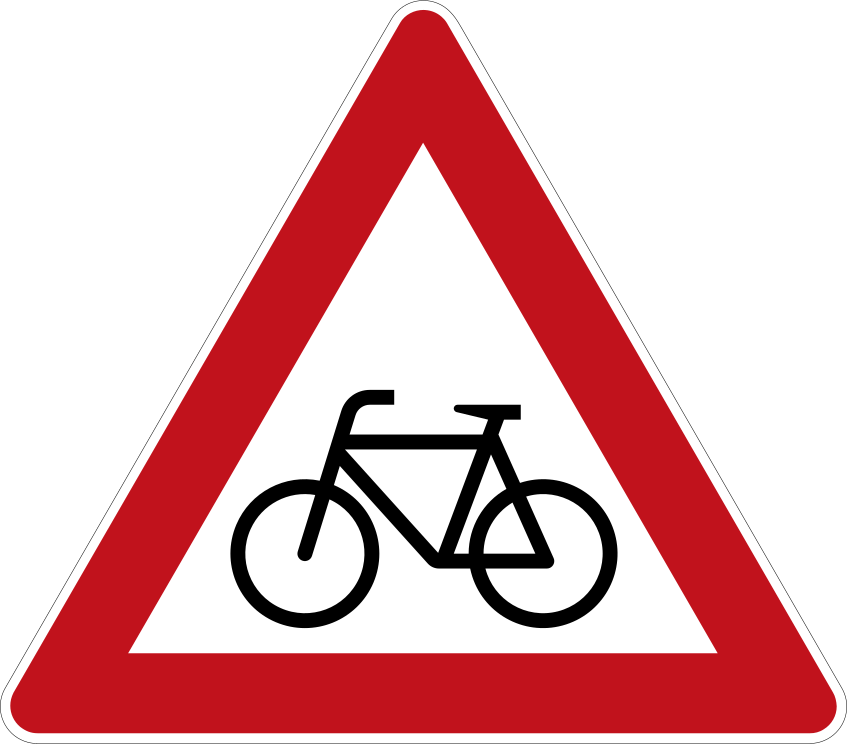
Two-Wheelers & Pedestrians
When you meet two-wheelers or pedestrians coming the other way, leave at least 1 m of side clearance in built-up areas and 1.5 m outside them
- 1Auvergne-Rhône-AlpesLyonMetropolitan8.3M
- 2Bourgogne-Franche-ComtéDijonMetropolitan2.8M
- 3BretagneRennesMetropolitan3.5M
- 4Centre-Val de LoireOrléansMetropolitan2.6M
- 5CorseAjaccioMetropolitan0.4M
- 6Grand EstStrasbourgMetropolitan5.5M
- 7Hauts-de-FranceLilleMetropolitan6.0M
- 8Île-de-FranceParisMetropolitan12.6M
- 9NormandieRouenMetropolitan3.4M
- 10Nouvelle-AquitaineBordeauxMetropolitan6.2M
- 11OccitanieToulouseMetropolitan6.2M
- 12Pays de la LoireNantesMetropolitan4.0M
- 13Provence-Alpes-Côte d'AzurMarseilleMetropolitan5.3M
- 14GuadeloupeBasse-TerreOverseas0.4M
- 15GuyaneCayenneOverseas0.3M
- 16La RéunionSaint-DenisOverseas0.9M
- 17MartiniqueFort-de-FranceOverseas0.4M
- 18MayotteMamoudzouOverseas0.3M
Driving laws are national (Code de la route). One local variation: the traffic authority can set 90 km/h instead of 80 km/h on the two-way roads it manages. License applications go through ANTS.
Myth: Priorité à droite applies at every junction
Fact: It applies only where a junction has no signs, no traffic lights and no officer directing traffic. At a Stop or 'Cédez le passage' sign you give way to traffic from both right and left.
Myth: French motorways are free to use
Fact: More than 90% of French motorways are run by 20 concession companies and are tolled, close to 9,200 km. Motorways that are not under concession are toll-free.
Myth: You must carry a breathalyzer (éthylotest) in your car
Fact: Carrying an éthylotest is not compulsory, so there is no fine for not having one. The blood alcohol limits still apply: 0.5 g/L, or 0.2 g/L on a probationary license.
Myth: Crit'Air vignettes are only needed in Paris
Fact: As of 2025, there are 25 ZFEs in mainland France. Only Paris and Lyon are legally required to restrict the most polluting vehicles, because they still regularly exceed air-quality limits; elsewhere the local authority decides which vehicles are restricted.
Speeding 50+ km/h becomes criminal offense
Since December 2025, exceeding the speed limit by 50 km/h or more is classified as a délit routier (criminal road traffic offense), not just a contravention. Only Paris and Lyon are required to enforce ZFE restrictions.
Permis B age lowered to 17
Since January 2024, the minimum age for the permis B (car license) was lowered from 18 to 17 years. Motorcycles now require a contrôle technique. Speeding under 5 km/h over no longer costs points.
License retention for phone use
Under decree no. 2020-605, police can retain the license on the spot when a driver holding a phone commits another listed offense at the same time; a suspension of up to six months can follow. This comes on top of the €135 fine and 3-point deduction.
80 km/h on two-way roads
On 1 July 2018 the speed limit on two-way roads without a central divider was reduced from 90 km/h to 80 km/h.
How France Compares Globally
France's driving regulations compared to other major countries, data compiled from official government sources
StrictestIn betweenMost lenientBAC limit and minimum age
| Parameter | France | Germany | Spain | UK | USA |
|---|---|---|---|---|---|
| BAC Limit | 0.05% | 0.05% | 0.05% | 0.08% | 0.08% |
| Min. Age (Car) | 17 | 18 | 18 | 17 | — |
| Highway Speed | 130 km/h | No limit* | 120 km/h | 112 km/h | Set by state |
| Test Questions | 40 | 30 | 30 | 50 | — |
| Road Deaths/yr | 3,263 | 2,832 | 1,775 | 1,602 (GB) | 39,254 |
| Deaths/100K | ~4.9 | ~3.4 | ~3.6 | ~2.4 (GB) | ~11.5 |
BAC Limit
France: 0.05%Germany: 0.05%Spain: 0.05%UK: 0.08%USA: 0.08%Min. Age (Car)
France: 17Germany: 18Spain: 18UK: 17USA: —Highway Speed
France: 130 km/hGermany: No limit*Spain: 120 km/hUK: 112 km/hUSA: Set by stateTest Questions
France: 40Germany: 30Spain: 30UK: 50USA: —Road Deaths/yr
France: 3,263Germany: 2,832Spain: 1,775UK: 1,602 (GB)USA: 39,254Deaths/100K
France: ~4.9Germany: ~3.4Spain: ~3.6UK: ~2.4 (GB)USA: ~11.5
France
Same as Germany (0.05%) and Spain (0.05%). Lower than the UK and USA (0.08%; Scotland and Utah 0.05%). Novice drivers: 0.02%.
Lowered from 18 to 17 in January 2024. Same as the UK (17). Germany: 18, or 17 with accompanied driving (BF17). Spain: 18.
Standard autoroute limit. Reduced to 110 in rain and for novice drivers. Germany has no general Autobahn limit, only an advisory speed of 130 km/h.
~4.9 per 100K. Higher than Germany (3.4), Spain (3.6) and Great Britain (2.4). The USA is far higher at 11.5/100K.
Road deaths: France 3,263 (ONISR 2025, mainland), Germany 2,832 (Destatis 2025), Spain 1,775 (DGT 2025), UK 1,602 (DfT 2024, Great Britain only), USA 39,254 (NHTSA 2024). Deaths per 100,000 are for the same years and areas (GB = Great Britain, without Northern Ireland). BAC limits: France/Germany/Spain 0.05%, UK 0.08% (Scotland 0.05%), USA 0.08% (Utah 0.05%). *Germany has no general motorway limit; 130 km/h is the advisory speed. The USA has no national speed limit: each state sets its own., means no single national figure.
Primary Sources
Verification Methodology
The facts on this page are checked against official sources. Our process:
- 1Rules and figures are taken from official French sources: Service-Public.fr, the Sécurité routière, ONISR, INSEE and the ministries concerned
- 2Figures for other countries come from their own official bodies (Destatis, DGT, DfT, NHTSA) and the European Commission
- 3Claims we could not confirm in an official source were removed
- 4Page last checked on November 17, 2026
If you find an error, please contact us so we can correct it immediately.
Frequently Asked Questions
How much does a driving license cost in France?
There is no fixed price: each driving school sets its own. The Sécurité routière puts the average cost of driving-school preparation at €1,200, depending on how many hours of training you need. On top of that, each attempt at the theory exam (ETG) costs €30. Registration, the practical test and the license application through ANTS are free.
What is the Code de la route exam format?
The épreuve théorique générale (ETG), commonly called the Code de la route exam, is a multiple-choice paper of 40 questions; you need at least 35 correct answers (87.5%) to pass. You sit it at an approved exam center (La Poste, SGS, Dekra, Pearson VUE or Bureau Veritas) for €30, due again at every attempt. The result is valid for 5 years.
What are the speed limits in France?
Autoroute: 130 km/h (110 in rain, 110 for novice drivers). Dual carriageway: 110 km/h (100 in rain, 100 novice). Two-way roads without a central divider: 80 km/h (90 where the local authority has set it). Built-up areas: 50 km/h. In fog with visibility under 50m, the limit is 50 km/h on all roads.
What is the BAC (blood alcohol) limit in France?
The general limit is 0.5 g/L (0.05% BAC). For novice drivers (permis probatoire, first 3 years) and drivers of public-transport vehicles, the limit is 0.2 g/L. Between 0.5–0.8 g/L: €135 fine + 6 points. Above 0.8 g/L: criminal offense with up to €9,000 fine, 6 points, license suspension, and up to 3 years in prison.
What is the permis probatoire?
All new license holders enter a probationary period (permis probatoire): 3 years normally, or 2 years if you completed conduite accompagnée (AAC). You start with 6 points (out of 12) and gain 2 per clean year (3 with AAC). Taking the optional 7-hour formation complémentaire between the 6th and 12th month shortens the probation to 2 years, or 1 year and 6 months after AAC. During this period, lower speed limits apply and the BAC limit is 0.2 g/L. Losing 3+ points during the probationary period requires a mandatory awareness course.
How does the permis à points system work?
France uses a 12-point license system. New drivers start with 6 points and build up to 12 over 3 years (2 with AAC). Points are deducted for offenses, the more serious the offense, the more points lost (1–6 per offense, max 8 per incident). Losing all points invalidates the license. You can recover up to 4 points by attending a voluntary awareness course (once per year, about €200 on average). Points are automatically restored after 2–3 offense-free years.
What is conduite accompagnée (AAC)?
Conduite accompagnée (Apprentissage Anticipé de la Conduite) allows young people to start learning to drive from age 15. After completing initial auto-école training (20h minimum), the learner drives with an accompanying person (at least 5 years' license, no serious offenses) for at least 1 year and 3,000 km. Benefits: you can take the practical test at 17, the probationary period is shorter (2 years instead of 3) and, according to the Sécurité routière, it reduces accidents among novice drivers.
Do I need a Crit'Air vignette?
If you plan to drive in a ZFE (Zone à Faibles Émissions) with restrictions, such as Paris or Lyon, you need a Crit'Air vignette. It costs €3.85 including postage and classifies your vehicle by emissions (0 to 5, plus unclassified). Order it from certificat-air.gouv.fr. Driving in a ZFE without the correct vignette: €68 fine.
Are French motorways tolled?
Most of them are. More than 90% of French motorways are run by 20 concession companies (sociétés concessionnaires d'autoroutes), which charge tolls on close to 9,200 km. Motorways that are not under concession are toll-free.
What equipment must I carry in my car in France?
Mandatory items: a reflective vest (gilet jaune) accessible from inside the vehicle and a warning triangle (triangle de signalisation). Fine: up to €38 if you cannot show them at a check. Carrying an éthylotest (breathalyzer) is not compulsory, so there is no fine for not having one. Recommended but not mandatory: first aid kit, fire extinguisher, spare bulbs.
Can I drive in France with a foreign license?
EU/EEA licenses can be used in France for as long as they remain valid. Visitors from outside the EU/EEA can drive on a short stay with their valid license, which must be in French or accompanied by an international driving permit or an official translation. If you settle in France, a non-EU license is recognized for 1 year, during which you can apply to exchange it. Whether it can be exchanged depends on the issuing country; if it cannot, you must pass the French driving test.
What is the contrôle technique?
The contrôle technique is a mandatory vehicle inspection. For private cars: first inspection at 4 years, then every 2 years. The inspector checks 133 points covering brakes, steering, lights, emissions, and safety. Vehicles failing critical items (défaillances critiques) cannot be driven until repaired. Since 2024, motorcycles, scooters and 50 cc mopeds also require a contrôle technique, every 3 years. Prices vary from one center to another.
What happens if I lose all my points?
If your permis à points reaches 0 points, your license is invalidated. You must surrender it within 10 days. You must wait 6 months before reapplying (1 year for repeat offenders). You must pass a medical and psychological examination, pass the Code de la route (ETG) again, and for those who held their license less than 3 years, also retake the practical test.
How do early payment discounts work for fines?
Most traffic fines (amendes forfaitaires) offer three tiers: minorée (reduced, pay within 15 days or 30 days online), forfaitaire (standard amount, pay within 45 days), and majorée (increased, after 45 days). For example, a €135 forfaitaire fine becomes €90 if paid early or €375 if paid late.
Is the minimum driving age really 17 now?
Yes, since January 2024, the minimum age to obtain the permis B and drive solo was lowered from 18 to 17. With conduite accompagnée (AAC), supervised driving can begin from age 15. This change aligns France with several other European countries including the UK (17) and Germany (17 with BF17).
Cite This Page
Use the following citations when referencing this article in academic papers, journalism, or reports.
APA 7th Edition
AutoviaTest. (2026, March 23). France driving license facts 2026 — Code de la route, auto-école, fees & speed limits. https://autoviatest.com/en/driving-test/france/facts
MLA 9th Edition
AutoviaTest. "France Driving License Facts 2026 — Code de la Route, Auto-école, Fees & Speed Limits." AutoviaTest, 23 Mar. 2026, autoviatest.com/en/driving-test/france/facts.
Chicago 17th Edition
AutoviaTest. "France Driving License Facts 2026 — Code de la Route, Auto-école, Fees & Speed Limits." Last modified November 17, 2026. https://autoviatest.com/en/driving-test/france/facts.
Ready to Pass Your French Theory Test?
Practice with 1,600+ exam-style Code de la route questions and detailed explanations.