
 Complete guide 2026Updated November 2026
Belgian Driving License 2026 The Complete Guide
Belgium driving license guide (2026): theory test format (50 questions, 41 to pass, 82%), exam and license fees, filiere libre vs driving school, 0.05% BAC (0.02% professional), three regions (Flanders, Wallonia, Brussels), priority from the right, and LEZ zones.
Table of Contents
Theory Test
50 multiple-choice questions on a computer at an approved exam center.
Must score 41/50 (82%) to pass. Questions cover traffic signs, priority rules, speed limits, alcohol regulations, and hazard perception. The exam language depends on the region: Dutch in Flanders, French in Wallonia (German in Eupen), and Dutch or French in Brussels. Other languages are available through a paid interpreter or audio translation. Fee: EUR 19 in Flanders and Brussels, EUR 17 in Wallonia. You can take it from age 17. After two failed attempts, you must complete 12 hours of theory lessons at an approved driving school before you can sit the exam again.
Total Cost
Costs depend on the training path.
Official fees: theory exam EUR 17-19, practical exam EUR 42-51, and about EUR 25 each for the provisional license and the license card in Flanders (the amount varies by municipality). Driving schools (auto-ecole/rijschool) set their own prices. With filiere libre (free guide system) you pay only the exam and license fees, but you need a guide who has held a B license for at least 8 years.
Road Deaths
464 road deaths in 2025, or 39 per million inhabitants, below the EU average of 43 (European Commission, final figures).
Statbel counted 470 deaths in 2024 and 501 in 2023. Deaths are down 28% compared with 2019, and the Commission lists Belgium among the five member states on course to halve road deaths by 2030.
BAC Limits
General limit: 0.05% BAC (0.5 g/L blood).
Professional drivers (buses, trucks, taxis): 0.02% BAC since 2015. Immediate fines start at EUR 197 for 0.05-0.08% and rise from 0.08%. Driving ban possible above 0.08%.
Three Regions
Belgium has three regions (Flanders, Wallonia, Brussels-Capital), and some traffic rules differ between them.
The default limit in built-up areas is 50 km/h in Flanders and Wallonia and 30 km/h in the Brussels-Capital Region since 1 January 2021. Each region manages its own driving exam and license rules.
Global Context
Belgium's road death rate (39 per million inhabitants in 2025) is below the EU average (43).
With filiere libre you can learn to drive with a family member as guide instead of a paid instructor. Priority from the right applies at junctions without signs or signals. Low Emission Zones operate in Brussels, Antwerp, and Ghent.
Belgium Road Safety: 3-Year Trend (2023–2025)
Belgium recorded 464 road deaths in 2025 (European Commission, final figures), 1% fewer than in 2024 and 28% fewer than in 2019. Statbel counted 470 deaths in 2024 and 501 in 2023. The EU aims to halve road deaths by 2030 and to come close to zero by 2050.
Year-over-year changes
Deaths per 100,000 Population
 France4.9
- Belgium3.9
 Netherlands3.4
 Germany3.4
 Great Britain2.4
Source: European Commission, final road fatality figures for 2025 (published per million inhabitants). Great Britain: 2024 (Department for Transport).
Belgian Theory Test Format
Computer-based theory test taken at approved exam centers in each region
The Belgian driving theory test consists of 50 multiple-choice questions taken on a computer at an approved exam center. You have 15 seconds per question (about 30 minutes in total). To pass, you must answer at least 41 out of 50 correctly (82%). The test covers traffic signs, priority rules (including the Belgian priority from the right), speed limits, alcohol regulations, vehicle safety, and hazard perception scenarios. The exam language depends on the region: Dutch in Flanders, French in Wallonia (German in Eupen), and Dutch or French in Brussels. Other languages are available through a paid interpreter or audio translation. You may take the exam from age 17. The theory certificate is valid for 3 years.
Questions
Duration
Pass Mark
Test Fee
What the Theory Test Covers
- Traffic signs, signals & road markings
- Priority from the right rule (priorite de droite)
- Speed limits by region and road type
- Overtaking, lane discipline & roundabouts
- Pedestrian crossings & cyclist safety zones
- Vehicle inspection (controle technique) requirements
- Seatbelt and child restraint regulations
- Tire and lighting requirements
- Emergency equipment (triangle, vest, fire extinguisher)
- Environmental rules and LEZ zones
- Hazard perception and situational awareness
- Alcohol and drug driving penalties
- Motorway driving rules and tunnel safety
- Tram priority and right-of-way
- Parking regulations and blue zones
How to Get Your Belgian Driving License
From theory test to practical exam, the complete process
- 1
Pass the Theory Test
Take the 50-question computer-based theory exam at an approved exam center
Available from age 17. Fee: EUR 17-19. Must score 41/50 (82%). Language: NL in Flanders, FR in Wallonia (DE in Eupen), NL or FR in Brussels; other languages with a paid interpreter. Theory certificate valid for 3 years. After two failed attempts: 12 hours of theory lessons at an approved driving school before the next attempt.
- 2
Choose Your Training Path
Select between driving school (auto-ecole) or filiere libre (free guide)
Driving school: lessons with a professional instructor, at prices set by each school. Filiere libre: learn with a guide who has held a B license for at least 8 years. Each path has a different provisional license.
- 3
Obtain a Provisional License
Apply for your provisional driving license (permis provisoire / voorlopig rijbewijs)
With driving school: 18-month provisional (M18), after at least 20 hours of lessons at an approved school. Filiere libre: 36-month provisional (M36). Fee: about EUR 25 in Flanders (varies by municipality). If your provisional license has expired, you can get a 12-month provisional (M12) with a valid theory pass and at least 6 hours of lessons at an approved driving school, taken after the expiry. In Flanders and Wallonia this is possible once, with a guide named on the license. You can also take the practical exam with the driving school instead.
- 4
Practice Driving
Complete the minimum practice period before the practical exam
Flanders: at least 5 months of practice. Wallonia: at least 3 months. Brussels: 9 months with a guide only, 6 months combined with 14 hours at a driving school, or 3 months after 20 hours at a school.
- 5
Pass the Practical Driving Test
Take the on-road practical exam at an approved exam center
At least 40 minutes of driving in real traffic. Tested on vehicle control, traffic rules, hazard awareness. Fee: EUR 42-51. Must be at least 18.
- 6
Receive Your Driving License
Collect your Belgian driving license (permis de conduire / rijbewijs)
EU-format credit-card license. Category B valid for 10 years. Drivers who have held a B license for less than 2 years face stricter penalties for certain offenses.
Belgian Driving License Fees
Costs depend heavily on your training path, driving school vs filiere libre (free guide)
| Fee | Amount |
|---|---|
| Theory exam fee | EUR 17-19 |
| Provisional license fee | ~EUR 25 (Flanders) |
| Practical exam fee | EUR 42-51 |
| License issuance fee | ~EUR 25 (Flanders) |
| Driving school lessons (if chosen) | Set by each school |
With filiere libre, the exam and license fees above are the only compulsory costs. Driving schools set their own prices. The provisional license and license card amounts are those published by Flanders and vary by municipality. Exam fees are charged per attempt.
See how ready you are with exam-style mock questions
Try Free QuestionsMinimum age by license category
- AM — Mopeds up to 45 km/hTheory test required16years
- A1 — Motorcycles up to 125cc / 11 kWProgressive access18years
- A2 — Motorcycles up to 35 kWProgressive access20years
- A — Motorcycles unlimitedDirect or progressive access24years
- B — Cars up to 3,500 kg, max 8+1 seatsMost common category18years
- C — Trucks over 3,500 kgRequires CAP (professional competence)21years
- D — Buses over 8+1 seatsRequires CAP24years
- BE — Car with heavy trailerTrailer over 750 kg18years
- G — Agricultural vehiclesRural/agricultural use16years
License Validity Periods
| License / age | Validity |
|---|---|
| AM (Moped)Administrative renewal | 10 years |
| A / A1 / A2 (Motorcycle)Administrative renewal | 10 years |
| B (Car)Administrative renewal, no retest | 10 years |
| C / D (Commercial)Medical exam + CAP required for renewal | 5 years |
Driving Bans & Repeat Offenses
- Courts can impose driving bans from 8 days to 5 years
- A new conviction within 3 years for certain serious offenses means a ban of at least 3 months
- The minimum rises to 6 months, then 9 months, for further repeat offenses
- Getting the license back then requires medical and psychological examinations, plus theory and practical exams or a course
- The license can be withdrawn on the spot for serious offenses, such as speeding more than 20 km/h over the limit in a built-up area
Filiere Libre (Free Guide System)
- Learn to drive with a personal guide instead of a driving school
- Guide must have held a B license for at least 8 years
- 36-month provisional license (vs 18 months with driving school)
- Guide must not have had license withdrawn in past 3 years
- No driving-school lessons required: you pay only the exam and license fees
Speed Limits in Belgium
Varies by region, Flanders, Wallonia, and Brussels each set their own urban limits
Belgium's speed limits differ by region. In built-up areas the default is 50 km/h in Flanders and Wallonia and 30 km/h in the Brussels-Capital Region (since 1 January 2021). Zones marked with zone-30 signs, including school zones, are limited to 30 km/h. Outside built-up areas the limit is 70 km/h in Flanders and Brussels and 70-90 km/h in Wallonia (depending on the road). Motorways and roads with at least two lanes in each direction separated by a central reservation have a 120 km/h limit.
| Road Type | Flanders | Wallonia | Brussels | Note |
|---|---|---|---|---|
| Built-up area (default) | 50* | 50 | 30 | Brussels: 30 km/h since 1 January 2021 |
| Outside built-up area | 70 | 70-90 | 70 | Standard national roads |
| Dual carriageway (2x2+) | 120 | 120 | 120 | Central reservation required |
| Motorway (autoroute/autosnelweg) | 120 | 120 | 120 | Nationwide limit |
Built-up area (default)
Flanders: 50*Wallonia: 50Brussels: 30Brussels: 30 km/h since 1 January 2021
Outside built-up area
Flanders: 70Wallonia: 70-90Brussels: 70Standard national roads
Dual carriageway (2x2+)
Flanders: 120Wallonia: 120Brussels: 120Central reservation required
Motorway (autoroute/autosnelweg)
Flanders: 120Wallonia: 120Brussels: 120Nationwide limit
Posted signs always take precedence over default limits. Zones marked with zone-30 signs, including school zones, are limited to 30 km/h. Towing with a trailer: max 120 km/h on motorways (if trailer+car combined weight allows).
Traffic Fines & Penalties
Belgian traffic fines include immediate fines (perception immediate) and court-imposed penalties
Belgium uses immediate fines (onmiddellijke inning / perception immediate) for common violations. Paying one normally closes the case, unless the public prosecutor decides within a month to prosecute. More serious offenses go to the police court (tribunal de police / politierechtbank). Speeding costs EUR 58 for the first 10 km/h over the limit, then EUR 7 per extra km/h on motorways and, in Flanders, EUR 12 per extra km/h in built-up areas, zone 30, school zones and residential areas. These amounts apply since 1 July 2026. Immediate fines for drink-driving start at EUR 197. Repeat offenses within three years carry heavier penalties.
Up to EUR 100EUR 101–300Over EUR 300
| Violation | Fine (EUR) | Court Action | Additional |
|---|---|---|---|
| Speeding 1-10 km/h over (built-up) | EUR 58 | No | Per offense |
| Speeding 11-30 km/h over (built-up) | EUR 58 + EUR 12/km/h | No | Flanders: per extra km/h |
| Speeding over 30 km/h (built-up) or 40 km/h (elsewhere) | EUR 80-4,000 | Yes | Driving ban of 8 days to 5 years |
| BAC 0.05-0.08% | EUR 197 | No | 12hr driving ban |
| BAC 0.08-0.12% | EUR 462+ | Yes | 12hr ban + court |
| BAC above 0.12% | EUR 1,600-16,000 | Yes | Court fine; driving ban possible |
| Running a red light | EUR 191 | No | Perception fine |
| Using phone while driving | EUR 191 | No | Handheld prohibited |
| Not wearing seatbelt | EUR 128 | No | Per person |
| Ignoring priority from right | EUR 128 | Possible | Serious offense |
| Driving without valid license | EUR 1,600-16,000 | Yes | Criminal offense |
| Entering LEZ without permission | EUR 150-350 | No | Varies by zone |
- EUR 58Per offense
Speeding 1-10 km/h over (built-up)
No - EUR 58 + EUR 12/km/hFlanders: per extra km/h
Speeding 11-30 km/h over (built-up)
No - EUR 80-4,000Driving ban of 8 days to 5 years
Speeding over 30 km/h (built-up) or 40 km/h (elsewhere)
Yes - EUR 19712hr driving ban
BAC 0.05-0.08%
No - EUR 462+12hr ban + court
BAC 0.08-0.12%
Yes - EUR 1,600-16,000Court fine; driving ban possible
BAC above 0.12%
Yes - EUR 191Perception fine
Running a red light
No - EUR 191Handheld prohibited
Using phone while driving
No - EUR 128Per person
Not wearing seatbelt
No - EUR 128Serious offense
Ignoring priority from right
Possible - EUR 1,600-16,000Criminal offense
Driving without valid license
Yes - EUR 150-350Varies by zone
Entering LEZ without permission
No
Immediate fines are fixed amounts. If a fine is contested or left unpaid, the case can go to the police court, where the fine can be higher. An administrative surcharge (EUR 8.84 in the law, indexed each year) is added to every immediate fine. The fine for drink-driving at 0.05-0.08% is doubled for a repeat offense within three years.
Know These Rules Before Your Theory Test
Traffic fines, speed limits, and priority rules are heavily tested in the Belgian theory exam. Practice with real exam-style questions.
How the road worksMandatory, with a penaltyMakes it easier
Drive on the Right
Belgium drives on the right: keep as close as possible to the right-hand edge of the carriageway.
Overtaking is on the left.
Priority from the Right
At junctions without signs or signals, you must give way to drivers coming from the right (priorite de droite/voorrang van rechts).
The rule does not apply on roundabouts.
BAC Limits
General limit: 0.05% BAC (0.5 g/L).
Professional drivers: 0.02% BAC. Immediate fines start at EUR 197 for 0.05-0.08%; from 0.08% the law sets a court fine of EUR 1,600-16,000. Immediate 12-hour driving ban on the spot.
Tram Priority
Trams always have priority over other traffic in Belgium, except when a traffic light or police officer indicates otherwise.
You must yield to trams when they are entering or leaving stops. Trams are overtaken on the right, even when stopped. At a stop without a boarding island, you must stop to let passengers get on and off.
Low Emission Zones (LEZ)
LEZ zones operate in Brussels, Antwerp, and Ghent.
Vehicles must meet minimum emission standards to enter. Registration required for foreign vehicles. Fines: EUR 150-350 per violation. Check eligibility before driving in these cities.
Controle Technique (Vehicle Inspection)
Periodic vehicle inspection (controle technique/technische keuring) is mandatory.
A car has its first inspection when it is 4 years old. In Flanders, cars are then inspected every 2 years (rule in force since 1 September 2026); in Wallonia and Brussels the standard interval is 1 year. An inspection is also required before a used car is registered to a new owner.
Mobile Phone Ban
Handheld phone use is prohibited while driving.
Fine: EUR 191. Hands-free systems and Bluetooth are permitted. The prohibition applies even when stopped at traffic lights or in traffic jams.
Mandatory Equipment
You must carry: warning triangle, reflective vest (one per occupant recommended), fire extinguisher (at least 1 kg of BC or ABC powder, mandatory for all cars), and first aid kit (mandatory).
Insurance green card must be available.
Seatbelts & Child Seats
Seatbelts mandatory for all occupants in all seats.
Children under 1.35m must use an appropriate child restraint system. Children under 18 must not travel in a seat fitted with an active front airbag while in a rear-facing child seat. Fine: EUR 128 per person.
Common Road Hazards in Belgium
464 road deaths in 2025, three situations to watch for on Belgian roads

Priority from the Right Junctions
At junctions without signs or signals, drivers coming from the right have priority. The rule does not apply on roundabouts
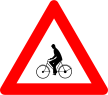
Overtaking Cyclists
When overtaking a cyclist you must leave at least 1 m in built-up areas and 1.5 m outside them
Trams
Trams have priority over other road users. They are overtaken on the right, and at a stop without a boarding island you must stop to let passengers get on and off
Belgium's Three Regions
Driving license administration is managed regionally, Flanders, Wallonia, and Brussels-Capital each have their own transport regulations
- 1FlandersNL (+ FR/DE/EN)
- 2WalloniaFR, DE (+ EN/NL)
- 3Brussels-CapitalNL, FR (+ DE/EN)
Belgium has three regions. The exam center in Eupen, in the German-speaking part of Wallonia, offers the theory test in German. Driving exam rules differ by region (for example, the minimum practice period). Always check the current rules for your region.
Myth: The speed limit in Belgian cities is always 50 km/h
Fact: Not everywhere. The Brussels-Capital Region has had a default limit of 30 km/h in built-up areas since 1 January 2021. In Flanders and Wallonia the default is 50 km/h, and zones marked with zone-30 signs, including school zones, are limited to 30 km/h. Always check posted signs.
Myth: You must use a driving school to get your license in Belgium
Fact: Belgium offers the filiere libre (free guide) system, in which you learn to drive with a personal guide (a family member or friend) who has held a B license for at least 8 years. No driving-school lessons are required on this path, and the provisional license is valid for 36 months instead of 18.
Myth: Priority from the right only applies to roads of equal size
Fact: In Belgium, priority from the right (priorite de droite) applies at ALL uncontrolled intersections regardless of road size. Even a vehicle emerging from a small side street has priority over one on a wider road, UNLESS signs, markings, or traffic lights indicate otherwise.
Myth: Every driver needs a Viapass vignette on Belgian motorways
Fact: Viapass is not a vignette. It is a kilometer charge, and it applies only to vehicles over 3.5 tonnes used for the road transport of goods.
Myth: You can drive in any Belgian city without restrictions
Fact: Brussels, Antwerp, and Ghent operate Low Emission Zones (LEZ) that restrict older, high-polluting vehicles. You must register your foreign vehicle online before entering. Non-compliant vehicles face fines of EUR 150-350. Check the LEZ requirements for your vehicle before traveling.
Higher traffic fines
Immediate fines rose on 1 July 2026: EUR 58 instead of 53 for speeding up to 10 km/h over the limit, EUR 197 instead of 179 for a BAC of 0.05-0.08%, EUR 191 instead of 174 for third-degree offenses such as running a red light. New court fine ranges in the Road Traffic Act took effect on 1 September 2026.
Flanders: car inspection every 2 years
Since 1 September 2026, cars in Flanders are inspected every 2 years after the first inspection at 4 years. In Wallonia and Brussels the standard interval remains 1 year.
Flanders: 5-month minimum practice period
Since 1 March 2024, learner drivers in Flanders must have practiced on public roads for at least 5 months before taking the practical exam.
E-scooter regulations introduced
New rules for electric scooters from 1 July 2022: minimum age 16, maximum speed 25 km/h, and riders follow the rules for cyclists, so no riding on pavements.
Brussels adopts 30 km/h as the default limit
On 1 January 2021 the Brussels-Capital Region lowered its default speed limit in built-up areas to 30 km/h. Flanders and Wallonia keep 50 km/h.
How Belgium Compares
Belgium's driving regulations compared to neighboring countries, data compiled from official government sources
StrictestIn betweenMost lenientBAC limit and minimum age
| Parameter | Belgium | France | Netherlands | Germany | UK |
|---|---|---|---|---|---|
| BAC Limit | 0.05% | 0.05% | 0.05% | 0.05% | 0.08% |
| Min. Age (Car) | 18 | 17 | 18* | 18* | 17 |
| Motorway Speed | 120 | 130 | 100/130 | No limit* | 112 |
| Test Questions | 50 | 40 | 50 | 30 | 50 |
| Road Deaths (2025) | 464 | 3,263 | 612 | 2,832 | 1,602† |
| Deaths/100K | 3.9 | 4.9 | 3.4 | 3.4 | 2.4† |
BAC Limit
Belgium: 0.05%France: 0.05%Netherlands: 0.05%Germany: 0.05%UK: 0.08%Min. Age (Car)
Belgium: 18France: 17Netherlands: 18*Germany: 18*UK: 17Motorway Speed
Belgium: 120France: 130Netherlands: 100/130Germany: No limit*UK: 112Test Questions
Belgium: 50France: 40Netherlands: 50Germany: 30UK: 50Road Deaths (2025)
Belgium: 464France: 3,263Netherlands: 612Germany: 2,832UK: 1,602†Deaths/100K
Belgium: 3.9France: 4.9Netherlands: 3.4Germany: 3.4UK: 2.4†
Belgium
Same as France, Netherlands, and Germany (0.05%). UK is higher at 0.08% (0.05% in Scotland).
France and the UK from 17. The Netherlands and Germany: 18, or 17 with accompanied driving.
Netherlands 100 km/h by day on most motorways, up to 130 km/h otherwise. France 130 km/h. Germany has sections with no limit (Autobahn). UK 70 mph (112 km/h).
39 per million inhabitants. France 3,263 (49), Netherlands 612 (34), Germany 2,832 (34). Great Britain: 1,602 in 2024 (24).
Road deaths and rates for Belgium, France, the Netherlands and Germany: European Commission, final figures for 2025 (published per million inhabitants: 39, 49, 34 and 34). The Netherlands figure is the count reported to the Commission; Statistics Netherlands (CBS) counts 759 road deaths for 2025. * The Netherlands and Germany: 18 to drive alone, 17 with accompanied driving. Germany has no general motorway limit; 130 km/h is the advisory speed. UK motorway limit: 70 mph (112 km/h). † Great Britain, 2024: 1,602 deaths, 24 per million inhabitants (Department for Transport).
Primary Sources
Verification Methodology
The facts on this page were checked against official sources. Our process:
- 1Rules and fines taken from Belgian federal and regional legislation
- 2Exam format, fees and training rules taken from the official pages of Flanders, Wallonia and the Brussels-Capital Region
- 3Road safety figures taken from Statbel and the European Commission
- 4Last checked on November 17, 2026
If you find an error, please contact us so we can correct it.
Frequently Asked Questions
How much does a driving license cost in Belgium?
It depends on your training path. The official fees are: theory exam EUR 17-19, practical exam EUR 42-51, and about EUR 25 each for the provisional license and the license card in Flanders (the amount varies by municipality). With filiere libre (free guide) these are the only compulsory costs. With a driving school (auto-ecole/rijschool) you also pay for lessons; each school sets its own prices.
What is the Belgian theory test format?
50 multiple-choice questions on a computer at an approved exam center. You have about 30 minutes. You must answer at least 41 correctly (82%) to pass. Topics include traffic signs, priority rules, speed limits, alcohol regulations, and hazard perception. The exam language depends on the region: Dutch in Flanders, French in Wallonia (German in Eupen), and Dutch or French in Brussels. Other languages are available through a paid interpreter or audio translation. Fee: EUR 17-19 per attempt. Theory certificate valid for 3 years. If you fail twice, you must complete 12 hours of theory lessons at an approved driving school before your next attempt.
What is the filiere libre system?
The filiere libre (free guide / vrije begeleiding) allows you to learn to drive with a personal guide instead of a professional driving school. Your guide must hold a B license for at least 8 years and not have had their license withdrawn in the past 3 years. You receive a 36-month provisional license (vs 18 months with a driving school). No driving-school lessons are required on this path, so you pay only the exam and license fees.
What are the speed limits in Belgium?
Built-up areas: 50 km/h in Flanders and Wallonia, 30 km/h in the Brussels-Capital Region since 1 January 2021. Zones marked with zone-30 signs, including school zones: 30 km/h. Outside built-up areas: 70 km/h in Flanders and Brussels, 70-90 km/h in Wallonia. Motorways and divided roads with at least two lanes in each direction: 120 km/h. Posted signs take precedence over default limits.
What is the blood alcohol limit in Belgium?
General limit: 0.05% BAC (0.5 g/L blood). Professional drivers (buses, trucks, taxis): 0.02% BAC since 2015. Immediate fines: EUR 197 for 0.05-0.08% and EUR 462 or more for 0.08-0.12%. For 0.08% and above the law sets a court fine of EUR 1,600-16,000, and a driving ban is possible. Immediate 12-hour driving ban on the spot.
What is priority from the right?
At uncontrolled intersections (no traffic lights, stop signs, yield signs, or priority road markings), vehicles coming from the right have priority (priorite de droite / voorrang van rechts). This applies regardless of road size, even a small side street has priority. Exceptions: roundabouts, priority roads (marked with diamond sign), and when signs indicate otherwise.
What are the emergency numbers in Belgium?
112, ambulance and fire brigade (EU-wide emergency number). 101, police. 116 000, Child Focus (missing children). 070 245 245, Poison Center. All four are free and answer 24 hours a day.
Do I need a vignette or toll to drive in Belgium?
Belgium's road charge, Viapass, is a kilometer charge for vehicles over 3.5 tonnes used for the road transport of goods. It does not apply to passenger cars.
What is a Low Emission Zone (LEZ)?
Brussels, Antwerp, and Ghent operate LEZ zones restricting older, polluting vehicles. You must register your foreign vehicle online before entering. Non-compliant vehicles face fines of EUR 150-350 per violation. Check the specific LEZ website for each city to verify if your vehicle meets the emission standards.
What is the minimum driving age in Belgium?
Theory test: from age 17. Provisional license and practical learning: from age 17 (with a guide). Practical exam and full license: from age 18. Mopeds (AM category): from age 16. Motorcycles A1 (125cc): from age 18. Trucks (C): from age 21. Buses (D): from age 24.
Cite This Page
Use the following citations when referencing this article in academic papers, journalism, or reports.
APA 7th Edition
AutoviaTest. (2026, March 27). Belgian driving license facts 2026 — theory test, fees, rules & guide. https://autoviatest.com/en/driving-test/belgium/facts
MLA 9th Edition
AutoviaTest. "Belgian Driving License Facts 2026 — Theory Test, Fees, Rules & Guide." AutoviaTest, 27 Mar. 2026, autoviatest.com/en/driving-test/belgium/facts.
Chicago 17th Edition
AutoviaTest. "Belgian Driving License Facts 2026 — Theory Test, Fees, Rules & Guide." Last modified November 17, 2026. https://autoviatest.com/en/driving-test/belgium/facts.
Ready to Pass Your Belgian Driving Test?
Practice with exam-style theory questions covering priority rules, speed limits, traffic signs, and all the topics tested in the Belgian theory exam. Available in English and French.
More Country Driving Guides
French Driving License Facts & GuideCode de la route test format, fees, speed limits, traffic fines, and everything about driving in France.Dutch Driving License 2026 — The Complete GuideCBR theory test, driving school costs, speed limits, traffic fines, and the Dutch license process.German Driving License 2026 — The Complete GuideTUV/DEKRA test format, Fahrschule costs, Autobahn rules, and the Punktekonto system.UK Driving License 2026 — The Complete GuideDVSA theory test, driving school costs, speed limits, traffic fines, and the points system.