
 Complete guide 2026Updated November 2026
Hungarian Driving License 2026 The Complete Guide
Hungary driving license guide (2026): KRESZ theory test (55 questions from a large question bank), training costs HUF 370,000–428,000 (~€960–1,100), zero BAC tolerance, penalty points system (büntetőpontok), műszaki vizsga (MOT equivalent), and the e-matrica motorway vignette system.
Table of Contents
Theory Test
The KRESZ theory test consists of 55 multiple-choice questions to be completed in 55 minutes.
You need at least 65 points to pass. Questions cover traffic signs, right-of-way rules, speed limits, and first aid. The test is computer-based and administered at KAV (Közlekedési Alkalmassági és Vizsgaközpont) examination centers.
Total Cost
The total cost of a B category license ranges from HUF 370,000 to 428,000 (~€960–1,100).
This includes driving school tuition (~HUF 319,000 for 29 lessons), theory exam fee (HUF 5,100), practical exam fee (HUF 12,200), medical examination (~HUF 7,200), and mandatory first aid course (~HUF 20,000–25,000).
Road Deaths
Hungary recorded 497 road fatalities in 2024, a rate of 5.2 per 100,000 population.
This is above the EU average. Pedestrians and cyclists account for a high proportion of victims, particularly in rural areas.
Zero BAC
Hungary enforces absolute zero tolerance (0.00% BAC) for ALL drivers.
Even trace amounts of alcohol result in penalties. Fines range from HUF 30,000 to 300,000 depending on the level. Over 0.05% BAC (0.5 g/l) is a criminal offense punishable by imprisonment up to 3 years.
Penalty Points
Hungary operates a büntetőpont (penalty point) system.
Drivers can accumulate up to 18 points before losing their license. Points range from 1 to 11 per offense. Reaching 18 points triggers mandatory license suspension and a re-examination. Each point counts for at most 3 years.
Global Context
Hungary’s road death rate (5.2/100K) is above the EU average (4.4/100K).
Zero BAC policy is among the strictest in Europe (shared with Czech Republic, Romania, Slovakia). License cost (~€1,030) is moderate. The e-matrica (motorway vignette) system is unique to Hungary among neighboring countries.
Hungary Road Safety: 3-Year Trend (2022–2024)
Hungary has seen significant improvement in road safety over recent years, with fatalities falling from 537 in 2022 to 497 in 2024. The government’s road safety strategy focuses on infrastructure upgrades, stricter enforcement of speed limits and BAC rules, and public awareness campaigns targeting vulnerable road users such as pedestrians and cyclists.
Year-over-year changes
Deaths per 100,000 Population
 Romania7.8
- Hungary5.2
 Czechia4.5
 Austria3.8
 Germany3.3
Source: European Commission Road Safety Statistics, KSH, WHO Global Status Report on Road Safety. Per-capita rates are estimates and may vary by methodology.
Hungarian Theory Test Format
Computer-based theory test administered at KAV examination centers across Hungary
The Hungarian KRESZ theory test for category B consists of 55 multiple-choice questions to be completed within 55 minutes. Questions are drawn from a comprehensive bank covering traffic signs, right-of-way rules, speed limits, vehicle safety, first aid, and environmental regulations. Each question is worth 1–2 points, with a maximum possible score of 75 points. You need at least 65 points to pass. The test is computer-based and administered at KAV centers throughout Hungary. A mandatory first aid course (elsősegélynyújtó tanfolyam) must be completed before taking the theory exam.
Questions
Duration
Pass Mark
Test Fee
What the Theory Test Covers
- Traffic signs, signals & road markings
- Right-of-way rules at intersections
- Speed limits by road type & zone
- Prohibited actions & driving violations
- Pedestrian & cyclist priority rules
- Vehicle inspection (műszaki vizsga) requirements
- Mandatory equipment (triangle, vest, first aid kit)
- Seatbelt and child restraint rules
- Tire requirements (winter tire recommendations)
- Environmental protection & emissions
- First aid procedures (elsősegély), mandatory course content
- Penalty point system (büntetőpontok)
- Alcohol & drug driving laws (zero BAC)
- Motorway rules & e-matrica vignette system
- Tram priority rules in Budapest & cities
How to Get Your Hungarian Driving License
From first aid course to jogosítvány, the complete process
- 1
Complete First Aid Course
Take the mandatory 16-hour first aid course (elsősegélynyújtó tanfolyam)
Must be completed before the theory exam. Certificate valid for 1 year. Cost: HUF 20,000–25,000. Course covers CPR, wound treatment, and accident scene management.
- 2
Get a Medical Certificate
Visit an authorized physician for a driving fitness examination
Includes vision test, general health assessment. Cost: ~HUF 7,200. Valid for specific period depending on age. Required before enrollment.
- 3
Enroll at a Driving School
Register at a licensed driving school (autósiskola)
Minimum 28 theory lessons and 29 practical driving lessons for B category. School fees: ~HUF 319,000 (29 lessons × ~11,000 HUF/lesson).
- 4
Pass the Theory Test
Take the KRESZ computer-based theory exam at a KAV center
55 questions, 55 minutes, need 65 points to pass. Fee: HUF 5,100. Retakes available after minimum 3 business days.
- 5
Complete Practical Training
Finish minimum 29 hours of practical driving lessons with your instructor
Includes city driving, rural roads, motorway familiarization, night driving, and maneuvers. Additional lessons available if needed.
- 6
Pass the Practical Driving Test
Complete the practical examination with a KAV examiner
Test covers: vehicle checks, city driving, maneuvers (parking, hill start). Duration: ~60 minutes. Fee: HUF 12,200.
- 7
Receive Your Jogosítvány
Collect your Hungarian driving license card
Issued within 8 business days. EU credit-card format. Valid throughout the European Union. Probationary period of 2 years for new drivers.
Hungarian Driving License Fees
Total cost HUF 370,000–428,000 (~€960–1,100) depending on region and driving school
| Fee | Amount |
|---|---|
| First aid course (elsősegély tanfolyam) | HUF 20,000–25,000 |
| Medical examination (orvosi alkalmassági) | ~HUF 7,200 |
| Driving school tuition (B category) | ~HUF 319,000 |
| Theory exam fee | HUF 5,100 |
| Practical exam fee | HUF 12,200 |
| License card issuance | HUF 4,000 |
| Additional practice lessons (if needed) | HUF 5,000–8,000/lesson |
| Total Typical (B category) | HUF 370,000–428,000 |
Prices vary by region, Budapest tends to be more expensive than rural areas. Additional retake fees apply for failed exams. Prices as of 2026.
See how ready you are with exam-style mock questions
Try Free QuestionsMinimum age by license category
- AM — Mopeds up to 50cc / 45 km/hElectric mopeds included15years
- A1 — Motorcycles up to 125cc / 11 kW16years
- A2 — Motorcycles up to 35 kW18years
- A — All motorcycles (unlimited)Or 2 years with A224years
- B — Cars up to 3,500 kg, max 8+1 seatsMost common category17years
- C — Trucks over 3,500 kgRequires B first21years
- D — Buses with more than 8+1 seatsRequires B first24years
- BE / CE / DE — With trailer combinationsRequires base category21years
License Validity Periods
| License / age | Validity |
|---|---|
| AM / A1 / A2 / A / BRenewed based on medical at age 40, 60, then every 2 years | Until age limit |
| C / CE (Truck)Medical exam required for each renewal | 5 years |
| D / DE (Bus)Medical + psychological exam required | 5 years |
| All (age 60+)Shorter validity for older drivers | 2 years |
Penalty Points System (Büntetőpontok)
- Maximum 18 penalty points before license suspension
- Points range from 1 to 11 per offense
- Drunk driving (any BAC): 9 points
- Speeding 20+ km/h over limit: 4–6 points
- Each point counts for at most 3 years from the final decision
E-Matrica (Motorway Vignette)
- Required for all motorways (autópálya) and expressways
- Available as 10-day, monthly, or annual pass
- Purchased online, at petrol stations, or from machines
- Linked to license plate, no physical sticker needed
- Enforcement via automatic camera systems
Speed Limits in Hungary
As per KRESZ, all speeds in km/h
Hungary’s speed limits follow a tiered system based on road type. In built-up areas (lakóterület), the general limit is 50 km/h. Outside built-up areas on standard roads, the limit increases to 90 km/h. On expressways (autóút), the limit is 110 km/h. On motorways (autópálya), the maximum speed is 130 km/h. An e-matrica (electronic vignette) is required for motorways and expressways. Residential zones (lakó övezet) have a 20 km/h limit. Towing speed is limited to 70 km/h everywhere.
| Road Type | Cars / Motorcycles | Trucks >3.5t | Buses | Note |
|---|---|---|---|---|
| Built-up area (Lakóterület) | 50 | 50 | 50 | General urban limit |
| Outside built-up area | 90 | 80 | 80 | Standard rural roads |
| Expressway (Autóút) | 110 | 70 | 70 | E-matrica required |
| Motorway (Autópálya) | 130 | 80 | 100 | E-matrica required |
Built-up area (Lakóterület)
Cars / Motorcycles: 50Trucks >3.5t: 50Buses: 50General urban limit
Outside built-up area
Cars / Motorcycles: 90Trucks >3.5t: 80Buses: 80Standard rural roads
Expressway (Autóút)
Cars / Motorcycles: 110Trucks >3.5t: 70Buses: 70E-matrica required
Motorway (Autópálya)
Cars / Motorcycles: 130Trucks >3.5t: 80Buses: 100E-matrica required
Residential zones (lakó övezet) have a 20 km/h limit. Towing limited to 70 km/h. Posted signs always take precedence. Winter tire use is recommended but not mandatory, road conditions may require reduced speeds.
Traffic Fines & Penalties
Key traffic fines in Hungary, on-the-spot fines (helyszíni bírság) and administrative penalties
Hungary’s traffic fine system includes on-the-spot fines (helyszíni bírság) up to HUF 50,000 issued by police, and higher administrative fines (közigazgatási bírság) up to HUF 300,000. Drunk driving is treated extremely seriously with zero tolerance, any detectable BAC results in penalties, while over 0.05% is a criminal offense. The penalty point system (büntetőpont) adds 1–11 points per offense, with license suspension at 18 points. Serious violations such as causing a fatal accident while intoxicated carry criminal prosecution and imprisonment.
Up to HUF 50,000HUF 50,001–100,000Over HUF 100,000, or criminalBanded by the top of each range
| Violation | Fine (HUF) | Points | Additional |
|---|---|---|---|
| Drunk driving (any detectable BAC) | 30,000–300,000 | 9 pt | License suspension 1–12 months |
| DUI >0.05% BAC (criminal) | Criminal prosecution | 11 pt | Up to 3 years imprisonment |
| Speeding 20 km/h over limit | 30,000–50,000 | 4 pt | — |
| Speeding 40+ km/h over limit | 50,000–300,000 | 6–8 pt | Possible license suspension |
| Running red light | 30,000–200,000 | 6 pt | — |
| Using phone while driving | 15,000–50,000 | 3 pt | — |
| No seatbelt | 20,000–40,000 | 1 pt | — |
| No e-matrica (motorway) | 14,875–74,450 | — | Category-dependent |
| No valid műszaki vizsga | 30,000–50,000 | 2 pt | Vehicle may be impounded |
| Driving without license | 50,000–300,000 | — | Criminal offense |
- 30,000–300,000License suspension 1–12 months
Drunk driving (any detectable BAC)
9 pt - Criminal prosecutionUp to 3 years imprisonment
DUI >0.05% BAC (criminal)
11 pt - 30,000–50,000—
Speeding 20 km/h over limit
4 pt - 50,000–300,000Possible license suspension
Speeding 40+ km/h over limit
6–8 pt - 30,000–200,000—
Running red light
6 pt - 15,000–50,000—
Using phone while driving
3 pt - 20,000–40,000—
No seatbelt
1 pt - 14,875–74,450Category-dependent
No e-matrica (motorway)
- 30,000–50,000Vehicle may be impounded
No valid műszaki vizsga
2 pt - 50,000–300,000Criminal offense
Driving without license
On-the-spot fines (helyszíni bírság) max HUF 50,000 if paid immediately. Administrative fines can reach HUF 300,000. Criminal penalties apply for BAC >0.05%, causing death while intoxicated, or driving without a license. Fines doubled in school zones during school hours.
Know These Rules Before Your Theory Test
Traffic fines, speed limits, and the penalty point system are heavily tested in the Hungarian KRESZ theory exam. Practice with real exam-style questions.
How the road worksMandatory, with a penaltyMakes it easier
Drive on the Right
Hungary uses right-hand traffic.
Overtake on the left. At roundabouts, traffic inside has priority unless signed otherwise.
Zero BAC Tolerance
Absolute zero tolerance (0.00% BAC) for ALL drivers.
Any detectable alcohol results in fines from HUF 30,000 and penalty points. Over 0.05% BAC (0.5 g/l) is a criminal offense with up to 3 years imprisonment.
Headlights Always On
Dipped headlights (tompított fény) are mandatory at all times outside built-up areas, day and night.
Inside built-up areas, headlights required from dusk to dawn and in poor visibility.
Tram Priority (Villamos elsőbbség)
Trams always have priority in Hungary.
You must yield to trams at all times. When a tram stops to load/unload passengers and there is no safety island, you must stop and wait until passengers have boarded.
Mandatory Equipment
All vehicles must carry: warning triangle, reflective vest, first aid kit.
Recommended but not legally required: winter tires (láncozás advised in snow). Spare bulb set recommended.
E-Matrica Required
Electronic motorway vignette (e-matrica) required for all motorways and expressways.
Available as 10-day (HUF 5,950), monthly, or annual pass. No physical sticker, linked to license plate. Heavy fines for non-compliance.
Phone Use Prohibited
Handheld phone use prohibited while driving.
Hands-free devices permitted. Fine: HUF 15,000–50,000 + 3 penalty points.
Seatbelts & Child Seats
Seatbelts mandatory for all occupants (front and rear).
Children under 150 cm must use an appropriate child restraint system. Children under 3 may not travel without a child seat.
Műszaki Vizsga (Vehicle Inspection)
Regular vehicle inspection (műszaki vizsga) required, new cars exempt for 4 years, then every 2 years for passenger cars.
Commercial vehicles require annual inspection. Conducted at authorized inspection stations.
Common Road Hazards in Hungary
497 road fatalities in 2024, know these hazards to stay safe on Hungarian roads
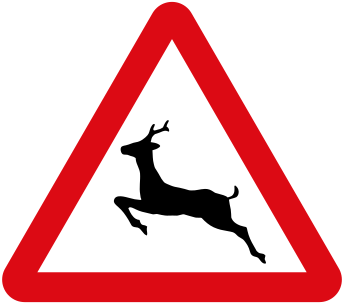
Wildlife Crossings
Deer, wild boar, and other wildlife frequent rural roads, especially at dawn and dusk. Watch for wildlife warning signs on roads through forested areas.
Fog on the Great Plain
The Alföld (Great Hungarian Plain) experiences dense fog in autumn and winter, dramatically reducing visibility on flat, straight roads.

Tram Tracks in Cities
Budapest, Miskolc, Debrecen, and Szeged have extensive tram networks. Tram tracks can be slippery when wet and create hazards for motorcyclists and cyclists.
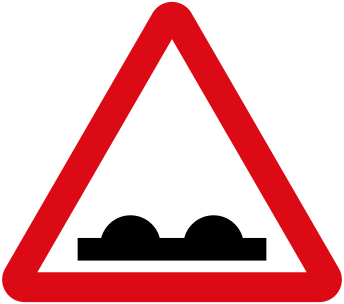
Poor Rural Road Surfaces
Some rural and minor roads have uneven surfaces, potholes, and poor markings. Agricultural vehicles may move slowly on these roads.
High-Speed Motorway Driving
130 km/h motorway limits combined with aggressive driving behavior make tailgating and sudden lane changes dangerous, especially near Budapest.
Pedestrians in Villages
Villages along main roads often lack proper pedestrian infrastructure. Watch for pedestrians, cyclists, and horse-drawn carts on roads through settlements.
Hungary’s Counties & Budapest
Hungary is divided into 19 counties (megye) and the capital city Budapest. Driving license administration is handled by the county government offices (kormányhivatal).
- 1BudapestBudapestCapital1.75M
- 2PestBudapestCounty1.30M
- 3Borsod-Abaúj-ZemplénMiskolcCounty0.65M
- 4Hajdú-BiharDebrecenCounty0.54M
- 5Szabolcs-Szatmár-BeregNyíregyházaCounty0.56M
- 6Bács-KiskunKecskemétCounty0.52M
- 7Győr-Moson-SopronGyőrCounty0.46M
- 8Csongrád-CsanádSzegedCounty0.40M
- 9FejérSzékesfehérvárCounty0.42M
- 10BaranyaPécsCounty0.37M
Hungary has 19 counties and 1 capital city (Budapest). Driving license testing is administered through KAV examination centers located in county capitals and major cities. Waiting times vary by location.
Myth: You can have one beer and still be under the legal limit
Fact: Hungary has ZERO tolerance (0.00% BAC). Even one sip of beer that registers on a breathalyzer will result in a fine, penalty points, and potential license suspension. There is no safe amount.
Myth: Winter tires are mandatory in Hungary during winter
Fact: Winter tires are NOT legally mandatory in Hungary, unlike in some neighboring countries. However, driving on summer tires in snowy/icy conditions is highly inadvisable and police can fine you for driving unsafely. Snow chains may be required on certain roads.
Myth: The e-matrica is only needed on the big motorways around Budapest
Fact: The e-matrica is required on ALL motorways (autópálya) and expressways (autóút) throughout Hungary, not just around Budapest. This includes routes to Lake Balaton, the Austrian border, and all major intercity highways.
Myth: EU driving licenses are automatically valid forever in Hungary
Fact: While EU licenses are recognized in Hungary, if you establish residency, you should exchange your license for a Hungarian one. Medical fitness re-examinations are required at certain ages (40, 60, then every 2 years).
Myth: Trams don’t really have absolute priority, it’s the same as any vehicle
Fact: Trams (villamos) have ABSOLUTE priority in Hungarian traffic law. You must yield to trams at all times. When a tram stops without a safety island, you must stop and wait for passengers. Violating tram priority rules carries heavy fines and penalty points.
Myth: Speed cameras only operate on motorways in Hungary
Fact: Hungary has fixed speed cameras on motorways, expressways, AND within built-up areas. Mobile speed enforcement (radar) is widespread. Average speed cameras (szakaszmérő) are increasingly common on main roads.
Updated KRESZ exam question bank
KAV refreshed the theory exam question bank with new questions on electric vehicle rules, updated traffic signs, and revised penalty point allocations effective for all new exams.
E-matrica fee restructuring
Motorway vignette prices adjusted with new category structure. Digital-only enforcement expanded with additional automatic camera systems on expressways.
Enhanced traffic camera network
National rollout of average speed cameras (szakaszmérő) on major road sections. New fixed cameras in accident-prone zones. Automatic red-light enforcement expanded.
Stricter penalties for phone use while driving
Increased fines and penalty points for handheld phone use. New regulations on dashboard camera evidence admissibility for traffic violations.
EU driving license directive alignment
Hungary aligned license categories with updated EU directive. New AM category requirements. Digital driving license pilot program discussed.
COVID-era temporary license extensions
Temporary extensions for expired driving licenses and műszaki vizsga certificates during the pandemic. Many extensions formally ended in 2022.
How Hungary Compares Regionally
Hungary’s driving regulations compared to neighboring countries, data compiled from official government sources
StrictestIn betweenMost lenientBAC limit and minimum age
| Parameter | Hungary | Austria | Germany | Czechia | Romania |
|---|---|---|---|---|---|
| BAC Limit | 0.00% | 0.05% | 0.05% | 0.00% | 0.00% |
| Min. Age (Car) | 17 | 17 (L17) | 17 (BF17) | 18 | 18 |
| Driving Side | Right | Right | Right | Right | Right |
| Motorway Speed | 130 | 130 | No limit | 130 | 130 |
| Test Questions | 55 | ~1,500 | ~1,000 | 25 | 26 |
| License Cost | ~€1,030 | ~€1,700 | ~€2,500 | ~€700 | ~€500 |
| Road Deaths/yr | 497 | 351 | 2,770 | 494 | 1,478 |
| Deaths/100K | 5.2 | 3.8 | 3.3 | 4.5 | 7.8 |
BAC Limit
Hungary: 0.00%Austria: 0.05%Germany: 0.05%Czechia: 0.00%Romania: 0.00%Min. Age (Car)
Hungary: 17Austria: 17 (L17)Germany: 17 (BF17)Czechia: 18Romania: 18Driving Side
Hungary: RightAustria: RightGermany: RightCzechia: RightRomania: RightMotorway Speed
Hungary: 130Austria: 130Germany: No limitCzechia: 130Romania: 130Test Questions
Hungary: 55Austria: ~1,500Germany: ~1,000Czechia: 25Romania: 26License Cost
Hungary: ~€1,030Austria: ~€1,700Germany: ~€2,500Czechia: ~€700Romania: ~€500Road Deaths/yr
Hungary: 497Austria: 351Germany: 2,770Czechia: 494Romania: 1,478Deaths/100K
Hungary: 5.2Austria: 3.8Germany: 3.3Czechia: 4.5Romania: 7.8
Hungary
Zero tolerance like Czechia and Romania. Austria 0.05%, Germany 0.05%.
17 in Hungary (B category). Austria L17 from 15.5, Germany BF17 from 17, Czechia 18, Romania 18.
Same as Austria and Czechia. Germany has no general limit (advisory 130). Romania 130.
Moderate-to-high. Austria ~€1,500–2,000, Germany ~€2,000–3,500, Czechia ~€600–800, Romania ~€400–600.
Above EU average (4.4). Austria 3.8, Germany 3.3, Czechia 4.5, Romania 7.8.
Road deaths 2024 (European Commission): Hungary 497, Austria 351, Germany 2,770, Czechia 494, Romania 1,478. Per-capita rates: Hungary 5.2, Austria 3.8, Germany 3.3, Czechia 4.5, Romania 7.8 per 100K.
Primary Sources
Verification Methodology
Every fact on this page has been cross-referenced against official primary sources. Our process:
- 1Primary data collected from Hungarian legislation (KRESZ) and government sources
- 2Cross-verified against KAV exam guidelines, KSH statistics, and EU reports
- 3Regional variations noted where applicable (fees differ by county)
- 4Page reviewed and fact-checked on November 17, 2026
If you find an error, please contact us so we can correct it immediately.
Frequently Asked Questions
How much does a driving license cost in Hungary?
The total cost ranges from HUF 370,000 to 428,000 (~€960–1,100). This includes: first aid course HUF 20,000–25,000, medical exam ~HUF 7,200, driving school ~HUF 319,000 (29 lessons), theory exam HUF 5,100, practical exam HUF 12,200, and license card HUF 4,000. Budapest tends to be more expensive than rural areas.
What is the KRESZ theory test format?
The KRESZ theory test has 55 multiple-choice questions to be completed in 55 minutes. Questions are worth 1–2 points each, with a maximum of 75 points. You need 65 points to pass. Topics include traffic signs, right-of-way, speed limits, first aid, and vehicle safety. The test is computer-based at KAV centers.
What is the blood alcohol limit in Hungary?
Hungary has absolute zero tolerance (0.00% BAC). Any detectable alcohol results in fines (HUF 30,000–300,000), 9 penalty points, and potential license suspension (1–12 months). BAC over 0.05% (0.5 g/l) is a criminal offense punishable by up to 3 years imprisonment.
What are the speed limits in Hungary?
Built-up areas: 50 km/h. Outside built-up areas: 90 km/h. Expressways (autóút): 110 km/h. Motorways (autópálya): 130 km/h. Residential zones: 20 km/h. Towing: max 70 km/h. E-matrica required for motorways and expressways.
What are the emergency numbers in Hungary?
112, General Emergency (EU standard, works everywhere). 107, Police (Rendőrség). 104, Ambulance (Mentők). 105, Fire Department (Tűzoltóság). All are toll-free and available 24/7. English-speaking operators usually available on 112.
Do I need an e-matrica for Hungarian motorways?
Yes, an e-matrica (electronic vignette) is required for all motorways (autópálya) and expressways (autóút). Available as 10-day (HUF 5,950 for D1 category), monthly, or annual pass. Purchase online at ematrica.hu, at petrol stations, or from roadside machines. Linked to your license plate, no physical sticker. Heavy fines for driving without one.
What is the minimum driving age in Hungary?
AM (moped): 15 years. A1 (125cc motorcycle): 16 years. A2 (35 kW motorcycle): 18 years. A (unlimited motorcycle): 24 years (or 20 with 2 years A2 experience). B (car): 17 years. C (truck): 21 years. D (bus): 24 years.
Is the first aid course mandatory for getting a driving license?
Yes, a 16-hour first aid course (elsősegélynyújtó tanfolyam) is mandatory before you can take the theory exam. It covers CPR, wound treatment, recovery position, and accident scene management. Cost: HUF 20,000–25,000. Certificate valid for 1 year.
What is the műszaki vizsga (vehicle inspection)?
Műszaki vizsga is Hungary’s mandatory vehicle inspection (similar to UK MOT or German TÜV). New cars are exempt for 4 years, then inspection every 2 years for passenger cars. Commercial vehicles require annual inspection. Covers brakes, lights, emissions, suspension, tires, and bodywork. Conducted at authorized stations.
Can I drive in Hungary with a foreign license?
EU/EEA licenses are valid in Hungary. Non-EU licenses are valid for 1 year with an International Driving Permit (IDP) based on the 1968 Vienna Convention. US, Canadian, and Australian licenses require an IDP. If you become a Hungarian resident, you must exchange your license within 1 year.
Do trams always have priority in Hungary?
Yes, trams (villamos) have absolute priority in Hungarian traffic law. You must yield to trams at all intersections and crossings. When a tram stops to load/unload passengers and there is no safety island (refuge), you must stop and wait until all passengers have boarded. This rule is heavily tested in the KRESZ exam.
What is the probationary period for new drivers?
New drivers in Hungary face a 2-year probationary period (próbaidő). During this period, the BAC limit is the same (zero), but any traffic violation can result in mandatory re-examination. The probationary period is noted on the license.
Are winter tires mandatory in Hungary?
No, winter tires are NOT legally mandatory in Hungary, unlike in Austria or Germany. However, driving on inadequate tires in winter conditions (snow, ice) can result in fines for unsafe driving. Snow chains may be required on certain mountain roads. Winter tires are strongly recommended November–March.
How does the penalty point system work?
The büntetőpont (penalty point) system allows a maximum of 18 points. Points per offense range from 1 (no seatbelt) to 11 (drunk driving as a criminal offense). Reaching 18 points triggers mandatory license suspension and re-examination. Each point counts for at most 3 years.
What are headlight rules in Hungary?
Dipped headlights are mandatory at all times outside built-up areas, including daytime. Inside built-up areas, headlights are required from dusk to dawn and during poor visibility (rain, fog, snow). Failure to use headlights results in a fine. This rule applies to all motor vehicles including motorcycles.
Cite This Page
Use the following citations when referencing this article in academic papers, journalism, or reports.
APA 7th Edition
AutoviaTest. (2026, November 17). Hungary driving license facts 2026 — KRESZ test, fees, fines & rules. https://autoviatest.com/en/driving-test/hungary/facts
MLA 9th Edition
AutoviaTest. "Hungary Driving License Facts 2026 — KRESZ Test, Fees, Fines & Rules." AutoviaTest, 17 Nov. 2026, autoviatest.com/en/driving-test/hungary/facts.
Chicago 17th Edition
AutoviaTest. "Hungary Driving License Facts 2026 — KRESZ Test, Fees, Fines & Rules." Last modified November 17, 2026. https://autoviatest.com/en/driving-test/hungary/facts.
Ready to Pass Your Hungarian KRESZ Test?
Practice with official KRESZ theory questions and detailed explanations. Available in Hungarian and English.
More Country Driving Guides
Austrian Driving License 2026 — The Complete GuideL17 system, driving school costs, speed limits, traffic fines, and vignette requirements.German Driving License 2026 — The Complete GuideTÜV test format, Fahrschule costs, Autobahn rules, and the points system in Flensburg.Czech Driving License 2026 — The Complete GuideTheory test format, driving school costs, zero BAC rule, and motorway vignette.Romanian Driving License 2026 — The Complete GuideTheory exam, driving school costs, speed limits, and traffic fines.