
 Complete guide 2026Updated April 2026
South Korean Driving Licence 2026 The Complete Guide
Everything you need to know about getting your driving licence in South Korea — KOROAD written test (40 MCQ, 40 min), driving school (학원) costs, penalty points system (벌점제도), speed limits, traffic fines, and the Yoon Chang-ho Law BAC limit.
Table of Contents
Theory Test
40 multiple-choice questions completed in 40 minutes.
28/40 correct to pass (70%). Administered by KOROAD (도로교통공단, Korea Road Traffic Authority) at driver's licence examination centres nationwide. Fee: KRW 10,000. Covers traffic laws, road signs, vehicle maintenance, and driving ethics.
Total Cost
Approximately KRW 500,000–1,000,000 (~$370–740 USD) total: driving school (학원) tuition KRW 400,000–800,000, written test KRW 10,000, skills test KRW 25,000, road driving test KRW 30,000, licence issuance KRW 10,000, and mandatory education hours included in school tuition.
KOROAD / Korean National Police AgencyRoad Deaths
2,521 fatalities in 2024 (~4.9 per 100K).
Significant improvement from 3,349 in 2019. Government target to reduce road deaths to below 2,000 by 2027 through stricter enforcement, smart infrastructure, and the 'Safe Speed 5030' campaign.
BAC Limit
0.03% — reduced from 0.05% in June 2019 under the 'Yoon Chang-ho Law' (윤창호법), named after a 22-year-old KATUSA soldier killed by a drunk driver while on military leave.
Penalties significantly increased: up to 5 years imprisonment and KRW 20 million fine for drink driving causing injury.
Safe Speed 5030
Nationwide speed limit reform implemented in April 2021 — urban speed limits reduced from 60 km/h to 50 km/h, and school/residential zones to 30 km/h.
This 'Safe Speed 5030' (안전속도 5030) policy aims to reduce pedestrian fatalities, which account for a disproportionately high share of Korean road deaths.
Global Context
Death rate ~4.9/100K vs USA 12.2, Germany 3.4, UK 2.5, Japan 2.0.
Uses a penalty points system (벌점제도) — 40 points in 1 year triggers licence suspension. One of the highest vehicle ownership rates in Asia. Dashcam usage is near-universal.
South Korea Road Safety: 6-Year Trend (2019–2024)
According to TAAS (Traffic Accident Analysis System), road fatalities have been declining steadily — from 3,349 in 2019 to 2,551 in 2023. The 2024 figure of 2,521 deaths continues the downward trend, reflecting the cumulative impact of the Yoon Chang-ho Law (stricter BAC limits), Safe Speed 5030 (reduced urban speed limits), and expanded enforcement in school zones.
Year-over-year changes
Deaths per 100,000 Population
 USA12.2
- South Korea5
 Germany3.3
 UK2.5
 India11.7
Source: WHO Global Status Report on Road Safety, TAAS. Per-capita rates are estimates and may vary by methodology.
South Korean Theory Test Format
The computerized written test is administered at KOROAD driver's licence examination centres across South Korea
The South Korean driving written test (학과시험) for Type 1 Ordinary licence consists of 40 multiple-choice questions. You have 40 minutes to complete the test. To pass, you must answer at least 28 of the 40 questions correctly — a 70% pass rate. The test is conducted on a computer at a KOROAD driver's licence examination centre (운전면허시험장). Topics include traffic laws and regulations, road signs and signals, vehicle maintenance and safety, driving ethics and courtesy, and emergency response procedures. The test fee is KRW 10,000. The test is available in Korean, English, Chinese, and several other languages for foreign residents.
Questions
Duration
Pass Mark
Test Fee
What the Written Test Covers
- Traffic signals, road signs (교통표지), and road markings
- Right of way rules at intersections and roundabouts
- Speed limits by road type (Safe Speed 5030)
- Parking and stopping regulations
- Pedestrian crossing rules and school zone regulations
- Vehicle inspection (차량검사) requirements
- Mandatory insurance (의무보험) requirements
- Seat belt and child restraint regulations
- Vehicle maintenance and safety equipment
- Dashcam usage and evidence in accidents
- Drink driving laws and BAC limits (Yoon Chang-ho Law)
- Highway and expressway driving rules
- Emergency response and accident procedures
- Adverse weather driving (rain, snow, fog)
- Driving ethics and courtesy (운전예절)
How to Get Your South Korean Driving Licence
From enrolment to licence issuance — the complete 6-step process
- 1
Enrol at a Driving School (학원 등록)
Register at a KOROAD-certified driving school (운전학원) and submit required documents
Cost: KRW 400,000–800,000 for the complete package. Bring ID, passport-size photos, and health certificate. Driving schools handle the full process including education, practice, and test scheduling.
- 2
Complete Mandatory Classroom Education (학과교육)
Attend required hours of classroom instruction on traffic laws, road safety, and driving ethics
Minimum 1 hour of traffic safety education at a KOROAD examination centre (or 3 hours at a driving school, which exempts the 1-hour requirement). Covers traffic laws, road signs, accident prevention, and driving ethics.
- 3
Pass the Written Test (학과시험)
Take and pass the computerized multiple-choice exam at a KOROAD examination centre
40 MCQ, 40 min, 28/40 to pass (70%). Fee: KRW 10,000. Available in Korean, English, Chinese, and other languages. Can be taken at the driving school or at a KOROAD test centre.
- 4
Pass the Driving Course Test (장내기능시험)
Demonstrate basic vehicle control skills on a designated driving course at the test centre
Fee: KRW 25,000. Tests include starting on a slope, navigating curves, parallel parking, and emergency stop. Minimum 4 hours of course driving practice required before the test. Pass mark: 80/100 points.
- 5
Pass the Road Driving Test (도로주행시험)
Pass the on-road driving test on a designated route in real traffic conditions
Fee: KRW 30,000. Minimum 6 hours of road driving practice required. Test lasts approximately 15–20 minutes on a designated route. Pass mark: 70/100 points. Evaluated on lane keeping, signalling, speed control, and hazard awareness.
- 6
Licence Issuance (면허 발급)
Receive your driving licence after passing all tests — issued same day at the examination centre
Fee: KRW 10,000. Licence issued on the spot at the KOROAD examination centre. Photo taken at the centre. New drivers receive a Type 1 Ordinary licence with a 2-year probationary period. Licence valid for 10 years.
South Korean Driving Licence Fees
Total cost typically KRW 500,000–1,000,000 (~$370–740 USD) — driving school package is the largest expense
| Fee | Amount |
|---|---|
| Driving school tuition (학원 수강료) | KRW 400,000–800,000 |
| Written test fee (학과시험) | KRW 10,000 |
| Driving course test fee (장내기능시험) | KRW 25,000 |
| Road driving test fee (도로주행시험) | KRW 30,000 |
| Licence issuance fee (면허 발급) | KRW 10,000 |
| Health certificate (건강검진) | KRW 5,000–7,000 |
| Photo fee (사진촬영) | KRW 6,000–8,000 |
| Re-test fee (per attempt) | KRW 10,000–30,000 |
| Total Typical (Type 1 Ordinary via driving school) | KRW 500,000–1,000,000 |
Costs vary by city and driving school. Seoul and major metropolitan areas tend to be more expensive. Government test fees are fixed nationwide. Taking additional road driving lessons beyond the minimum hours increases the total cost. Exchange rate: approximately $1 USD = KRW 1,350. Total in USD: approximately $370–740.
See how ready you are — practice with real exam questions
Try Free QuestionsMinimum age by licence category
- Motorized Bicycle (원동기장치자전거) — 125cc or less16 years16years
- Type 2 Small (2종 소형) — Motorcycles up to 260cc18 years18years
- Type 2 Ordinary (2종 보통) — Cars, vans up to 10 passengers18 years — most common licence category18years
- Type 1 Ordinary (1종 보통) — Cars, vans up to 15 passengers, trucks up to 12t18 years — manual or automatic18years
- Type 1 Large (1종 대형) — Buses, large trucks19 years, 1+ year Type 1 Ordinary experience19years
- Type 1 Special (1종 특수) — Tow trucks, cranes, special vehicles19 years, 1+ year Type 1 Ordinary experience19years
- Motorized Bicycle (원동기) — 50cc or less16 years16years
Licence Validity Periods
| Licence / age | Validity |
|---|---|
| Type 1 Ordinary / Large / SpecialStandard renewal period | 10 years |
| Type 2 Ordinary / SmallStandard renewal period | 10 years |
| Commercial / taxi driversAptitude test required at renewal | 5 years |
| Age 65–74Aptitude test and cognitive screening required | 5 years |
New Driver Restrictions (초보운전)
- 2-year probationary period after obtaining licence
- Must display '초보운전' (new driver) sticker on vehicle
- Penalty points doubled during probationary period for certain violations
- Licence revoked if accumulating 40+ penalty points during probation (vs 40 in 1 year for regular drivers)
- Must complete additional safety education if involved in an accident during probation
Penalty Points System (벌점제도)
- South Korea uses a penalty points system (벌점제도) administered by the Korean National Police Agency
- Points are accumulated for traffic violations — severity determines points assigned (10–100 points per violation)
- 40 points accumulated in 1 year = licence suspension (40일 면허정지)
- Licence revocation at 121 points in 1 year, 201 points in 2 years, or 271 points in 3 years
- Points can be reduced through safe driving education courses (특별교통안전교육)
- Penalty points are reset after the suspension period has been served
Speed Limits in South Korea
As per Korean Road Traffic Act — all speeds in km/h — Safe Speed 5030 in effect since April 2021
South Korea implemented the 'Safe Speed 5030' (안전속도 5030) policy in April 2021, reducing urban speed limits from 60 km/h to 50 km/h and school/residential zones to 30 km/h. Rural roads allow 60–80 km/h depending on the road class. Highways (고속도로) allow 100–110 km/h, while expressways (자동차전용도로) allow 80–90 km/h. School zones (어린이보호구역) are strictly enforced at 30 km/h with enhanced penalties — double fines and penalty points for violations in these zones. Speed cameras are widespread, and the TOPIS traffic management system monitors traffic flow in real time.
| Road Type | Cars | Trucks >3.5t | Note |
|---|---|---|---|
| Urban (도심) | 50 | 50 | Reduced from 60 km/h in 2021 |
| Rural (지방도로) | 80 | 60 | 60–80 km/h depending on road class |
| Highway (고속도로) | 90 | 80 | Minimum speed 50 km/h |
| Expressway (자동차전용도로) | 100-110 | 80 | Urban expressways 80 km/h |
| School Zone (어린이보호구역) | 30 | 30 | Double penalties for violations |
Urban (도심)
Cars: 50Trucks >3.5t: 50Reduced from 60 km/h in 2021
Rural (지방도로)
Cars: 80Trucks >3.5t: 6060–80 km/h depending on road class
Highway (고속도로)
Cars: 90Trucks >3.5t: 80Minimum speed 50 km/h
Expressway (자동차전용도로)
Cars: 100-110Trucks >3.5t: 80Urban expressways 80 km/h
School Zone (어린이보호구역)
Cars: 30Trucks >3.5t: 30Double penalties for violations
The Safe Speed 5030 policy (April 2021) reduced urban limits to 50 km/h and school zones to 30 km/h. School zone violations carry double fines and penalty points. The 'Minsik's Law' (민식이법, March 2020) introduced criminal penalties for drivers who injure children in school zones — 3 years or more imprisonment for causing death (up to life imprisonment); 1–15 years or KRW 5–30 million fine for causing injury. Speed cameras and unmanned enforcement devices are widespread.
Traffic Fines & Penalties
Fixed fines (범칙금) for common violations — severe cases involve criminal penalties and licence suspension
South Korea uses a system of fixed fines (범칙금) for common traffic violations combined with a penalty points system (벌점제도). Fines vary based on vehicle type — passenger cars, vans, and commercial vehicles have different fine amounts. Running a red light incurs a KRW 60,000 fine and 15 penalty points. Drink driving under the Yoon Chang-ho Law (BAC 0.03%+) results in licence revocation and criminal penalties. School zone violations carry double fines and penalty points under Minsik's Law.
Up to ₩40,000₩40,001–₩100,000Over ₩100,000, or a criminal penalty
| Violation | Fine (KRW) | Penalty Points | Other |
|---|---|---|---|
| Speeding 20 km/h or less over | KRW 30,000–40,000 | 15 | — |
| Speeding 20–40 km/h over | KRW 60,000–70,000 | 30 | — |
| Speeding 40–60 km/h over | KRW 90,000–100,000 | 60 | — |
| Speeding 60+ km/h over | KRW 120,000–130,000 | 120 | — |
| Running a red light | KRW 60,000 | License suspension | — |
| Drink driving (BAC 0.03–0.08%) | Criminal penalty | License revocation | Criminal penalty |
| Drink driving (BAC 0.08%+) | Criminal penalty | 15 | — |
| No seatbelt | KRW 30,000 | 0 | — |
| Handheld phone use while driving | KRW 60,000 | 15 | — |
| School zone speeding (20+ km/h over) | KRW 120,000 | Double | — |
| Hit-and-run (도주운전) | Criminal penalty | License revocation | Criminal penalty |
| Illegal parking | KRW 40,000–50,000 | 0 | — |
- KRW 30,000–40,000—
Speeding 20 km/h or less over
15 - KRW 60,000–70,000—
Speeding 20–40 km/h over
30 - KRW 90,000–100,000—
Speeding 40–60 km/h over
60 - KRW 120,000–130,000—
Speeding 60+ km/h over
120 - KRW 60,000—
Running a red light
License suspension - Criminal penaltyCriminal penalty
Drink driving (BAC 0.03–0.08%)
License revocation - Criminal penalty—
Drink driving (BAC 0.08%+)
15 - KRW 30,000—
No seatbelt
0 - KRW 60,000—
Handheld phone use while driving
15 - KRW 120,000—
School zone speeding (20+ km/h over)
Double - Criminal penaltyCriminal penalty
Hit-and-run (도주운전)
License revocation - KRW 40,000–50,000—
Illegal parking
0
Fines shown are for passenger cars (승용차). Vans and commercial vehicles have higher fines. Drink driving (BAC 0.03%+): licence suspension or revocation, up to 5 years imprisonment, fines up to KRW 20 million. Hit-and-run (특가법 적용): severe criminal penalties including up to life imprisonment if causing death. School zone violations under Minsik's Law carry double fines and penalty points. Penalty points accumulation: 40 points in 1 year = suspension, Revocation at 121+ points/1yr, 201+/2yr, or 271+/3yr.
Know These Rules Before Your Written Test
Traffic fines, speed limits, BAC laws, and school zone rules are heavily tested in the Korean written test. Practice with real exam-style questions.
How the road worksMandatory, with a penaltyMakes it easier
Drive on the Right
South Korea drives on the right side.
Overtake only on the left. At unmarked intersections, yield to vehicles coming from the right. Left turns at major intersections require a green arrow signal.
Dashcam Culture (블랙박스)
South Korea has one of the highest dashcam adoption rates in the world.
Most vehicles are equipped with front and rear dashcams (블랙박스). Dashcam footage is widely accepted as evidence in insurance claims and legal proceedings.
BAC 0.03% — Yoon Chang-ho Law (윤창호법)
Blood alcohol limit is 0.03% — reduced from 0.05% in June 2019.
BAC 0.03–0.08%: licence suspension, up to 1 year imprisonment or fine up to KRW 5 million. BAC 0.08–0.2%: licence revocation, 1–2 years imprisonment or KRW 5–10 million fine. BAC 0.2%+: 2–5 years imprisonment or KRW 10–20 million fine. Refusing a breathalyzer: treated as BAC 0.08%+.
School Zones — Minsik's Law (민식이법)
Speed limit of 30 km/h in all school zones (어린이보호구역).
Double fines and penalty points for violations. Criminal penalties for injuring children: 3 years or more imprisonment for causing death (up to life imprisonment); 1–15 years or KRW 5–30 million fine for causing injury. Effective since March 2020.
Mandatory Insurance (의무보험)
Third-party liability insurance (의무보험) is mandatory for all registered vehicles.
Minimum coverage includes bodily injury liability. Driving without insurance: up to 1 year imprisonment or fine up to KRW 10 million.
Phone Ban — Handheld Prohibited
Using a handheld phone while driving is prohibited.
Fine: KRW 60,000 and penalty points. Hands-free devices and Bluetooth are permitted. Navigation use is allowed only with a mount.
Hit-and-Run — Severe Penalties (특가법)
Hit-and-run (도주운전) carries severe criminal penalties under the Act on Aggravated Punishment (특가법).
Causing death: up to life imprisonment. Causing injury and fleeing: 1–30 years imprisonment. Stopping and rendering aid is legally required.
Child Safety
Children under 6 must be in an approved child restraint system.
Children under 13 must wear a seatbelt. The driver is responsible for ensuring all passengers under 13 are properly restrained. Violation fine: KRW 60,000.
Headlights at Night & in Tunnels
Headlights are mandatory from sunset to sunrise and in tunnels.
Daytime running lights are recommended but not mandatory. High beams must be dimmed within 100m of oncoming traffic or 50m when following another vehicle.
Common Road Hazards in South Korea
2,521 road fatalities in 2024 — know these hazards to stay safe on Korean roads
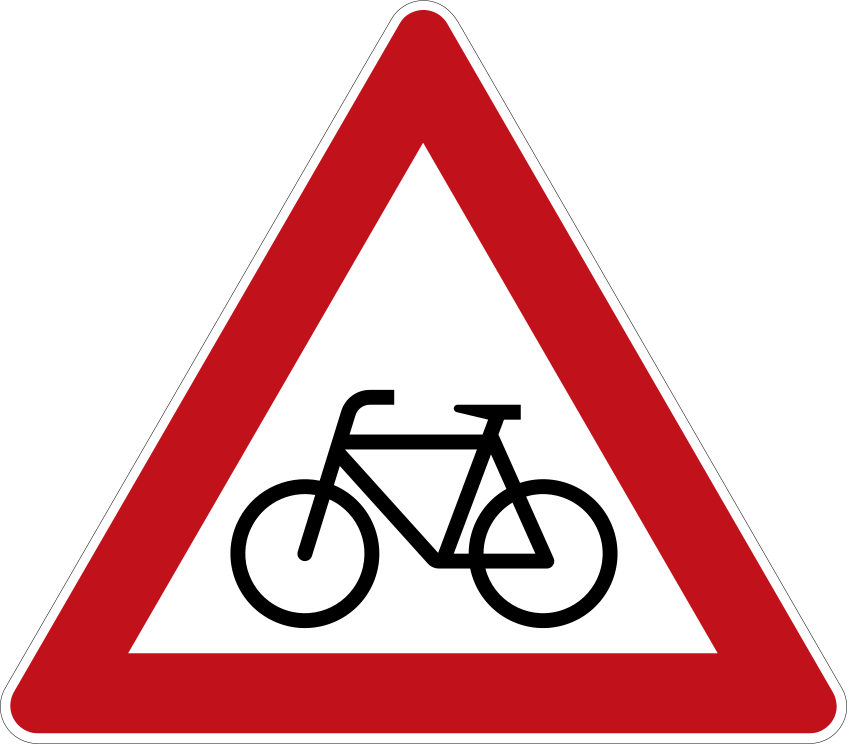
Motorcycle & Scooter Deliveries (배달 오토바이)
South Korea's massive delivery culture means thousands of delivery scooters and motorcycles operate aggressively in urban areas. They frequently weave between lanes, run red lights, and ride on sidewalks. Be especially vigilant near restaurants and commercial districts.
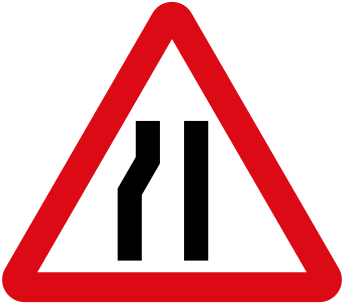
Narrow Alleys (골목길)
Many Korean cities have extremely narrow alleyways (골목길) in older residential and commercial areas. Two-way traffic in single-lane alleys is common. Pedestrians, cyclists, and vehicles share the space. Drive slowly and use your horn at blind corners.
Aggressive Driving Culture
Korean urban driving can be aggressive — frequent lane changes, tailgating, and last-second merges are common. Bus and taxi drivers are known for assertive driving. Maintain safe following distance and stay calm. Dashcam footage is your best protection.
Heavy Rain & Typhoons (장마/태풍)
The summer monsoon season (장마, June–July) brings intense rainfall causing flooding and reduced visibility. Typhoons from August to October can bring destructive winds and flash flooding. Avoid underpasses during heavy rain and check weather advisories.
Winter Ice in Northern Regions
Northern provinces (Gangwon-do, Gyeonggi-do) experience freezing temperatures and black ice from November to March. Mountain passes can be particularly dangerous. Winter tires are recommended but not legally mandated. Use chains on designated mountain roads.
Elderly Pedestrians (고령 보행자)
South Korea has one of the fastest-ageing populations globally. Elderly pedestrians account for a disproportionately high share of road fatalities — over 50% of pedestrian deaths. Exercise extreme caution near traditional markets, parks, and residential areas.
South Korea's 17 Administrative Divisions
Driving licence administration is handled by KOROAD examination centres across all divisions
- 1SeoulSeoul9.4M
- 2BusanBusan3.3M
- 3DaeguDaegu2.4M
- 4IncheonIncheon3.0M
- 5GwangjuGwangju1.4M
- 6DaejeonDaejeon1.5M
- 7UlsanUlsan1.1M
- 8SejongSejong0.4M
- 9Gyeonggi-doSuwon13.6M
- 10Gangwon-doChuncheon1.5M
- 11Chungcheongbuk-doCheongju1.6M
- 12Chungcheongnam-doDaejeon2.1M
- 13Jeollabuk-doJeonju1.8M
- 14Jeollanam-doMuan1.8M
- 15Gyeongsangbuk-doAndong2.6M
- 16Gyeongsangnam-doChangwon3.3M
- 17JejuJeju City0.7M
Traffic laws are national (도로교통법), applying uniformly across all 17 administrative divisions. KOROAD operates driver's licence examination centres in all major cities. Seoul, Busan, and other metropolitan cities have multiple examination centres.
Myth: You can turn right on red freely in South Korea
Fact: Since July 2022, right turns on red are restricted at intersections with pedestrian signals. You must stop completely and yield to all pedestrians before proceeding. Fines of KRW 60,000 and 15 penalty points apply for violations. Previously, right on red was broadly permitted.
Myth: The written test is very difficult and most people fail
Fact: The pass mark for Type 1 is 70% (28/40) and Type 2 is 60% (24/40). Pass rates are over 90%. The test was made easier in 2011 to encourage more people to get licences through official channels rather than unlicensed driving.
Myth: International Driving Permits work indefinitely in South Korea
Fact: IDPs are valid for 1 year for tourists and short-term visitors. Long-term residents (with an Alien Registration Card) must obtain a Korean licence — either by exchange (for qualifying countries) or by taking the tests. Some countries have reciprocal exchange agreements.
Myth: Korea doesn't have strict drink driving laws
Fact: Korea has one of the strictest BAC limits in the world at 0.03% (Yoon Chang-ho Law, 2019). Penalties include up to 5 years imprisonment and KRW 20 million in fines for drink driving causing injury. Refusal to take a breathalyzer is treated as BAC 0.08%+ and results in licence revocation.
Myth: Dashcams are optional luxury accessories
Fact: Dashcams (블랙박스) are essentially standard equipment in South Korea. An estimated 80%+ of vehicles have them. They are crucial for insurance claims and legal disputes. Many newer vehicles come with factory-installed dashcams. Parking mode dashcams are also extremely popular.
Myth: Speed limits haven't changed in South Korea recently
Fact: Major changes occurred in April 2021 with the 'Safe Speed 5030' policy, reducing urban limits from 60 km/h to 50 km/h and school zones to 30 km/h. Additionally, Minsik's Law (March 2020) introduced criminal penalties for drivers who injure children in school zones.
Recent Changes to South Korean Driving Laws
Key regulatory updates affecting drivers in South Korea
Elderly driver safety measures & autonomous vehicle regulations
Enhanced cognitive testing requirements for elderly licence renewals (75+). New regulations for Level 3 autonomous vehicles on designated roads. Expanded TOPIS smart traffic management system coverage.
Right-turn enforcement strengthened & electric vehicle rules
Increased enforcement of the 2022 right-turn-on-red restrictions at pedestrian crossings. New charging infrastructure requirements for EVs. Updated penalty point schedule for distracted driving.
Right turn on red restricted at pedestrian signals
Starting July 2022, drivers must stop completely at red lights before turning right and yield to all pedestrians at crosswalks with pedestrian signals. Previously, right turns on red were broadly permitted.
Safe Speed 5030 — urban speed limits reduced
Nationwide implementation of 'Safe Speed 5030' (안전속도 5030) in April 2021: urban speed limits reduced from 60 km/h to 50 km/h, school and residential zones to 30 km/h. Aimed at reducing pedestrian fatalities.
Yoon Chang-ho Law — BAC limit reduced to 0.03%
In June 2019, the BAC limit was reduced from 0.05% to 0.03% under the Yoon Chang-ho Law (윤창호법), named after a 22-year-old KATUSA soldier killed by a drunk driver while on military leave. Penalties for drink driving were also significantly increased.
How South Korea Compares Globally
South Korea's driving regulations compared to other major countries — data compiled from official government sources
StrictestIn betweenMost lenientBAC limit and minimum age
| Parameter | South Korea | Germany | USA | UK |  Japan |
|---|---|---|---|---|---|
| BAC Limit | 0.03% | 0.05% | 0.08% | 0.08% | 0.03% |
| Min. Age (Car) | 18 | 18 | 16 | 17 | 18 |
| Driving Side | Right | Right | Right | Left | Left |
| Highway Speed | 100–110 | No limit* | 105–137 | 113 | 100–120 |
| Test Questions | 40 MCQ | 30 MCQ | 20–50 | 50 | 50 |
| Licence Cost | ₩50–100만 | €2,000–3,500 | $30–90 | £200–1,500 | ¥300K+ |
| Road Deaths/yr | 2,551 | 2,770 | 40,901 | 1,695 | 2,678 |
| Deaths/100K | ~5.0 | ~3.3 | 12.2 | 2.5 | 2.1 |
BAC Limit
South Korea: 0.03%Germany: 0.05%USA: 0.08%UK: 0.08%Japan: 0.03%Min. Age (Car)
South Korea: 18Germany: 18USA: 16UK: 17Japan: 18Driving Side
South Korea: RightGermany: RightUSA: RightUK: LeftJapan: LeftHighway Speed
South Korea: 100–110Germany: No limit*USA: 105–137UK: 113Japan: 100–120Test Questions
South Korea: 40 MCQGermany: 30 MCQUSA: 20–50UK: 50Japan: 50Licence Cost
South Korea: ₩50–100만Germany: €2,000–3,500USA: $30–90UK: £200–1,500Japan: ¥300K+Road Deaths/yr
South Korea: 2,551Germany: 2,770USA: 40,901UK: 1,695Japan: 2,678Deaths/100K
South Korea: ~5.0Germany: ~3.3USA: 12.2UK: 2.5Japan: 2.1
South Korea
Among the strictest globally (Yoon Chang-ho Law, 2019). Germany 0.05%, USA/UK 0.08%, Japan 0.03%. Reduced from 0.05%.
Same as Germany and Japan. USA allows from 16, UK from 17. Mopeds from 16.
Highways 100–110 km/h. Germany has no general limit.
~$370–740 USD. Much cheaper than Germany (€2–3.5K) and comparable to Japan. Far more than USA ($30–90).
~5.0 per 100K — improving rapidly. Down from 3,349 in 2019. USA: 12.2, Germany: 3.3, UK: 2.5, Japan: 2.1.
Road deaths: South Korea 2,521 (TAAS 2024), Germany 2,814 (Destatis 2025), USA 40,901 (NHTSA 2023), UK 1,695 (DfT 2023), Japan 2,547 (NPA 2025). Per-100K rates calculated from national population data. UK BAC is 0.08% for England/Wales; Scotland is 0.05%. South Korea and Japan share the strictest BAC limit at 0.03%.
Primary Sources
Verification Methodology
Every fact on this page has been cross-referenced against at least two authoritative sources. Our process:
- 1Primary data collected from official Korean legislation and government portals
- 2Cross-verified against TAAS publications, KOROAD data, and Korean National Police Agency resources
- 3National regulations apply uniformly — no regional variations noted
- 4Page reviewed and fact-checked on April 12, 2026
If you find an error, please contact us so we can correct it immediately.
Frequently Asked Questions
How much does a South Korean driving licence cost?
The total cost for a Type 1 Ordinary (car) licence is typically KRW 500,000–1,000,000 (~$370–740 USD). This includes: driving school tuition KRW 400,000–800,000, written test KRW 10,000, driving course test KRW 25,000, road driving test KRW 30,000, licence issuance KRW 10,000, and health certificate KRW 5,000–10,000. Additional road driving lessons increase the total cost.
What is the South Korean written test format?
The written test (학과시험) for Type 1 Ordinary licence consists of 40 multiple-choice questions. You have 40 minutes. You must answer at least 28 of the 40 questions correctly (70% for Type 1). Topics include traffic laws, road signs, vehicle maintenance, driving ethics, and emergency procedures. The test is available in Korean, English, Chinese, and other languages.
What are the speed limits in South Korea?
Urban areas: 50 km/h (reduced from 60 in 2021 under Safe Speed 5030). School zones: 30 km/h. Rural roads: 60–80 km/h. Highways: 100–110 km/h. Expressways: 80–90 km/h. Trucks have lower limits on highways.
What is the BAC limit in South Korea?
0.03% — one of the world's strictest, reduced from 0.05% in June 2019 under the Yoon Chang-ho Law (윤창호법). BAC 0.03–0.08%: licence suspension, up to 1 year imprisonment or fine up to KRW 5 million. BAC 0.08–0.2%: licence revocation, 1–2 years imprisonment or KRW 5–10 million fine. BAC 0.2%+: 2–5 years imprisonment or KRW 10–20 million fine. Refusing a breathalyzer is treated as BAC 0.08%+.
What is the Yoon Chang-ho Law?
The Yoon Chang-ho Law (윤창호법) was enacted in June 2019, named after a 22-year-old KATUSA soldier killed by a drunk driver while on military leave in September 2018. It reduced the BAC limit from 0.05% to 0.03% and significantly increased penalties for drink driving — up to 5 years imprisonment and KRW 20 million in fines for causing injury while intoxicated.
What is Minsik's Law?
Minsik's Law (민식이법) was enacted in March 2020, named after a child killed by a car in a school zone. It mandates installation of speed cameras and traffic signals in all school zones, and introduces criminal penalties for drivers who injure children in school zones — 3 years or more imprisonment for causing death (up to life imprisonment); 1–15 years or KRW 5–30 million fine for causing injury.
Do I need a dashcam in South Korea?
While not legally required, dashcams (블랙박스) are essentially standard equipment in South Korea — an estimated 80%+ of vehicles have them. They are crucial for insurance claims and legal disputes. Dashcam footage is widely accepted as evidence. Many newer Korean vehicles come with factory-installed dashcams.
How does the penalty points system work?
South Korea uses a penalty points system (벌점제도). Points are assigned per violation (10–100 points). Accumulating 40 points in 1 year triggers a 40-day licence suspension. Licence revocation occurs at cumulative thresholds: 121 points in 1 year, 201 in 2 years, or 271 in 3 years. Points can be reduced through safe driving education courses. New drivers face doubled penalty points for certain violations during the 2-year probation period.
Can I use an International Driving Permit in South Korea?
Yes, tourists and short-term visitors can use an IDP for up to 1 year. Long-term residents (with an Alien Registration Card) must obtain a Korean licence. Some countries (including USA, Canada, UK, Germany, Japan, France) have reciprocal exchange agreements allowing licence conversion without retesting. Others must take the written, skills, and road tests.
What is Safe Speed 5030?
Safe Speed 5030 (안전속도 5030) is a nationwide speed limit policy implemented in April 2021. It reduced urban speed limits from 60 km/h to 50 km/h and school/residential zones to 30 km/h. The policy aims to reduce pedestrian fatalities, which account for a disproportionately high share of Korean road deaths compared to other OECD countries.
Are right turns on red allowed?
Restricted since July 2022. At intersections with pedestrian signals, you must stop completely at a red light, check for pedestrians, and only proceed with the right turn when safe. Previously, right turns on red were broadly permitted. Fine: KRW 60,000 and 15 penalty points for violations.
What happens in a hit-and-run in South Korea?
Hit-and-run (도주운전) carries extremely severe penalties under the Act on Aggravated Punishment (특가법). Causing death and fleeing: up to life imprisonment. Causing injury and fleeing: 1–30 years imprisonment. Even a minor fender bender — if you leave the scene without exchanging information, it can be classified as hit-and-run.
What is the minimum age for driving in South Korea?
Mopeds and 125cc motorcycles (Type 2 Small): 16 years. Cars (Type 1 Ordinary or Type 2 Ordinary): 18 years. Large vehicles (Type 1 Large): 19 years with 1+ year of Type 1 Ordinary experience. Special vehicles (Type 1 Special): 19 years with 1+ year experience.
How long is a South Korean driving licence valid?
Type 1 and Type 2 licences are valid for 10 years. Commercial and taxi drivers: 5 years with aptitude test at renewal. Drivers 65–74: 5 years. Drivers 75+: 3 years with cognitive screening. The licence can be renewed up to 6 months before expiry at any KOROAD examination centre or police station.
What are the emergency numbers in South Korea?
112 — Police emergency (경찰), available 24/7. 119 — Fire and ambulance (소방/구급), available 24/7. 1588-2504 — Road rescue service (도로구원). 120 — Government hotline for general inquiries. Operators on 112 and 119 can connect to interpretation services for foreign callers.
Cite This Page
Use the following citations when referencing this article in academic papers, journalism, or reports.
APA 7th Edition
AutoviaTest. (2026, March 25). South Korea driving licence facts 2026 — KOROAD written test, fees, penalty points & traffic fines. https://autoviatest.com/en/driving-test/south-korea/facts
MLA 9th Edition
AutoviaTest. "South Korea Driving Licence Facts 2026 — KOROAD Written Test, Fees, Penalty Points & Traffic Fines." AutoviaTest, 25 Mar. 2026, autoviatest.com/en/driving-test/south-korea/facts.
Chicago 17th Edition
AutoviaTest. "South Korea Driving Licence Facts 2026 — KOROAD Written Test, Fees, Penalty Points & Traffic Fines." Last modified March 25, 2026. https://autoviatest.com/en/driving-test/south-korea/facts.
Ready to Pass Your KOROAD Written Test?
Practice with 700+ official-style written test questions and detailed explanations. Available in 24 languages.
More Country Driving Guides
India Driving Licence Facts & RTO GuideRTO test format, fees, speed limits, traffic fines, state-wise information, and everything about driving in India.German Driving Licence 2026 — The Complete GuideTÜV/DEKRA test format, Fahrschule costs, Autobahn rules, speed limits, and the Flensburg points system. Swedish Driving Licence 2026 — The Complete GuideTrafikverket theory test, trafikskola costs, Vision Zero road safety, speed limits, and the licence revocation system.Japanese Driving Licence 2026 — The Complete GuideWritten test format, driving school costs, speed limits, traffic fines, and the penalty points system.