
 Complete guide 2026Updated November 2026
Luxembourg Driving License 2026 The Complete Guide
Luxembourg driving license guide (2026): SNCA theory test format, auto-école costs, Code de la Route rules, speed limits, traffic fines, and the 12-point system.
Table of Contents
Luxembourg Driving Test Explained, Code de la Route, Cost & Pass Rate 2026
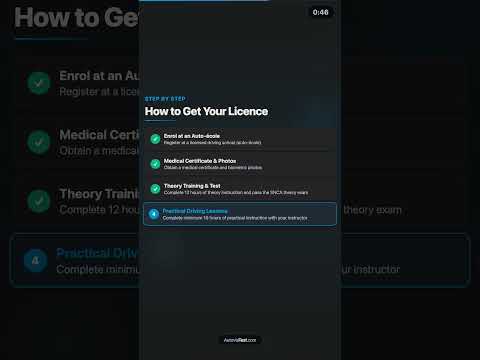
A 2-minute walkthrough of Luxembourg's driving license system, multilingual exams, mandatory driving school, and one of the strictest BAC limits in Europe.
 Video Guide · 2 min
Key Takeaways
- The full SNCA first-time Category B theory test has 54 multiple-choice questions in 30 minutes (48/54 to pass), available in Luxembourgish, French, German, Portuguese, and English, while the 20-question (18/20, 20 min) format applies to extensions.
- Total cost runs roughly €1,500–€2,500 including mandatory auto-école lessons, medical certificate, and SNCA exam fees (SNCA administrative/resit fee is €30).
- Enrollment in an accredited auto-école is mandatory, minimum 12 theory lessons and 16 practical lessons.
- Speed limits are 50 km/h urban, 90 rural, 130 motorway (110 in rain), respected strictly.
- Alcohol limit is 0.05% BAC for experienced drivers and 0.02% for novices during their first 2 years.
- Minimum age is 18 for a Class B license; theory exam can be taken from age 17.
- New drivers face a 2-year probation period with a lower fine threshold and automatic license review.
Read full transcript
Luxembourg's driving license system is multilingual, you can take the theory exam in French, German, English, Portuguese, or Luxembourgish, and run by the SNCA (Société Nationale de Circulation Automobile) under the Code de la Route. Here's the 2-minute breakdown.
0:06 Theory Test Format. SNCA's full first-time Category B theory test has 54 multiple-choice questions in 30 minutes, and you must score at least 48/54 (max 6 errors) to pass, while a compact 20-question (18/20, 20-minute) format covers license-category extensions. Questions cover road rules, signage, right-of-way, and Luxembourg's strict enforcement of speed and alcohol rules.
0:20 Cost of a Luxembourg License. Total cost runs €1,500 to €2,500. That covers enrollment at an accredited auto-école (mandatory), a minimum of 12 theory lessons and 16 practical lessons, a medical certificate, the €30 SNCA administrative or resit fee, and the practical exam fee. Luxembourg auto-écoles are regulated and prices are relatively standardized.
0:35 Luxembourg Speed Limits. Speed limits are 50 km/h in urban areas, 90 km/h on conventional rural roads, and 130 km/h on motorways, dropped to 110 km/h in rain. Luxembourg is a small country but has excellent roads and strict enforcement with a dense camera network.
0:47 Traffic Fines. Fines escalate quickly. Speeding 16 to 30 km/h over the limit is €145 plus 2 license points. Mobile phone use while driving is €145 and 2 points. Not wearing a seatbelt is €145. Drink-driving above 0.05% BAC starts at €145, but above 0.08% it becomes a criminal offense with possible immediate license suspension and court appearance.
1:02 Key Road Rules. Luxembourg drives on the right. Headlights must be on during bad weather and at night. A reflective safety vest and warning triangle are mandatory equipment. Novice drivers in their first 2 years have a lower BAC limit of 0.02% and face harsher penalties for infractions.
1:14 Step-by-Step License Process. The process: enroll in an accredited auto-école, complete mandatory theory lessons, pass the SNCA theory exam, complete mandatory practical lessons, pass the practical exam. Minimum age is 18 for Class B, though theory can be taken from 17.
1:29 Emergency Numbers. Luxembourg uses 112 for all emergencies, police, ambulance, fire, answered in French, German, English, and Luxembourgish. The CGDIS (Corps grand-ducal d'incendie et de secours) handles rescue operations. Police non-emergency is 113.
1:37 Driving Myths vs Facts. Myth: since Luxembourg is small, enforcement is relaxed. Fact: Luxembourg has one of the densest speed camera networks in Europe and fines are issued rapidly. Myth: you can book the SNCA theory exam independently without driving school. Fact: enrollment at an accredited auto-école and at least 12 hours of theory lessons are mandatory before taking the exam.
Practice the full SNCA question bank for free on AutoviaTest to prepare for your Luxembourg theory exam.
Theory Test
54 multiple-choice questions, computer-based, 30 minutes.
Available in 5 languages: Luxembourgish, French, German, English, and Portuguese. Administered at SNCA centers in Sandweiler, Diekirch, and Esch-sur-Alzette.
Total Cost
Approximately €1,300–€2,000 total: auto-école registration and lessons ~€60–90/hour, theory test resit €30, practical test €100, license issuance €30 (tax stamp).
Mandatory 12h theory + 16h practical minimum.
Road Deaths
Just 18 fatalities in 2024 (∼2.7 per 100K), making Luxembourg one of the safest EU countries for road safety.
Speed is the leading cause, involved in 44% of fatal crashes. Small population (681,973) means annual figures fluctuate significantly.
BAC Limit
0.5 g/L (0.05%) for standard drivers.
Strict 0.2 g/L (0.02%) for novice drivers (first 2 years), professional drivers (bus, truck, taxi), and driving instructors. Penalties escalate sharply: €145 fine at 0.5–0.8 g/L, up to €10,000 and prison at ≥1.2 g/L.
12-Point System
All licenses start with 12 points.
Points are deducted for offenses: 6 points for DUI/refusal, 4 points for phone use or serious speeding, 2 points for common violations. Losing all 12 points triggers automatic 12-month suspension. Clean 3-year record restores all points.
Global Context
Luxembourg is among the EU’s safest countries for driving despite having 200,000+ daily cross-border commuters.
Unique features: free public transport since 2020, 5-language theory test, conditions-based winter tire requirement. License cost (€1,300–€2,000) is moderate by European standards.
Luxembourg Road Safety: 6-Year Trend (2019–2024)
According to STATEC and the European Commission, Luxembourg recorded just 18 deaths in 2024 — its lowest figure in recent history and a 31% drop from 2023. The sharp spike in 2022 (36 deaths) was an anomaly in an otherwise improving trend.
Year-over-year changes
Deaths per 100,000 Population
 Sweden2
- Luxembourg2.7
 Denmark2.4
 Germany3.3
 France4.8
Source: EC Road Safety Country Profile, STATEC. Per-capita rates are estimates and may vary by methodology. Small-population countries show greater annual variation.
Luxembourg Theory Test Format
The computerized theory test is administered by SNCA at three centers across Luxembourg
The Luxembourg driving theory test (examen théorique) for Category B consists of 54 multiple-choice questions drawn randomly from the official question bank, to be completed in 30 minutes. The test is computer-based with photo-based scenarios and is available in 5 languages: Luxembourgish, French, German, English, and Portuguese, reflecting the country’s multilingual character and large expat population. An oral exam is also available on request with a sworn interpreter. The first attempt fee is included in driving school fees; resit or no-show fee is €30. Tests are held at SNCA centers in Sandweiler (Tuesdays), Fridhaff/Diekirch (Wednesdays), and Esch-sur-Alzette (Thursdays).
Questions
Duration
Pass Mark
Test Fee
What the Theory Test Covers
- Traffic signs & signals (Code de la Route)
- Priority rules (priorité à droite)
- Speed limits (urban, rural, autoroute)
- Stopping, parking & zone rules
- Roundabout rules & signaling
- Vehicle technology & maintenance
- Winter tire requirements (M+S / Alpine)
- Contrôle technique (vehicle inspection)
- First aid basics
- Fuel-efficient driving (eco-driving)
- Motorway driving & merging
- Hazard perception & emergency braking
- BAC limits & novice rules
- Tunnel & railway crossing rules
- 12-point license system
How to Get Your Luxembourg Driving License
From auto-école to permis de conduire, the complete 6-step process
- 1
Enroll at an Auto-école
Register at a licensed driving school (auto-école)
Choose an auto-école near you. They provide theory and practical instruction. Lesson rate ~€60–90/hour.
- 2
Medical Certificate & Photos
Obtain a medical certificate and biometric photos
A medical certificate less than 3 months old is required. Prepare biometric passport photos (~€10) for your license application.
- 3
Theory Training & Test
Complete 12 hours of theory instruction and pass the SNCA theory exam
12h theory minimum. Test: 54 MCQs, 30 minutes, 5 language options, €30 resit fee.
- 4
Practical Driving Lessons
Complete minimum 16 hours of practical instruction with your instructor
16h practical minimum for Category B. Includes mandatory road types: urban, rural, and motorway driving.
- 5
Practical Test
Pass the practical driving test at an SNCA center
Approximately 30–45 minutes. Fee: €100. Examiner assesses driving in real traffic conditions.
- 6
Receive Your Permis de Conduire
Apply for your license at the commune and begin the probationary period
License issuance: €30 (tax stamp). You enter a 24-month probationary period with mandatory safety course at CFC Colmar-Berg.
Luxembourg Driving License Fees
Total cost typically €1,300–€2,000, moderate by European standards
| Fee | Amount |
|---|---|
| Auto-école practical lessons (per hour) | ~€60–90 |
| Theory lessons (12h minimum, included in school fee) | Included |
| Theory test (first attempt) | Included |
| Theory test resit / no-show | €30 |
| Practical test (per attempt) | €100 |
| Driving license application (tax stamp) | €30 |
| Driving license issuance (tax stamp) | €30 |
| CFC Colmar-Berg safety course (probation) | ~€250 |
| Biometric photos | ~€10 |
| Medical certificate | ~€50 |
| Total Typical (Category B) | €1,300–€2,000 |
Costs depend on the number of practical lessons needed. The auto-école lesson rate (~€60–90/hour) is the largest variable. License renewal: free. License extension (adding categories): €30. Duplicate license: €30. Foreign license exchange: €30.
See how ready you are with exam-style mock questions
Try Free QuestionsMinimum age by license category
- AM — Mopeds, light quadricycles (≤45 km/h)16years
- A1 — Light motorcycles (max 15 kW / 125cc)16years
- A2 — Motorcycles (max 35 kW)18years
- B — Cars up to 3,500 kg17 with conduite accompagnée18years
- A — Motorcycles unlimitedProgressive access from A2 after 2 years20years
- C / CE — Trucks over 3,500 kgMedical exam required21years
- D / DE — Buses (8+ passengers)Medical exam required24years
License Validity Periods
| License / age | Validity |
|---|---|
| AM / A1 / A2 / A / B / BEStandard validity until age 70 | 10 years |
| C / CE / D / DE (professional)Medical exam required for renewal | 5 years |
| Age 70–80Medical exam required from age 60 | Max 5 years |
| Age 80+Medical exam required | Max 2 years |
Probationary Period (Période Probatoire)
- 24-month probationary period for all new license holders
- 0.2 g/L BAC limit during probation (stricter than standard 0.5 g/L)
- Mandatory one-day safety course at CFC Colmar-Berg
- Training booklet must be maintained throughout probation
- Violations during probation carry harsher consequences
12-Point License System
- 12 points = starting balance for all licenses
- 6 points: DUI, test refusal, drug driving
- 4 points: phone use, serious speeding (>50%), BAC 0.8–1.2 g/L, hit & run
- 2 points: speeding, red light, yield violation
- 2 points: no seatbelt or child seat
- 3-year clean record restores all 12 points
- Voluntary 1-day course recovers 3 points (once per 3 years)
Speed Limits in Luxembourg
As per the Code de la Route, all speeds in km/h
Luxembourg has straightforward speed limits aligned with EU norms. Urban areas are limited to 50 km/h by default, with 30 km/h zones near schools and residential areas. Rural roads (routes nationales) are limited to 90 km/h. Autoroutes (motorways) have a 130 km/h limit that drops to 110 km/h in rain, snow, or fog. Heavy vehicles and trailers are restricted to 75 km/h on rural roads and 90 km/h on autoroutes. All 6 Luxembourg motorways (167 km total) are toll-free for passenger vehicles. Speed cameras (radars fixes and mobiles) are used throughout the country.
| Road Type | Cars | Heavy / Trailers | Note |
|---|---|---|---|
| Urban (built-up areas) | 50 | 50 | 30 km/h zones near schools |
| Rural (routes nationales) | 90 | 75 | Single carriageway |
| Autoroute (dry) | 130 | 90 | 167 km motorway network, toll-free |
| Autoroute (rain/fog/snow) | 110 | 90 | Reduced in adverse weather |
| Tunnel | 90 | 90 | Special limit in tunnels |
Urban (built-up areas)
Cars: 50Heavy / Trailers: 5030 km/h zones near schools
Rural (routes nationales)
Cars: 90Heavy / Trailers: 75Single carriageway
Autoroute (dry)
Cars: 130Heavy / Trailers: 90167 km motorway network, toll-free
Autoroute (rain/fog/snow)
Cars: 110Heavy / Trailers: 90Reduced in adverse weather
Tunnel
Cars: 90Heavy / Trailers: 90Special limit in tunnels
Luxembourg’s 6 autoroutes total 167 km and are entirely toll-free for passenger vehicles. Eurovignette applies only to HGVs ≥12 tonnes. Speed cameras are widespread.
Traffic Fines & Penalties
As per the Code de la Route, all fines in Euros
Luxembourg enforces traffic violations through a combination of fixed fines and points deductions from the 12-point license system. Key penalties: phone use while driving costs €250 plus 4 points (increased February 2024). Drunk driving at 0.5–0.8 g/L carries a €145 fine plus 2 points, escalating to criminal prosecution and up to €10,000 at ≥1.2 g/L. Speeding fines start at €49 for minor offenses and increase based on the excess speed and zone type. Severe speeding (>50% over the limit) triggers criminal prosecution.
Up to €50€51–€250Over €250, or prosecution
| Violation | Fine | Points |
|---|---|---|
| Speeding (minor, <15 km/h urban) | €49 | 2 pt |
| Speeding (moderate) | €145 | 2 pt |
| Speeding (severe, >50% over limit) | Criminal | 4 pt |
| Phone / tablet use while driving | €250 | 4 pt |
| Seatbelt violation | €49 | 2 pt |
| Drunk driving (0.5–0.8 g/L) | €145 | 2 pt |
| Drunk driving (0.8–1.2 g/L) | Up to €500 | 4 pt |
| Drunk driving (≥1.2 g/L) | Up to €10,000 | 6 pt |
| Red light / stop sign violation | €145 | 2 pt |
| Winter tires non-compliance | €74 | — |
| Not respecting right of way | €145 | 2 pt |
| Parking violation | €25–145 | — |
- €49
Speeding (minor, <15 km/h urban)
2 pt - €145
Speeding (moderate)
2 pt - Criminal
Speeding (severe, >50% over limit)
4 pt - €250
Phone / tablet use while driving
4 pt - €49
Seatbelt violation
2 pt - €145
Drunk driving (0.5–0.8 g/L)
2 pt - Up to €500
Drunk driving (0.8–1.2 g/L)
4 pt - Up to €10,000
Drunk driving (≥1.2 g/L)
6 pt - €145
Red light / stop sign violation
2 pt - €74
Winter tires non-compliance
- €145
Not respecting right of way
2 pt - €25–145
Parking violation
Points are deducted from a starting balance of 12. Severe violations (≥1.2 g/L BAC, >50% over speed limit) are criminal offenses with potential imprisonment. Phone use fine increased from €145 to €250 in February 2024; points increased from 2 to 4 in October 2023.
Know These Rules Before Your Theory Test
Traffic fines, speed limits, and BAC rules are heavily tested in the Luxembourg theory exam. Practice with real exam-style questions.
How the road worksMandatory, with a penaltyMakes it easier
Drive on the Right
Luxembourg drives on the right.
Overtake on the left only. Same as all neighboring countries (Germany, France, Belgium).
Priorité à Droite
At unmarked intersections, the vehicle from the right has priority.
Strictly enforced throughout Luxembourg, especially in towns.
Tram Priority
Trams always have right of way in Luxembourg City unless specifically marked otherwise.
Respect tram lanes at all times.
Zipper Merge (Fermeture éclair)
Mandatory zipper merge when lanes reduce.
Drivers must alternate, one vehicle from each lane. €74 fine for non-compliance.
Winter Tires
Required on ALL wheels whenever winter conditions exist (ice, snow, frost).
Conditions-based, not date-based. M+S or Alpine symbol required. €74 fine.
0.2 g/L BAC for Novices
Strict 0.2 g/L (0.02%) limit during the 24-month probationary period, for professional drivers, and driving instructors.
General limit is 0.5 g/L.
Mandatory Insurance
Third-party liability insurance (responsabilité civile) is mandatory for all motor vehicles.
Must be in place before vehicle registration.
Contrôle Technique
Vehicle inspection required after 4 years, then every 2 years until age 6, then annually.
Carried out by SNCT, DEKRA or LU KS. Failure to comply = fine + impoundment.
Warning Triangle & Vest
Warning triangle is mandatory in every vehicle.
Reflective vest is also mandatory. First aid kit is recommended but not legally required.
Common Road Hazards in Luxembourg
18 road fatalities in 2024, know these hazards to stay safe on Luxembourg roads
Cross-Border Commuter Traffic
200,000+ workers commute daily from France, Belgium, and Germany, causing severe congestion during rush hours, especially on the A3, A4, and A6
Black Ice & Fog
Luxembourg’s hilly terrain and river valleys are prone to sudden fog and black ice in autumn/winter, especially on bridges
Narrow Rural Roads
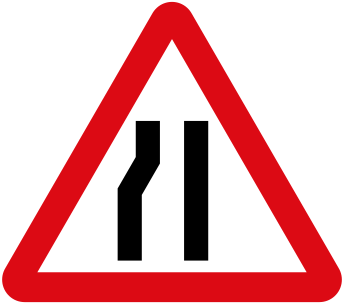
Many rural roads (routes nationales) are narrow, winding, and lack shoulders, caution needed when overtaking
Wildlife Crossings
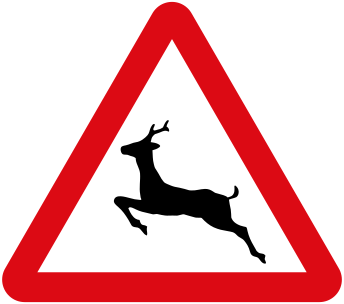
Deer and wild boar frequently cross rural roads in the Ardennes region, especially at dawn and dusk

Speed on Autoroutes
High speed differentials between slow trucks and fast cars on the 130 km/h motorways can be dangerous
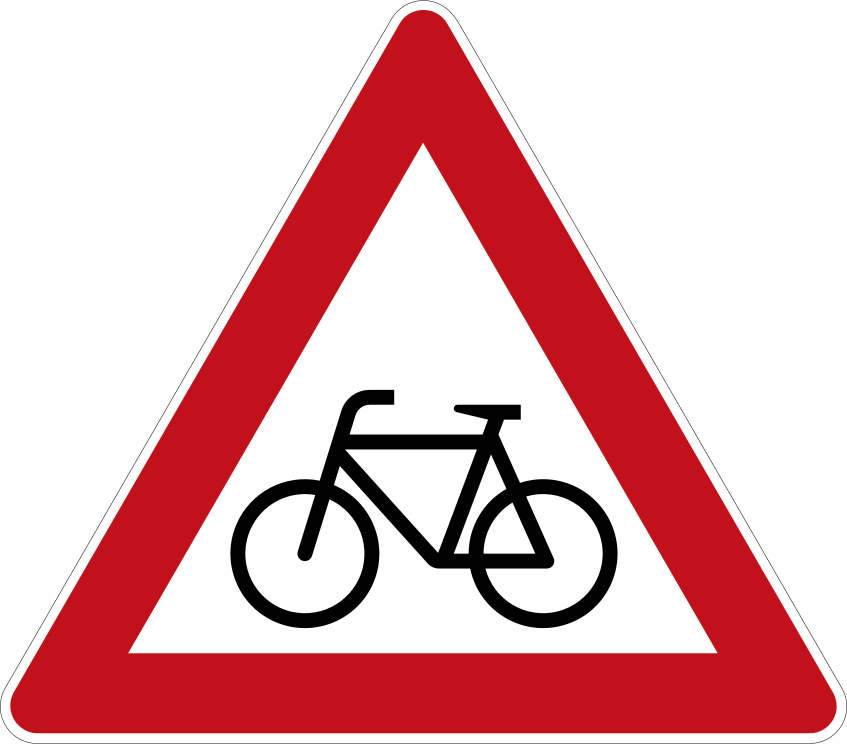
Urban Cyclists & Trams
Luxembourg City has growing cycling infrastructure and an active tram network, check blind spots and respect tram priority
SNCA Test Centers
The SNCA administers theory and practical tests at three locations across Luxembourg
- 1Sandweiler11, rue de Luxembourg, L-5230Main SNCA headquartersTuesdays
- 2Fridhaff / DiekirchNorthern LuxembourgServes the northern regionWednesdays
- 3Esch-sur-AlzetteSouthern LuxembourgServes the southern regionThursdays
Luxembourg has 681,973 residents but processes licenses for a driving population swelled by 200,000+ cross-border commuters. All three SNCA centers offer the theory test in 5 languages.
Myth: Luxembourg has no speed cameras
Fact: False. Luxembourg uses both fixed and mobile speed cameras (radars fixes et mobiles) throughout the country. Fines are issued automatically and apply to foreign-registered vehicles as well.
Myth: Winter tires are required from October to March
Fact: Luxembourg’s winter tire law is conditions-based, NOT date-based. Winter tires are required whenever winter conditions exist (ice, snow, frost), which can technically apply year-round. All four wheels must have M+S or Alpine symbol tires. €74 fine for non-compliance.
Myth: Free public transport means less traffic congestion
Fact: Despite free public transport since March 2020 (all buses, trams, trains nationwide), Luxembourg still suffers massive traffic congestion. Over 200,000 cross-border commuters drive in daily from France, Belgium, and Germany, and many are not well served by public transport routes.
Myth: Small country means easy driving
Fact: Luxembourg has among the highest self-reported speeding and drink-driving frequency in the EU per survey data. The narrow rural roads, cross-border traffic mix, and multilingual signage can be challenging for newcomers.
Myth: Luxembourg roads have tolls
Fact: All Luxembourg motorways are completely toll-free for passenger vehicles, motorcycles, and vehicles under 12 tonnes. The Eurovignette only applies to heavy goods vehicles (HGVs) of 12+ tonnes.
Myth: A first aid kit is mandatory in your car
Fact: A warning triangle and reflective vest are mandatory, but a first aid kit is only recommended, not legally required. A fire extinguisher is also not mandatory. Always carry a warning triangle and reflective vest.
Recent Changes to Luxembourg Driving Laws
Key regulatory updates affecting drivers in Luxembourg
Phone use penalties increased
Points deduction increased from 2 to 4 (October 2023); fine increased from €145 to €250 (February 2024). Both-ear headphones also banned (€74 fine).
SNCA online booking system
SNCA introduced an online appointment system for theory test bookings via MyGuichet.lu, phone, and email across all three centers.
Free public transport nationwide
Luxembourg became the first country in the world to make all public transport (buses, trams, trains) completely free for everyone, effective March 1, 2020.
Accompanied driving rules updated
Conduite accompagnée (accompanied driving) rules updated, allowing learners from age 17 to drive with a supervising adult after passing the theory test and completing 12 practical hours. Luxembourg only, prohibited 23:00–06:00.
Points system penalties revised
The penalty scale for the 12-point license system was revised, with updated point deductions for various offenses aligned with EU recommendations.
Winter tires made compulsory
Conditions-based winter tire requirement introduced. All four wheels must have M+S or Alpine symbol tires when winter conditions exist. Applies to all vehicles regardless of registration country.
How Luxembourg Compares to Its Neighbors
Luxembourg’s driving regulations compared to its neighboring countries, data from official government sources
| Parameter | Luxembourg | Germany | France |  Belgium |  Netherlands |
|---|---|---|---|---|---|
| BAC Limit | 0.05% | 0.05% | 0.05% | 0.05% | 0.05% |
| Min. Age (Car) | 18 | 18 | 17 | 18 | 18 |
| Driving Side | Right | Right | Right | Right | Right |
| Highway Speed | 130 | No limit* | 130 | 120 | 100 |
| Test Questions | 54 | 30 | 40 | 50 | 50 |
| License Cost | €1,500 | €3,000 | €1,800 | €1,400 | €3,200 |
| Road Deaths/yr | 18 | 2,770 | ~3,200 | ~470 | ~675 |
| Deaths/100K | ~2.7 | ~3.3 | ~4.8 | ~4.1 | ~3.8 |
BAC Limit
Luxembourg: 0.05%Germany: 0.05%France: 0.05%Belgium: 0.05%Netherlands: 0.05%Min. Age (Car)
Luxembourg: 18Germany: 18France: 17Belgium: 18Netherlands: 18Driving Side
Luxembourg: RightGermany: RightFrance: RightBelgium: RightNetherlands: RightHighway Speed
Luxembourg: 130Germany: No limit*France: 130Belgium: 120Netherlands: 100Test Questions
Luxembourg: 54Germany: 30France: 40Belgium: 50Netherlands: 50License Cost
Luxembourg: €1,500Germany: €3,000France: €1,800Belgium: €1,400Netherlands: €3,200Road Deaths/yr
Luxembourg: 18Germany: 2,770France: ~3,200Belgium: ~470Netherlands: ~675Deaths/100K
Luxembourg: ~2.7Germany: ~3.3France: ~4.8Belgium: ~4.1Netherlands: ~3.8
Luxembourg
Same as all neighbors. Novice limit 0.02%, stricter than Belgium (0.05%), same as France and Netherlands.
Same as Germany, Belgium and the Netherlands; France issues the license from 17. Accompanied driving from 17 in Luxembourg and Germany, from 15 in France.
Same as France. Higher than Belgium (120) and Netherlands (100). Germany has no general limit.
Moderate. Cheaper than Germany (€2,500–€3,500) and Netherlands (€2,500–€3,200). Similar to Belgium.
~2.7 per 100K, among the safest in Europe. Germany ~3.3, France ~4.8, Belgium ~4.1, Netherlands ~3.8.
Road deaths: Luxembourg 18 (2024), Germany 2,770 (Destatis 2024), France ~3,200 (ONISR 2024), Belgium ~470 (Statbel 2024), Netherlands ~675 (CBS 2024). BAC: all countries 0.05% standard. Netherlands highway: 100 km/h daytime since 2020 (130 at night on some stretches).
Primary Sources
Verification Methodology
Every fact on this page has been cross-referenced against official primary sources. Our process:
- 1Primary data collected from SNCA, Guichet.lu, and Transports.lu official portals
- 2Cross-verified against STATEC publications and EC Road Safety reports
- 3Regional variations noted where applicable (test centers, commune offices)
- 4Page reviewed and fact-checked on November 17, 2026
If you find an error, please contact us so we can correct it immediately.
Frequently Asked Questions
How much does a driving license cost in Luxembourg?
The total cost for a Category B (car) license is typically €1,300–€2,000. This includes: auto-école practical lessons at ~€60–90/hour (16h minimum), theory instruction (12h minimum), practical test €100, license issuance €30 (tax stamp), and biometric photos ~€10. A mandatory safety course at CFC Colmar-Berg (~€250) is required during the probationary period. The auto-école lesson rate is the largest variable.
What is the Luxembourg theory test format?
The SNCA theory test (examen théorique) for Category B has 54 multiple-choice questions drawn randomly from the official question bank. You have 30 minutes (20 minutes if you already hold another license, such as AM). The test is computer-based with photo scenarios and available in 5 languages: Luxembourgish, French, German, English, and Portuguese. Oral exams available on request.
What are the speed limits in Luxembourg?
Speed limits per the Code de la Route: Urban areas 50 km/h (30 km/h zones near schools). Rural roads (routes nationales) 90 km/h. Autoroutes 130 km/h (110 km/h in rain, snow, or fog). Tunnels 90 km/h. Heavy vehicles/trailers: 75 km/h rural, 90 km/h autoroute. All Luxembourg motorways (167 km) are toll-free for passenger vehicles.
What is the BAC (blood alcohol) limit in Luxembourg?
General limit: 0.5 g/L (0.05% BAC). Novice drivers (first 2 years), professional drivers, and driving instructors: 0.2 g/L (0.02%). First offense at 0.5–0.8 g/L: €145 fine + 2 points. At 0.8–1.2 g/L: higher penalties + 4 points. At ≥1.2 g/L: criminal prosecution, up to €10,000 fine, potential imprisonment, 6 points.
What is the 12-point license system?
All Luxembourg driving licenses start with 12 points. Points are deducted for violations: 6 points for DUI/refusal/drug driving, 4 points for phone use/serious speeding/BAC 0.8–1.2/hit & run, 2 points for speeding/red light/yield/seatbelt. Losing all 12 = automatic suspension (12 months first time, 24 months if repeated within 3 years). A 3-year clean record restores all points. A voluntary 1-day course recovers 3 points (once per 3 years).
What is the probationary period for new drivers?
After passing the practical test, you enter a 24-month probationary period (période probatoire). During this time: a stricter BAC limit of 0.2 g/L applies, you must maintain a training booklet, and you must complete a mandatory one-day safety course at CFC Colmar-Berg. Violations during probation carry harsher consequences.
Can I take the theory test in English?
Yes. Luxembourg’s theory test is available in 5 languages: Luxembourgish, French, German, English, and Portuguese. This reflects the country’s multilingual character and large international/expat population. An oral exam is also available on request with a sworn interpreter for candidates who need it.
What is the conduite accompagnée (accompanied driving)?
Conduite accompagnée allows 17-year-olds to drive accompanied by a designated adult after passing the theory test and completing 12 practical hours. Restrictions: Luxembourg only (not valid abroad), prohibited between 23:00 and 06:00, the accompanying person must be experienced and named on the authorization. Full license can be obtained at 18.
Do I need winter tires in Luxembourg?
Luxembourg has a conditions-based winter tire requirement: winter tires with M+S, M.S., M&S, or Alpine symbol markings are required on ALL four wheels whenever winter conditions exist (ice, snow, frost). This is not date-based, it applies whenever conditions warrant. You cannot mix winter and summer tires. Fine: €74 plus potential vehicle immobilization.
Are Luxembourg motorways toll-free?
Yes. All Luxembourg motorways (6 autoroutes, 167 km total) are completely toll-free for passenger vehicles, motorcycles, and vehicles under 12 tonnes. The Eurovignette only applies to heavy goods vehicles (HGVs) of 12 tonnes or more. There are no tunnel tolls or bridge tolls.
What equipment must I carry in my car?
Mandatory: warning triangle (triangle de présignalisation) and reflective vest (gilet de sécurité). Recommended but NOT mandatory: first aid kit and fire extinguisher. The warning triangle must be placed 100m behind your vehicle in case of breakdown. The reflective vest must be worn when exiting the vehicle on motorways or rural roads.
What are the emergency numbers in Luxembourg?
112, General emergency (fire, ambulance, rescue), EU-wide, free from any phone. 113, Police emergency (Grand-Ducal Police). 244 244 244, Police non-emergency. Operators typically speak French, German, Luxembourgish, and often English. Both 112 and 113 accept SMS.
Can I convert my foreign license to a Luxembourg one?
EU/EEA licenses are valid in Luxembourg without conversion. Non-EU license holders must exchange or retake tests depending on bilateral agreements. You generally have 1 year after establishing residency to convert. Exchange fee: €30 (tax stamp). Non-residents receive a virtual 12-point system, violations still deduct points.
What is the contrôle technique (vehicle inspection)?
All registered vehicles must pass periodic roadworthiness inspections carried out by SNCT, DEKRA or LU KS: first inspection at 4 years, then every 2 years until age 6, then annually. SNCT sends notification 8 weeks before expiry. Exemptions: trailers under 750 kg and vehicles with max speed 25 km/h. Failure to comply results in fines and potential vehicle impoundment.
Is public transport really free in Luxembourg?
Yes. Since March 1, 2020, all public transport in Luxembourg (buses, trams, and trains in 2nd class) is completely free for everyone, residents and visitors alike. Luxembourg was the first country in the world to implement nationwide free public transport. First class on trains still requires a ticket. Despite this, traffic congestion remains significant due to 200,000+ daily cross-border commuters.
Cite This Page
Use the following citations when referencing this article in academic papers, journalism, or reports.
APA 7th Edition
AutoviaTest. (2026, March 28). Luxembourg driving license facts 2026 — SNCA test, fees & rules. https://autoviatest.com/en/driving-test/luxembourg/facts
MLA 9th Edition
AutoviaTest. "Luxembourg Driving License Facts 2026 — SNCA Test, Fees & Rules." AutoviaTest, 28 Mar. 2026, autoviatest.com/en/driving-test/luxembourg/facts.
Chicago 17th Edition
AutoviaTest. "Luxembourg Driving License Facts 2026 — SNCA Test, Fees & Rules." Last modified November 17, 2026. https://autoviatest.com/en/driving-test/luxembourg/facts.
Ready to Pass Your SNCA Theory Test?
Practice with exam-style questions based on the Luxembourg Code de la Route and detailed explanations.
More Country Driving Guides
German Driving License 2026 — The Complete GuideTÜV/DEKRA theory test, Fahrschule costs, Autobahn rules, Büßgeldkatalog fines, and the Flensburg points system.French Driving License 2026 — The Complete GuideCode de la route, auto-école costs, speed limits, traffic fines, and the permis à points system.Belgian Driving License 2026 — The Complete GuideTheory test format, driving school costs, speed limits, traffic fines, and the Belgian points system.Dutch Driving License 2026 — The Complete GuideCBR theory test, rijschool costs, speed limits, traffic fines, and the Dutch driving regulations. Spanish Driving License 2026 — The Complete GuideDGT test format, autoescuela costs, speed limits, traffic fines, and the points system.
 Swiss Driving License 2026 — The Complete GuideFahrausweis test format, driving school costs, speed limits, traffic fines, and the Via Sicura system.