Priority Signs
Indicate who has right of way at intersections. Various shapes and colors.
About Priority Signs
Priority signs are defined in Annex 1, Section B of the 1968 Vienna Convention on Road Signs and Signals. Unlike most other categories, Section B uses distinct shapes per sign so that each can be recognised even when partly obscured or seen from behind: an inverted equilateral triangle for give way (Section B.1), an octagon for stop (Section B.2a), and a square set on point (diamond) for priority road (Section B.3). The defining driver-action principle of Section B is the allocation of right-of-way at points where streams of traffic meet.
Drivers facing a Section B.1 give-way sign must yield to traffic on the intersecting road; drivers facing a Section B.2 stop sign must come to a complete halt before yielding; drivers on a Section B.3 priority road have right-of-way over crossing traffic until an end-of-priority sign cancels the privilege. The category complements rather than replaces the general right-of-way rules in Article 18 of the Convention on Road Traffic.
All Priority Signs
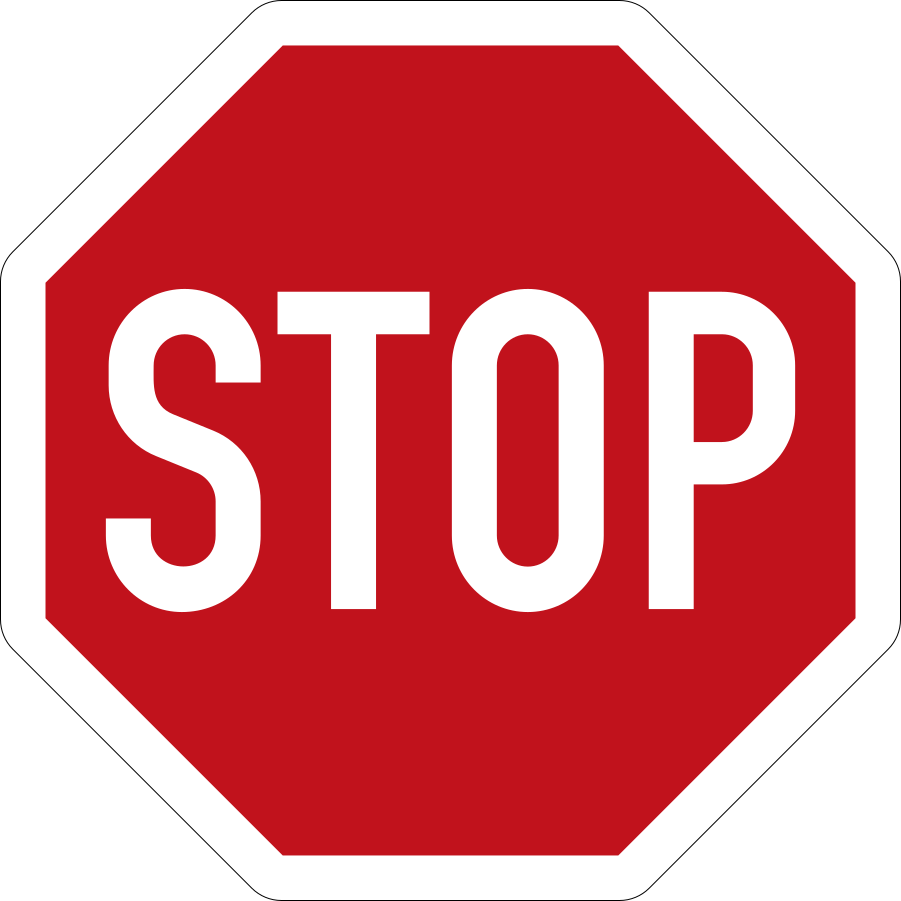
Stop
Drivers must come to a complete stop at the stop line — or, in the absence of a line, at the point where the sign offers a clear view of the intersecting road — and must give way to all traffic on the intersecting road before proceeding.
When you see it
You see this sign at junctions of minor with major roads, at railway level crossings without active warning, and at points where the intersecting road has poor visibility.
What you must do
You must bring the vehicle to a complete halt, give way to all traffic on the intersecting road, and may proceed only when the way is clear.
Country variations
Vienna 1968 Section B.2(a) defines the octagon as the standard; Section B.2(b) permits an alternative circular variant with an inset inverted triangle and the word STOP. The legend STOP is retained in most countries; local-language variants include ARRET (Quebec), ARRETEZ (Quebec/road works), DUR (Turkey) and a hand pictogram (Israel).
Source: Vienna 1968 Section B.2(a)
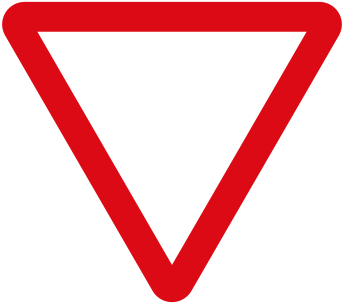
Yield / Give Way
Drivers must give way to traffic on the intersecting road. A complete stop is not required if the way is clear, but the obligation to yield is absolute.
When you see it
You see this sign at the entry to roundabouts, at minor-road junctions with major roads, at slip-road merges and at controlled junctions where stopping is not always necessary.
What you must do
You must give way to all vehicles on the intersecting or circulating road. You shall stop if necessary to comply, and may proceed only when the way is clear.
Country variations
Commonwealth countries label the sign GIVE WAY; the United States, Ireland and several Caribbean jurisdictions use YIELD. The Convention permits the sign with or without inscription.
Source: Vienna 1968 Section B.1
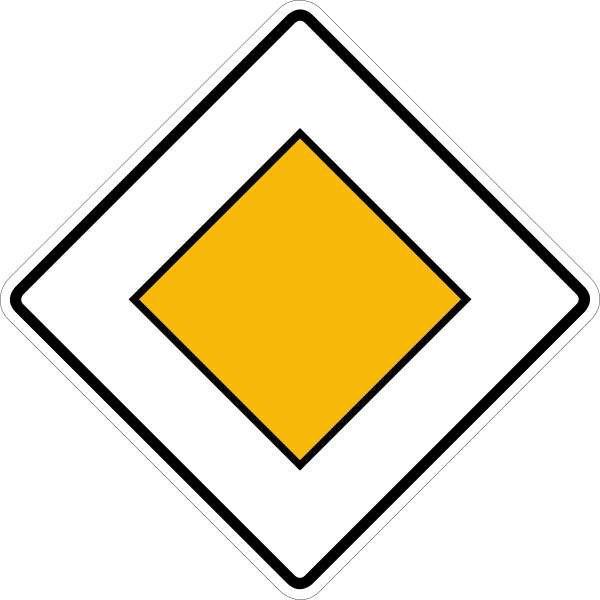
Priority Road
Designates the road carrying the sign as a priority road. Drivers on this road have right-of-way over traffic emerging from intersecting roads until the priority is cancelled by an end-of-priority-road sign.
When you see it
You see this sign at the start of a priority route through a town or along a regional road, repeated after each major intersection to confirm that priority remains in force.
What you must do
You shall proceed with right-of-way at intersections along this road, but must still observe stop or give-way signs facing your direction and shall not assume priority over pedestrians or emergency vehicles.
Country variations
The priority-road sign is standard across continental Europe and most other Vienna parties; it is not used in the United Kingdom, Ireland, the United States, Canada or Australia, which allocate priority by other signs and road markings.
Source: Vienna 1968 Section B.3
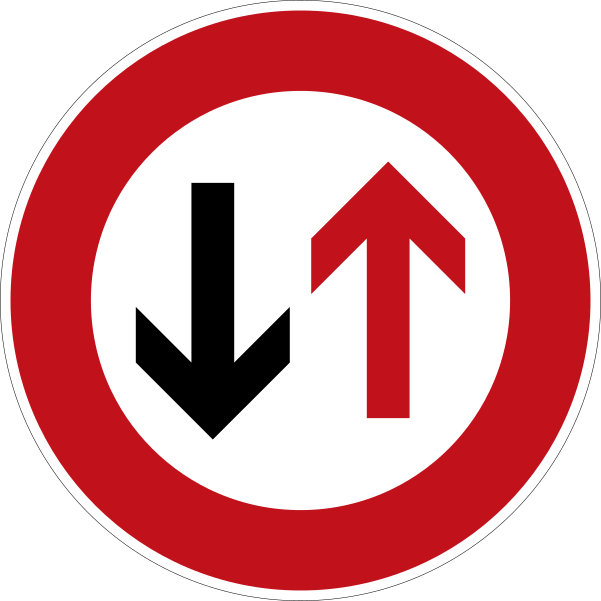
Priority for Oncoming Traffic
Indicates that oncoming traffic has priority over your direction at an upcoming narrow stretch. The disc shows a black upward arrow alongside a red downward arrow; oncoming vehicles (red) take precedence over your direction (black).
When you see it
You see this sign at the entry to narrow bridges, single-lane road-works diversions, and other stretches where two-way traffic must yield to one direction; the opposing direction will face a matching Section B.6 priority-over-oncoming sign.
What you must do
You must give way to oncoming vehicles and shall not enter the narrow stretch until it is clear; if you have already entered and meet an oncoming vehicle, you must reverse to a passing point where safe.
Source: Vienna 1968 Section B.5
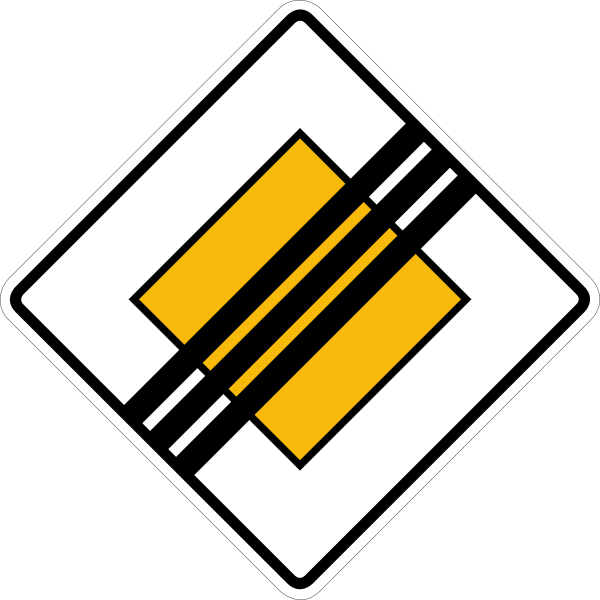
End of Priority Road
Cancels the priority granted by a Section B.3 priority-road sign. The diamond shows the same yellow-on-white field as the priority-road sign but is crossed by a black or grey diagonal bar from upper right to lower left.
When you see it
You see this sign at the end of a priority route through a town or along a regional road, typically just before a junction where priority reverts to the default right-of-way rules.
What you must do
You must no longer assume right-of-way at intersections beyond this sign. You shall observe any subsequent stop, give-way or 'priority to the right' rule that applies on the road ahead.
Source: Vienna 1968 Section B.4
Key Information About Priority Signs
How to Recognize
Priority signs have unique shapes: octagonal (stop), inverted triangle (yield), or diamond (priority road).
Required Action
Follow the priority rules indicated. Stop completely at stop signs, yield at yield signs.
Penalties
Running a stop sign or failing to yield: 100-400 EUR, 2-4 license points.
Explore Other Categories
Ready to Ace Your Driving Test?
Everything you need to pass on your first attempt
30+ Practice Tests
Real exam questions
Tess AI Coach
Personalized guidance
16 Lessons
Interactive learning
Progress Tracking
Performance insights